
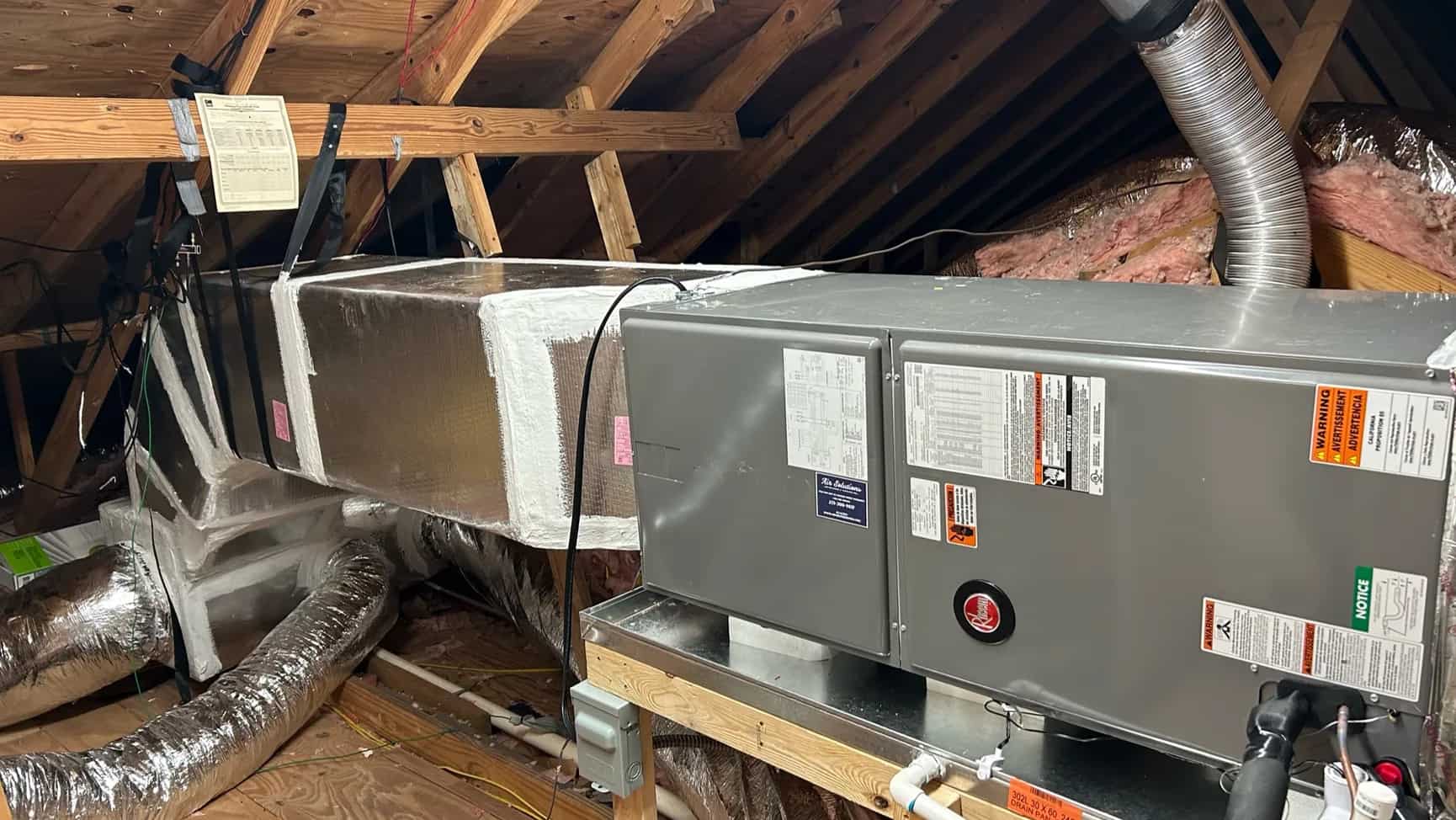
Indoor Air Quality in Magnolia Springs.
Local indoor air quality in Magnolia Springs, Alabama and surrounding Baldwin County. Dehumidifiers, air scrubbers, UV purification, ventilation. Licensed AL#23194. 353+ five-star reviews. Call (251) 300-9817.
Get a Free Estimate
Name and phone is all we need to call you back. Takes ~20 seconds.
353+ five-star reviews · Same-day · 24/7 · Licensed AL#23194
What indoor air quality looks like in this climate.
Most Baldwin County IAQ conversations start with the same broad humidity reading and end with the same dehumidifier recommendation, but Magnolia Springs has a moisture source the other cities don't. The town sits wrapped by the Magnolia River on one flank, the Fish River on another, and the Weeks Bay watershed to the south, with a meaningful share of the housing stock inside a few hundred yards of one of those waterways. River evaporation pushes moisture outward through the floodplain continuously rather than only on weather-driven humid afternoons, and the live-oak canopy shading the historic district slows the overnight drying cycle that an open-sun lot would otherwise get. The combined effect is a localized indoor humidity envelope running measurably above what the regional dewpoint columns alone would predict.
The per-coordinate ERA5 record for the town puts the 2023 cooling load near 3,001 degree days against roughly 1,053 heating degree days, with average July highs around 89.5°F and January lows hovering near 50°F at the 21-meter river-corridor elevation. None of those headline numbers look exceptional on a chart next to Foley or Fairhope. The piece they miss is the moisture-source geography: a Magnolia Springs system spends more of its operating hours managing latent load per cooling-degree-day than a structurally identical system on a drier inland lot, because the river-corridor evaporation supply keeps the indoor humidity baseline elevated even on dry-bulb-moderate days. IAQ work here is dehumidifier-and-filtration engineering against a chronic regional moisture supply, not against a transient weather event.
What we see on calls in Magnolia Springs.
The Census ACS pegs the median Magnolia Springs home at a 1983 build year, and the IAQ failure modes follow from a housing stock that is roughly four decades old and overwhelmingly owner-occupied (87.9 percent of 481 occupied units). The dominant pattern on a river-adjacent address is moisture infiltration through the crawl-space vapor barrier and the duct chases that run through it. River-evaporation humidity migrates into the floodplain soil, the crawl-space ambient relative humidity stays elevated through nearly all of an extended cooling season, and any breach in the vapor barrier or any unsealed chase penetration releases that moisture into the conditioned envelope. On the older Historic District stock the problem compounds: lath-and-plaster wall construction absorbs and releases humidity on a longer time constant than modern drywall, acting as a passive buffer when conditions are stable but as a chronic indoor moisture release when the wall-cavity humidity climbs after a wet stretch.
Three patterns layer on top of the moisture-source story. The live-oak canopy across the historic district and along the river corridor produces a year-round debris stream that drywall-stock subdivisions inland never see — live oak cycles leaves continuously with a heavier drop in late winter rather than a single fall shed, and the Spanish moss living epiphytically in the canopy along the river sheds fragments and pollen-bound dust across every season. Return-side filtration loads on a calendar that does not match the regional pollen-week assumptions, and indoor dust here carries an organic signature with a heavier mold-spore burden than roadside subdivision dust. Condensate-side biological growth on the evaporator coil and drain pan runs at an accelerated rate because the coil stays wet across more of the calendar year than a Daphne bluff or Spanish Fort system would; a drain-pan biofilm left untreated for a season can drive the musty-vent complaint even when every other IAQ component looks fine on paper. Our service catalog covers whole-home dehumidifiers, air scrubbers, UV purification, ductwork sealing, and advanced filtration systems, and we don't offer duct cleaning as a standalone service — one-time cleaning rarely produces durable improvement once the underlying moisture pathways stay in place.
- Older housing stock typical here (median build year suggests 39+ year systems are common). Duct leakage and undersized returns are the recurring finds.
- Long cooling season means compressors run heavy May through October. Annual maintenance pays for itself in compressor lifespan.
- Mild winters mean heat pumps cover the season comfortably without backup runtime in normal years. Cold-snap weeks expose undersized units.
Indoor Air Quality in Magnolia Springs — the questions that come up.
- Our house is along the Magnolia River and the indoor humidity always feels higher than at our friends' house a mile inland. How do you size a whole-home dehumidifier for a river-adjacent property?
- The river-adjacent moisture profile in Magnolia Springs is genuinely different from a drier inland lot, and the dehumidifier sizing math reflects that. A standard pints-per-day rule of thumb sized from floor area alone routinely undershoots on a Magnolia or Fish River frontage property by a meaningful margin, because the chronic moisture supply migrating outward from the waterway through the floodplain is not captured by the regional climate baseline that the rule of thumb is built around. Sizing comes off a real latent-load calculation that accounts for the building envelope condition (a 1983 home and a 1925 home present different infiltration profiles even on the same street), the existing AC dehumidification capacity measured at the coil under load, indoor relative humidity readings taken at multiple stations during the assessment, and the crawl-space vapor-barrier integrity that determines how much river-corridor moisture is actually reaching the conditioned envelope. A typical river-adjacent Magnolia Springs home in the mid-vintage band often needs a unit somewhere in the 90-to-130 pints-per-day range to hold indoor RH at the 50-to-55 percent target, which can run 30 to 50 percent above what a quarter-mile-inland address would require. We run the math on your specific lot rather than quoting a model number off a chart.
- The live-oak canopy over our Historic District home is beautiful but the indoor dust seems constant. What filter strategy actually works under all that Spanish moss?
- The live-oak-plus-Spanish-moss debris pattern in the Historic District is genuinely heavier and more year-round than the seasonal pollen surges that drive filtration recommendations elsewhere in Baldwin County. Live oak cycles leaves continuously with a heavier drop in late winter and early spring, the canopy carries Spanish moss that sheds fragments across every season, and the dust that reaches indoor surfaces here carries a heavier organic and mold-spore burden than roadside subdivision dust does. The intervention that actually moves the needle is filter cabinet geometry, not MERV rating alone. A 1-inch filter slot running an aggressive MERV rating produces enough static-pressure drop that the air handler airflow falls below specification, the dehumidification capacity at the coil drops with it, and the blower motor runs hot — exactly the opposite of what you want in a high-latent-load environment. A 4-inch media cabinet retrofit lets you run MERV 11 or MERV 13 with a much lower pressure drop, stretches the replacement cadence from monthly to roughly quarterly, and captures the canopy debris on a usable timescale. We measure the actual return-side static pressure during the assessment and recommend a filter type, MERV rating, and replacement cadence that puts your specific system inside spec rather than guessing at a one-size answer.
- We own one of the older homes in the Magnolia Springs Historic District with original lath-and-plaster walls. Does that affect how you do indoor-air-quality work?
- Materially, yes — and the difference is worth understanding before any work gets scheduled. Lath-and-plaster construction (wood lath strips covered with three coats of lime or gypsum plaster) interacts with indoor humidity on a longer time constant than modern drywall. The plaster matrix absorbs moisture when wall-cavity humidity rises and releases it as humidity drops, so the walls act as a passive humidity buffer under stable conditions and as a chronic indoor moisture release when the wall-cavity envelope stays wet after a humid stretch. The IAQ consequence is that a dehumidifier on a lath-and-plaster house needs to be sized against both indoor air volume and the moisture-storage capacity of the wall system itself; indoor RH readings during the assessment should be taken at multiple stations and across multiple time intervals to capture the wall-buffer behavior rather than as an instantaneous snapshot. The work-side consequence is that cutting into lath-and-plaster to retrofit accessory wiring or ductwork is destructive in a way drywall isn't, and the patch never looks the same. We plan the IAQ work around the wall system rather than assuming it can be modified at will, with the recommendation usually favoring equipment placement that avoids new wall penetrations wherever the geometry allows.
- Magnolia Springs is small and a 30-minute drive from your Daphne shop. How does that change scheduling for an IAQ assessment compared with a no-cool emergency call?
- It changes the timeline more than it changes the cost. A no-cool emergency call in August is a same-day dispatch problem regardless of the drive — we drive the half hour and the time-to-arrival is whatever the road takes that hour. An IAQ assessment is structurally different work: indoor humidity readings at multiple stations, return-side static pressure measurement, coil and condensate inspection, crawl-space and chase observations on the older homes, and a written recommendation are not tasks that benefit from a 2 AM site visit or from a tight same-day window. We book IAQ assessments into a scheduled weekday morning slot, and whenever the routing allows we stack the visit alongside a Cool Club tune-up or another scheduled call somewhere south of Daphne so the drive economics work cleanly for both parties. The 30-minute drive does not produce a rural trip fee on Magnolia Springs IAQ work, and the assessment timeline at the property is unhurried by design rather than squeezed into a tight dispatch window.
- If our older Magnolia Springs home has musty smells from the supply registers, do you clean the ductwork? And what do you actually recommend instead?
- Direct answer first: we don't offer duct cleaning as a standalone service. The choice is grounded in industry evidence, not in a sales positioning preference — one-time duct cleaning has a weak track record on durable IAQ improvement once the underlying moisture causes are left untouched. On an older Magnolia Springs home, the actual cause behind a musty register is almost never the dust sitting inside the duct itself; it is the moisture pathway feeding biological growth on the supply-duct surfaces. Chase cavities trap humid crawl-space air pulled from the river-corridor moisture envelope, that humidity meets the cooler supply-duct surfaces during cooling cycles and condenses there, and the resulting moisture eventually reaches the airstream to produce the register smell. What we do install is ductwork sealing — pressure-testing the duct system, locating the chase-side leak points, and sealing them with mastic or aerosolized sealant wherever the geometry permits — plus full ductwork replacement on systems where the inner liner has degraded too far for sealing to recover the original performance. On a 1983-vintage Magnolia Springs structure, sealing is generally the right intermediate move; on an original Historic District retrofit running degraded 1990s flex-duct branches, replacement tends to be the durable fix. We diagnose which path applies during the assessment instead of automatically reaching for the costlier scope.
Weather history that has shaped the Magnolia Springs indoor-air-quality call pattern.
- Sep 2020 — Hurricane Sally — lath-and-plaster wall-cavity moisture release: Sally swept across south Baldwin with Magnolia Springs squarely inside the sustained-wind footprint, followed by a multi-day power-restoration slog. The indoor-air consequences outlasted the equipment consequences by a wide margin, and the pattern hit harder here than in newer-construction sibling cities thanks to the historic building stock. Lath-and-plaster walls throughout the Historic District and along the older Magnolia River corridor soaked up storm-period moisture into the plaster matrix and into the wood lath behind it; the slow return of that water back into the conditioned envelope continued for many months after the visible repairs wrapped. Properties that came back online without a documented drying-and-dehumidification routine were the ones generating the chronic mold-odor service tickets that lingered into 2021. Wall-cavity moisture measurement at multiple stations during a post-storm assessment — rather than just an air-side humidity snapshot — is the difference between a clean recovery on these older properties and a problem that stretches across several seasons.
- Sep 2004 — Hurricane Ivan — the post-storm vapor-barrier baseline: Ivan is the older reference event for long-tenure Magnolia Springs owners and the reconstruction wave it triggered set the modern baseline for vapor-barrier integrity and crawl-space chase sealing on a meaningful share of the housing stock. Properties whose post-Ivan rebuild was done with attention to the crawl-space vapor pathway have generally held up against the river-corridor moisture envelope; properties whose rebuild treated the crawl space as a casual chase rather than as a moisture-management priority are the ones we still see chronic indoor humidity baselines on today. The IAQ-relevant question on any older Magnolia Springs address is not whether Ivan reached the structure but whether the post-Ivan repair was done against the right moisture-management spec for the river-corridor setting.
- Jan 2024 — Multi-night hard freeze — dehumidifier control-board damage: Mid-January 2024 brought a stretch of three back-to-back sub-32°F overnight lows to south Baldwin, with afternoon temperatures struggling to climb out of the high 30s — a winter pattern the town rarely sees against its typical 50°F January overnight baseline. The IAQ failure mode was less about the freeze itself and more about how the grid behaved around it. Several short-duration outages and restoration cycles rippled through 36555 during the cold stretch, and the consequence on the IAQ accessory side was a wave of whole-house dehumidifier control-board faults plus humidistat-controller failures on units interrupted mid-cycle. At addresses where the dehumidifier sat dead through the recovery week, indoor relative humidity drifted back into the biological-growth range even as the heat strip cycled. The takeaway baked into every Magnolia Springs IAQ accessory install since: the dehumidifier and any controller load belong on a surge-protected branch rather than being treated as an optional add-on to the electrical spec.
- Annual cycle (late winter through fall) — Live-oak leaf drop and Spanish-moss debris under the canopy: Live oak does not shed all its leaves in fall the way a deciduous canopy does — it cycles foliage continuously with a heavier drop concentrated in late winter and early spring, right around the same March-April window that brings the live-oak pollen surge. Spanish moss epiphytic in the canopy along the river corridor sheds fragments across every season of the year, carrying its own dust and pollen-bound organic load. Indoor IAQ complaints during the heaviest live-oak weeks cluster around insufficient filtration MERV rating, return-grille undersizing that limits how aggressively a higher-MERV filter can run without choking static pressure on the air handler, and return-side air sealing breaches that pull unfiltered canopy debris directly into the supply stream. The intervention is usually a 4-inch media cabinet retrofit plus return-side air sealing rather than a more expensive filter dropped into a slot that physically cannot support it.
Every Magnolia Springs neighborhood, every zip.
An indoor-air-quality visit at a Magnolia Springs address is scheduled-assessment work rather than emergency-dispatch work, and the small-town reality changes the visit economics in honest ways. The town carries a single ZIP, 36555, covering Downtown Magnolia Springs, the Magnolia River corridor, the Fish River area to the east, the Weeks Bay frontage on the south, and the Historic District where the live-oak canopy and Spanish moss are densest. The Daphne shop sits 20.6 miles to the north by OSRM routing — typical drive lands near the half-hour mark on US-98 south through Foley to the Magnolia Springs turn-off. No HVAC contractor operates inside the town limits as a dedicated Magnolia Springs IAQ shop (the population of 1,325 cannot support that kind of specialty presence), so every IAQ truck rolling onto Oak Street or along the river corridor is coming from somewhere else. We absorb the drive into standard coverage and charge no rural trip fee on Magnolia Springs IAQ work.
An IAQ engagement here typically unfolds across two visits with a written documentation package between them. The first visit is the assessment: indoor relative humidity readings at multiple stations and floor levels, return-side static pressure measured across the existing filter, evaporator-coil and condensate-pan inspection photographs, crawl-space vapor-barrier and chase-cavity moisture observations, an explicit wall-cavity check on lath-and-plaster historic stock, and a written recommendation laying out which interventions would actually move the needle for this specific house. The second visit is the install if the homeowner moves forward. While that scope is being worked out, the 24/7 number for whatever HVAC system is currently in the house is (251) 300-9817 — we try to catch live pickup whenever the rotation can swing it, and on an IAQ-flagged voicemail the same-business-morning callback is what opens the next phone touch (a slow-burning humidity or chase-moisture complaint gains nothing from a 2 AM truck roll). When an IAQ conversation eventually leads to a Cool Club enrollment for ongoing preventive work, the member benefit covers bi-annual professional tune-ups plus 15% off all AC repairs and 5% off new systems, and IAQ baseline measurements stack onto the spring or fall maintenance window at no extra trip charge.
- Downtown Magnolia Springs
- the Magnolia River corridor
- the Fish River area
- Weeks Bay
- the Magnolia Springs Historic District
What Magnolia Springs customers can claim.
- Most meters inside the 36555 ZIP that covers Magnolia Springs draw electricity and natural gas from Riviera Utilities, while a smaller subset of parcels — usually on outer subdivisions — read Baldwin EMC on the bill. The fastest way to confirm which provider actually serves a specific Magnolia Springs address is to glance at the utility logo on the most recent power bill before counting on either rebate menu, because the two providers operate on independent program cycles and the qualifying-equipment lists do not map across.
- Standalone IAQ accessory installs — whole-house dehumidifiers, UV-C lamp kits, media filtration cabinets, and dedicated outdoor air systems put in on their own without a wider HVAC replacement — sit outside the typical residential utility-rebate scope. The rebate frameworks at both Riviera and Baldwin EMC anchor to system-level kilowatt-hour efficiency thresholds and SEER2 tiers, not to indoor-air-quality endpoints, so a dehumidifier or UV-C job by itself usually does not earn a direct rebate from either provider. Where IAQ work attaches to a qualifying full heat-pump replacement on the same visit, the system-level rebate covers the combined scope — that is the practical opening.
- Both Riviera and Baldwin EMC have, over recent program years, sponsored residential efficiency rebates tied to qualifying high-SEER2 AC and heat-pump installations on the full-replacement side. Program names, dollar amounts, and qualifying-equipment tiers shift on each utility's own schedule. The responsible play at any Magnolia Springs consultation is to confirm the current rebate posture directly with whichever provider serves the parcel, instead of folding an outdated number into the project estimate.
Indoor Air Quality Coverage Map — Magnolia Springs, Alabama
Centered near Magnolia Springs for orientation. Air Solutions Heating & Cooling provides indoor air quality throughout every Magnolia Springs neighborhood and zip code, plus the surrounding Baldwin County area. Same crew, same number — we travel the whole county.
353+ Five-Star Reviews. And Counting.
“Jacob arrived as scheduled and completed the service quickly and efficiently despite the severely adverse conditions working in the attic in extreme heat and humidity.”
Schedule Indoor Air Quality in Magnolia Springs.
Dehumidifiers, air scrubbers, UV purification, ventilation. Same-day appointments most weekdays in Magnolia Springs and surrounding Baldwin County. Tell us when works for you — we'll confirm by phone during weekday office hours (8 AM-4 PM).
Need someone right now? Call (251) 300-9817 — our 24/7 emergency line is answered live when we can and returned quickly when we can't.
Indoor Air Quality in Magnolia Springs — FAQs
Why is indoor air quality such a big deal on the Gulf Coast?
Baldwin County's outdoor humidity averages 75% annually and peaks above 90% on summer mornings. Indoor humidity tracks outdoor humidity, and at 60%+ indoor RH, problems start: dust mite populations explode, mold can germinate on indoor surfaces, wood furniture warps, and that distinctive 'musty house' smell appears. Getting indoor RH into the 40-55% range solves most indoor air quality complaints — and that's primarily an HVAC engineering problem, not just a 'buy an air purifier' problem.Do I need a whole-house dehumidifier in Baldwin County?
Probably not if your AC is properly sized and maintained — a right-sized AC removes plenty of moisture during normal cooling cycles. You DO benefit from a whole-house dehumidifier if: (1) your home is tight new construction where AC doesn't run long enough to dehumidify, (2) you have a vacation rental that sits at higher setpoints during vacancy, (3) you have chronic mold complaints despite good cooling, or (4) you have indoor pools/spas/large fish tanks adding moisture continuously. We provide a written estimate before any work begins.Are UV-C lights worth installing on my HVAC system?
Coil-mounted UV-C lights are genuinely useful in Baldwin County's humidity — they keep evaporator coils and drain pans biologically sterile, preventing the musty smell that humid climates produce. Worth considering for homes with chronic supply-vent odor or vacation rentals. We provide a written estimate before installation. The marketing claims about UV killing airborne pathogens are overstated; airflow is too fast for meaningful kill rates. For air sterilization, better filtration is more cost-effective.Do you service all of Magnolia Springs, AL?
Yes — Air Solutions Heating & Cooling covers every neighborhood and zip code in Magnolia Springs, Alabama — including Downtown Magnolia Springs, the Magnolia River corridor, the Fish River area, plus the surrounding subdivisions and rural roads. We handle AC repair, AC installation, AC maintenance, emergency HVAC, and commercial HVAC. Standard service hours weekdays, 24/7 emergency response, and same-day appointments most of the year. Call (251) 300-9817 to schedule.What HVAC issues are most common in Magnolia Springs?
Homes around the Magnolia River most commonly call us for refrigerant leaks (often salt-air or coil corrosion related on the Gulf Coast), undersized air conditioning systems struggling with Baldwin County summer humidity, and capacitor failures during peak load between June and September. A Cool Club bi-annual maintenance plan catches most of these issues before they cause a breakdown.
Indoor Air Quality Near Magnolia Springs.
Right at the Magnolia Springs city limit? We service the surrounding Baldwin County communities on the same routes — same crew, same response times.
Related HVAC Guides.
Long-form articles about indoor air quality and Baldwin County HVAC, with practical advice from our team.
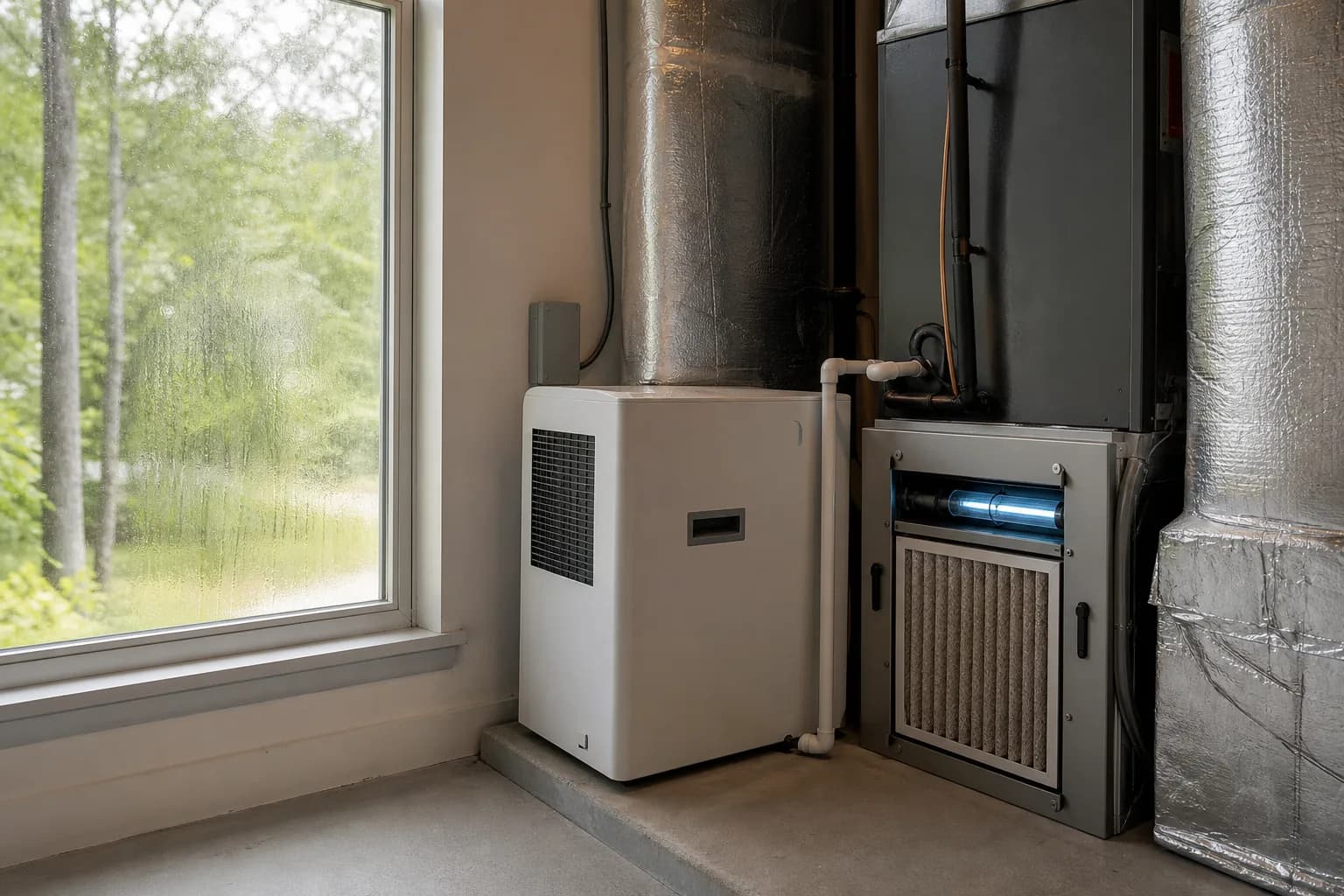 Indoor Air Quality
Spring Mold Bloom in Magnolia Springs HVAC Systems: Detection and Cleanup
How to detect and address spring mold in Magnolia Springs, AL HVAC systems — symptoms, DIY checks, and when professional remediation is needed.
April 23, 20264 min Seasonal
Holiday Weekend AC Prep for Magnolia Springs Cookout Hosts
Pre-holiday AC prep for Magnolia Springs, AL homeowners hosting cookouts and family gatherings — what to check, when to call, how to handle peak summer party loads.
September 21, 20264 min Maintenance
Why Your Outdoor AC Unit Is Buzzing But Not Cooling in Magnolia Springs
Outdoor AC unit humming or buzzing without cooling in Magnolia Springs, AL — what causes it, what to do immediately, and what each fix costs.
September 17, 20264 min
Other services in Magnolia Springs & this service across Baldwin County.
- All HVAC services in Magnolia Springs, AL
- Indoor Air Quality across Baldwin County
- AC Repair in Magnolia Springs
- AC Installation in Magnolia Springs
- AC Maintenance in Magnolia Springs
- Commercial HVAC in Magnolia Springs
- Emergency HVAC in Magnolia Springs
- Heating Repair in Magnolia Springs
- Heat Pump Services in Magnolia Springs
- Ductless Mini-Splits in Magnolia Springs
- Heating Installation in Magnolia Springs
Indoor Air Quality in Magnolia Springs — Schedule Today.
Same-day appointments most weekdays. Cool Club members get prioritized scheduling.