
Indoor Air Quality in Elberta.
Local indoor air quality in Elberta, Alabama and surrounding Baldwin County. Dehumidifiers, air scrubbers, UV purification, ventilation. Licensed AL#23194. 353+ five-star reviews. Call (251) 300-9817.
Get a Free Estimate
Name and phone is all we need to call you back. Takes ~20 seconds.
353+ five-star reviews · Same-day · 24/7 · Licensed AL#23194
What indoor air quality looks like in this climate.
Elberta sits about 20 meters above sea level on the rural plain east of Foley, far enough inland that the Gulf salt envelope is not the dominant environmental factor, and far enough south that the cooling season runs hard from late March through October. The per-coordinate ERA5 reanalysis pegs the local cooling load near 3,036 degree days against only 1,033 heating degree days, with average July highs around 90.9°F and the average January overnight low right at the 50°F mark. For indoor-air-quality work that asymmetry is the whole shape of the conversation: an Elberta HVAC system spends roughly three times as many runtime hours managing summer humidity as winter cold, and the brief winter that does arrive is mild enough that it never dries the indoor envelope the way an inland-north winter would. The moisture baseline is essentially year-round.
What the temperature columns do not show is the agricultural environment those degree days sit inside. Open-sun lots with active row-crop or pasture acreage in line of sight push a different outdoor-air load onto a residence than a tree-canopied Eastern Shore yard does. Radiant gain on the envelope runs higher without mature shade pulling temperatures down at the wall surface, and pollen and field-dust drift onto outdoor air intakes runs heavier and at different times of year than the live-oak canopy pattern most of the matrix relies on. The IAQ baseline ends up asking for filtration sized to a rural-not-coastal contamination profile alongside dehumidification sized to a near-coast latent envelope.
What we see on calls in Elberta.
The recurring IAQ failure patterns we work through on Elberta properties cluster around four genuinely-local sources. The first is agricultural-field particulate: row-crop and pasture acreage within sight of the residence pushes pollen, harvest dust, and occasional controlled-burn smoke onto outdoor air intakes on a three-peak seasonal cadence — grass and tree pollen in spring, ragweed and cut-hay drift in late summer, corn-and-soybean harvest dust in fall. The return-side filter on a rural Elberta home loads faster than the same equipment in an interior subdivision, and the right answer is rarely a higher MERV rating dropped into the existing 1-inch return slot. A 4-inch media cabinet retrofit running MERV 11 or MERV 13 carries the seasonal load without starving the air handler. The 2022 Census puts the median Elberta home around 32 years old, which usually means we are working on the second or third air handler at the address with original-vintage return geometry sized for a much lower filter density.
The other three sources stack alongside the agricultural particulate load. Propane combustion byproducts inside the building envelope matter on the rural acreage parcels with no natural-gas distribution at the meter, where LP runs the kitchen range, the water heater, sometimes a supplemental space heater, and occasionally a dual-fuel furnace paired with the heat pump. Combustion inside the envelope generates water vapor, CO2, and trace byproducts the IAQ system has to manage alongside the cooling-season latent load, and a disconnected or attic-discharged range hood puts a recurring combustion-byproduct pulse straight back into the indoor air. The well-water-versus-municipal-water split is the next one — a meaningful share of rural Elberta parcels run on private well, which changes the engineering on any whole-house humidifier accessory (mineral scaling on bypass pads, electrode fouling on steam canisters) and on the condensate-discharge path off a whole-house dehumidifier where on-property septic systems limit where continuous discharge can legally land. The last is dust ingress on detached-outbuilding ductwork runs: workshops, barns, equipment sheds, and tractor garages inherit diesel exhaust, welding fume, grain dust, or hydraulic-fluid aerosols rather than the residential pollen-and-dander mix, so the filtration sizing on those runs deserves its own walk-through. Our IAQ catalog covers whole-home dehumidifiers, air scrubbers, UV purification, ductwork sealing, and advanced filtration systems. To be explicit on what we don't do: we don't offer duct cleaning as a standalone service, because one-time cleaning has a poor track record once the underlying moisture pathway, return-side air leakage, or chronic outdoor contamination source is left in place.
- Mid-life equipment is the common profile in this area. Capacitor and contactor failures dominate the service-call mix.
- Long cooling season means compressors run heavy May through October. Annual maintenance pays for itself in compressor lifespan.
- Mild winters mean heat pumps cover the season comfortably without backup runtime in normal years. Cold-snap weeks expose undersized units.
Indoor Air Quality in Elberta — the questions that come up.
- Our Elberta farmhouse sits next to a row-crop field and the AC filter clogs faster than the manufacturer recommends. What actually works?
- Filter-loading on a rural Elberta address with active agricultural acreage in line of sight almost never resolves by going to a higher MERV rating in the existing 1-inch return slot. The static-pressure penalty from a denser filter in a too-small return chokes the blower, drops dehumidification capacity, and shortens motor life. The intervention that actually moves the needle is a 4-inch media cabinet retrofit on the return, where the increased surface area lets a MERV-11 or MERV-13 element seat without that static-pressure penalty, stretches the change cadence to roughly quarterly on a typical-loading address, and gives the system enough room for the spring tree-pollen, late-summer ragweed, and fall harvest-dust peaks without three separate clog events. We size the cabinet against the existing return geometry and adjust the change cadence to the actual local field cycle rather than to a generic Baldwin County calendar.
- Our Elberta house runs propane for the range, the water heater, and a backup space heater. Does that affect indoor air quality?
- Yes, and the conversation is genuinely different from an all-electric Fort Morgan property or a natural-gas-fed Foley address. Any fossil-fuel combustion inside the building envelope generates water vapor, CO2, and trace combustion byproducts the IAQ system has to manage alongside the cooling-season latent load. The IAQ assessment on an LP-served Elberta home walks three things specifically: the combustion-air supply path on each appliance (a blocked supply path pushes the appliance toward incomplete combustion and elevated indoor CO2), the kitchen-range hood vent termination (a hood that recirculates or discharges into the attic puts the combustion-byproduct pulse straight back into the indoor air), and the water-vapor load a propane water heater adds to what the cooling system is already pulling out. The recommendation that follows is usually combustion-ventilation correction first, supplemental whole-house dehumidification sized for the combined latent load second, and a CO/smoke combination detector on every level of the house as a non-negotiable baseline.
- Our Elberta home is on a private well. Does that change anything for a whole-house humidifier or a dehumidifier install?
- Yes, on both pieces of equipment. On a whole-house humidifier, well-source water often carries mineral content the municipal installs do not see, which scales bypass pads and clogs steam-canister electrodes at a faster cadence than the manufacturer's service interval anticipates — the fix is either a dedicated softener loop feeding the humidifier line or a maintenance cadence matched to your specific well chemistry, and we sample the supply line during the assessment to set the right expectation. On a whole-house dehumidifier the engineering question is where the continuous condensate discharge can legally land, because on addresses with on-property septic systems the dehumidifier output cannot typically be tied into the septic line. That usually means routing to a gravel-bed discharge a regulated distance from the foundation and the septic field. The assessment walks the discharge target before the install gets quoted rather than improvising the route at install time.
- Can you climate-control our detached workshop or barn alongside the house IAQ work, and do the filtration recommendations differ?
- Yes, and the filtration recommendations differ from the residential filter spec in ways that matter. A workshop, barn, equipment shed, or tractor garage inherits a distinct outdoor-air contamination load — diesel exhaust, welding fume, grain dust, hydraulic-fluid aerosols, sawdust depending on what the building is used for — and none of those loads match what the residential filter is sized to handle. The realistic answer is usually a dedicated mini-split serving the outbuilding with its own filtration cabinet sized to the actual contamination, a separate ductless head on a multi-zone heat-pump arrangement, or in the smaller outbuildings a standalone air scrubber sized to the in-shop generated particulate. We do not try to extend a residential return into an outbuilding and pretend the same filter spec will hold up; the static-pressure problems, the cross-loading back into the house, and the comfort compromise on the main residence all stack against that arrangement.
- Does UV-C purification really do anything on a rural Elberta home, or is it more relevant in coastal humidity?
- It is relevant on a rural Elberta home, but for the right reason — coil-side biofilm suppression — rather than as an air-purification claim. UV-C installed downstream of the evaporator coil suppresses biological regrowth on the coil and condensate pan, where most of the in-system biological growth fueling musty-supply-register smell originates. On the Elberta climate envelope the coil stays wet through the long cooling season (roughly 3,036 cooling degree days a year keeps the equipment in dehumidification mode for the bulk of the operating calendar), so the coil-sterilization benefit is genuinely real over the year. What UV-C does not do is capture ag-pollen or harvest dust at the duct-passage timescale, neutralize propane combustion byproducts, or fix a return-side air leak pulling humid attic or crawl-space air into the supply stream. It belongs in a layered IAQ stack alongside the filtration cabinet and the dehumidification sizing, not as a substitute. Lamp life on a typical UV-C product runs roughly 9,000 to 12,000 hours (about one calendar year of continuous duty), and a calendar-based annual swap at the spring tune-up beats waiting for visible failure — the lamp glow continues well after the effective germicidal output has dropped below the useful threshold.
Weather and seasonal events that shape the Elberta indoor-air-quality call mix.
- Sep 2020 — Hurricane Sally — multi-month wall-cavity moisture release on rural acreage: Sally tracked north through Elberta after landfall at Gulf Shores with sustained tropical-storm-force winds and rainfall that drove moisture into wall cavities on a share of the Highway 98 corridor and the outlying farm addresses. The IAQ aftermath ran considerably longer than the equipment aftermath: insulation and wall-cavity moisture that took on water continued releasing humidity into living spaces for months, and homes that came back online without an explicit drying-and-dehumidification protocol produced chronic mold-smell complaints stretching into 2021. Rural addresses with detached workshops and barns that took on water carried the recovery even longer because those outbuildings rarely got the same drying attention the main residence received.
- Jan 2024 — Multi-night sub-freezing stretch — LP combustion-ventilation surfacing: The mid-January 2024 freeze that ran sub-32°F overnight lows for three consecutive nights surfaced an unusual IAQ failure mode on Elberta properties running propane combustion appliances. LP-served homes saw supplemental space-heater and water-heater run cycles go up sharply through the cold week, pushing combustion byproducts and water vapor into the indoor air at a rate the IAQ system was not sized for. On a small number of addresses we found combustion-air supply paths that had been blocked seasonally (a basement window plugged for winter, a foundation vent closed against the cold) which moved the affected appliance toward incomplete combustion and elevated indoor CO2 readings. The corrective conversation is combustion-air supply planning before the next cold front, not a heroic dehumidifier upgrade after the fact.
- Summer 2023 — Sustained high-heat run — indoor RH climb on continuous AC and ag-field radiant load: A multi-week stretch of above-95°F afternoons through July and August stacked the Elberta IAQ call mix toward addresses where the AC was running around the clock and indoor RH was still drifting above the 60-percent biological-growth threshold. The pattern presented differently across the housing spread: on 1990s farmhouse stock with looser envelopes, outdoor humidity infiltration overwhelmed the dehumidification capacity of a sensible-load-only AC; on the newer post-2005 acreage builds, the AC physically could not move enough air against the latent load alone even with a tight envelope. The answer in both cases is supplemental whole-house dehumidification with humidistat-aware control, sized to the specific envelope and the outdoor radiant gain on an open-sun rural lot.
- Annual (spring tree/grass, late-summer ragweed, fall harvest dust) — Three-season agricultural particulate cycle on outdoor air intakes: Elberta's pollen and field-dust calendar is genuinely different from the Eastern Shore live-oak pattern. Spring loads return-side filters with tree and grass pollen on homes within sight of pasture; late summer adds ragweed and cut-hay drift especially downwind of an active hayfield; fall brings harvest dust on the row-crop ground east and south of town. The single-season filter-change cadence that works on a sheltered subdivision home does not work on an Elberta acreage parcel — we set the cadence around three particulate peaks rather than one, often with a media-cabinet pre-filter swap between the standard tune-up visits.
What Elberta customers can claim.
- Confirming which electric utility serves a specific Elberta parcel is the first step before any rebate conversation, because the Riviera and Baldwin EMC footprints both touch the community and the line between them does not follow a clean east-west boundary. The fastest confirmation is the utility logo on a current Elberta electric bill — the two cooperatives run separate residential rebate menus and the eligibility paperwork is not interchangeable.
- Pure IAQ accessory equipment — a whole-home dehumidifier on its own, a UV-C lamp kit, a 4-inch media cabinet, an ERV or dedicated outdoor air system installed without an HVAC replacement — generally falls outside the residential utility-rebate program scope, which is built around system-level kilowatt-hour efficiency targets rather than indoor-air-quality outcomes. The practical exception is when IAQ work bundles into a qualifying heat-pump replacement at the same install. Program names, dollar amounts, and qualifying equipment tiers shift periodically at both providers; we verify the current program at the consultation rather than carry a stale figure into the project budget.
- Cool Club membership covers the two annual professional tune-ups that catch the IAQ failure modes most likely to develop on an Elberta address — a spring visit to clean the coil and reset the filter cadence before the worst of the pollen and humidity season, and a fall visit to verify combustion-appliance ventilation on LP-served homes before the heating season runs the propane equipment harder. The benefit published on the maintenance page is 15% off all AC repairs and 5% off new systems, with no long-term contract requirement.
- The federal Section 25C heat-pump credit expired December 31, 2025. Pure IAQ accessory work never qualified on its own, and new system replacements in 2026 do not qualify either. For bundled IAQ-plus-heat-pump work placed in service before the cutoff, your CPA can advise on the 2025 return. Riviera Utilities and Baldwin EMC programs remain active.
Every Elberta neighborhood, every zip.
An indoor-air-quality engagement at an Elberta address starts as a scheduled assessment rather than an emergency dispatch, which is the right way to plan the trip when the road time is meaningful. The OSRM routing puts the run from the Daphne shop to a typical Elberta parcel at roughly 31 miles along US-98 through Loxley and Foley, which clocks near 50 minutes in normal weekday conditions and longer when weekend traffic toward the Gulf-front corridor stacks up. The 36530 ZIP covers the full Elberta footprint we work — Downtown Elberta around the Highway 98 intersection, the Highway 98 corridor frontage, the parcels around the Baldwin County Heritage Museum, and the rural acreage that fans outward through farming country toward Loxley and Summerdale on the north side and toward Lillian and the Wolf Bay drainage on the south.
A typical Elberta IAQ engagement unfolds across two visits with a written assessment in between. The first visit takes indoor RH readings at multiple stations, reads static pressure across the existing return-side filter, photographs the coil and condensate path, walks the propane appliance inventory and ventilation paths on LP-served addresses, samples outdoor-air intake exposure relative to the closest agricultural source, and on private-well addresses checks the dehumidifier discharge target against the septic-system layout. The second visit is the install if the homeowner moves forward. After-hours coverage on whatever HVAC system is currently in the house runs through (251) 300-9817; IAQ-flagged voicemails generally come back the same business morning to set up the assessment, because chronic indoor humidity, recurring smell complaints, and filter-loading questions do not benefit from a 2 AM site visit the way a no-cool event in August does. Cool Club membership covers the two annual professional tune-ups plus 15% off all AC repairs and 5% off new systems, and the IAQ baseline measurements can stack onto the spring or fall maintenance visit rather than booking a separate trip.
- Downtown Elberta
- the Highway 98 corridor
- the Baldwin County Heritage Museum area
- rural Elberta
Indoor Air Quality Coverage Map — Elberta, Alabama
Centered near Elberta for orientation. Air Solutions Heating & Cooling provides indoor air quality throughout every Elberta neighborhood and zip code, plus the surrounding Baldwin County area. Same crew, same number — we travel the whole county.
353+ Five-Star Reviews. And Counting.
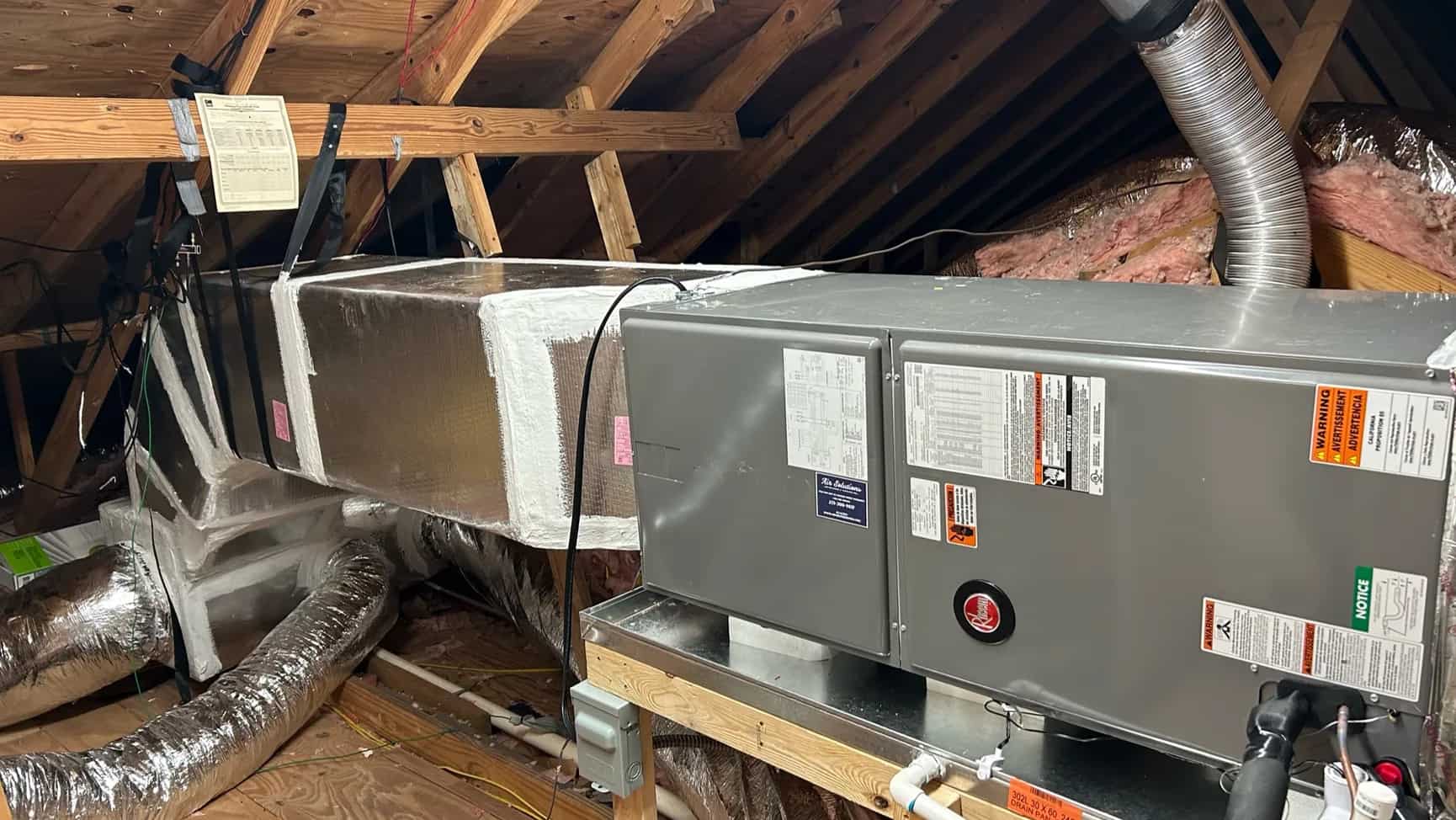
“Jacob arrived as scheduled and completed the service quickly and efficiently despite the severely adverse conditions working in the attic in extreme heat and humidity.”
Schedule Indoor Air Quality in Elberta.
Dehumidifiers, air scrubbers, UV purification, ventilation. Same-day appointments most weekdays in Elberta and surrounding Baldwin County. Tell us when works for you — we'll confirm by phone during weekday office hours (8 AM-4 PM).
Need someone right now? Call (251) 300-9817 — our 24/7 emergency line is answered live when we can and returned quickly when we can't.
Indoor Air Quality in Elberta — FAQs
Why is indoor air quality such a big deal on the Gulf Coast?
Baldwin County's outdoor humidity averages 75% annually and peaks above 90% on summer mornings. Indoor humidity tracks outdoor humidity, and at 60%+ indoor RH, problems start: dust mite populations explode, mold can germinate on indoor surfaces, wood furniture warps, and that distinctive 'musty house' smell appears. Getting indoor RH into the 40-55% range solves most indoor air quality complaints — and that's primarily an HVAC engineering problem, not just a 'buy an air purifier' problem.Do I need a whole-house dehumidifier in Baldwin County?
Probably not if your AC is properly sized and maintained — a right-sized AC removes plenty of moisture during normal cooling cycles. You DO benefit from a whole-house dehumidifier if: (1) your home is tight new construction where AC doesn't run long enough to dehumidify, (2) you have a vacation rental that sits at higher setpoints during vacancy, (3) you have chronic mold complaints despite good cooling, or (4) you have indoor pools/spas/large fish tanks adding moisture continuously. We provide a written estimate before any work begins.Are UV-C lights worth installing on my HVAC system?
Coil-mounted UV-C lights are genuinely useful in Baldwin County's humidity — they keep evaporator coils and drain pans biologically sterile, preventing the musty smell that humid climates produce. Worth considering for homes with chronic supply-vent odor or vacation rentals. We provide a written estimate before installation. The marketing claims about UV killing airborne pathogens are overstated; airflow is too fast for meaningful kill rates. For air sterilization, better filtration is more cost-effective.Do you service all of Elberta, AL?
Yes — Air Solutions Heating & Cooling covers every neighborhood and zip code in Elberta, Alabama — including Downtown Elberta, the Highway 98 corridor, the Baldwin County Heritage Museum area, plus the surrounding subdivisions and rural roads. We handle AC repair, AC installation, AC maintenance, emergency HVAC, and commercial HVAC. Standard service hours weekdays, 24/7 emergency response, and same-day appointments most of the year. Call (251) 300-9817 to schedule.What HVAC issues are most common in Elberta?
Homes around Hwy 98 most commonly call us for refrigerant leaks (often salt-air or coil corrosion related on the Gulf Coast), undersized air conditioning systems struggling with Baldwin County summer humidity, and capacitor failures during peak load between June and September. A Cool Club bi-annual maintenance plan catches most of these issues before they cause a breakdown.
Indoor Air Quality Near Elberta.
Right at the Elberta city limit? We service the surrounding Baldwin County communities on the same routes — same crew, same response times.
Related HVAC Guides.
Long-form articles about indoor air quality and Baldwin County HVAC, with practical advice from our team.
 Homeowner Resources
Selling Your Elberta Home in Summer? HVAC Questions Buyers Always Ask
HVAC questions Elberta, AL home buyers ask sellers — what records to prepare, what fixes to make pre-listing, and what disclosures matter most in the inspection period.
September 16, 20264 min Buyer Guides
SEER2 Ratings for Elberta Homeowners: What's Worth Paying For
SEER2 efficiency ratings explained for Elberta, AL homeowners — what each tier costs upfront, what it saves long-term, and where the breakeven sits in our climate.
September 9, 20264 min Maintenance
Frozen Evaporator Coil in Elberta: Why It Happens in 95° Weather
How an Elberta, AL AC evaporator coil freezes during 95°F summer days — three causes, what to do when it happens, and why it indicates other problems.
August 27, 20264 min
Other services in Elberta & this service across Baldwin County.
- All HVAC services in Elberta, AL
- Indoor Air Quality across Baldwin County
- AC Repair in Elberta
- AC Installation in Elberta
- AC Maintenance in Elberta
- Commercial HVAC in Elberta
- Emergency HVAC in Elberta
- Heating Repair in Elberta
- Heat Pump Services in Elberta
- Ductless Mini-Splits in Elberta
- Heating Installation in Elberta
Indoor Air Quality in Elberta — Schedule Today.
Same-day appointments most weekdays. Cool Club members get prioritized scheduling.