
Inverter vs Standard Compressors: An Elberta Climate Analysis
Inverter vs standard HVAC compressor analysis for Elberta, AL climate — efficiency, comfort, and cost differences.

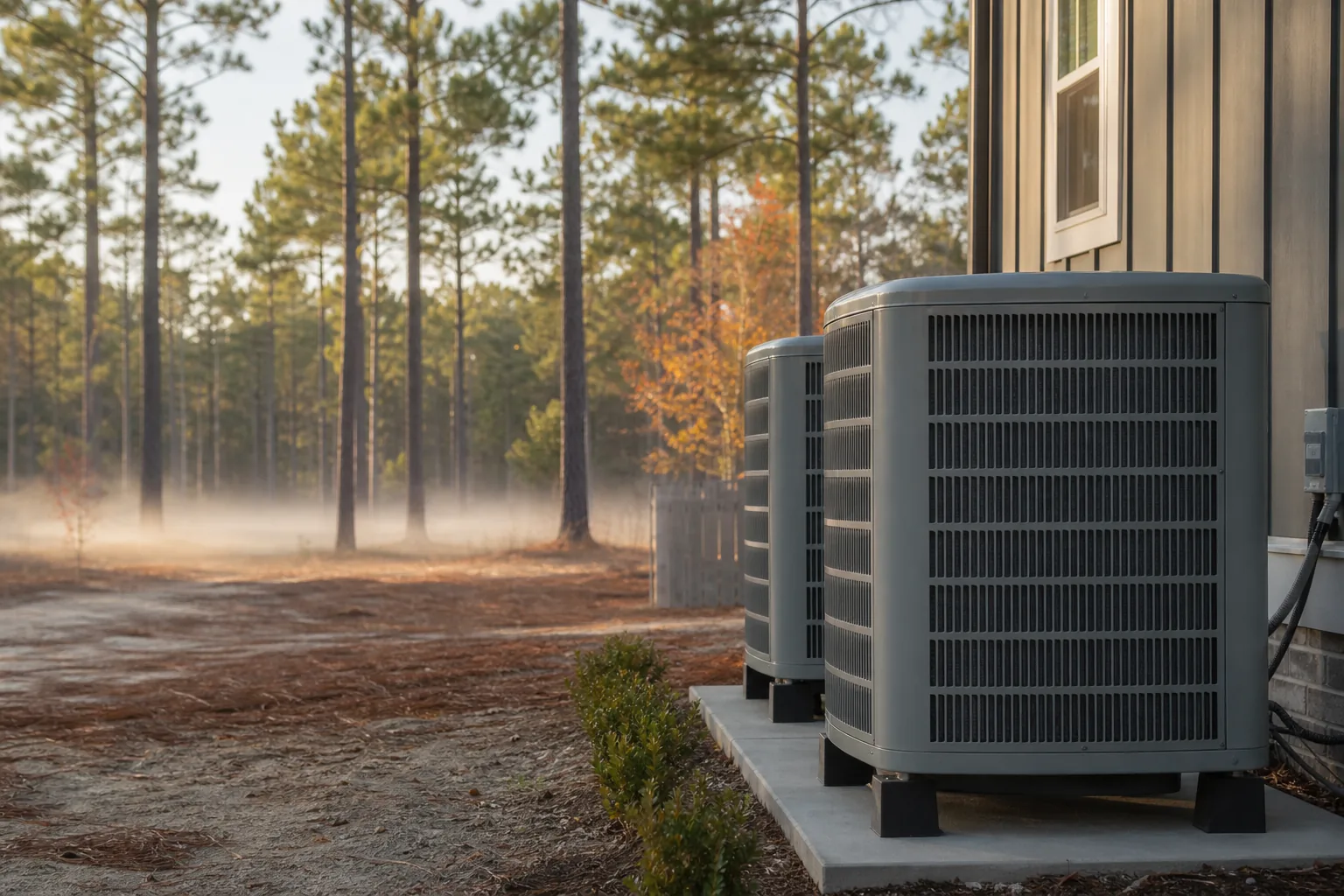
You're shopping new HVAC for your Elberta home, maybe out in the rural stretches off the Highway 98 corridor or closer to town. Some quotes specify "inverter" or "variable-speed" compressors with 20-30% premium. Standard compressors are cheaper. For Elberta climate specifically — this German-heritage farming community east of Foley in Baldwin County — when does the inverter premium pay off?
What's the actual difference
Standard compressor (single-stage):
- On or off, no in-between
- Full power when running
- Cycles on/off frequently
- Lower upfront cost
- Lower efficiency
Two-stage compressor:
- Two power levels (typically 65% + 100%)
- Smarter than single-stage
- Less cycling than single-stage
- Mid-tier pricing
- Mid-tier efficiency
Inverter (variable-speed) compressor:
- Continuous modulation 25-100% capacity
- Runs at exactly the speed needed
- Minimal cycling
- Premium upfront cost
- Highest efficiency
- Best humidity control
For Elberta climate — coastal humidity + long cooling season — inverter compressors offer real advantages.
Why inverter compressors matter in Elberta climate
Elberta's climate creates specific challenges:
1. High humidity (60-75% relative humidity year-round). Inverter compressors maintain longer cooling cycles = better dehumidification. Standard compressors cycle quickly = less humidity removal.
2. Long cooling season (8+ months). More runtime = more efficiency benefit from inverter.
3. Coastal moderation reduces extreme load. Variable demand favors variable-speed compressors that can match output to need.
4. Premium home value standards. Premium equipment matches premium home expectations.
Comfort comparison
Standard compressor:
- Strong cooling burst when on
- Notable temperature swings (+/- 2-3°F from setpoint)
- Audible cycling
- Less effective humidity control
- Slightly cooler air feel due to short cycles
Two-stage compressor:
- Steadier comfort
- Smaller temperature swings (+/- 1-2°F)
- Two distinct sound levels
- Better humidity control
- More even comfort
Inverter compressor:
- Very steady comfort
- Minimal temperature swings (+/- 0.5°F)
- Variable, often quieter operation
- Excellent humidity control
- Most consistent comfort
For Elberta households where humidity matters (most do), inverter compressors offer noticeable comfort improvement.
Cost comparison
For a typical 3-ton system in Elberta, the install-cost ladder generally goes:
- Single-stage 14-15 SEER2 — lowest equipment cost
- Two-stage 16-18 SEER2 — moderate premium over single-stage
- Inverter 18-22 SEER2 — largest premium, often 20-30% over single-stage
Note that the federal 25C tax credit, which used to help offset a qualifying high-efficiency heat pump, expired December 31, 2025 and no longer applies to a 2026 or later install — so it isn't part of this math anymore (see below). What narrows the effective gap between tiers now is the operating-cost savings the higher tier delivers over its life.
Get specific quote numbers in writing before deciding — actual ranges depend on tonnage, ductwork condition, and current equipment promos.
Operating cost math
Annual cooling-season electricity use scales roughly with SEER2:
- Single-stage (14 SEER2): highest seasonal kWh draw of the three; cooling-heavy bill curve in summer
- Two-stage (16 SEER2): moderate reduction vs single-stage from longer steady cycles
- Inverter (20 SEER2): largest reduction; modulating output matches load with less peak draw
Over a 15-year equipment life, the cumulative utility difference between single-stage and inverter on an Elberta cooling-load profile is meaningful — often enough to recoup a sizeable portion of the upfront premium for owners who stay 10+ years. Short-hold owners recoup less.
For Elberta climate, inverter math is typically positive over equipment life for primary residences.
Equipment longevity
Single-stage compressor:
- 12-15 year life expectancy
- Fewer parts; simpler design
- Generally reliable
Two-stage compressor:
- 13-16 year life expectancy
- Slightly more complex
- Most fail at compressor itself
Inverter compressor:
- 14-18 year life expectancy
- Most complex; sophisticated control
- Variable-speed itself can fail expensively
For Elberta installations, longevity differences are modest. Maintenance frequency matters more than compressor type for life expectancy.
Repair cost considerations
Single-stage compressor failure:
- Common; well-understood
Two-stage compressor failure:
- Slightly more complex
Inverter (variable-speed) compressor failure:
- Specialized; sometimes longer repair time
- Some need full replacement
When inverter compressor fails, repair costs are higher. But proper maintenance keeps failures rare.
Federal 25C tax credit: expired after 2025
The federal 25C heat-pump credit no longer applies to a new Elberta install. The 2025 federal budget law ended it as of December 31, 2025; the only remaining use is a system placed in service on or before that date, claimed on the 2025 return via IRS Form 5695. If that's your situation, confirm it with a CPA.
While it was available, the credit hinged on efficiency thresholds — higher-tier compressors cleared them more easily than builder-grade single-stage units. That same efficiency logic still drives the operating-cost case for stepping up a tier, credit or no credit:
- Single-stage at the lowest SEER2 ratings saves the least over time
- Two-stage trims the seasonal bill from longer, steadier cycles
- Inverter delivers the largest operating-cost reduction on an Elberta cooling profile
When inverter makes most sense
1. Long-stay Elberta primary residences (10+ years). Lifetime savings recoup premium investment.
2. Premium homes. Equipment expectations match home value.
3. Humidity priority households. Allergy sufferers, comfort priority.
4. High-utility-cost regions. Operating savings matter more.
5. Smart-home integrated households. Inverter equipment plays well with sophisticated controls.
6. Coastal-influence properties. Better humidity management matters.
When standard compressor is fine
1. Tight budget installs. The upfront savings versus inverter is real money in your pocket today.
2. Short-stay properties (5-7 year hold). Operating savings don't recoup premium.
3. Vacation rental properties. Reliability + simplicity often preferred.
4. Modest comfort priorities. Some don't notice difference between compressor types.
5. Smaller homes. Less load = less savings benefit.
6. Replacement during peak season urgency. Standard equipment more readily available.
What to ask in Elberta quotes
1. "What compressor type is included?" Single-stage, two-stage, or inverter (variable-speed).
2. "What's the SEER2 rating?" Drives seasonal efficiency and your operating cost over the system's life.
3. "What's the manufacturer compressor warranty?" 10-12 year compressor warranty premium.
4. "Coastal-grade equipment options?" Important for Elberta near-coast properties.
5. "What's variable-speed-specific service support?" Some installers prefer simpler equipment; verify capability.
6. "Smart thermostat optimization?" Variable-speed compressors benefit from smart controls.
Recommended brands by tier
Premium inverter heat pumps for Elberta:
- Trane XV20i (premium build, excellent warranty)
- Carrier Infinity 24 Greenspeed (smart-home leader)
- Lennox Signature XC25 (efficiency leader)
- Daikin DZ20VC (inverter technology focused)
- Mitsubishi Hyper-Heat (cold-climate variant)
Mid-tier two-stage for Elberta:
- Trane XR16
- Carrier Performance 16
- Lennox Elite series
- Goodman GVZC20
Budget single-stage for Elberta:
- Goodman GSXC18
- Builder-grade options (often unbranded)
Inverter equipment maintenance
Variable-speed compressors benefit from:
- Annual professional service (inverter electronics need attention)
- Smart thermostat with proper configuration
- Surge protection (inverters more sensitive to voltage events)
- Coil cleaning (efficiency matters more)
- Drain line maintenance
Cool Club membership rolls all of these into a single annual visit.
Decision framework for Elberta
Step 1: Determine residence duration.
- < 5 years: any compressor fine
- 5-10 years: two-stage or inverter
- 10+ years: inverter likely best math
Step 2: Check humidity tolerance.
- High tolerance: any compressor
- Sensitive: two-stage minimum, inverter preferred
Step 3: Consider budget flexibility.
- Tight: standard or two-stage
- Moderate: two-stage
- Flexible: inverter
Step 4: Verify with Manual J load calculation.
- Right sizing matters more than compressor type
- Inverter better tolerates over-sizing
- Standard requires precise sizing
Elberta-specific considerations
Three local factors:
1. Gulf Coast humidity strongly favors variable-speed for comfort across Baldwin County.
2. Distance from the coast varies. A home near the bays needs coastal-grade corrosion protection more than it needs any particular compressor type; one in the drier ag land around the Baldwin County Heritage Museum area has more leeway.
3. Newer Elberta construction trending inverter. Premium homes match premium equipment.
Ready for an Elberta heat pump quote?
Air Solutions Heating & Cooling provides Elberta heat pump quotes with all compressor type options + Manual J load calculations. Family-run, founded in Daphne, licensed AL#23194.
- Schedule a Quote — free in-home consultation
- Call (251) 300-9817 — questions answered
- Heat Pump Services — full overview
Related resources
- Heat Pump Services in Elberta — city-specific service page
- All HVAC services in Elberta — every service locally
- HVAC Brands We Service — full brand list
- HVAC Financing — payment options