
Local vs National HVAC: The Baldwin County Reality
An honest local-vs-national HVAC comparison for Baldwin County homeowners — how each business model shapes your price, your tech, and your repair-or-replace advice.
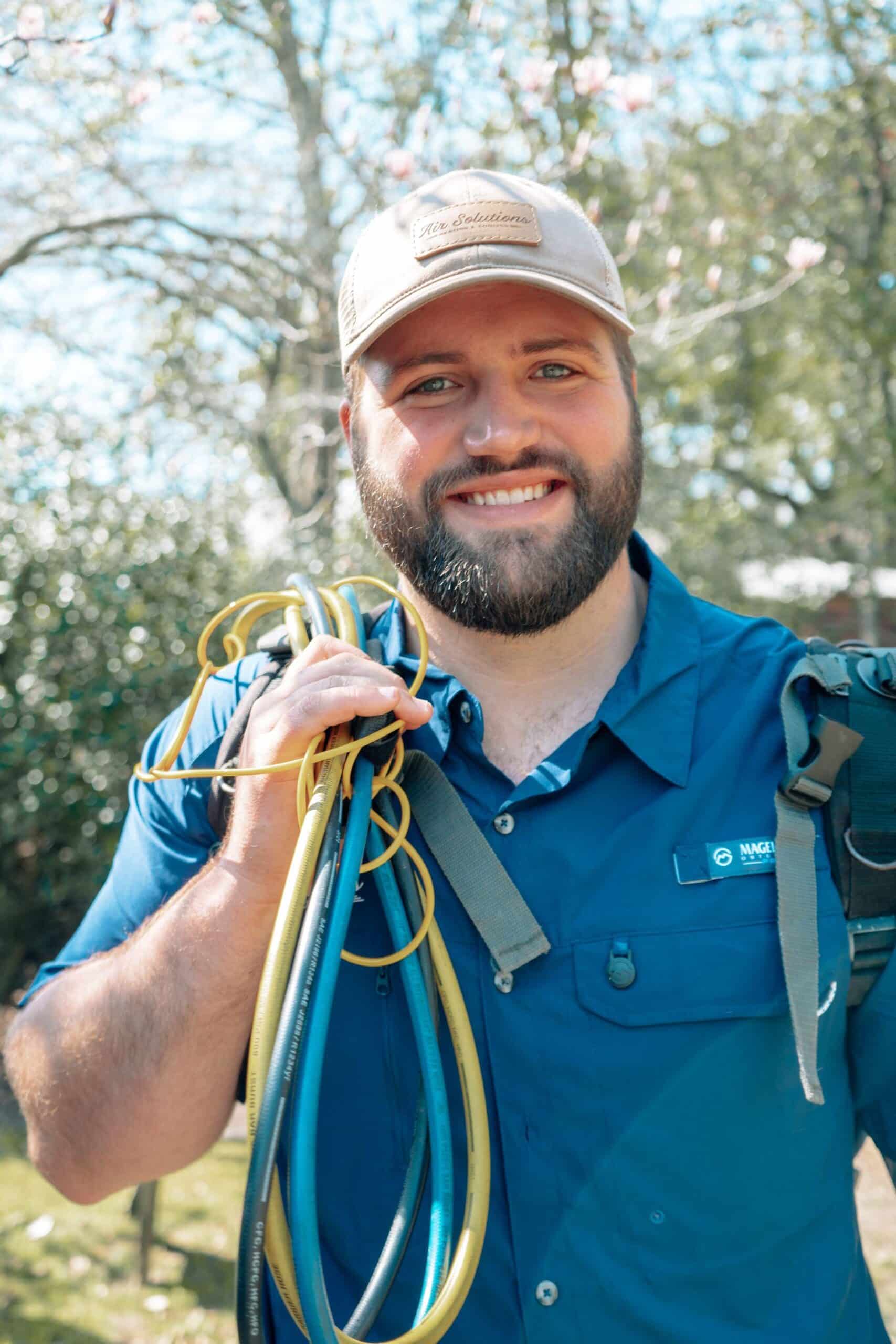
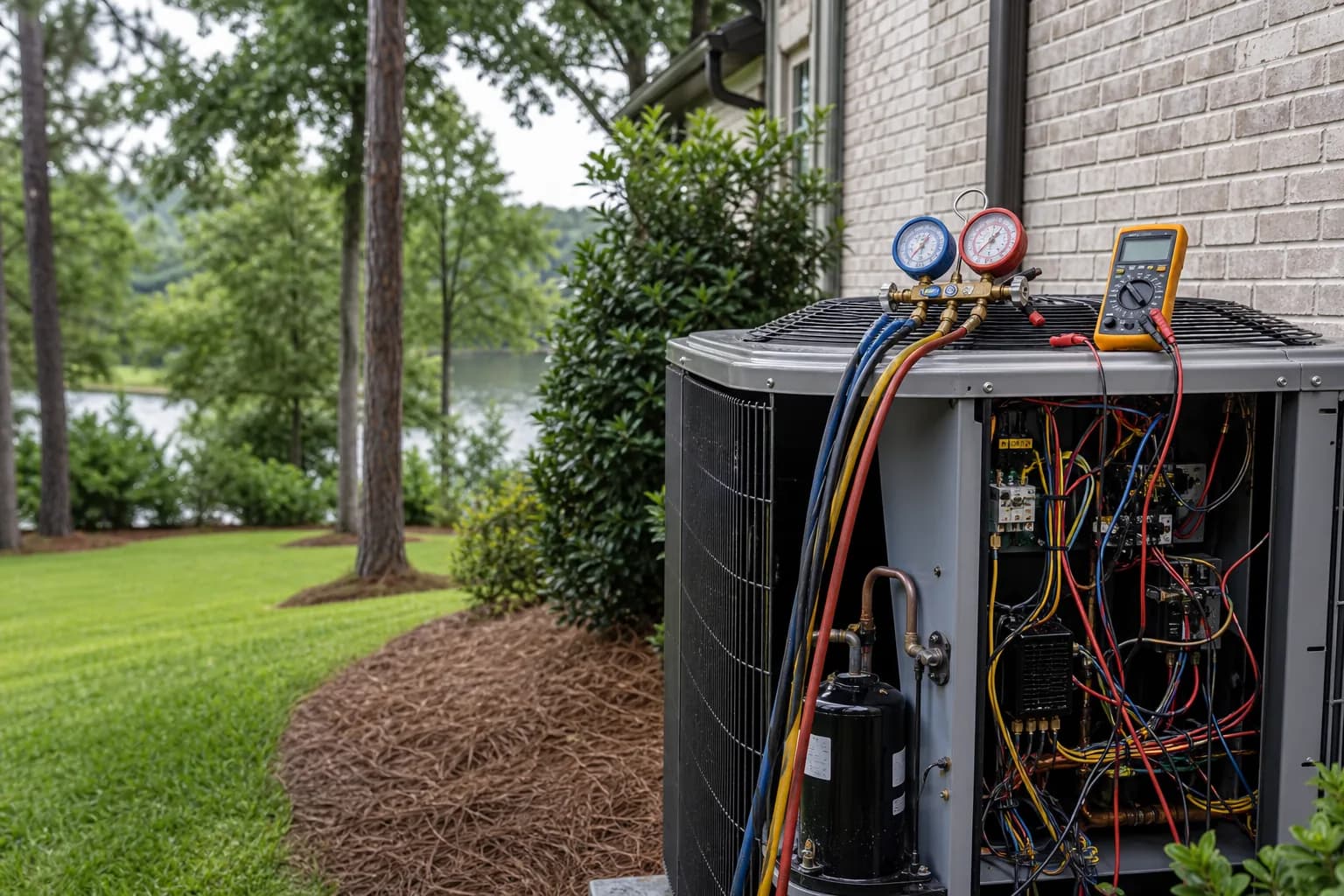
If your air conditioner quits on a 96-degree afternoon in Daphne, you're not thinking about business models. You're thinking about who can get cool air back in the house. But the kind of company you call — a locally owned shop or a national-brand franchise — shapes more than how fast a truck shows up. It quietly shapes the price you're quoted, who's standing in your yard, and whether the advice you get points toward a repair or a brand-new system.
I'll be straight with you up front: I own a local company, so I'm not a neutral party here. But this is an honest comparison, not a sales pitch, and there are real places where the national guys genuinely win. Let me walk you through how the two models actually differ, where each one earns its keep, and how to read your own situation.
It's about the business model, not the logo
The first thing to understand is that "local vs national" isn't really about the name on the truck. It's about how the company is built, and that structure decides almost everything downstream. A national franchise and a local shop can send technicians with identical certifications to your door and still operate on completely different incentives — because one is feeding a corporate machine and the other is just trying to keep its neighbors as customers.
So before you weigh reviews or response time, it helps to picture where your money goes in each model. Here's the contrast as plainly as I can draw it.
| Factor | Local | National |
|---|---|---|
| What your ticket funds | The actual work, plus a small local crew and one office | The work plus corporate offices, national ad spend, and franchise fees |
| Pricing pressure | No upsell formula or sales quota driving the number up | Techs are often on quotas that reward bigger tickets |
| Who shows up | Techs who live and work the coast year-round | Could be a tech recently transferred from an inland branch |
| Repair-vs-replace lean | Paid to fix the problem in front of them | Some models are incentivized to sell new systems |
| Accountability | Owner hears about it at church and the ballfield | One bad job is a rounding error across a thousand locations |
| Brand familiarity | You may have to ask a neighbor who they trust | Instantly recognizable name, reassuring if you're new in town |
| Surge capacity | One crew; books up fast in a region-wide event | Can sometimes pull trucks from unaffected areas |
That table is most of the article in miniature. The rest is me explaining why each row lands the way it does — including the two rows where the national column is the honest winner.
Where your money actually goes
Start with price, because it's what most people ask about first. A national franchise isn't padding your bill out of greed; it's covering real costs that exist whether you see them or not. Corporate headquarters, the regional and national advertising you've seen on TV and heard on the radio, the franchise fees each location pays to use the brand — all of that gets funded out of the same tickets customers pay. Layer on the sales quotas a lot of these operations put their technicians on, and you get a quote shaped partly by what the company needs to hit, not just by what your system needs.
A locally owned shop doesn't carry that weight. I've got a small crew, a truck or two, and one office — not a corporate org chart to feed. There's no upsell formula handed down from above telling my techs to turn a routine repair into a conversation about a new system. That doesn't automatically make every local quote lower than every national one; a fly-by-night with no overhead can lowball and then cut corners. But the structural pressure runs the right direction, and that's the part you can't see on the invoice.
The coast does specific things to your equipment
Here's a difference that has nothing to do with money and everything to do with where we live. Baldwin County is a salt-air, high-humidity environment, and that's hard on HVAC equipment in ways an inland tech doesn't automatically have a feel for. Salt off Mobile Bay and the Gulf works its way into outdoor coils and electrical contacts and starts corroding them early — a condenser on the bluffs in Daphne or out toward Historic Malbis ages on a different clock than the same unit inland. Our humidity keeps condensate drain lines wet and feeds the algae that clogs them — which is why a drain backing up and tripping a float switch is one of the most common no-cool calls we run all summer.
A technician who's spent their whole career working the coast recognizes those patterns on sight. They know to look at the contactor for salt pitting, to check the drain line before assuming the worst, to expect a little corrosion on a five-year-old condenser that would look alarming on the same unit in Birmingham. A good tech transferred in from a dry inland branch isn't incompetent — they just haven't watched these specific failures happen hundreds of times. With a national operation, you don't always get to pick which branch's experience shows up in your driveway.
Salt air and Gulf humidity write their own service manual down here. You learn to read it by working it every week — not by reading about it before you transfer in.
Accountability you can actually reach
This one's a little uncomfortable to say out loud, but it's true: a local owner can't hide from a bad job. I live here. I run into customers at the grocery store, at church, at the ballfield. If we do shoddy work or overcharge somebody, word travels through this county fast, and it sticks to my name specifically. A thousand-location national chain can absorb a bad review or a botched install the way the ocean absorbs a raindrop — it barely registers against the whole. The incentive to make every single job right is just structurally stronger when the whole business is one person's reputation in one community.
That accountability is also why our reviews matter so much to us. We've earned hundreds of 5-star Google reviews from Baldwin County homeowners, and every one of them is a neighbor we'll likely see again. That's not a marketing line — it's the actual pressure that keeps a local shop honest. The flip side, in fairness, is that "local" alone is no guarantee of quality; plenty of one-truck operations cut corners too. The good local shops are the ones that are easy to verify and easy to hold to account.
Repair or replace — follow the incentive
Maybe the most important difference is the advice you get when something breaks. Some national models are built to sell equipment — the bigger the ticket, the better the day looks for the company and sometimes for the tech personally. When that's the structure, the recommendation quietly tilts toward "you really should think about a whole new system," even when a part would have carried you for years.
A local shop paid to fix the problem in front of it doesn't feel that pull. When a capacitor, a contactor, or a clogged drain line is genuinely all that's wrong, that's what we tell you and that's what we do. And when a system truly is at the end of the road — limping along, eating refrigerant, costing more to keep alive than to replace — we'll tell you that just as plainly and walk you through how we weigh repair against replacement, including what a new system actually runs in Baldwin County. The point isn't that local always means repair. It's that the advice isn't being steered by a quota you can't see.
When do national brands genuinely win?
I told you I'd be fair, so here it is. There are two situations where reaching for a national name is a perfectly reasonable call, and I won't pretend otherwise.
The first is brand trust when you're brand new to the area. If you just moved to Baldwin County and you don't have a neighbor to ask or a contractor you already trust, a name you recognize from national advertising is a real comfort. Familiarity is worth something when you're starting from zero, and there's no shame in calling the name you know on your first go. (My pitch to you would just be: try a local shop once and see, then decide for yourself.)
The second is raw scale during a region-wide crisis. When a heat wave settles over the whole Gulf Coast at once, or the days after a hurricane have every system in the county screaming for attention, a small local crew books up fast — there's only one of us, and the demand is everywhere at once. A large multi-branch operation can sometimes pull trucks in from outside the affected region to add capacity. In a true area-wide emergency, that surge ability is a genuine advantage, and I'd rather you have cool air from someone than swelter waiting on us.
Bottom line
For most everyday HVAC repairs and replacements in Baldwin County, the local model's trade-offs land in your favor: pricing without a corporate upsell formula, technicians who actually know what salt air and Gulf humidity do to your equipment, real accountability you can reach, and repair-or-replace advice that isn't bent by a quota. Where the national brands earn their place is narrower but real — the comfort of a familiar name when you're new in town, and surge capacity when an entire region needs service at once.
So don't choose by the logo on the truck. Choose by the model that fits your situation, and then verify whoever you call the same way regardless: current Alabama license, proof of insurance, a written estimate, and reviews you can actually read. We're a locally owned, Alabama-licensed shop (AL#23194) that's openly the local option here — and we're happy to earn the comparison.
Ready to get an honest look at your system?
- Schedule service online — pick a time that works and we'll come take a real look, no upsell formula attached.
- Call us at (251) 300-9817 — 24/7, for emergencies and everything else.
- See our AC repair service — what we check, how we diagnose, and how the visit works.
- HVAC service across Daphne — our home base, from the bluffs to Lake Forest.
The cheapest way to never need this decision under pressure is to stay ahead of it with a coastal spring tune-up — local or national, the system you maintain is the one that doesn't quit on a 96-degree afternoon.
Related resources
- How to Choose a Licensed HVAC Contractor in Orange Beach: Red Flags to Avoid — the how-to-vet companion to this which-model piece.
- How to Read an HVAC Estimate: An Orange Beach Quote Walk-Through — spot the padding in any quote, local or national.
- Cool Club Membership vs One-Off Tune-Ups: Orange Beach Cost Comparison — how our maintenance plan stacks up against paying per visit.