
The Coastal HVAC Longevity Guide: Salt Air, Corrosion, and Equipment Life in Baldwin County
How salt air shortens HVAC life along the Baldwin County coast versus inland — realistic equipment lifespans, what corrodes first, and the protective measures that work.
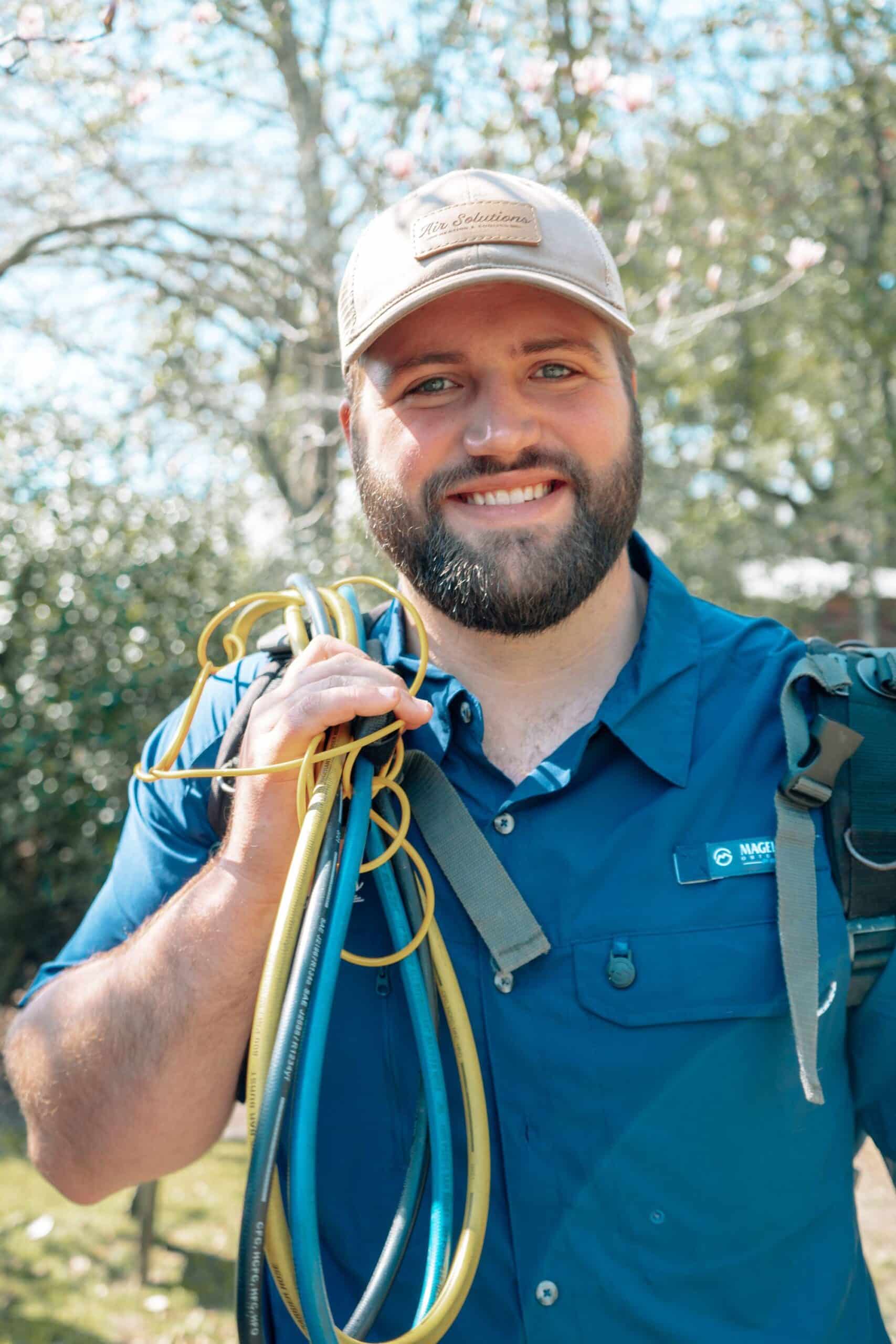
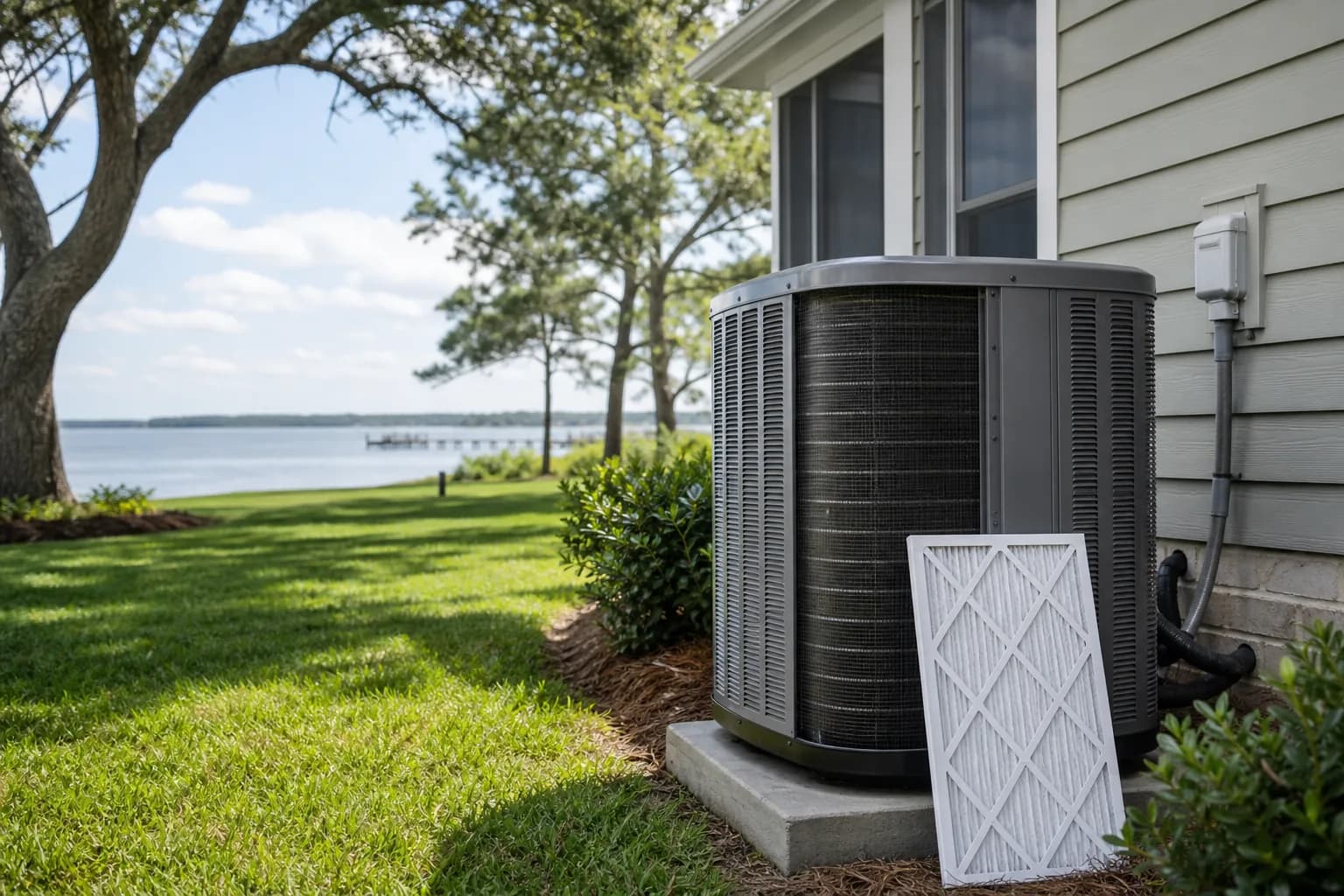
Two identical air conditioners can leave the same warehouse on the same truck, get installed the same week, and live wildly different lives depending on where they land in Baldwin County. Put one behind a condo in Gulf Shores and the other on an acreage homesite up near Bay Minette, and a decade later they're barely the same machine. The coastal unit may be fighting rust and limping toward replacement while the inland one hums along like it's half its age.
The difference is salt. This guide is the reference we point Baldwin County homeowners to when they want to understand how coastal air shortens equipment life, what fails first, how long their system should realistically last where they live, and the practical steps that buy back years. Whether you're on the water in Orange Beach, up the Eastern Shore in Fairhope, or out in the rural north county, the same chemistry applies — it just hits with very different intensity.
How salt air actually attacks an HVAC system
Salt doesn't have to splash on your equipment to corrode it. Along the Gulf, the air itself carries a fine aerosol of salt that settles on every exposed surface. Add our heat and humidity, and you've created a near-perfect environment for corrosion: salt is hygroscopic, meaning it pulls moisture out of the air and holds a damp, salty film against the metal. That film is what does the damage.
- The outdoor coil. The condenser coil — the radiator-like fins on your outdoor unit — is ground zero. Salt corrosion eats the thin aluminum fins and attacks the joints between dissimilar metals, like copper tubing meeting aluminum fins. As fins corrode and crumble, the coil loses its ability to shed heat, the system works harder, and efficiency drops long before the unit dies outright. We walk through exactly how this plays out over time in our look at the five-year reality of condenser corrosion on the coast.
- The cabinet and hardware. The sheet-metal cabinet, screws, fan grille, and mounting hardware rust. A rusted-through base pan or a seized fan motor mount is a common coastal sight.
- Electrical contacts and the compressor terminals. Corrosion creeps into contactors, terminals, and connections, causing intermittent faults that are maddening to chase — the kind of problem that comes and goes with the humidity.
- The line set and fasteners. Even the refrigerant lines and their supports degrade faster in salt air.
How much does salt corrosion vary across Baldwin County?
Baldwin County is big, and "coastal corrosion" is really a gradient, not a single condition. Roughly speaking:
- The immediate coast — Gulf Shores, Orange Beach, Fort Morgan, the bayfront stretches of Point Clear and Montrose. This is the harshest zone. Equipment here lives in constant salt aerosol and takes the full brunt. It's also where vacation rentals run high occupancy, which adds runtime on top of corrosion.
- The Eastern Shore — Daphne, Fairhope, Spanish Fort. Sitting along Mobile Bay, these areas still get meaningful salt exposure, especially closer to the water, but it's milder than the open Gulf. A home down on the bluffs in Olde Towne Daphne or out toward Montrose, right on the bay, sees more salt than one a few miles inland off Hwy 181 — the gradient runs even within a single Eastern Shore town. Equipment fares better here than on the beach but worse than out in the country.
- The inland north county — Bay Minette, Stockton, Stapleton, and the rural acreage stretches. Far enough from the salt that corrosion is a minor factor. Here the limits on equipment life are the ordinary ones: heat, runtime, and maintenance — not salt.
Two homeowners can both be in "Baldwin County" and need completely different things from their HVAC. A beachfront condo owner should treat corrosion as the primary enemy. A homeowner on ten acres up north barely needs to think about it. If you want to pin down where you fall on that gradient, how far from Mobile Bay corrosion actually matters gets specific about distance and exposure.
What realistic equipment lifespan looks like here
Manufacturers love to quote long, clean lifespans, but the honest range depends heavily on where you are and how you maintain it. We'd rather give you a grounded picture than a brochure number.
A well-maintained system inland can reach the upper end of its expected service life — the kind of long, uneventful run those brochures imply. Move that same equipment to the Eastern Shore and you should mentally shave some years off unless it's protected and serviced. Put it on the open coast with no protective measures and salt can cut the usable life down hard, with the coil often being the first thing to surrender. The compressor and the rest of the system may have plenty of life left, but a corroded coil can force the question early.
The encouraging part: most of that coastal penalty is preventable. The difference between a beach unit that dies young and one that goes the distance is almost entirely about protection and upkeep — a point we make in more detail in why coastal units fail earlier and how to slow it down.
The protective measures that genuinely extend life
If you live anywhere from the Eastern Shore to the open Gulf, these are the moves that pay back in years of equipment life.
- Coil coatings. Factory-applied or aftermarket corrosion-resistant coatings on the condenser coil are one of the most effective defenses. When you're buying a new system for a coastal home, asking about a coil designed or coated for seaside duty is one of the smartest specification choices you can make. Because we're not tied to a single manufacturer, we can match the equipment to your location rather than to a brand quota. If you're weighing the upgrade, we break down when condenser coatings are genuinely mandatory versus optional.
- Regular rinsing. Gently rinsing the outdoor coil with fresh water on a routine basis washes away the accumulated salt film before it can dig in. On the immediate coast this matters more than almost anything else, and it's something a homeowner can do between professional visits — carefully, with the power off, and without bending the delicate fins.
- Routine professional maintenance. Twice-a-year service lets a tech clean the coil properly, treat corrosion early, tighten and protect electrical connections, and catch a deteriorating contactor before it strands you. On the coast, maintenance isn't a luxury — it's the thing standing between you and a short equipment life.
- Smart placement and shelter. Where there's a choice, siting the outdoor unit away from direct salt spray and prevailing onshore wind, and giving it reasonable airflow clearance, reduces the daily salt dose. Even a thoughtful spot on the lee side of the house helps.
- Stainless and corrosion-rated hardware. When components are replaced, choosing corrosion-resistant fasteners and parts keeps small failures from cascading.
How to think about it where you live
If you're on the open coast, treat corrosion as your system's main adversary: buy coated coils, rinse routinely, and maintain religiously. If you're on the Eastern Shore, you've got a milder version of the same fight — protection and maintenance still pay off, just with a bit more margin. And if you're inland in the north county, you can largely set salt aside and focus on the ordinary fundamentals of clean filters, clear airflow, and regular service. One county, three playbooks — and knowing which one is yours is the first step to getting your full money's worth out of your equipment.
Ready to protect your system in Baldwin County?
Air Solutions Heating & Cooling provides corrosion-aware maintenance, coil care, and new-system guidance across all of Baldwin County — from the Gulf-front condos to the north-county acreage. Family-run, founded in Daphne, licensed AL#23194 and BBB A-rated.
- Schedule maintenance — coil cleaning and a full corrosion check, quoted in writing
- Call (251) 300-9817 — questions about coastal equipment life answered
- AC Maintenance services — full overview
Related resources
- All HVAC services — full service list
- Service area — every Baldwin County city we cover
- AC Maintenance in Gulf Shores — coastal maintenance, city page
- AC Maintenance in Fairhope — Eastern Shore maintenance, city page
- How to protect your AC before a hurricane: lessons from Sally — storm prep for coastal equipment
- Replacing your AC on the Eastern Shore: the complete 2026 guide — when a corroded coil forces the replacement decision