
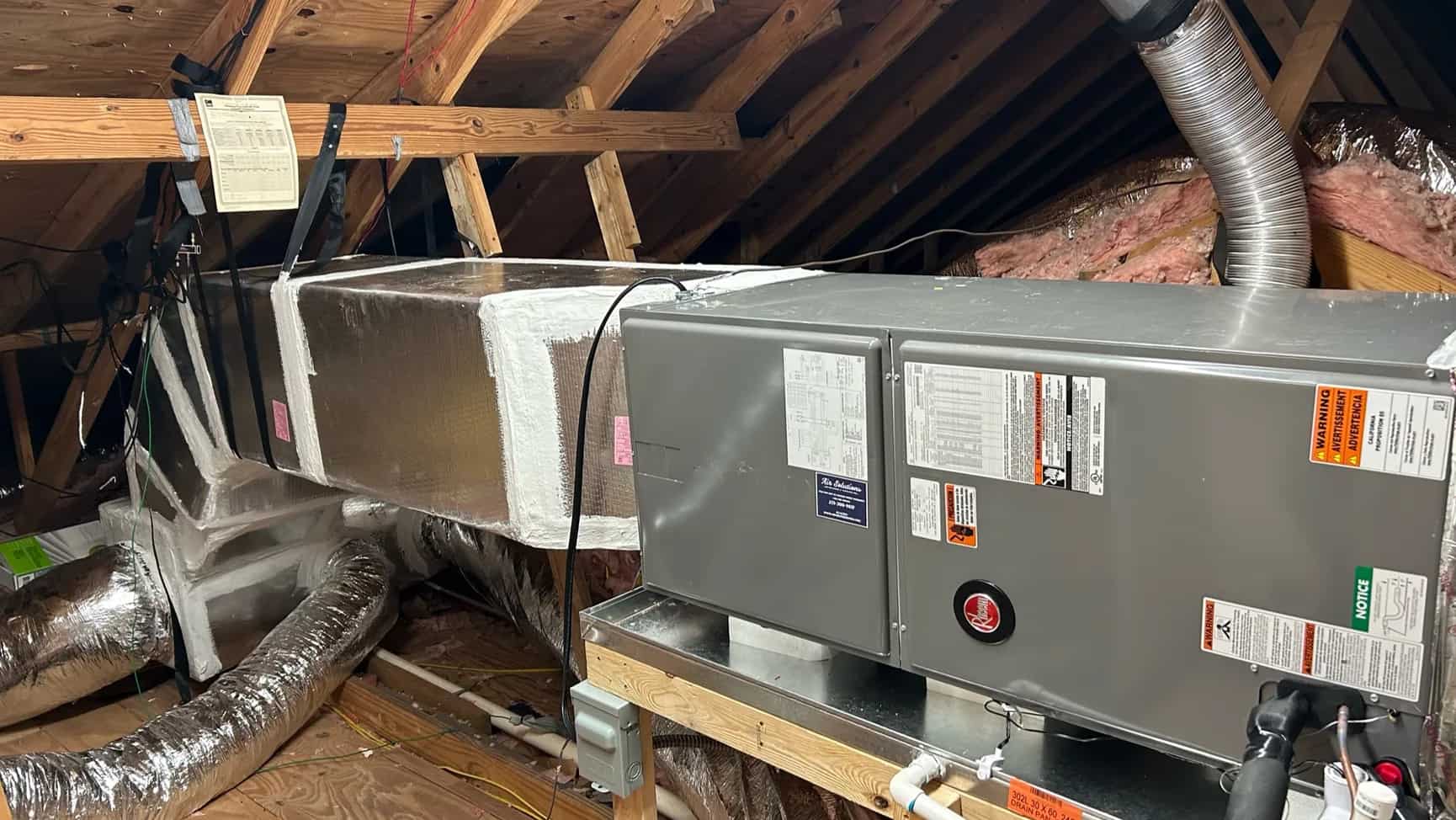
Heat Pump Services in Magnolia Springs.
Local heat pump services in Magnolia Springs, Alabama and surrounding Baldwin County. Repair, install, maintenance for Baldwin County's #1 system type. Licensed AL#23194. 353+ five-star reviews. Call (251) 300-9817.
Get a Free Estimate
Name and phone is all we need to call you back. Takes ~20 seconds.
353+ five-star reviews · Same-day · 24/7 · Licensed AL#23194
What heat pump services looks like in this climate.
Magnolia Springs sits in a microclimate that genuinely flatters a heat pump across the operating year. Per-coordinate ERA5-Land reanalysis at the town's grid cell returns roughly 3,002 cooling degree days for 2023 paired with about 1,053 heating degree days, alongside average July highs near 89.5°F and an average January low hovering at 50.1°F. The load-bearing detail is what the mature live-oak canopy across the Historic District and along the Magnolia River corridor does to both ends of the curve: canopy shade shaves the sensible cooling peak on most older lots well below an open-sun equivalent, and the same canopy softens radiative heat loss on a clear winter night.
Translated into operating hours, that combination keeps a modern variable-speed heat pump inside the efficient middle of its capacity curve for nearly the entire calendar year. The compressor rarely gets pushed toward either ceiling, the auxiliary heat strip exists for a handful of unusual January mornings rather than as a routine seasonal load, and coefficient-of-performance numbers on a correctly commissioned system stay comfortably above 3.0 across most of the heating season. The variable that does not show up in the temperature data is humidity. The river-floodplain envelope wrapped by the Magnolia River, the Fish River corridor, and the Weeks Bay watershed keeps winter relative humidity above 70% on most mornings, and an outdoor coil sitting in deep canopy shade behaves differently in that envelope than the open-sun installation the equipment's defrost-board parameters were programmed against.
What we see on calls in Magnolia Springs.
The recurring heat-pump-services patterns in Magnolia Springs cluster around three realities the shaded river corridor produces in a way no other matrix cell repeats. The most distinctive is defrost-cycle timing drift on outdoor units that have lived in deep live-oak shade and sustained winter humidity for years. Factory-programmed defrost parameters assume a frost-accumulation rate calibrated against open-sun average conditions; on a coil sitting in canopy shade with 70-to-85% relative humidity through most of December and January, the actual frost rate runs different from spec and the timing parameters drift further off each winter without producing an obvious daily symptom. The drift surfaces eventually as either too-frequent reverse-cycling (which chills the supply air) or as a frost sheet the late-triggered cycle struggles to clear in the time allotted. Reading the defrost-board timing values against the equipment-specific spec is part of any honest bi-annual service visit here.
The second pattern is equipment vintage. A meaningful share of the town's residential heat-pump population traces to the post-Ivan replacement wave across 2005-to-2008, which puts most of those systems at the 18-to-21-year mark today — squarely inside the bracket where compressor end-of-life, refrigerant-transition decisions, and full-system replacement quotes cluster on the service schedule. The 2022 ACS pegs the median town home age at roughly 43 years on a 1983 median build, with 87.9% owner-occupancy across the 481 occupied units inside 36555, which means the homeowner asking the service questions is usually the same person who has lived with the prior equipment's weather-by-weather behavior for a decade or more — useful input for the repair-versus-replace conversation. The third pattern is a subtler service-side reality: secondary condensate-pan trips during heat-mode operation. On shoulder-season days with outdoor temperatures in the 50-to-60°F band and high return-air humidity, a heat pump running short heating cycles can still pull condensate across the indoor coil. If the primary drain is partially fouled by biological growth, the secondary float switch trips on what the homeowner reads as a heating call. The fault display points toward the cooling side, the diagnostic looks at the wrong half of the equipment unless the technician knows the pattern, and the underlying cause is something a documented bi-annual drain treatment would have prevented.
- Older housing stock typical here (median build year suggests 39+ year systems are common). Duct leakage and undersized returns are the recurring finds.
- Long cooling season means compressors run heavy May through October. Annual maintenance pays for itself in compressor lifespan.
- Mild winters mean heat pumps cover the season comfortably without backup runtime in normal years. Cold-snap weeks expose undersized units.
Heat Pump Services in Magnolia Springs — the questions that come up.
- Our heat pump's outdoor unit sits under live oaks and the defrost cycle does not seem to clear the coil on a damp cold morning. Is that a Magnolia Springs pattern?
- It is, and it is probably the single most distinctive heat-pump-services question we field in town. A defrost cycle times its reversals against outdoor coil temperature and accumulated runtime, briefly swapping to cooling mode to clear frost before returning to heating duty. The factory-programmed timing parameters assume an open-sun, average-humidity frost-accumulation rate. On a coil that has lived under deep live-oak canopy with 70-to-85% winter humidity for years — exactly the operating environment the Magnolia River corridor produces through most of December and January — the actual frost rate runs different from spec, and timing parameters drift further off each winter without producing an obvious daily symptom. The drift surfaces eventually as either too-frequent reverse-cycling (wasting energy and chilling the supply air) or as a frost sheet the late-triggered cycle struggles to clear in the time allotted. Real diagnosis means reading the defrost-board timing values against the equipment-specific spec rather than confirming the board has power. Short-term, switching the thermostat to emergency heat runs the auxiliary strip and bypasses the heat pump until a technician arrives.
- Air Solutions recommended a straight heat pump rather than a dual-fuel system with a gas furnace for our Magnolia Springs home. Why?
- Because for most Magnolia Springs addresses that is what the climate-and-infrastructure math honestly supports. The per-coordinate heating load is roughly 1,053 heating degree days a year, which a modern variable-speed heat pump with a correctly sized auxiliary heat strip carries on its own across the entire heating season. The freeze nights that arrive two or three times each winter do engage the auxiliary strip briefly, but they do not justify adding gas-furnace infrastructure for a handful of kilowatt-hours of winter relief. The other half of the math is meter availability: while Riviera Utilities does run a gas main through parts of the 36555 ZIP, the historic-village residential footprint inside the town limits is meaningfully thinner on connected gas service than the headline utility coverage suggests. Verifying gas-meter presence at your specific address is part of any pre-install assessment, and on most parcels the simpler and equally capable answer is the straight heat-pump configuration. Where an address does have an active gas service connected and a homeowner who specifically values gas heat for freeze nights, dual-fuel stays on the menu as an honest option rather than the default.
- Our heat pump is around 17 years old and a major repair has been quoted. Given the mild winters in Magnolia Springs, does the repair-versus-replace math change?
- It does, and the older-stock plus moderate-climate combination cuts in both directions. On the repair-supporting side: a 17-year-old Magnolia Springs heat pump has seen meaningful heat-mode duty for only a handful of weeks each winter against roughly 1,053 heating degree days, which means heat-mode mechanical wear is genuinely lower than the same equipment in a colder inland climate would carry. A reversing valve, defrost board, or auxiliary strip at 17 calendar-years may have a fraction of the run-hours an equivalent north-county unit of the same vintage would show — which argues for a thoughtful repair on a system otherwise running fine in cooling mode. On the replacement-supporting side: cooling mode is where the equipment has actually been working for nearly two decades. The compressor, condenser coil, and outdoor fan have absorbed most of the lifetime duty in this climate, and if any of those cooling-side components are showing weakness on the diagnostic, the heat-mode repair is treating a symptom rather than the underlying state. We walk both sides honestly on the diagnostic visit. Air Solutions is not an authorized dealer for any single manufacturer, so any replacement recommendation is shaped by fit for the home and budget rather than a dealer incentive.
- We own an older home in the Magnolia Springs Historic District. Where can the outdoor heat-pump unit go without compromising the streetscape or running into a flood-elevation problem?
- Outdoor placement on a Historic-District lot is a three-axis decision. The first axis is visual: the streetscape character is part of why people own here, so the preferred placement is on the side of the structure that is not visible from the road, screened naturally by existing planting where airflow clearance permits, with sound-rating documentation pulled at the spec stage so the unit is not audible from the front porch or the closest neighboring property. The second is airflow clearance, which the equipment manufacturer specifies as a minimum distance from walls, fences, and overhead obstructions and which we honor even when the visual answer would prefer tighter geometry. The third is FEMA flood-zone elevation, which matters more on a heat pump than on a cooling-only condenser because the unit operates bidirectionally — cooling and heating-mode defrost both produce condensate on the fall-line drainage off the pad. The town-center FEMA designation is Zone X (minimal flood hazard), but the Magnolia River, Fish River, and Weeks Bay watershed wrap the town, and parcel-level NFHL queries on river-adjacent lots routinely surface AE-zone pockets. We pull the FEMA map for the specific parcel before specifying pad height, and on a Zone AE lot the pad gets specified to the lot's actual base flood elevation requirement rather than a default 4-to-6-inch standard.
- Is a bi-annual maintenance plan actually worth it on a heat pump in a small town like Magnolia Springs, given that the winters are mild and the equipment runs in cooling mode most of the year?
- In this microclimate the answer is usually yes, and the case rests on the failure-mode patterns the shaded river corridor produces rather than on raw runtime hours. A heat pump in town spends most of its calendar life in cooling mode, but the heat-mode failure signatures that surface during the short winter season — defrost-board timing drift on a shaded humid coil, secondary condensate-pan trips during heat-mode shoulder-season dehumidification, reversing-valve standby wear, auxiliary-strip continuity issues that pass a static check and fail under sustained load — all develop quietly through the long warm seasons before showing up on a January morning. A documented spring cooling-mode visit and a documented fall heating-mode visit catch those drift items at the cadence the equipment actually needs, and serve in parallel as the bi-annual professional-maintenance log most major manufacturers require to keep the parts warranty in force through year ten. Cool Club is the membership wrapper around that cadence, and the published member benefit reads from the source as 15% off all AC repairs and 5% off new systems with no long-term contract.
Every Magnolia Springs neighborhood, every zip.
A central heat-pump system rarely lives its entire service life on a single Air Solutions visit, and the 30-minute dispatch to a Magnolia Springs address is best read as a multi-trip lifecycle rather than a one-off drive. The OSRM routing south from our Daphne shop down US-98 through Foley to the Magnolia Springs turn-off measures 20.6 highway miles and runs just over half an hour each way under normal weekday traffic. Across the equipment's working life that drive gets made for the pre-install consultation, the install itself, the first-cold-morning commissioning verification, two tune-up visits a year if the homeowner sits inside a Cool Club cadence, and any reactive service call along the way. Because the town is small enough that no contractor inside the 36555 ZIP operates as a dedicated Magnolia Springs heat-pump shop, every truck reaching Oak Street or a river-corridor address is coming from somewhere else in the county; we absorb that into the standard coverage tier and do not add a separate rural trip fee on Magnolia Springs heat-pump work.
Coverage spans the single ZIP 36555 — Downtown Magnolia Springs and the Historic District where the live-oak canopy is at its densest, the Magnolia River corridor running along Oak Street and the side streets dropping toward the water, the Fish River area east of the historic core, and the Weeks Bay frontage on the south. For an after-hours no-heat call on the kind of cold-snap morning that genuinely tests heat-pump equipment in this town, the 24/7 line worth saving in your contacts is (251) 300-9817; we pick up live when the rotation allows, and the missed-call return slot sits at the head of the next outbound queue rather than disappearing into a queue we forget about. Where a Magnolia Springs heat-pump-services relationship lands inside a Cool Club membership, the per-visit value compounds in this microclimate because the bi-annual tune-up cadence is exactly what catches the defrost-board drift, condensate-drain fouling, and reversing-valve standby wear that would otherwise produce a winter-morning service call — and the published member benefit reads from the WP source as 15% off all AC repairs and 5% off new systems with no long-term contract on the membership itself.
- Downtown Magnolia Springs
- the Magnolia River corridor
- the Fish River area
- Weeks Bay
- the Magnolia Springs Historic District
Cold-snap and storm events that shape heat-pump-services patterns at Magnolia Springs addresses.
- Jan 2024 — Multi-night sub-freezing stretch: Several consecutive nights well below freezing across south Baldwin — atypical for a town that averages a 50°F January overnight low, and rare enough that a lot of installed Magnolia Springs heat pumps had not exercised reverse cycle in meaningful winter duty for years going in. The failure cluster afterward sorted heavily toward the items that had drifted quietly through the previous mild winters: defrost boards out of timing spec couldn't clear heavy frost on shaded outdoor coils, secondary float switches tripped on heat-mode shoulder days when primary drains were fouled, and auxiliary-strip circuits that registered fine on a static continuity check went open under sustained heating-mode load. The post-event diagnostic queue across the south-county corridor ran heavy for a couple of weeks.
- Sep 2020 — Hurricane Sally: Sally made landfall as a Category 2 at Gulf Shores and tracked northeast across south Baldwin with Magnolia Springs inside the sustained-wind envelope. For heat-pump equipment the consequences sorted into two waves. Immediate: outdoor units that took canopy-debris strikes during the wind event and outdoor disconnect cabinets that absorbed wind-driven rain and never got re-sealed afterward. Delayed: the multi-day power-restoration cycling that followed the storm pushed repeated voltage dips and brown-out events through inverter compressor boards and electronic expansion-valve controllers, which do not tolerate that kind of dirty-power exposure cleanly. A wave of board-level service calls clustered into the months that followed on units that had restarted fine on impact day but failed in late October and early November. New heat-pump installs in town since Sally lean toward sealed disconnect cabinets and surge protection on the outdoor disconnect as standard scope rather than an upcharge line.
- Sep 2004 — Hurricane Ivan: Ivan is the older reference event for long-tenure Magnolia Springs homeowners, and the heat-pump-services consequence two decades on is equipment vintage. The replacement wave that followed Ivan across 2005-to-2008 produced most of the current population of installed heat-pump equipment in town, which now sits at the 18-to-21-year mark — deep inside the bracket where compressor end-of-life concerns, refrigerant-transition decisions, and full-system replacement quotes cluster on the service schedule. That cohort drives the bulk of the repair-versus-replace conversations we hold here today.
What Magnolia Springs customers can claim.
- The 36555 ZIP covering Magnolia Springs runs predominantly on Riviera Utilities for both electric service and natural gas, with a smaller share of perimeter meters falling instead on Baldwin EMC depending on subdivision. The split tracks parcel-level service-territory lines rather than neighborhood boundaries, so the fastest confirmation for any specific address is the masthead on the most recent power statement. Confirming the actual provider matters before relying on either utility's rebate menu because the two operate on independent program cycles with non-interchangeable qualifying-equipment lists.
- Both Riviera Utilities and Baldwin EMC have historically maintained residential energy-efficiency rebate menus tied to qualifying high-efficiency heat-pump installations clearing specific SEER2 and HSPF tiers. Variable-speed inverter equipment typically scores well against those floors because the compressor pulls strong part-load efficiency numbers, which is where most Magnolia Springs annual runtime sits. Program windows and qualifying-equipment lists revise on each provider's own calendar, so the responsible practice on any quote is to verify the active rebate menu directly with whichever utility serves the meter rather than carry a stale dollar figure into the project budget. Service line items themselves — defrost-board service, reversing-valve diagnostics, auxiliary-strip replacement, condensate-drain remediation, capacitor or contactor swaps — do not qualify for utility rebates; the rebate pathways apply on the install side, not on repair line items.
- When a manufacturer is running an active rebate on the specific equipment a Magnolia Springs heat-pump install calls for, the manufacturer rebates available on the equipment we install are applied directly to your quote — not as paperwork the homeowner has to chase down after the install is complete.
Heat Pump Services Coverage Map — Magnolia Springs, Alabama
Centered near Magnolia Springs for orientation. Air Solutions Heating & Cooling provides heat pump services throughout every Magnolia Springs neighborhood and zip code, plus the surrounding Baldwin County area. Same crew, same number — we travel the whole county.
353+ Five-Star Reviews. And Counting.
“Jacob was friendly, professional and prompt.”
“Jacob was absolutely wonderful. Definitely would recommend him and this company!!”
“⭐⭐⭐⭐⭐ **Outstanding Service from Air Solutions and Jesse!** I can't say enough good things about my experience with **Air Solutions**, especially their technician **Jesse**. After dealing with my 10-year-old HVAC system, I wanted someone who would actually take the time to diagnose and properly service the system rather than simply recommend replacing it. Jesse exceeded my expectations. He was…”
Schedule Heat Pump Services in Magnolia Springs.
Repair, install, maintenance for Baldwin County's #1 system type. Same-day appointments most weekdays in Magnolia Springs and surrounding Baldwin County. Tell us when works for you — we'll confirm by phone during weekday office hours (8 AM-4 PM).
Need someone right now? Call (251) 300-9817 — our 24/7 emergency line is answered live when we can and returned quickly when we can't.
Heat Pump Services in Magnolia Springs — FAQs
Why are heat pumps the most common HVAC system in Baldwin County?
Baldwin County's mild winter climate (Climate Zone 2A) is ideal for heat pump operation. Heat pumps deliver 2-3 units of heat for every unit of electricity consumed in our typical winter conditions, while also providing all the summer cooling. One outdoor unit, both seasons, lower utility bills than separate AC + gas furnace setups in our climate. Alabama Power and TVA EnergyRight rebate programs may apply to qualifying high-efficiency installs.How long do heat pumps last on the Gulf Coast?
Inland Baldwin County heat pumps (Daphne, Fairhope, Spanish Fort, Bay Minette) typically last 12-15 years with bi-annual maintenance. Coastal heat pumps (Gulf Shores, Orange Beach, Fort Morgan) typically last 8-12 years due to salt-air corrosion. Coastal-grade outdoor units with corrosion-resistant coatings extend coastal lifespan to 12-16 years. Cool Club bi-annual maintenance documented for warranty purposes maximizes equipment life.Is the federal 25C tax credit still available for heat pump installations?
No — the federal 25C Energy Efficient Home Improvement Credit expired December 31, 2025. Heat pump systems placed in service in 2026 or later are not eligible. If your system was installed on or before December 31, 2025, the credit may be available on your 2025 federal return — verify with a CPA. For new 2026 installs, ask about Alabama Power, TVA EnergyRight, and manufacturer rebate programs that remain in effect.Do you service all of Magnolia Springs, AL?
Yes — Air Solutions Heating & Cooling covers every neighborhood and zip code in Magnolia Springs, Alabama — including Downtown Magnolia Springs, the Magnolia River corridor, the Fish River area, plus the surrounding subdivisions and rural roads. We handle AC repair, AC installation, AC maintenance, emergency HVAC, and commercial HVAC. Standard service hours weekdays, 24/7 emergency response, and same-day appointments most of the year. Call (251) 300-9817 to schedule.What HVAC issues are most common in Magnolia Springs?
Homes around the Magnolia River most commonly call us for refrigerant leaks (often salt-air or coil corrosion related on the Gulf Coast), undersized air conditioning systems struggling with Baldwin County summer humidity, and capacitor failures during peak load between June and September. A Cool Club bi-annual maintenance plan catches most of these issues before they cause a breakdown.
Heat Pump Services Near Magnolia Springs.
Right at the Magnolia Springs city limit? We service the surrounding Baldwin County communities on the same routes — same crew, same response times.
Related HVAC Guides.
Long-form articles about heat pump services and Baldwin County HVAC, with practical advice from our team.
 Maintenance
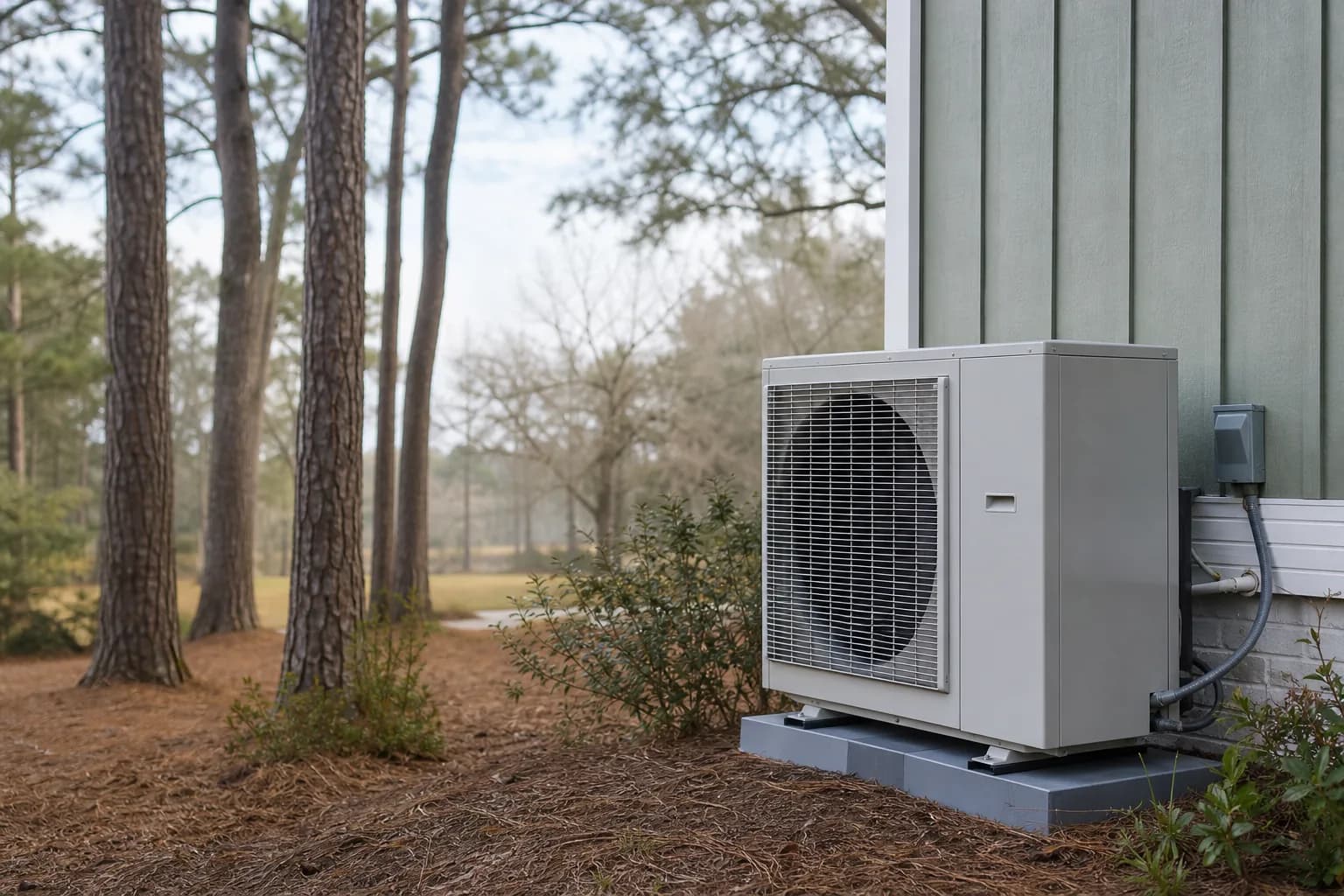
Understanding Your Heat Pump's Defrost Cycle: A Magnolia Springs Winter Guide
Steam off the outdoor unit on a foggy Magnolia Springs morning is usually the defrost cycle doing its job. Here is how it works and when it doesn't.
May 4, 20265 min Seasonal
Holiday Weekend AC Prep for Magnolia Springs Cookout Hosts
Pre-holiday AC prep for Magnolia Springs, AL homeowners hosting cookouts and family gatherings — what to check, when to call, how to handle peak summer party loads.
September 21, 20264 min Maintenance
Why Your Outdoor AC Unit Is Buzzing But Not Cooling in Magnolia Springs
Outdoor AC unit humming or buzzing without cooling in Magnolia Springs, AL — what causes it, what to do immediately, and what each fix costs.
September 17, 20264 min
Other services in Magnolia Springs & this service across Baldwin County.
- All HVAC services in Magnolia Springs, AL
- Heat Pump Services across Baldwin County
- AC Repair in Magnolia Springs
- AC Installation in Magnolia Springs
- AC Maintenance in Magnolia Springs
- Commercial HVAC in Magnolia Springs
- Emergency HVAC in Magnolia Springs
- Heating Repair in Magnolia Springs
- Indoor Air Quality in Magnolia Springs
- Ductless Mini-Splits in Magnolia Springs
- Heating Installation in Magnolia Springs
Heat Pump Services in Magnolia Springs — Schedule Today.
Same-day appointments most weekdays. Cool Club members get prioritized scheduling.