
Understanding Your Heat Pump's Defrost Cycle: A Magnolia Springs Winter Guide
Steam off the outdoor unit on a foggy Magnolia Springs morning is usually the defrost cycle doing its job. Here is how it works and when it doesn't.

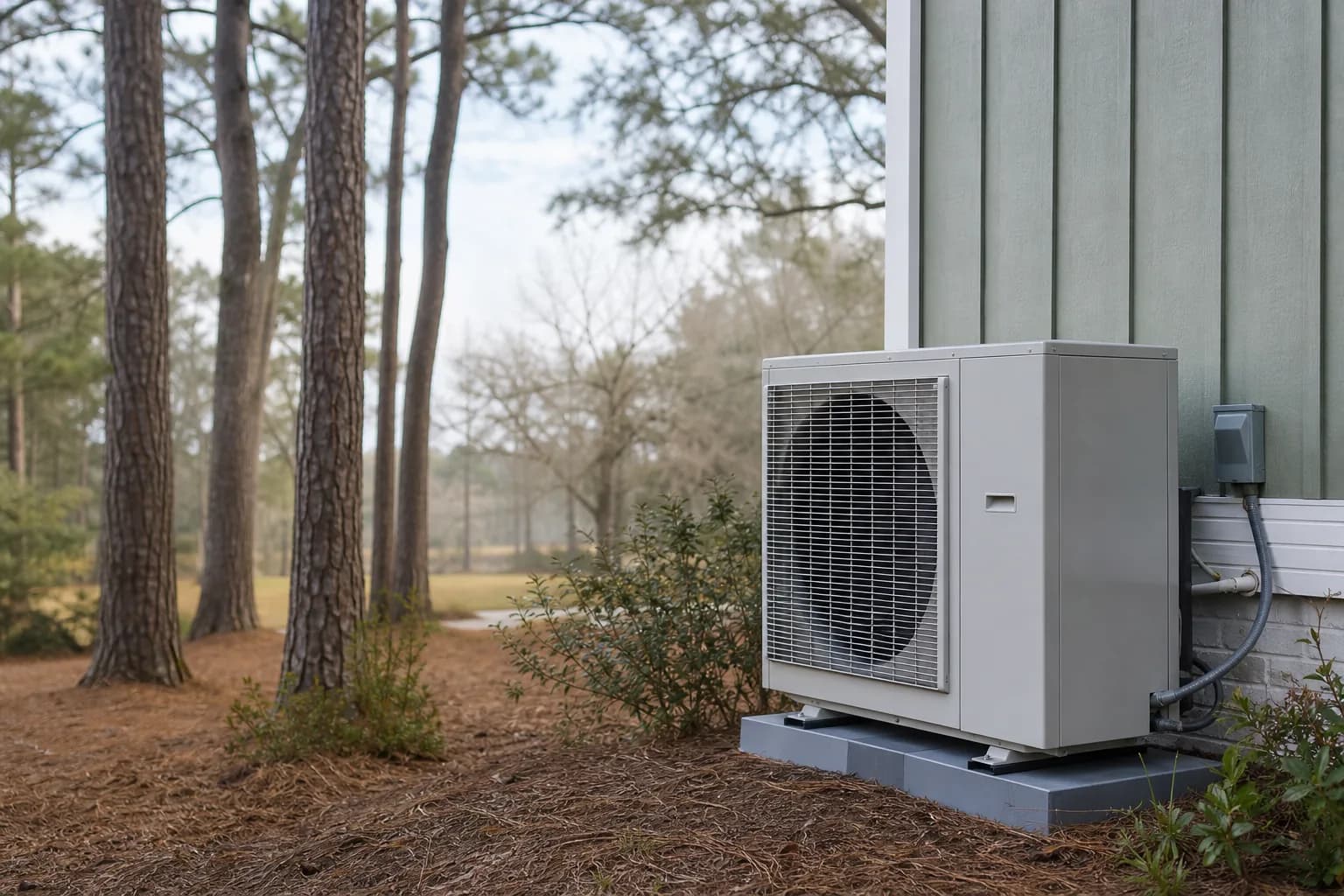
Mornings along the Magnolia River have a particular feel in January. Fog settles under the live-oak canopy, the air is thick even when the thermometer reads cold, and the old cottages take their time warming up. If you step outside on a morning like that and find your heat pump exhaling a cloud of vapor with its fan motionless, your first instinct might be to reach for the phone. Hold off for a moment. What you are almost certainly watching is the defrost cycle, and it is one of the most misunderstood normal behaviors a heat pump has.
We get more calls about this than just about any other winter worry, and the great majority of them end with a homeowner relieved that nothing is broken. This guide walks through the whole thing slowly: where the frost comes from, what the unit does to shed it, how the riverfront climate changes the picture, and the specific symptoms that tell us a defrost has genuinely failed.
Where the frost comes from
A heat pump warms a home by harvesting heat from outside air. Counterintuitive as that sounds in winter, there is usable warmth in cold air, and the refrigerant cycle concentrates it indoors. The catch is that the outdoor coil has to run colder than the surrounding air to absorb that warmth, which drops it below freezing on a chilly morning. Any humidity in the air condenses against the fins and freezes there.
Magnolia Springs is damp. The Magnolia River, the live-oak tree cover, and the proximity to Weeks Bay and Mobile Bay all keep moisture in the air well into the cold months. That moisture is the raw material for frost, which is why our corner of Baldwin County sees defrost activity readily even on mornings that are not bitterly cold by the numbers.
How the unit clears itself
Rather than letting frost smother the coil, the heat pump interrupts heating to melt it off. For a few minutes it switches into a mode that sends hot refrigerant outward to the coil, the reverse of how it normally heats your house. The outdoor fan stops so it isn't fighting the warm-up with a blast of cold air. The frost melts, runs off as water, and rises as the steam you noticed. Then the unit returns to heating and the fan spins back up.
Because the indoor side would be pushing cool air during that reversal, the system usually leans on its supplemental electric heat for those few minutes so the rooms don't lose much warmth. That is the faint lukewarm draft you feel at the registers mid-cycle.
Nine times in ten, the homeowner who calls about smoke pouring off the outdoor unit is describing a perfectly healthy defrost. The steam is just melted frost meeting cold air.
Reading the riverfront climate
How often you see defrost has more to do with humidity than with how low the temperature drops, and Magnolia Springs runs humid. Compared with a dry inland town at the same temperature, expect the cycle to show up somewhat more frequently here. A newer unit with a sensor that watches for actual frost will defrost only when it needs to; an older unit that runs on a fixed timer may cycle on a schedule whether much frost has formed or not.
Here is a loose picture of what a damp Magnolia Springs winter tends to produce:
| Outdoor conditions | Roughly what to expect |
|---|---|
| Mild afternoon near 55F | Little or no defrost |
| Damp evening around 40F | An occasional clearing cycle |
| Cold snap in the low 30s | Regular cycles, perhaps hourly |
What a healthy cycle looks like
A normal defrost is over quickly, generally within a few minutes and rarely beyond ten. It begins and ends on its own. You should not turn the thermostat off to "help" it, and you should never chip at the ice or pour anything warm on the coil. Bent fins and cracked tubing are a far worse outcome than a few minutes of vapor.
When has the cycle actually failed?
Everything to this point is the system working correctly. A genuine defrost fault announces itself differently, and it usually centers on the cycle refusing to either start or finish:
- The unit stays in reverse and blows cool air for far longer than a normal cycle, never returning to heat.
- A heavy block of ice clings to the coil and survives the cycle, or rebuilds within minutes of clearing.
- Defrost fires again and again during mild weather when little frost could possibly be forming.
- Or the opposite: the coil is buried in ice and the unit never attempts to clear it.
- The supplemental heat runs almost continuously and the rooms still feel short of the set temperature.
Each of those points to a part rather than a mystery: a coil sensor reading wrong, a control board that won't sequence the cycle, a reversing valve that sticks, or a refrigerant charge that has slipped low and is freezing the coil excessively. A technician confirms which by checking the charge, watching the board command a defrost, and verifying a clean handoff back to heating.
A note for older cottages
Many of the homes tucked under the oaks here are older, and so are some of the heat pumps tucked beside them. As a system ages past a decade or so, you may notice the cycle running more often than it once did as the compressor loses a step. On its own that is not a crisis, but combined with a climbing winter electric bill it is a fair signal to start thinking ahead about a replacement on your own schedule rather than during a January breakdown.
Bottom line for Magnolia Springs homeowners
Steam, a paused fan, and a brief lukewarm draft that all resolve within a few minutes are the marks of a heat pump taking care of itself. A unit that locks up in reverse, ices over solid, or runs the backup heat endlessly is asking for attention. When the difference isn't obvious from your driveway, let us take a look.
Air Solutions Heating & Cooling is a family-run business serving Baldwin County and the Eastern Shore, licensed in Alabama under AL#23194.
- Schedule heat pump service in Magnolia Springs
- Call (251) 300-9817 to talk through what your unit is doing
- Heat pump services overview
Related resources
- Heat pump services in Magnolia Springs
- All HVAC services in Magnolia Springs
- Cool Club membership — seasonal tune-ups plus 15% off all AC repairs and 5% off new systems