
Indoor Air Quality on the Gulf Coast: Why Humidity Changes Everything
How Gulf Coast humidity drives indoor air quality problems in Baldwin County homes — and the HVAC strategies that actually work in our climate.

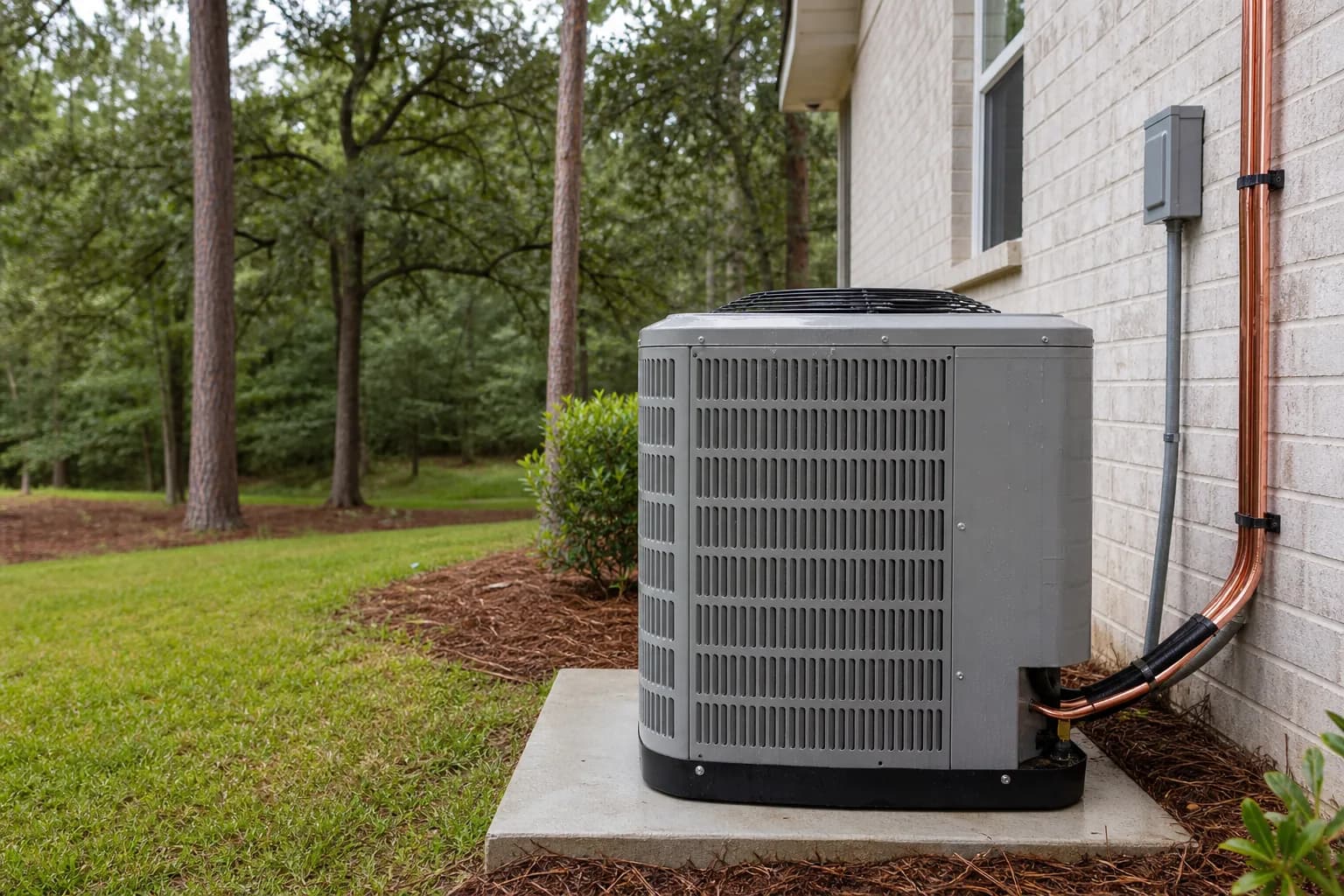
Indoor air quality on the Gulf Coast is a different problem than indoor air quality in Phoenix or Chicago, and the strategies marketed nationally don't all work here. The dominant variable in Baldwin County is humidity. Get humidity right and most of the other indoor air quality issues — biological growth, dust mites, perceived stuffiness, "musty smell" complaints — solve themselves or become much smaller problems. Get humidity wrong and no air purifier on the market saves you.
This guide explains why humidity drives IAQ in our climate, what indoor humidity range you should actually target, and which HVAC interventions are worth the money — versus which ones are mostly marketing. For the broader comfort picture beyond air quality alone, our Eastern Shore home comfort guide to beating Gulf Coast humidity is the companion read.
Why humidity matters more here
Baldwin County's outdoor relative humidity averages 75% annually, peaks above 90% on summer mornings, and rarely drops below 50% even in winter. We live in one of the most humid climates in the continental United States — and a home perched on the Daphne bluffs above Mobile Bay sits in the thick of it, with the Jubilee tide mornings a standing reminder of how much moisture this air holds.
Indoor humidity tracks outdoor humidity through several pathways: air leaks in the building envelope, occupant respiration and showers, kitchen activity, and (most importantly) the air your HVAC system processes. If your AC isn't dehumidifying effectively, your indoor humidity climbs into the 60-70% range — and that's where the problems start.
Above ~60% indoor relative humidity, several things happen at once:
- Dust mite populations explode (they need humidity to survive; below 50% they die back)
- Mold spores can germinate on indoor surfaces (door frames, baseboards, behind furniture, inside wall cavities)
- Wood furniture absorbs moisture and warps
- Drywall and insulation can develop hidden moisture damage
- People feel "sticky" and uncomfortable even at lower temperatures
- Asthma and allergy symptoms worsen
- That distinctive "old beach house" smell appears — which is biological growth in fabrics, carpets, and HVAC ductwork
Below ~30% indoor relative humidity, you get the opposite problems: dry skin, static electricity, wood floor cracking, respiratory irritation. Almost no Baldwin County home gets this dry naturally; it would only happen with aggressive over-cooling and very tight construction.
The sweet spot is 40-50% relative humidity. That's the range where dust mites are suppressed, mold is largely inhibited, and people feel comfortable. The entire IAQ strategy in our climate is engineering your house to stay there.
Measuring before you fix
Before you spend money on any IAQ improvement, buy a hygrometer (relative humidity meter) at the hardware store. Place it in your main living area at chest height, away from the AC supply vent. Watch the reading at different times of day for a week.
You're looking for:
- Average reading: should be 45-55% in summer, 35-45% in winter
- Spike during cooking or showers: temporary jumps to 60-65% are normal; should drop within an hour
- Sustained readings above 60%: this is the problem signal that needs an HVAC fix
- Sustained readings below 35%: rare here; would suggest aggressive over-cooling
If your hygrometer reads steadily 55-60%+, your AC is not dehumidifying adequately for the latent load your house is generating. That's the IAQ problem you actually need to solve — and it's common enough that we wrote a whole piece on why a house stays humid with the AC running.
Why do most Baldwin County AC systems under-dehumidify?
Three reasons we see repeatedly:
1. The system is over-sized
If the AC capacity is too large for the home, the cooling cycle ends fast — the thermostat reads "satisfied" before the system has run long enough to remove much moisture from the air. The compressor cycles off, the fan stops, indoor humidity stays high.
This is the single most common humidity problem in Baldwin County, and it's almost always inherited from the previous installation. We see it as much in the established Lake Forest and Timbercreek homes here in Daphne as anywhere — a system swapped like-for-like over decades without anyone recalculating the load. The original contractor sized the equipment generously to "make sure it cools" without doing a load calculation. Every subsequent replacement matched the existing tonnage. Three replacements later, the house has had an oversized system for 30 years.
The fix: right-size the next replacement. A Manual J load calc almost always reveals a smaller unit is appropriate. The new properly-sized system runs longer cycles and dehumidifies meaningfully better.
2. The system is single-stage with default thermostat programming
Single-stage compressors are either fully on or fully off. They cool quickly when running, but the cycles are short and don't pull much latent moisture. If your thermostat has no humidity-aware programming (most basic thermostats don't), the system has no reason to extend cycles for dehumidification.
Two fixes:
- Upgrade to a two-stage or variable-speed compressor next replacement (longer cycles, better moisture removal)
- Install a humidity-aware thermostat (Ecobee with smart sensors, Honeywell Lyric, Nest Learning) that can extend cooling cycles when indoor humidity climbs
3. The condensate drain isn't draining properly
This one surprises people. The water removed from your indoor air collects in the condensate drain pan and flows out through a pipe to the outside (or to a floor drain). If the pipe is clogged or the slope is wrong, water sits in the drain pan and partially re-evaporates back into the air handler air stream. The system effectively re-humidifies what it just dehumidified.
Symptoms: musty smell from supply vents, water occasionally dripping from indoor unit, indoor humidity higher than expected even with adequate cooling.
Fix: clear and treat the drain (we do this on every Cool Club tune-up), and verify the slope is consistent toward the drain termination.
Whole-house dehumidifier — when it's worth it
For some Baldwin County homes, the AC alone cannot get indoor humidity under control. Common scenarios:
- Very tight new construction (high-performance windows, sealed envelope, low natural ventilation) where there's not enough cooling load to drive the AC long enough to dehumidify
- Older homes with lots of air infiltration where outdoor humidity floods in faster than the AC can remove it
- Vacation rental properties where the AC is set high during vacancy periods, allowing humidity to climb
- Homes with indoor pools, hot tubs, or large fish tanks adding moisture continuously
Whole-house dehumidifiers are dedicated equipment that runs independent of the AC. They process indoor air, remove moisture, and dump it through the same drain system the AC uses. Quality units are 60-90 pints/day capacity for residential, integrate with the existing ductwork, and add a separate humidistat control (often integrated with smart thermostats). We go deeper on the buy-or-skip decision in do you need a whole-home dehumidifier on the Eastern Shore.
Installation cost varies meaningfully by capacity, integration complexity, and ductwork condition — get a written quote before deciding. Worth it when:
- Your indoor humidity is sustainedly above 60% despite proper AC sizing and operation
- You have a tight-envelope home where the AC won't run long cycles
- You have a vacation property you want to keep at higher temperatures during vacancy without humidity spikes
Not worth it for:
- Homes where the underlying AC is just over-sized — fix the AC instead
- Homes where the humidity issue is intermittent (cooking, showers) — improved exhaust ventilation is cheaper
- General "I want better air" homes without measured humidity problems — start with a hygrometer
Air filtration — what actually helps
The marketing around indoor air filtration is intense and often misleading. Here's what actually does what.
MERV ratings — the practical view
MERV (Minimum Efficiency Reporting Value) ranges from MERV 1 to MERV 16 for residential equipment. Higher MERV = catches smaller particles.
- MERV 4-6: Catches large particles (lint, dust). Default fiberglass throwaway filter. Protects equipment but does little for indoor air quality.
- MERV 8: Catches mold spores, pollen, dust mite debris. The Air Solutions baseline recommendation for Baldwin County. Affordable, available, doesn't strain most blower motors.
- MERV 11-13: Catches finer particles (bacteria, smoke, smaller pollen). Good upgrade for asthma/allergy households. Requires verifying your blower motor can handle the increased static pressure.
- MERV 14-16: HEPA-class filtration. Catches viruses and the smallest particles. Often too restrictive for residential ductwork — can starve the system for airflow, hurting cooling performance and dehumidification. Only use with a dedicated bypass HEPA filtration system, not as a standard return filter.
The MERV 8 to MERV 13 range is where most Baldwin County homes should live. Going higher than 13 in a standard return air slot usually hurts more than it helps.
Change frequency: every 60-90 days minimum during cooling season, 90 days during shoulder seasons. Pollen-area homes (Loxley, Robertsdale, Summerdale near ag land) should change every 45-60 days — our guide on how often to change your AC filter on the Gulf Coast breaks down the timing by household. During the spring oak-pollen surge off Mobile Bay, those intervals tighten further, which we cover in oak pollen and bay air: a spring indoor air guide.
HEPA filtration
True HEPA filters (99.97% efficient at 0.3 microns) are the gold standard for filtration but cannot be installed as a return-air filter on a standard residential system — they're too restrictive. The right way to get HEPA-class filtration is a dedicated bypass filtration unit (typically 250-500 CFM) installed in parallel with the main air handler. Pricing varies with capacity and ductwork integration; get a written quote.
Worth it for: severe allergy households, immunocompromised residents, homes near major pollen sources or industrial activity. Not necessary for most Baldwin County homes.
UV-C light air purifiers and coil sterilization
UV-C lights installed inside the air handler kill biological growth on the evaporator coil and (with some units) airborne biologicals as air passes through. Real benefits:
- Coil stays cleaner = better airflow and efficiency over time
- Less biological growth in drain pan = less musty smell potential
- Some reduction in airborne bacteria and mold spores
UV add-ons are a moderate-cost upgrade installed during a maintenance visit or replacement; confirm pricing in writing. Worth it for: homes with chronic musty smell, homes with documented mold issues, vacation rentals where the AC may sit unused for stretches. Not necessary for most homes with good baseline humidity control.
The marketing claims around UV killing 99.9% of airborne pathogens are technically true under lab conditions (still air, direct exposure) but overstated in real airflow conditions. The realistic benefit is coil and drain pan cleanliness, not air sterilization. If you already smell mustiness coming off the supply vents, the growth is likely in the ducts themselves — our Gulf Coast guide to mold in AC ducts covers what to do about it.
Ventilation — the underrated lever
Modern tight-envelope homes (most new construction in Baldwin County since ~2015 — think the newer Jubilee Farms and Bellaton builds off Hwy 181) sometimes have the opposite of an old-house problem: not enough fresh air exchange. Indoor pollutants build up because the house doesn't naturally leak.
Solutions, in increasing order of cost:
Bathroom exhaust fan timers. Cheapest fix. Set bathroom fans to run for 15-20 minutes after every shower (most modern fans have built-in timers). Removes humidity at source before it spreads to the rest of the house.
Kitchen range hood ducted to outside. Critical for gas ranges; meaningful for electric. A range hood that just recirculates air through a charcoal filter doesn't actually remove moisture or pollutants. A ducted hood does.
ERV (Energy Recovery Ventilator). A dedicated ventilation system that pulls in fresh outdoor air, exhausts stale indoor air, and uses a heat exchanger to transfer thermal energy between the two streams (so you don't lose all your conditioned air to the outside). ERVs are a meaningful capital install — quote varies with home size and ductwork. Worth it for very tight new construction homes; usually overkill for older Baldwin County housing stock.
What we recommend, in priority order
If we're walking through a Baldwin County home and the homeowner asks "what should I do for indoor air quality" — this is the order we suggest:
- Buy a hygrometer. Tells you whether you actually have a humidity problem in the first place.
- MERV 8 (minimum) air filter, changed every 60 days. Affordable, available, doesn't strain the blower motor.
- Verify AC is properly sized via Manual J on the next replacement. Free if you're already replacing equipment.
- Bi-annual professional maintenance (Cool Club). Catches dirty coils, clogged drains, and refrigerant issues that quietly degrade dehumidification.
- Variable-speed or two-stage compressor on the next replacement. Best single dehumidification investment available; price varies with brand and tonnage.
- Whole-house dehumidifier IF measured humidity sustains above 60% with steps 1-5 in place. Quote varies with capacity and ductwork integration.
- UV coil-sterilization light IF chronic musty smell or vacation-rental sit-time. Moderate add-on at install or maintenance visit.
- HEPA bypass filtration IF severe allergies or immune issues. Dedicated parallel filtration; priced per capacity.
The first four cover 80% of indoor air quality complaints in Baldwin County homes. Items 5-8 are worth it for specific situations, not as defaults.
The conversation we have at every install
When we quote a new AC installation in Baldwin County, indoor air quality is part of the conversation — not a bolt-on upsell after you've already signed. We measure your existing duct system, look at your filter slot configuration, ask about humidity complaints, and recommend whether higher-MERV filtration, a dehumidifier, or UV is actually appropriate for your specific situation. Sometimes the answer is "you don't need any of that — the new system will fix it." Sometimes the answer is "you've got a 70-year-old house with major air infiltration and you'll want a dehumidifier." Either way, our indoor air quality work runs from Daphne across the county.
Schedule an indoor air quality consultation if you've been thinking about indoor air quality and aren't sure where to start.