
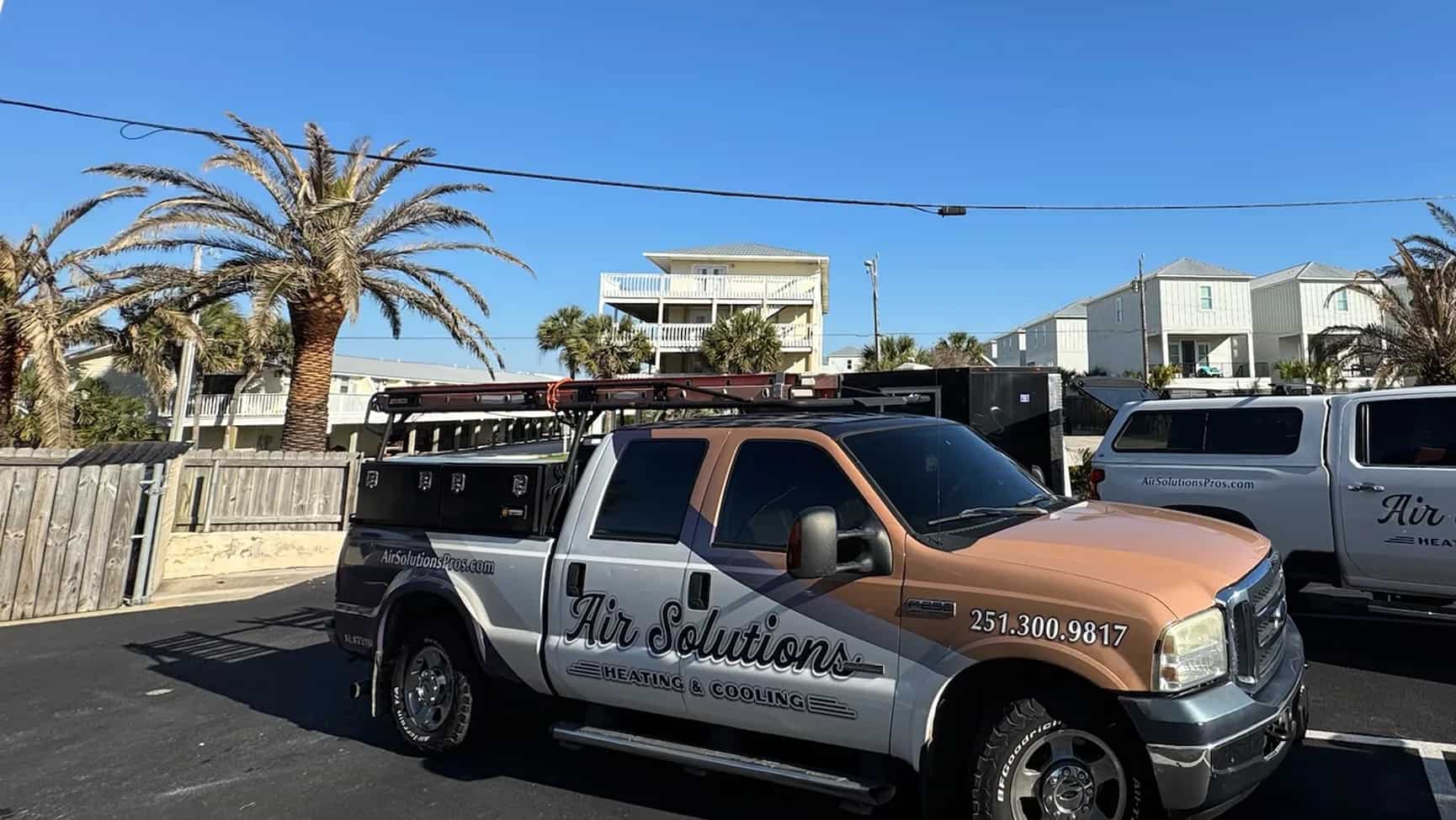
Commercial HVAC in Fort Morgan.
Local commercial HVAC in Fort Morgan, Alabama and surrounding Baldwin County. Restaurants, vacation rentals, property managers. Licensed AL#23194. 353+ five-star reviews. Call (251) 300-9817.
Get a Free Estimate
Name and phone is all we need to call you back. Takes ~20 seconds.
353+ five-star reviews · Same-day · 24/7 · Licensed AL#23194
Every Fort Morgan neighborhood, every zip.
Commercial HVAC service from Daphne to a Fort Morgan address dispatches across the longest road distance we cover anywhere in Baldwin County, and the operational answer to that geography is contracted preventative-maintenance scheduling stacked with adjacent peninsula stops rather than reactive one-off break-fix dispatch. From the Daphne shop out to a typical peninsula commercial address the OSRM-verified routing comes to 57.1 miles and 88.6 minutes one way — call it 90 minutes door-to-door under normal weekday conditions, longer on summer Saturdays when Highway 59 backs up south of Foley under rental-turnover traffic. Coverage spans the single 36542 ZIP that the community shares with Gulf Shores: Mobile Point at the tip of the peninsula, the Fort Morgan Peninsula proper, the Gulf Shores Plantation and Colony at Fort Morgan commercial blocks, the Mobile Bay Ferry landing area commercial cluster, and every commercial address along the 22-mile length of Highway 180 from the peninsula entrance out to the historic Fort.
The practical structure that makes commercial accounts work over that road distance is a bi-annual or quarterly contracted-maintenance posture — a pre-season inspection visit in late March or early April before the Memorial Day operational ramp, a post-season visit in late October or early November as the seasonal businesses wind down — with the route planned months in advance to stack adjacent Gulf Shores and Orange Beach commercial work onto the same dispatch day. Common-failure parts for peninsula commercial RTU work ride on the truck so the first-visit fix rate stays high through the contract-visit cycle: capacitors in the typical commercial microfarad ranges, contactors, common control boards, common belt sizes, condensate pumps, and the coastal-grade hardware kit that gets used more often than not on any outdoor electrical work. (251) 300-9817 is the line for any commercial conversation that crosses business hours, and on the peninsula side that 24/7 framing matters specifically because seasonal staff turnover means we sometimes get the call from a property manager who started the week before and is calling from a building they have not yet walked the equipment on. When an active break-fix emergency lands during peak season we drive anyway and we quote an honest arrival window on the dispatch call rather than promise a tighter number than the road can keep — the WP page publishes an approximate 50-minute figure that the OSRM clock does not support, and the honest number is what shapes the realistic peninsula arrival window for any after-hours commercial call.
- Mobile Point
- the Fort Morgan Peninsula
- Fort Morgan Road (Highway 180)
- Gulf Shores Plantation
- The Colony at Fort Morgan
- the Mobile Bay Ferry landing area
Commercial HVAC in Fort Morgan — the questions that come up.
- We manage a beach-condo association office and a peninsula restaurant that both shut down November through March. What does the pre-Memorial-Day startup visit actually cover, and is it worth the line item?
- The pre-Memorial-Day startup inspection is the most consequential commercial service visit of the year on a seasonal peninsula account, and the scope runs broader than a once-a-year tune-up on a year-round building. The components we work through after the long dormancy: refrigerant pressures and superheat-subcooling readings on every circuit, electrical-side load testing of capacitors and contactors that have not seen current since the previous October, blower and condenser-fan-motor bearing inspection, condensate drain and pump function under simulated load to clear off-season biofilm, coastal-grade outdoor hardware inspection for pitting or fastener corrosion accumulated through the salt envelope, and a documented thermostat and controls calibration so the building is dialed before guests or diners walk in. The economics: a peninsula commercial property opening cold for Memorial Day weekend with a failed RTU loses revenue at peak-season weekly rates and absorbs guest-experience fallout that no spot-repair recovers. The startup visit catches the issues while there is calendar room to fix them.
- Our peninsula commercial RTU sits exposed on a flat roof inside the salt envelope. Do we really need coastal-grade coils and stainless hardware on commercial equipment, or is that more of a residential thing?
- Coastal-grade specification matters more on a peninsula commercial RTU than on the residential equivalent, not less. Commercial RTUs sit unhoused on flat roofs without the thermal-mass building buffering that shields a ground-level residential condenser. The duty cycle through a peninsula peak season accumulates corrosion-driven wear faster than the lighter residential runtime curve. The equipment scale (five to twenty tons typical for peninsula commercial) means the corrosion-driven failure dollar amounts run several multiples of a residential repair, and a single salt-driven compressor failure on a commercial RTU during peak season justifies the entire coastal-tier premium across a decade of operation. The spec menu on the commercial side mirrors residential — e-coat coil treatment, the manufacturer's coastal or seacoast tier, stainless or upgraded plated hardware on cabinet fasteners and fan grilles — and the tier varies by which side of the peninsula the building faces. Gulf-side parcels get the heaviest marine-rated lineup; bay-side parcels work with mid-tier coastal in most cases. We assess per address rather than charging a blanket peninsula upcharge regardless of orientation.
- Our vacation property management firm has an office building on the peninsula AND coordinates HVAC service across hundreds of individual rental units. How does the commercial service contract handle both sides?
- In HVAC terms the split tracks how the equipment is configured rather than how the management business is organized. The office building itself is a commercial account in every operational sense — typically a small package RTU or split system on a building dedicated to office, dispatch, and maintenance functions, where the contracted-maintenance scope and emergency-response framework look like any other small-commercial peninsula account. The per-unit rental work across the properties your firm manages is residential service, scoped per rental and treated under the residential relationship for each individual owner. What changes on a management-firm partnership is the coordination layer in between. When a guest calls in a comfort failure on a Saturday afternoon, the dispatch chain typically runs guest-to-management-firm-to-us rather than guest-to-owner-to-us, and we work with your dispatch team on access logistics, the work-approval threshold the absentee owner has authorized you to clear without separate sign-off, the invoice format your property-file bookkeeping needs, and the priority routing across multiple simultaneous calls on a turnover Saturday.
- Air Solutions installs Carrier, Trane, Lennox, Goodman, Rheem, York, Bryant, and Amana — which brand makes sense for a Fort Morgan commercial rooftop replacement?
- We're not an authorized dealer for any single manufacturer, which means our recommendation is based on what fits your building and budget, not on a dealer incentive. On a peninsula commercial RTU replacement the brand-selection conversation weighs three things that look different on a Fort Morgan flat-roof install than on an inland Baldwin commercial install. First, coastal-grade commercial SKU availability through the manufacturer's commercial supply chain — not every manufacturer that ranks well on residential coastal coverage stocks the equivalent commercial coil-treatment and hardware-tier through regional distribution over the 15-to-20-year commercial lifespan. Second, parts pipeline for the specific tonnage range, because a peninsula commercial property is too far from any local commercial parts house to ride out a special-order wait during peak season. Third, the building's operational profile (year-round-occupied beach-condo management office versus seasonal restaurant versus vacation-management dispatch hub) because the duty-cycle envelope shapes which manufacturer's commercial lineup actually pencils out over the asset's life. We walk that comparison in detail at the in-building consultation rather than hand over a brochure.
- How does the federal tax treatment work on a Fort Morgan commercial HVAC capital project, and does anything from the residential 25C credit apply?
- The residential 25C Energy Efficient Home Improvement Credit does not apply to commercial property — that credit was limited to residential by IRS rule and has not been available for any new installs since it expired December 31, 2025, and commercial HVAC capital falls under an entirely separate set of IRS code sections. The relevant commercial provisions typically include Section 179 expensing (qualifying equipment within annual limits, frequently used for small-commercial HVAC capital), Section 48 commercial energy investment credits (specific high-efficiency configurations meeting program criteria), and Section 179D commercial-building energy deduction (qualifying whole-building efficiency improvements). Which provisions actually apply on any peninsula commercial project depends on the building's entity structure, how the equipment is classified for cost-recovery purposes, the in-service year, and the owner's broader tax posture. The honest move is to route any commercial-tax-treatment question through the building's CPA before the equipment quote lands. What we provide on a peninsula commercial install is the invoice, the equipment model and serial numbers, the install record, and any manufacturer commercial-tier efficiency documentation the building file needs — your CPA will know what the IRS expects to see attached to the year-of-install return for whichever provision they pursue.
What commercial HVAC looks like in this climate.
A commercial HVAC account on the Fort Morgan peninsula lives inside an unusually lopsided climate envelope and an unusually pronounced seasonal business curve, and both facts shape the equipment conversation in ways no inland Baldwin commercial cell has to weigh. The per-coordinate ERA5 reanalysis at the peninsula grid cell logs roughly 3,008 cooling degree days against just 642 heating degree days for 2023 — the lowest annual heating load anywhere in our Baldwin County coverage, paired with average July highs near 85.7°F and average January lows around 56.4°F. For a flat-roof package unit on a peninsula commercial building the operational translation is a cooling season that effectively runs eight to ten months on a year-round-occupied building and a heating season so light that the strip stage on a heat-pump RTU stays on standby for the great majority of the year.
Layered on top of that climate envelope is a sharp seasonal business cycle that compresses peninsula commercial cooling load into a Memorial-Day-to-Labor-Day peak with a shoulder-season tail through October and a deep winter quiet window from Thanksgiving through early March. Beach-equipment rental concessions open seasonally and close for the winter entirely. Peninsula bars and restaurants often move to limited-hours winter operations or shutter November through February. Beach-condo association management offices stay open year-round, but their dispatch and walk-in volume scales with rental occupancy. Vacation-property management firms operate continuously, but their summer hours and staff load run several multiples of their winter footprint. The HVAC consequence is equipment that goes through long dormancy windows interrupted by intense peak-season runtime, with the pre-Memorial-Day startup inspection the most consequential service visit of the year on a seasonal account.
What Fort Morgan customers can claim.
- Every commercial address on the Fort Morgan peninsula runs on Baldwin EMC for electric service, and there is no natural-gas distribution network reaching the commercial corridor along Highway 180 past the early stretch of the peninsula. The single-provider electric reality and the no-gas reality together simplify the equipment-spec conversation on the infrastructure side: no electric-provider verification step, no dual-fuel pairing on the table for any RTU replacement, and the configuration on a peninsula commercial building is either a straight commercial AC paired with electric resistance backup or a commercial heat-pump RTU handling the entire load.
- Baldwin EMC structures commercial energy-efficiency incentive programs around demand reduction (kW) and qualifying high-efficiency commercial-tier equipment rather than the per-unit tax-credit math that drives residential decisions. The cooperative's commercial program posture shifts more frequently than the residential menu does, so the responsible move on any peninsula commercial proposal is a direct call to BEMC for the current program posture at the time of quote rather than a budget figure built off last year's incentive sheet.
- Manufacturer commercial rebates available on the equipment we install are applied directly to the project quote rather than handed off as separate paperwork for the building owner to chase after the install. We pull the current commercial incentive sheet from the manufacturer at proposal time so the number on the quote matches the program that is live for the install year.
- Federal tax treatment of commercial HVAC capital falls under a separate set of IRS code sections than the residential 25C credit (which expired December 31, 2025 and never applied to commercial property in the first place). Relevant commercial provisions typically include Section 179 expensing, Section 48 commercial energy investment credits, and Section 179D commercial-building energy deduction. Which provisions apply on any given peninsula commercial project depends entirely on the building's entity structure, the in-service year, and the owner's broader tax posture — the right next step is a conversation between the building's CPA and our proposal, not a dollar figure pasted onto the equipment quote. Our install-side records — the invoice, equipment model and serial numbers, install documentation, and any manufacturer commercial-tier efficiency documentation the file needs — are what your CPA will ask for when assembling the substantiation.
- The Cool Club program is structured as a residential maintenance membership rather than a commercial-account billing structure, with bi-annual tune-ups and member benefits including 15% off all AC repairs and 5% off new systems on the residential side. For a peninsula commercial account, the equivalent operational structure is a contracted commercial maintenance agreement scoped against the specific building (bi-annual or quarterly visits depending on equipment count and operational profile, written-condition reports, and emergency-priority dispatch under the contract) rather than residential Cool Club membership extended sideways. All rebate dollar amounts move annually; verify current figures with Baldwin EMC at baldwinemc.com before counting on a specific number in the commercial project budget.
Storms and exposure cycles that have shaped commercial HVAC service patterns on the Fort Morgan peninsula.
- Sep 16, 2020 — Hurricane Sally (Cat-2 landfall at Gulf Shores; eyewall across the Fort Morgan peninsula): Sally tracked its eyewall directly across the Fort Morgan peninsula with multi-day storm-surge inundation and sustained wind exposure along the entire Highway 180 corridor. The commercial-HVAC aftermath ran on a different track than the residential pattern. Flat-roof package units took direct wind exposure that compromised curb-anchor integrity on units that had not been re-secured during the previous off-season, condenser-fan-grille damage from windborne debris, and outdoor electrical compartment intrusion through compromised gasketing. Roof-membrane damage around RTU curbs surfaced as water-intrusion problems through the following rainy seasons. The post-restoration commercial-grid surge cycle stressed control boards and capacitors across the peninsula commercial inventory for 6 to 18 months. Accounts on active service contracts came back online faster because the pre-storm baseline let our crew focus on what had changed.
- Sep 16, 2004 — Hurricane Ivan (major Cat-3 landfall just west of the peninsula): Ivan is the reference storm for peninsula commercial property owners. The eastern eyewall passed over Mobile Point and the worst of the wind field ran along the full length of Fort Morgan Road. Much of the commercial inventory visible along Highway 180 today either rebuilt post-Ivan or substantially upgraded the building envelope and mechanical systems during the rebuild window. Commercial RTU equipment installed in that 2005-onward wave is now well past 18 years of peninsula coastal exposure and sits firmly in the replacement-decision window on the basis of age alone. The replace-versus-repair conversation on a peninsula commercial building today often starts from that calendar reality rather than from a single component failure.
- Ongoing — peninsula commercial salt-fog exposure — Sustained coastal corrosion on flat-roof commercial outdoor equipment: Not a single dated event but the most material long-run factor on Fort Morgan commercial equipment lifespan. Flat-roof commercial RTUs sit unhoused inside the peninsula's salt-aerosol envelope continuously — Gulf-side parcels face full-marine aerosols on the southern face, bay-side parcels face brackish Mobile Bay aerosols on the northern face, and sea-breeze cycles push the load across twice a day from opposite directions. Corrosion on standard-spec commercial outdoor equipment runs measurably faster on the peninsula than on equivalent equipment at an inland Foley or Robertsdale commercial site. The maintenance counterpart is a documented outdoor-coil rinse on every bi-annual visit, a fastener-and-gasket integrity inspection, an outdoor electrical-compartment check for surface pitting, and a curb-anchor and roof-membrane inspection.
- Jan 2024 — Multi-night sub-freezing stretch across the Gulf Coast: A sustained cold run that put unusual heating-mode load on peninsula commercial heat-pump RTUs for an unusual window. For most Fort Morgan commercial buildings the event was a brief stress test of components that normally sit on standby through the 642-HDD heating envelope. Buildings on contracted maintenance had the dormant heating-mode components checked during the previous fall visit and rode through cleanly. Buildings without recent maintenance produced the predictable failure mix the morning of the first hard-freeze open: stuck reversing valves, open auxiliary heat-strip circuits at the contactor side, condensate traps backed up under high-humidity defrost cycling. The fall pre-heating-season inspection is the maintenance item that prevents that morning-of failure pattern.
What Fort Morgan homeowners say after a Commercial HVAC call.
Hand-picked GBP reviews for this cell pending. Wave C selects 1-3 reviews from the existing pool, ensuring no review appears on more than two cells per the master-plan uniqueness rule.
Commercial HVAC Coverage Map — Fort Morgan, Alabama
Centered near Fort Morgan for orientation. Air Solutions Heating & Cooling provides commercial HVAC throughout every Fort Morgan neighborhood and zip code, plus the surrounding Baldwin County area. Same crew, same number — we travel the whole county.
353+ Five-Star Reviews. And Counting.
“Jessie goes above and beyond, glad my friend referred him to my business.”
“Called at 2:30 this morning. They responded around 6:00 and arrived on time. HVAC repaired quickly. Very professional and polite. Immediately signed up for their maintenance plan. UPDATE! Follow up service and cleaning on time and further improved the system’s performance. Will continue to do business with them.”
“I can't say enough good things about Air Solutions. Not only are they honest, dependable and reasonably priced, but they genuinely care about their customers. Maria at the office is amazing to work with, and all of the guys in the field are so kind, professional and good at what they do. I've used them at properties that I manage for others as well as my own properties - HIGHLY recommend!!”
Schedule Commercial HVAC in Fort Morgan.
Restaurants, vacation rentals, property managers. Same-day appointments most weekdays in Fort Morgan and surrounding Baldwin County. Tell us when works for you — we'll confirm by phone during weekday office hours (8 AM-4 PM).
Need someone right now? Call (251) 300-9817 — our 24/7 emergency line is answered live when we can and returned quickly when we can't.
Commercial HVAC in Fort Morgan — FAQs
Do you offer commercial HVAC service contracts in Baldwin County?
Yes. We work with restaurants, vacation rental properties, retail, and multi-unit operators across Baldwin County. Service contracts include scheduled preventative maintenance, prioritized response, and per-unit pricing for fleet accounts.What's your typical response time for commercial emergencies?
For service-contract customers, we respond same-day on weekdays and within hours on weekends. Restaurants and vacation rentals get prioritized routing — we know what a Friday afternoon failure costs you.Can you handle multi-unit vacation rental portfolios?
Yes. Many of the Gulf Shores and Orange Beach property managers we work with have 8 to 50+ units. We schedule turnover-aligned maintenance, document everything by unit, and bill at fleet rates.Do you service all of Fort Morgan, AL?
Yes — Air Solutions Heating & Cooling covers every neighborhood and zip code in Fort Morgan, Alabama — including Mobile Point, the Fort Morgan Peninsula, Fort Morgan Road (Highway 180), plus the surrounding subdivisions and rural roads. We handle AC repair, AC installation, AC maintenance, emergency HVAC, and commercial HVAC. Standard service hours weekdays, 24/7 emergency response, and same-day appointments most of the year. Call (251) 300-9817 to schedule.What HVAC issues are most common in Fort Morgan?
Homes around the historic Fort most commonly call us for refrigerant leaks (often salt-air or coil corrosion related on the Gulf Coast), undersized air conditioning systems struggling with Baldwin County summer humidity, and capacitor failures during peak load between June and September. A Cool Club bi-annual maintenance plan catches most of these issues before they cause a breakdown.
Commercial HVAC Near Fort Morgan.
Right at the Fort Morgan city limit? We service the surrounding Baldwin County communities on the same routes — same crew, same response times.
Related HVAC Guides.
Long-form articles about commercial HVAC and Baldwin County HVAC, with practical advice from our team.
 Commercial
Vacation Rental AC Failures Between Guests in Fort Morgan: The Turnover Playbook
How Fort Morgan, AL vacation rental owners can prevent and respond to AC failures during the critical guest-turnover window — protocols, contracts, monitoring.
September 14, 20265 min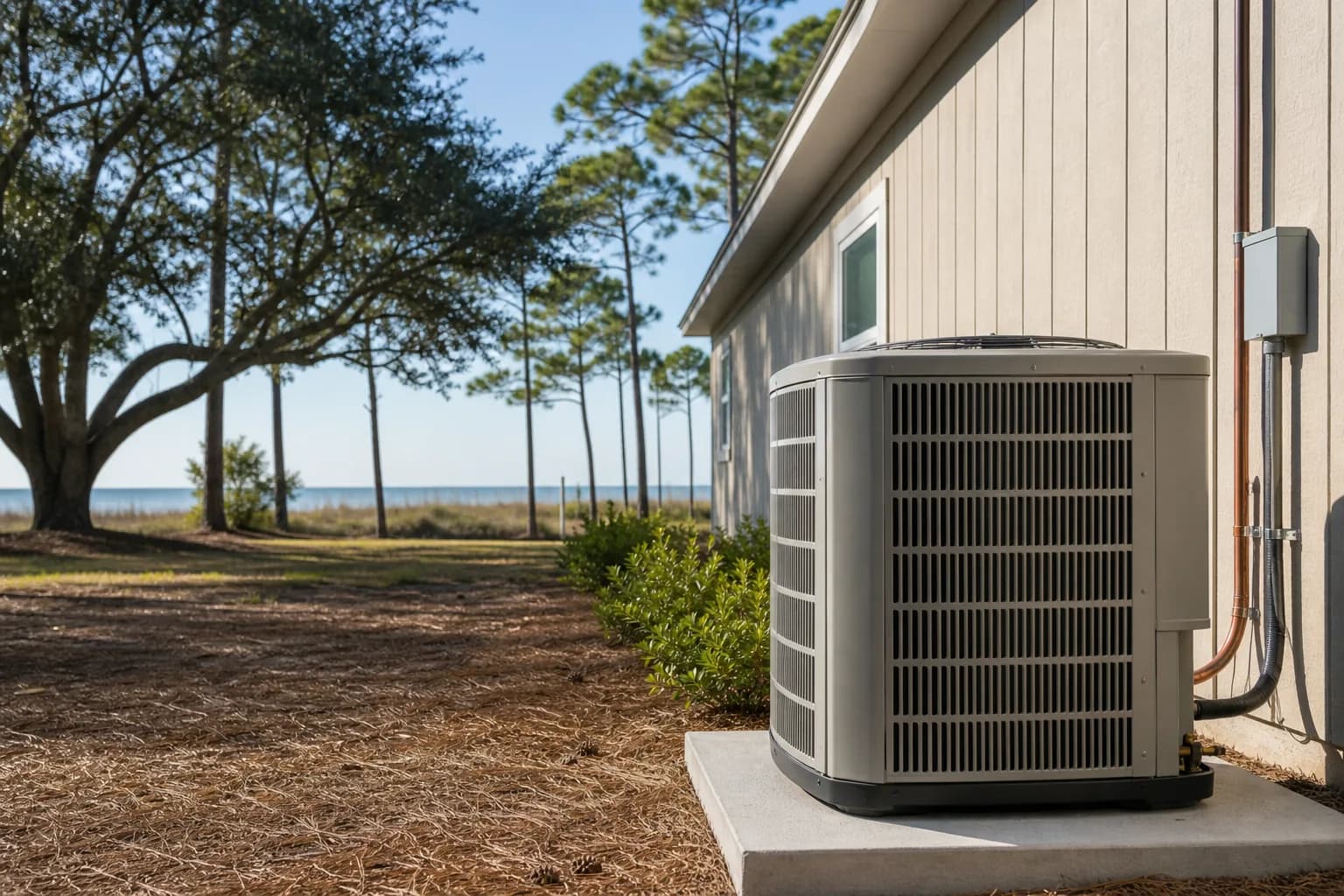 Commercial
AC Sizing for Vacation Rentals: Why Bigger Costs You Money
Why properly sized AC matters more in Gulf Coast vacation rentals than in primary residences — and how oversized systems quietly destroy your reviews and your equipment lifespan.
January 10, 20268 min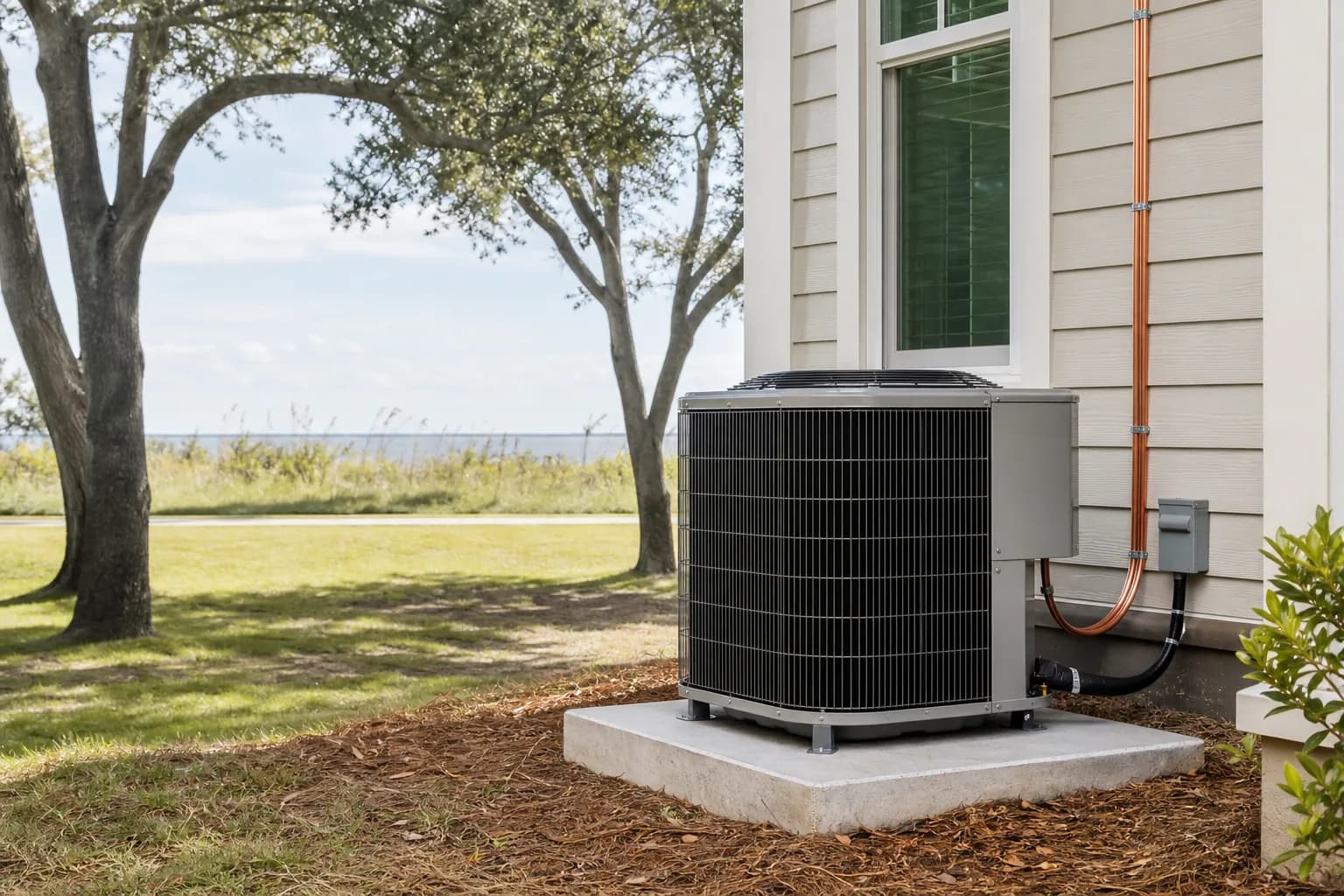 Commercial
Condo HOA HVAC Rules: What Orange Beach and Gulf Shores Owners Need to Know
What HVAC restrictions condo owners face in Orange Beach, Gulf Shores, and Perdido Beach Boulevard buildings — what HOAs actually approve, and how to navigate replacement on a coastal high-rise.
August 10, 20258 min
Other services in Fort Morgan & this service across Baldwin County.
- All HVAC services in Fort Morgan, AL
- Commercial HVAC across Baldwin County
- AC Repair in Fort Morgan
- AC Installation in Fort Morgan
- AC Maintenance in Fort Morgan
- Emergency HVAC in Fort Morgan
- Heating Repair in Fort Morgan
- Heat Pump Services in Fort Morgan
- Indoor Air Quality in Fort Morgan
- Ductless Mini-Splits in Fort Morgan
- Heating Installation in Fort Morgan
Commercial HVAC in Fort Morgan — Schedule Today.
Same-day appointments most weekdays. Cool Club members get prioritized scheduling.