

Commercial HVAC in Point Clear.
Local commercial HVAC in Point Clear, Alabama and surrounding Baldwin County. Restaurants, vacation rentals, property managers. Licensed AL#23194. 357+ five-star reviews. Call (251) 300-9817.
Get a Free Estimate
Name and phone is all we need to call you back. Takes ~20 seconds.
357+ five-star reviews · Same-day · 24/7 · Licensed AL#23194
What we see on calls in Point Clear.
The Point Clear commercial inventory is dominated by three patterns that genuinely set this cell apart from the inland Baldwin commercial-HVAC mix. First is the resort-and-club rooftop equipment that defines the bayfront commercial footprint — the kind of multi-ton RTU loadout that lives on a bayfront resort property like the Grand Hotel at the south end of the ZIP or on a private club like Lakewood Club nearby. We are referencing the equipment pattern, not the customer roster: the rooftop-unit population on this kind of property runs longer hours, swings between near-empty and near-full occupancy on a weekly cycle, and absorbs salt-air exposure on outdoor coils that a Foley strip-mall package never sees. Second is the bayfront restaurant kitchen ventilation reality — the dining establishments tucked along Scenic 98 and serving the resort and second-home traffic run the full kitchen-ventilation conversation: exhaust-hood draw against a makeup-air unit that has to be balanced against dining-room cooling pressure, walk-in cooler condensers on the back side that struggle when rooftop ambient climbs above 130°F in the late afternoon, and grease-vapor migration onto adjacent condenser coils. Third is the retirement-adjacent small-commercial inventory — financial-advisory offices, estate-planning practices, medical specialty rooms, real-estate brokerages serving the second-home and retirement market — where the comfort expectation is steady, the documentation expectation is meticulous, and a 78°F sales floor on a 92°F July afternoon prompts a same-week call rather than a wait-it-out posture.
The fourth pattern is the salt-air corrosion clock on commercial outdoor equipment, which runs faster on multi-ton condenser cabinets than on residential 3-ton units of the same vintage simply because commercial gear pulls more amperage through larger contactors, exposes more aluminum-fin surface area to the brackish drift coming off the bay, and is far more often roof-mounted where direct salt-air exposure is continuous rather than partially sheltered. Contactor-life and condenser-fan-bearing-life on bayfront commercial outdoor units run measurably shorter than the manufacturer's nameplate assumption, electrical-cabinet seal degradation lets humid marine air migrate inside the disconnect housing, and rooftop curb flashings on equipment that has been through several roof replacements often no longer match the unit footprint cleanly. The fifth pattern is the conference-and-event-venue load-swing reality on the resort-attached and standalone event-space inventory — a ballroom or banquet room that runs near-empty Monday through Thursday and packs to capacity for a Saturday wedding produces a sensible-load and latent-load swing that a single-stage commercial package was never designed to follow gracefully, and the resulting short-cycle pattern accelerates compressor wear and contactor pitting on equipment that looks fine on a Tuesday-morning service walk-through.
- Mid-life equipment is the common profile in this area. Capacitor and contactor failures dominate the service-call mix.
- Long cooling season means compressors run heavy May through October. Annual maintenance pays for itself in compressor lifespan.
- Mild winters mean heat pumps cover the season comfortably without backup runtime in normal years. Cold-snap weeks expose undersized units.
Commercial HVAC in Point Clear — the questions that come up.
- Our bayfront restaurant on Scenic 98 keeps fighting humidity in the dining room when the kitchen is running full hood. What is that pattern usually telling us?
- It is almost always one of three failure modes, and the diagnostic order matters because guessing the wrong one wastes both money and dining-room comfort. First, the kitchen makeup-air balance against the exhaust hood — when the hood pulls more air than the makeup unit delivers, the building goes into negative pressure, the dining-room RTU starts pulling makeup through every door and window crack, and the latent load on the dining-room system spikes past its design point right as the seating fills up. The bay-influenced humidity load makes that imbalance hit harder in Point Clear than it would inland. Second, condenser-coil fouling on the rooftop unit from grease-vapor migration across the rooftop deck from the hood discharge — common on bayfront properties where the rooftop layout puts the hood discharge close to the dining-room RTU condenser. Third, an undersized or aging compressor that satisfies the thermostat reading at low ambient but cannot pull latent capacity once the rooftop deck temperature climbs above 130°F on a July afternoon. We diagnose all three with measurement on a documented walk-through rather than guessing, then quote the fix in writing before any work starts.
- We run a private club property on the bayfront with rooftop equipment that swings from near-empty weekday loads to full ballroom on weekends. Do you handle equipment at that scale?
- Yes — multi-ton rooftop-unit scope on bayfront resort-and-club properties along the Point Clear corridor sits squarely within what we service, and the equipment class is the kind of work that genuinely benefits from a local independent contractor rather than a national chain whose service-contract pricing was written against a different equipment baseline. The honest pattern on this kind of property is two operating modes: light steady-state load Monday through Thursday with the ballroom at a fraction of capacity, then a packed Saturday-evening event that drives both sensible and latent load to design point or beyond. The control-strategy and short-cycle-protection conversation here is genuinely distinct from a 1990s strip-mall package unit. We measure the actual operating profile against the equipment's design curve, document where the unit is short-cycling on swing days, and frame the maintenance or replacement scope against what the equipment is actually being asked to do. No specific customer-roster claims on which bayfront resort or club properties we currently service; the equipment-pattern competence is real and the conversation starts with a documented walk-through.
- We operate a small professional office near Point Clear serving an older retirement-community clientele. The expectation around comfort and documentation is high. How does your service approach actually handle that?
- The retirement-adjacent professional-services account profile is one of the most common small-commercial engagements in the Point Clear ZIP, and the comfort-and-documentation expectation lands differently here than it does on a general-population suburban commercial account. The Census median age in Point Clear is 64.0 — the oldest of any city in our service-area map — and the small-commercial inventory serving that population reflects it. Our standard service-contract scope for this kind of account covers bi-annual on-site preventive visits scheduled into the calendar a full quarter ahead, a documented per-unit checklist on every RTU and split system in the space, written service reports that go into the building's facility records, and an emergency-response framework with the off-hours line at (251) 300-9817 routed through dispatch. The walk-through with the property manager on each visit is part of the scope rather than an upcharge, and the documentation discipline supports both the building's own records and any manufacturer-warranty paperwork on covered repairs. We will not promise specific minute-window ETAs on after-hours calls, but the visit-cadence and the documentation are what the relationship is actually built on.
- Our event space hosts weddings and conferences with major load swings between empty weekdays and full-capacity weekends. Will a standard rooftop unit handle that, or do we need to think about it differently?
- A standard single-stage commercial package unit was not designed to follow the kind of weekly load asymmetry that a bayfront event venue puts on it gracefully, and the wear pattern shows up earlier than a residential tune-up cadence would predict. The honest framing is that conference and event-venue HVAC equipment in the Point Clear bayfront footprint absorbs three distinct stresses a steady-state office unit never sees: rapid sensible-load ramp from near-empty to near-full as guests arrive, latent-load spike from body-heat and beverage-service moisture, and a short-cycle pattern on the weekday shoulders when the empty space barely calls for cooling. The control strategy that actually performs across that profile typically involves staged or variable-capacity equipment rather than single-stage, demand-controlled ventilation that ramps the outside-air fraction with occupancy rather than running it at a fixed setpoint, and a thermostat or BMS strategy that anticipates the load swing rather than chasing it. We will walk the space, measure the actual load profile across at least one full event cycle if the existing equipment allows the data capture, and put a replacement-or-retrofit scope in writing that addresses the load-swing reality rather than treating it as an oversized residential install.
- Does Cool Club apply to our commercial Point Clear account, or is it really a residential program?
- Cool Club is structured as our residential maintenance membership — the bi-annual tune-up cadence and the published member benefits including 15% off all AC repairs and 5% off new systems are scoped around a single-family home with one or two residential systems. Commercial Point Clear accounts almost always engage on a separate service-contract basis instead, because the scope needs to reflect actual commercial-equipment count, operating-hour profile, kitchen-ventilation balance where a restaurant tenant is in scope, BMS or thermostat integration for any multi-tenant property, and an emergency-response framework appropriate to the business-impact stakes. If you own a Point Clear residence and also operate a commercial space along Scenic 98, in the Grand Hotel area, or in the Historic District, the residential side can sit on Cool Club while the commercial side runs on its own service contract — separate programs that share the same diagnostic and documentation standard on every visit.
- Do you offer commercial HVAC service contracts in Baldwin County?
- Yes. We work with restaurants, vacation rental properties, retail, and multi-unit operators across Baldwin County. Service contracts include scheduled preventative maintenance, prioritized response, and per-unit pricing for fleet accounts.
- Can you handle multi-unit vacation rental portfolios?
- Yes. Many of the Gulf Shores and Orange Beach property managers we work with have 8 to 50+ units. We schedule turnover-aligned maintenance, document everything by unit, and bill at fleet rates.
What commercial HVAC looks like in this climate.
The per-coordinate ERA5 numbers at the bayfront grid cell come in around 2,994 cooling degree days and 1,024 heating degree days for a typical year, with July highs averaging near 89°F and January lows landing close to 51°F. Read that as a commercial-runtime profile and the implication is direct: a bayfront-resort rooftop unit, a downtown-restaurant condensing unit, or a Scenic 98 retail package serving the Point Clear ZIP runs continuous-duty cooling from roughly late April into late October. Six months of steady-state load each year stacks compressor hours and condenser-fan bearing hours onto commercial equipment substantially faster than the calendar suggests, and the lifecycle math on a commercial RTU sitting in the 36564 footprint is paced by accumulated runtime rather than by install date. A property manager budgeting for a replacement at the eight-year mark is usually thinking about a unit that has logged closer to twelve calendar years of equivalent residential runtime.
The humidity-side load matters as much as the dry-bulb temperature in the Point Clear commercial setting, and arguably more for any dining establishment, event venue, or boutique-hospitality space along the bayfront. Mobile Bay sits within walking distance of every Scenic 98 commercial parcel, and overnight dew points stay elevated across most of the cooling season — a commercial system that holds setpoint on temperature but quietly loses latent capacity through the afternoon produces a dining room that reads sticky-cool rather than comfortable-cool, and that is the kind of complaint a banquet manager hears about by the second course. The maintenance discipline that actually keeps these spaces comfortable measures supply-air enthalpy and dehumidification performance separately from the thermostat reading and trends those numbers across the service-contract calendar rather than against a one-off snapshot.
Weather events that have shaped commercial-HVAC service patterns along the Point Clear bayfront.
- Sep 2020 — Hurricane Sally: Sally tracked across the eastern Mobile Bay corridor as a Category 2, and the bayfront strip from Fairhope south through Point Clear absorbed significant wind-driven rain plus storm surge along the Scenic 98 commercial frontage. The commercial outdoor-equipment aftermath was meaningful on multiple fronts: rooftop unit curb flashings on bayfront properties took direct wind-driven water exposure, multi-ton condenser cabinets on resort-and-club properties cycled hard through the multi-day power-restoration sequence on the Riviera Utilities feeders, and electrical-cabinet seals on commercial disconnects absorbed salt-water residue that quietly accelerated corrosion across the following two seasons. The post-storm commercial call wave clustered into the six weeks after the grid recovered — control-board faults on units that had survived impact but failed under load, contactor pitting from the voltage cycling, and a steady stream of capacitor replacements on equipment that had been operating marginally before the storm. Commercial accounts on active service contracts came back online substantially faster because the baseline documentation let us know what changed.
- Sep 2004 — Hurricane Ivan: Ivan is the older reference event for long-tenure Point Clear commercial-property owners. The 2005-2008 rebuild-era commercial-HVAC installs that followed Ivan now sit at the 18-to-21-year mark, well inside the bracket where a service-contract intake visit becomes a candid repair-or-replace assessment rather than a routine tune-up. Documented service history on these systems is what supports an honest replacement-budget conversation with a property manager planning capital expenditure against actual remaining useful life rather than an optimistic install-date calculation. Ivan also rewrote the elevation conversation on bayfront commercial outdoor pad placement — flood-elevation hardware specs on Scenic 98 and Grand Hotel area commercial parcels have not been the same since.
- Jan 2024 — Multi-night hard-freeze stretch: The January 2024 cold snap put even the mildest-winter commercial inventory in the matrix through a stress test it had not seen in years. Point Clear commercial heat-pump and gas-pack equipment that had not been exercised in heating mode since the prior winter exposed weak points across the bayfront commercial corridor: reversing valves stuck mid-cycle on RTUs that had not seen heating-mode duty in eight months, auxiliary heat strips reading open at the contactor, defrost-board calibration drift on older equipment, and condensate traps backed up on units running high-humidity defrost cycles. Restaurant managers opening Saturday brunch found dining rooms in the low 60s; event-venue staff found ballrooms that took until mid-afternoon to recover. Accounts on bi-annual service-contract maintenance had caught most of these failure points during the prior fall visit; accounts on break-fix only saw most of them as emergency calls during the freeze itself.
- Aug 2023 — Heat-advisory stretch: Multi-day heat-index readings above 105°F stacked the seasonal commercial-failure pattern on Point Clear bayfront equipment. Capacitor swaps on RTUs that had drifted out of spec, frozen indoor coils on systems marginally low on refrigerant, and a cluster of dining-room latent-load failures where building cooling held dry-bulb temperature but could not pull humidity down fast enough during full evening seatings. Walk-in cooler condensers on the restaurant back-sides crossed safe-temperature thresholds when rooftop deck ambient ran away. The heat-advisory pattern stacked on top of the chronic salt-air corrosion clock that already runs faster on commercial outdoor equipment than on residential gear.
What Point Clear homeowners say after a Commercial HVAC call.
“We cannot recommend Air Solutions Heating and Cooling enough!! We've used them for our home and business for several years now and are very pleased with their customer service and affordable prices. Jesse E. is our technician for most of our needs, and he's a very competent and trustworthy individual. Again, highly recommend!!”
“Reaves worked on our A/C for our personal home and on one of our rental homes and did a fantastic job. He was very professional, arrived quickly and got the job done on time, and for a fair price. Would definitely hire Air Solutions again…”
What Point Clear customers can claim.
- Point Clear runs on a two-provider utility split that matters meaningfully on the commercial side: residential and commercial electric service across the 36564 ZIP is Riviera Utilities, while natural gas where the distribution main reaches the parcel is Fairhope Public Utilities. The split is genuinely unusual for south Baldwin — most neighboring communities sit on a single provider for both fuel paths — and the commercial implication is that any rebate eligibility conversation has to be run against each provider separately because their commercial-incentive menus do not overlap.
- Commercial energy-efficiency rebate availability on both Riviera Utilities (electric-side) and Fairhope Public Utilities (gas-side) shifts year over year, and commercial-incentive structures typically target demand-reduction and full-system retrofit work rather than break-fix repairs or routine service. Routine maintenance line items — RTU tune-ups, coil cleaning, contactor and capacitor replacement, refrigerant-pressure verification, condensate-pump replacement — do not generally qualify for rebate dollars from either provider. The pathways apply when a commercial property replaces existing equipment with qualifying high-efficiency units on a documented project basis.
- Verifying current commercial rebate posture directly with whichever provider serves the parcel — Riviera Utilities for electric, Fairhope Public Utilities for gas — is the responsible step before counting a rebate figure into a commercial replacement quote. We will surface the commissioning paperwork on any commercial install we complete; how it gets used on the utility-rebate side is best handled by the property owner or facility manager working directly with the utility's commercial-services group.
- Federal commercial tax-code provisions for HVAC capital equipment are independent of the utility-rebate path. Eligibility math on the commercial side depends on the building's tax structure, the specific equipment installed, and the placed-in-service date — the responsible move is to walk any tax-treatment question through the property's CPA before treating a generic figure on an equipment proposal as a final commitment. Commercial tax treatment runs through different code sections than residential energy credits, and we are not the right office to render the final number on that question.
Commercial HVAC Coverage Map — Point Clear, Alabama
Centered near Point Clear for orientation. Air Solutions Heating & Cooling provides commercial HVAC throughout every Point Clear neighborhood and zip code, plus the surrounding Baldwin County area. Same crew, same number — we travel the whole county.
357+ Five-Star Reviews. And Counting.
“Jessie goes above and beyond, glad my friend referred him to my business.”
“Called at 2:30 this morning. They responded around 6:00 and arrived on time. HVAC repaired quickly. Very professional and polite. Immediately signed up for their maintenance plan. UPDATE! Follow up service and cleaning on time and further improved the system’s performance. Will continue to do business with them.”
Schedule Commercial HVAC in Point Clear.
Restaurants, vacation rentals, property managers. Same-day appointments most weekdays in Point Clear and surrounding Baldwin County. Tell us when works for you — we'll confirm by phone during weekday office hours (8 AM-4 PM).
Need someone right now? Call (251) 300-9817 — our 24/7 emergency line is answered live when we can and returned quickly when we can't.
Commercial HVAC Near Point Clear.
Right at the Point Clear city limit? We service the surrounding Baldwin County communities on the same routes — same crew, same response times.
Related HVAC Guides.
Long-form articles about commercial HVAC and Baldwin County HVAC, with practical advice from our team.
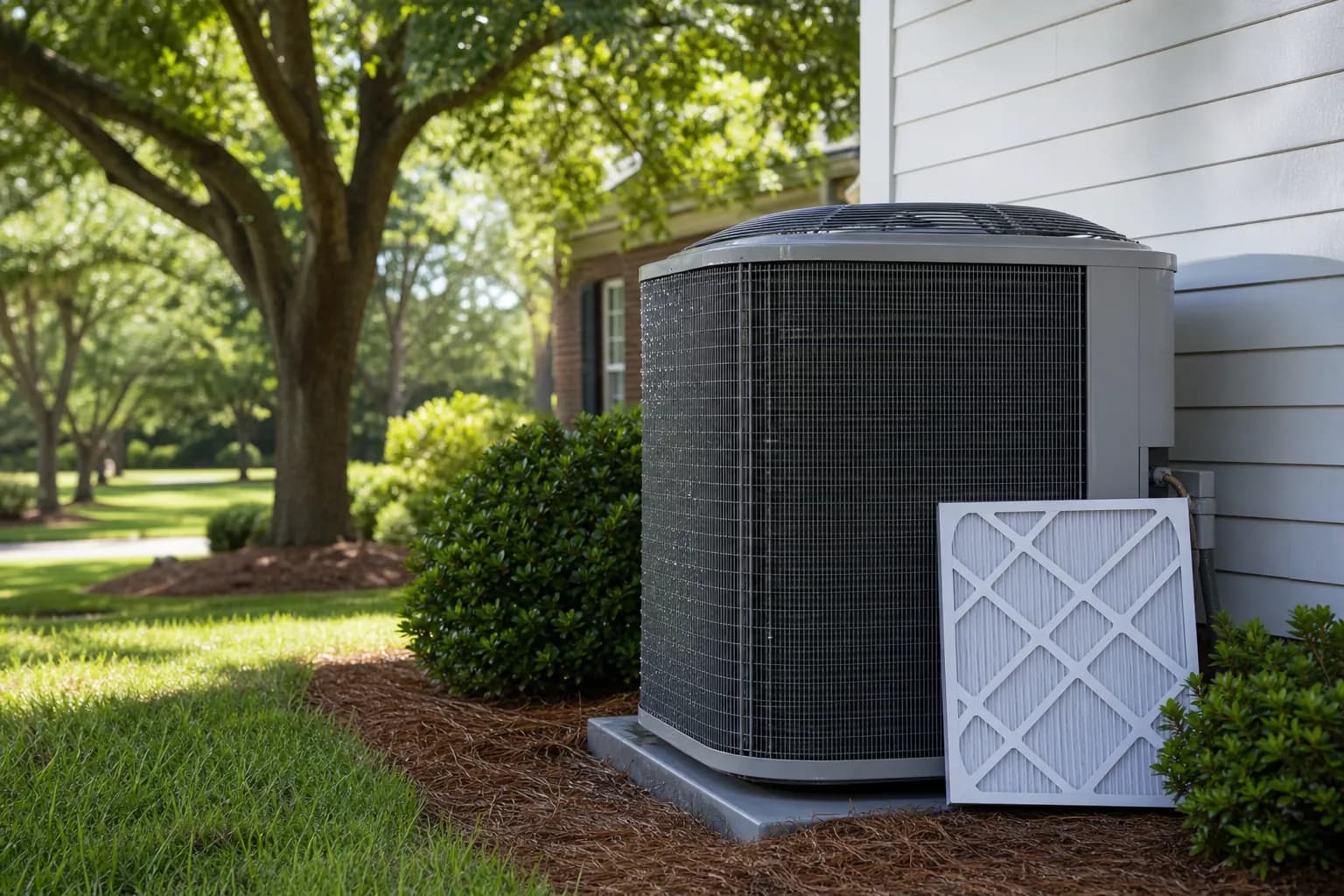 Seasonal
Pre-Cooling Your Eastern Shore Home Before the Afternoon Heat Peak
A pre-cooling strategy for Eastern Shore homes — cool the house earlier, manage thermostat setbacks, blinds, fans, and humidity so your AC isn't fighting the worst heat from behind.
August 4, 20266 min Emergency
No-Cool Emergencies for Point Clear Homeowners: What to Do First
A zone went warm in your Point Clear, AL home? A bayfront-aware triage for multi-zone estates, salt-air wear, and knowing your first move before help arrives.
July 28, 20266 min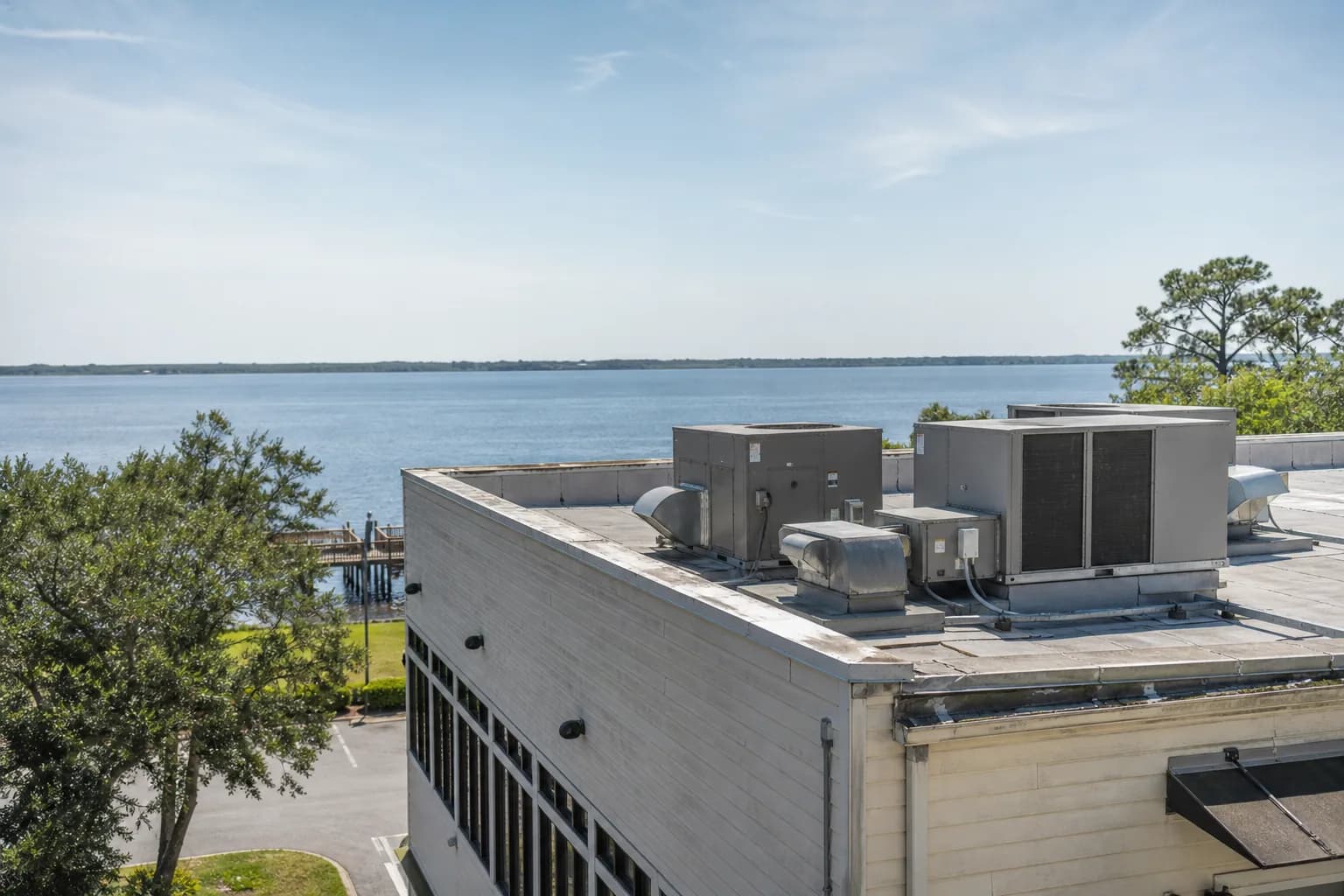 Commercial
Commercial HVAC for Baldwin County Businesses
A plain-English overview of commercial HVAC in Baldwin County — how it differs from residential, what each business type needs, and what a service contract covers.
May 15, 20268 min
Other services in Point Clear & this service across Baldwin County.
- All HVAC services in Point Clear, AL
- Commercial HVAC across Baldwin County
- AC Repair in Point Clear
- AC Installation in Point Clear
- AC Maintenance in Point Clear
- Emergency HVAC in Point Clear
- Heating Repair in Point Clear
- Heat Pump Services in Point Clear
- Indoor Air Quality in Point Clear
- Ductless Mini-Splits in Point Clear
- Heating Installation in Point Clear
Commercial HVAC in Point Clear — Schedule Today.
Same-day appointments most weekdays. Cool Club members get prioritized scheduling.