

Indoor Air Quality in Point Clear.
Local indoor air quality in Point Clear, Alabama and surrounding Baldwin County. Dehumidifiers, air scrubbers, UV purification, ventilation. Licensed AL#23194. 357+ five-star reviews. Call (251) 300-9817.
Get a Free Estimate
Name and phone is all we need to call you back. Takes ~20 seconds.
357+ five-star reviews · Same-day · 24/7 · Licensed AL#23194
What indoor air quality looks like in this climate.
Point Clear sits at roughly 32 meters of elevation on the western shore of the Eastern Shore peninsula with Mobile Bay running the entire length of the western boundary, and the per-coordinate ERA5 reanalysis for 2023 puts the local climate envelope at about 2,994 cooling degree days against 1,024 heating degree days. The headline number for an indoor-air-quality assessment is not the cooling-degree-day total itself — it is the average July high near 89°F, which is meaningfully MILDER than the comparable Fairhope figure a few miles north and noticeably milder than the inland Foley subdivision number. The bay's thermal mass keeps the dry-bulb extremes inside a narrower band, which means a Point Clear cooling system runs long mild duty rather than short intense duty.
What the temperature columns understate is the moisture envelope, and on a bayfront-adjacent address the moisture envelope dominates. Overnight dew points stay elevated across most of the cooling season, with the bay returning humid air across the structure on the overnight reverse flow even after the daytime sea breeze has dropped off. A Point Clear home where the AC alone has been asked to handle the latent load typically lands somewhere in the 58 to 64 percent indoor RH range on a summer afternoon — comfortable enough that the homeowner does not immediately suspect anything is wrong, but well above the 50-to-55 percent target that limits biological growth and that an older household member with respiratory sensitivity will notice as the difference between feeling well and feeling congested. The mechanical answer is supplemental whole-home dehumidification sized to the bayfront-exposure profile, not a more aggressive thermostat setpoint that just runs the compressor harder against a load it was not designed to absorb.
What we see on calls in Point Clear.
The IAQ call pattern on a Point Clear primary residence runs differently from a Foley subdivision call or a Gulf Shores rental-turnover call, and the difference traces back to the Census numbers more than to the climate ones. Median age across the 36564 ZIP comes in at 64.0 — the highest figure on this site — and owner-occupancy at 73.2 percent reinforces a long-tenure primary-residence pattern that brings detailed and specific questions to the assessment visit. The dominant IAQ ask we hear from a Point Clear household is filtration selection for an older household member whose respiratory sensitivity to indoor particulate has become a stewardship priority. That puts the conversation squarely on media filtration cabinet selection: HEPA-class or MERV-13-equivalent media that captures fine particulate at the 0.3-to-1.0-micron range where pollen fragments and indoor dust dominate, sized against the static-pressure budget the existing air handler can actually accommodate without the airflow falling out of specification.
Two other patterns layer onto the demographic-driven filtration story and define the rest of the Point Clear IAQ call mix. First, dehumidifier sizing on a bayfront-exposed address is genuinely its own conversation. Whole-home dehumidifier capacity for a typical Point Clear home in the median 1993-vintage band tends to land in a working range that flexes meaningfully with the building envelope tightness and the bay-aerosol exposure of the parcel — a 1925 Point Clear Historic District cottage and a 2008 Scenic 98 bayfront build present completely different latent-load profiles even at identical square footage. Second, brackish aerosol exposure on bayfront and near-bayfront Point Clear addresses affects more than just the outdoor coil. Inside the air handler cabinet, low-voltage harness connections, control-board terminal lugs, communicating-thermostat backplate contacts, and the contactor terminal screws all see accelerated wear from the salt-influenced return-side airstream that comes through the outdoor-air intake and any positive-pressure ventilation pathway. Our IAQ service catalog covers whole-home dehumidifiers, air scrubbers, UV purification, ductwork sealing, and advanced filtration systems, and we do not offer duct cleaning as a standalone service — one-time cleaning does not produce durable improvement once the underlying chase-moisture pathway or the salt-aerosol load is left in place.
- Mid-life equipment is the common profile in this area. Capacitor and contactor failures dominate the service-call mix.
- Long cooling season means compressors run heavy May through October. Annual maintenance pays for itself in compressor lifespan.
- Mild winters mean heat pumps cover the season comfortably without backup runtime in normal years. Cold-snap weeks expose undersized units.
Indoor Air Quality in Point Clear — the questions that come up.
- An older family member in our Point Clear house has been more sensitive to indoor particulate over the past year. What filtration upgrade actually moves the needle without overhauling the entire HVAC system?
- The most meaningful upgrade on a Point Clear primary residence is usually a 4-inch media cabinet retrofit running MERV 13, which captures fine particulate down into the 0.3-to-1.0-micron range where pollen fragments, indoor dust, and smaller allergen particles dominate. The cabinet geometry matters more than the MERV number alone — a 1-inch filter slot running MERV 13 produces a static-pressure drop that an air handler installed for the median 1993-vintage Point Clear home cannot push through cleanly, which drops airflow, drops dehumidification capacity at the coil, and risks overheating the blower motor on a continuous-runtime summer day. The 4-inch cabinet absorbs that pressure drop and stretches the replacement cadence from monthly on a 1-inch slot to quarterly on the media. For households with a sensitive occupant we typically recommend a tighter calendar-based replacement interval — every two months on bayfront addresses where the salt-influenced aerosol load runs higher — rather than waiting for visual loading on the media to indicate replacement. None of the above is a medical recommendation; the engineering decisions sit on filter capture efficiency, system static-pressure budget, and replacement cadence, which is the right scope for an HVAC contractor to advise on.
- What size whole-home dehumidifier actually makes sense for a 2,600-square-foot Point Clear home near Scenic 98?
- Sizing comes off a measured latent-load calculation rather than a square-footage chart, because the building envelope drives the answer more than the floor area does. For a 2,600-square-foot Point Clear home the inputs that matter are the year built and envelope tightness (a Point Clear Historic District cottage from the 1920s and a 2010 Scenic 98 bayfront build present completely different latent profiles at identical square footage), the existing AC dehumidification performance measured at the coil under representative cooling-mode load, the indoor relative humidity baseline taken at multiple stations before any new equipment goes in, and the bayfront-aerosol exposure of the specific parcel because Mobile Bay overnight dew points keep the latent ceiling above what an inland comparable home would see. A typical Point Clear address in the median 1993-vintage band tends to need a unit somewhere in the 70-to-110-pints-per-day range to hold indoor RH inside the 50-to-55 percent target during cooling season.
- We're right on the bay at Point Clear. How much does salt air actually affect the indoor equipment, not just the outdoor condenser?
- More than most homeowners expect, and the indoor-side wear pattern is genuinely material on a fifteen-to-twenty-year horizon. The brackish aerosol from Mobile Bay does not stop at the building envelope — outdoor-air intakes, leaky window frames, attic ventilation pathways, and any positive-pressure ventilation route pull a measurable share of the salt-influenced airstream into the return-side air handling. Inside an air handler cabinet on a bayfront Point Clear property the practical consequences accumulate slowly: oxidation on the contactor terminal screws, accelerated wear on the low-voltage harness connections and pin housings, control-board terminal-lug corrosion that eventually produces communicating-system thermostat sync issues or intermittent component-call faults, and faster filtration loading on the return side because the aerosol carries particulate the filter has to catch. None of those failures present as emergencies in any single year. Cumulatively over a five-to-ten-year window they show up as control-board replacements and capacitor-or-contactor faults arriving earlier than the calendar age of the equipment would suggest.
- What does a Point Clear IAQ assessment visit actually involve, and what should I expect to receive in writing?
- The assessment is a structured measurement visit, not a sales pitch, and the deliverable is a written recommendation document that the household can read on its own time and bring back to the install conversation. The standard measurements include indoor relative humidity readings at multiple stations across the conditioned space (typically the master bedroom, the primary living area, and one secondary bedroom or guest room), return-side static pressure read across the existing filter under cooling-mode load, evaporator coil and condensate pan inspection with photographs documenting current condition, supply-and-return temperature split readings to verify AC dehumidification performance under representative load, outdoor coil condition notes on bayfront addresses, and on older homes a chase-moisture observation on any accessible portions of the supply or return ductwork. The written report lays out the measurements alongside the recommended interventions in priority order, with a budget range for each line item, and identifies which items would benefit from being scheduled together to reduce total visit count.
- Why don't you offer duct cleaning as a standalone service, and what do you recommend instead for a Point Clear home where the supply registers smell musty?
- The verbatim policy is that we do not offer duct cleaning as a standalone service, and the reason is a track record problem rather than a capacity problem. One-time duct cleaning produces a brief improvement that does not survive once the underlying moisture pathway is left in place — and on a Point Clear home with bay-moderated overnight dew points and a building envelope that breathes humid air across the calendar, the underlying moisture pathway is almost always the dominant cause of the supply-register smell. What we recommend instead, in order of priority, is: first, a chase-moisture and condensate-side investigation to identify whether the smell traces to evaporator coil biofilm, condensate pan growth, or supply-duct condensation against humid chase-cavity air; second, the appropriate intervention based on what the investigation finds (UV-C lamp on the coil to suppress biofilm regrowth, condensate treatment to clear pan growth, ductwork sealing where the chase cavity is the moisture source); third, a whole-home dehumidification recommendation sized to the latent load if the broader humidity envelope is the underlying driver.
- Do I need a whole-house dehumidifier in Baldwin County?
- Probably not if your AC is properly sized and maintained — a right-sized AC removes plenty of moisture during normal cooling cycles. You DO benefit from a whole-house dehumidifier if: (1) your home is tight new construction where AC doesn't run long enough to dehumidify, (2) you have a vacation rental that sits at higher setpoints during vacancy, (3) you have chronic mold complaints despite good cooling, or (4) you have indoor pools/spas/large fish tanks adding moisture continuously. We provide a written estimate before any work begins.
- Are UV-C lights worth installing on my HVAC system?
- Coil-mounted UV-C lights are genuinely useful in Baldwin County's humidity — they keep evaporator coils and drain pans biologically sterile, preventing the musty smell that humid climates produce. Worth considering for homes with chronic supply-vent odor or vacation rentals. We provide a written estimate before installation. The marketing claims about UV killing airborne pathogens are overstated; airflow is too fast for meaningful kill rates. For air sterilization, better filtration is more cost-effective.
Weather events that have shaped the Point Clear indoor-air-quality call mix.
- Sep 2020 — Hurricane Sally — multi-month wall-cavity moisture release: Sally tracked across the Mobile Bay corridor and the Point Clear bayfront strip absorbed significant wind-driven rain plus storm surge along Scenic 98. The IAQ aftermath on bayfront and near-bayfront Point Clear properties outlasted the equipment aftermath by a wide margin: wall cavities and attic insulation that took on water during the storm continued to release humidity into living spaces for many months afterward, and the older Point Clear Historic District cottages with their retrofit ductwork chases held the moisture longer than the newer Scenic 98 builds with intact vapor barriers did.
- Sep 2004 — Hurricane Ivan — long-tenure reference event: Ivan is the older reference event for long-tenure Point Clear homeowners and the storm that drove the 2005-to-2008 rebuild-era wave on a meaningful share of the Scenic 98 housing stock. The IAQ-relevant question on post-Ivan rebuilds today is whether the rebuild was executed with a vapor-barrier and air-sealing strategy that holds up to the bayfront moisture envelope twenty years later.
- Jan 2024 — Multi-night hard-freeze stretch — dehumidifier power-cycling: Even the Mobile Bay thermal moderation could not blunt the worst night of the January 2024 cold snap, and the IAQ-side failure mode was not the freeze itself — it was the grid recovery. Multiple short-duration power restoration cycles across Point Clear produced an uptick in whole-home dehumidifier control-board faults and humidistat-controller failures on units that lost power mid-cycle, and on the addresses where the dehumidifier was down for the recovery week, indoor RH climbed back into the biological-growth band even while heating cycles were running normally.
- Summer 2023 — Multi-week high-dew-point stretch — indoor RH ceiling event: A run of weeks in mid-summer where overnight low temperatures and dew points stayed close enough together that no meaningful overnight drying window opened up. Point Clear properties without supplemental dehumidification capacity saw indoor RH climb above 60 percent even with AC running essentially continuously, which is exactly the regime that produces respiratory-sensitivity complaints on a long-tenure primary residence with an older household member.
What Point Clear customers can claim.
- Point Clear sits on a two-provider utility split that is genuinely unusual for south Baldwin: residential electric service across the 36564 ZIP runs through Riviera Utilities, and natural gas where the distribution main reaches the address runs through Fairhope Public Utilities.
- Standalone IAQ accessories — whole-home dehumidifiers, UV-C lamp kits, media filtration cabinets, and dedicated outdoor air systems — typically do not qualify for direct utility rebates from either Riviera Utilities or Fairhope Public Utilities. The practical exception is when the IAQ work bundles into a qualifying high-efficiency heat-pump replacement at the same install — the system-level rebate then covers the combined project rather than the accessory work in isolation.
- Confirm current Riviera Utilities and Fairhope Public Utilities residential energy-efficiency program eligibility and dollar amounts directly with whichever provider serves the address before treating any specific rebate figure as part of project math, because the program menus genuinely do reset year to year.
- Standalone IAQ accessories bundled into a qualifying high-efficiency heat-pump replacement may participate in any active Riviera Utilities system-level rebate program; accessories installed without a system replacement typically do not qualify on their own.
Every Point Clear neighborhood, every zip.
Indoor-air-quality work at a Point Clear address typically unfolds across two visits — an assessment with measurements, then an install if the homeowner moves forward — and the drive-time economics from the shop genuinely shape what we can offer on the booking calendar. The Daphne-to-Point-Clear route is OSRM-verified at about 12 miles down through Fairhope and onto Scenic 98, running roughly 20 minutes each way under normal traffic, which puts Point Clear inside the same dense Eastern Shore routing band as Fairhope and Montrose. Coverage spans the single 36564 ZIP: the Grand Hotel area at the south end, the Scenic 98 bayfront strip running north toward the Fairhope city line, and the Point Clear Historic District inland a few blocks from the water.
On the after-hours channel, the line at (251) 300-9817 covers 24/7 emergency situations across Baldwin County and missed live pickups get a return call promptly. Cool Club membership covers two professional tune-up visits per year on the underlying HVAC equipment plus 15% off all AC repairs and 5% off new systems, with no long-term contract holding anyone in place.
- the Grand Hotel area
- Scenic 98 bayfront homes
- the Point Clear Historic District
Indoor Air Quality Coverage Map — Point Clear, Alabama
Centered near Point Clear for orientation. Air Solutions Heating & Cooling provides indoor air quality throughout every Point Clear neighborhood and zip code, plus the surrounding Baldwin County area. Same crew, same number — we travel the whole county.
357+ Five-Star Reviews. And Counting.
“Jacob arrived as scheduled and completed the service quickly and efficiently despite the severely adverse conditions working in the attic in extreme heat and humidity.”
Schedule Indoor Air Quality in Point Clear.
Dehumidifiers, air scrubbers, UV purification, ventilation. Same-day appointments most weekdays in Point Clear and surrounding Baldwin County. Tell us when works for you — we'll confirm by phone during weekday office hours (8 AM-4 PM).
Need someone right now? Call (251) 300-9817 — our 24/7 emergency line is answered live when we can and returned quickly when we can't.
Indoor Air Quality Near Point Clear.
Right at the Point Clear city limit? We service the surrounding Baldwin County communities on the same routes — same crew, same response times.
Related HVAC Guides.
Long-form articles about indoor air quality and Baldwin County HVAC, with practical advice from our team.
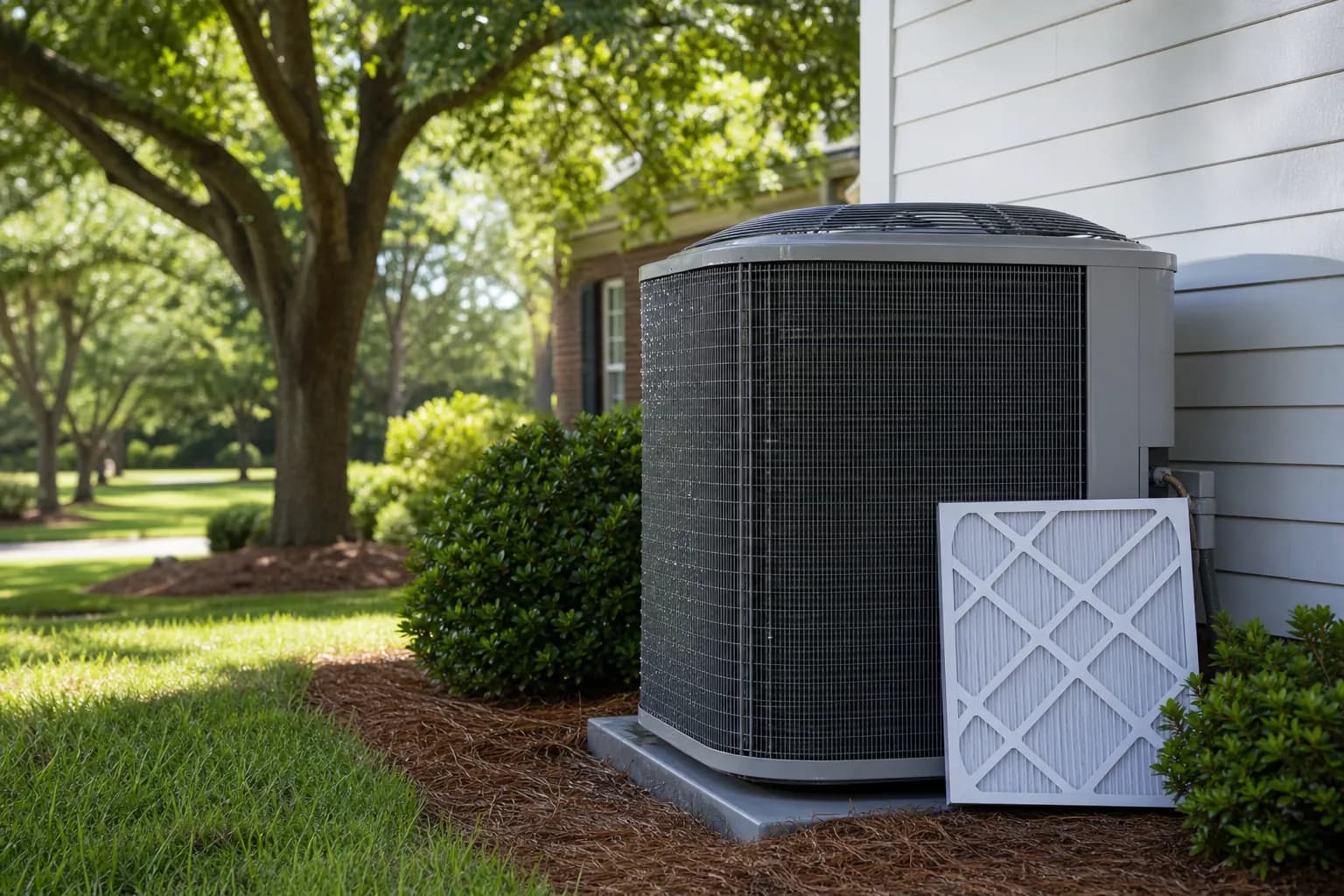 Seasonal
Pre-Cooling Your Eastern Shore Home Before the Afternoon Heat Peak
A pre-cooling strategy for Eastern Shore homes — cool the house earlier, manage thermostat setbacks, blinds, fans, and humidity so your AC isn't fighting the worst heat from behind.
August 4, 20266 min Emergency
No-Cool Emergencies for Point Clear Homeowners: What to Do First
A zone went warm in your Point Clear, AL home? A bayfront-aware triage for multi-zone estates, salt-air wear, and knowing your first move before help arrives.
July 28, 20266 min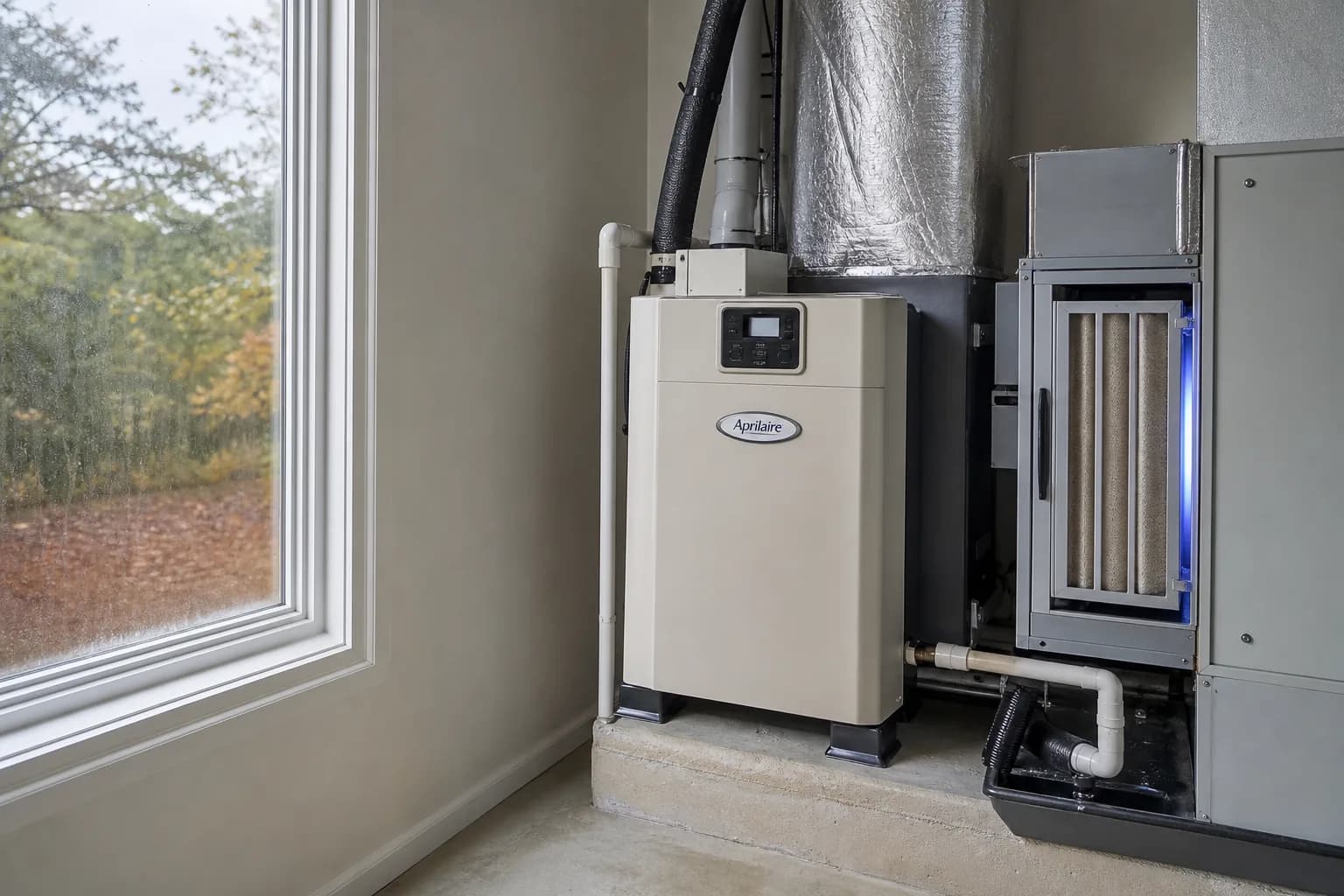 Indoor Air Quality
Why Your Fairhope Home Feels Stuffy in Fall: Lower Humidity, Tighter Homes
Stuffy fall feeling in your Fairhope, AL home? Why it happens (low humidity + sealed-up homes) and how to fix it.
September 30, 20264 min
Other services in Point Clear & this service across Baldwin County.
- All HVAC services in Point Clear, AL
- Indoor Air Quality across Baldwin County
- AC Repair in Point Clear
- AC Installation in Point Clear
- AC Maintenance in Point Clear
- Commercial HVAC in Point Clear
- Emergency HVAC in Point Clear
- Heating Repair in Point Clear
- Heat Pump Services in Point Clear
- Ductless Mini-Splits in Point Clear
- Heating Installation in Point Clear
Indoor Air Quality in Point Clear — Schedule Today.
Same-day appointments most weekdays. Cool Club members get prioritized scheduling.