

Indoor Air Quality in Montrose.
Local indoor air quality in Montrose, Alabama and surrounding Baldwin County. Dehumidifiers, air scrubbers, UV purification, ventilation. Licensed AL#23194. 357+ five-star reviews. Call (251) 300-9817.
Get a Free Estimate
Name and phone is all we need to call you back. Takes ~20 seconds.
357+ five-star reviews · Same-day · 24/7 · Licensed AL#23194
What indoor air quality looks like in this climate.
Indoor-air-quality work in Montrose is shaped by one dominant variable, and it is not the temperature. The per-coordinate ERA5 reanalysis at the Eastern Shore bluff puts the 2023 cooling load near 3,032 degree days against a heating load of roughly 1,045 — a 2.9-to-1 cooling-dominant climate with an average July high near 90°F and an average January low around 51°F. Those numbers describe a workable mid-Gulf climate envelope. What they do not describe is the moisture profile that Mobile Bay maintains across the bluff almost year-round, and the moisture profile is where the IAQ conversation actually lives. A Montrose dew-point reading in the mid-70s on a typical August afternoon means the latent load — the moisture an HVAC system has to remove before indoor air feels comfortable — runs persistently above what the dry-bulb temperature alone would suggest.
On a bayfront bluff property the practical translation is straightforward: an AC system right-sized for sensible cooling but underpowered on dehumidification will keep the house cool and clammy at the same time, with indoor relative humidity drifting above 60% through long stretches of the summer regardless of how hard the compressor runs. That is the failure mode behind most of the IAQ complaints we field on this ZIP, and it is why a whole-house dehumidifier is the PRIMARY IAQ intervention for a Montrose home rather than a peripheral upgrade. The bay does not stop moderating the moisture envelope at the end of summer either — fall and winter shoulder stretches keep dew points elevated long after the sensible cooling load has tapered off, so the latent-load tool has to keep working when the AC has effectively cycled out. That asymmetry is the climate fact that ought to drive the equipment spec on every IAQ assessment we run here.
Indoor Air Quality in Montrose — the questions that come up.
- Our Scenic 98 home stays cool but feels clammy all summer even with the AC running constantly. Do we actually need a whole-house dehumidifier?
- On a bayfront bluff address, the answer is usually yes, and the diagnostic chain that leads there is straightforward. Cool-but-clammy at constant runtime is the signature of a sensible-load-driven AC that is shutting down on temperature before the coil has been wet long enough to wring meaningful moisture out of the air. Mobile Bay keeps a Montrose home's latent load high enough that even a properly sized AC frequently cannot do the dehumidification work alone — the dew point sits in the mid-70s most summer afternoons, and the indoor relative humidity baseline drifts above 60% in long stretches regardless of how hard the compressor runs. The mechanical answer on a Montrose address is a whole-house dehumidifier ducted in line with the existing system and controlled off a humidistat-aware thermostat that runs the dehumidifier independently of cooling demand. Whole-home dehumidifier installations vary based on system size and installation complexity; we run the latent-load math on your specific house during the assessment rather than quoting from a square-footage chart that does not account for the bay envelope.
- Does Mobile Bay salt air actually affect indoor electronics and the air handler, or only the outdoor condenser?
- Both, and the indoor-side effect is the one most homeowners do not anticipate. The brackish aerosol that moves across the Scenic 98 corridor on the afternoon sea breeze and back across the bluff on the overnight return flow does not stop at the building envelope — outdoor-air intakes, leaky window frames, and any positive-pressure ventilation pathway pull a measurable share of that salt-influenced air indoors. Inside an air-handler cabinet on a bayfront address, the practical consequences add up over years: terminal-lug oxidation on control boards, thermostat backplate corrosion, accelerated wear on low-voltage harness connections, and faster filtration loading on the return side because the aerosol carries particulate the filter has to catch. None of this is dramatic on a single inspection, but over a five-to-ten-year horizon it shows up as control-board failures, communicating-system thermostat sync issues, and capacitor-or-contactor faults that arrive earlier than the calendar age of the equipment would suggest. The mitigation on an indoor assessment is a stepped filtration upgrade (typically a 4-inch MERV 11 or MERV 13 media cabinet if the system static pressure budget allows), shorter filter replacement cadence on bayfront addresses (every two months rather than every three), and on a replacement install we spec coastal-grade options where they exist for the indoor components most exposed to the return-side airstream.
- Why do you not have a population number or typical home age for Montrose? Other Baldwin cities have those figures published.
- Honestly because they do not exist for Montrose at the federal data layer. The community is unincorporated and too small to receive its own Census place or Census Designated Place publication, so the 2022 American Community Survey simply does not return a median year built, a population total, a median household income, or a median age for it the way it does for Daphne, Fairhope, or Spanish Fort. The community itself is very real — the Historic District has been a recognized Eastern Shore enclave for over a century — but the federal statistical framework does not break it out from the surrounding Baldwin County totals at the place-summary level. We would rather flag that gap honestly than backfill an invented number on the page. From an IAQ-assessment perspective the gap does not actually matter to the work itself: indoor relative humidity, wall-cavity moisture, biofilm at the coil, retrofit-chase condition, and filter loading all measure the same way on a per-house basis regardless of whether the broader community has a Census place row to anchor a demographic narrative.
- We have a 1920s Montrose Historic District cottage with retrofit ductwork in the crawl space. The supply vents smell musty in summer. Can the ductwork be cleaned or does it need replacing?
- The musty supply-register smell on a Historic District retrofit cottage is almost always traceable to the duct chase rather than to a coil or condensate problem at the air handler. The chase cavity traps humid crawl-space air, that humid air condenses against the cooler supply-duct surface during cooling-mode operation, and the moisture eventually reaches the airstream as the smell at the register. We do not offer duct cleaning as a standalone service — that is a deliberate choice grounded in the industry track record, which shows poor durable improvement from one-time cleaning once the underlying chase moisture pathway is left in place. What we do offer is ductwork sealing, which closes the leakage points that let unconditioned crawl-space air into the supply stream, and full ductwork replacement when the existing system is too far gone for sealing to recover. On a 1920s Historic District retrofit, sealing is sometimes enough; where the inner liner has already deteriorated past the point where sealing can recover, replacement becomes the durable fix. We diagnose which is appropriate on the assessment visit rather than defaulting to the more expensive recommendation, and on a property with the chronic musty-vent pattern we also evaluate whether a UV-C lamp on the evaporator coil makes sense alongside the duct work to suppress the biofilm regrowth that would otherwise return after the chase issue is fixed. UV-C lamps used for coil sterilization carry a rated germicidal output somewhere between 9,000 and 12,000 hours, so an annual replacement cadence at the spring tune-up makes more sense than waiting for the visible blue glow to fade.
- Your shop is in Daphne and we are in Montrose. Does the short drive change how an IAQ project actually gets scheduled?
- It does, and it is one of the few places on our site where the geographic proximity directly changes the project economics rather than just the dispatch math. The OSRM routing engine returns 2.8 miles and roughly five minutes from the Daphne shop on US-98 up Scenic 98 to the Montrose centerpoint — the shortest drive in our entire Baldwin County matrix outside Daphne itself. For an IAQ engagement that typically unfolds across two visits (a diagnostic assessment first, then an install visit if you decide to move forward), the short drive means we can book the assessment within the week and return for the install work without the road time forcing both visits onto the same day. It also means that an IAQ accessory install — a whole-house dehumidifier add-on, a UV-C lamp install, a 4-inch media cabinet retrofit — can stack onto the spring or fall maintenance visit window for a Cool Club member rather than triggering a separate dispatch trip. The drive figure is a transit fact, not a service-time promise, and the realistic arrival window on any specific day still depends on which truck is rolling and what the route looks like — but the geographic floor here is as low as anywhere we serve.
- Do I need a whole-house dehumidifier in Baldwin County?
- Probably not if your AC is properly sized and maintained — a right-sized AC removes plenty of moisture during normal cooling cycles. You DO benefit from a whole-house dehumidifier if: (1) your home is tight new construction where AC doesn't run long enough to dehumidify, (2) you have a vacation rental that sits at higher setpoints during vacancy, (3) you have chronic mold complaints despite good cooling, or (4) you have indoor pools/spas/large fish tanks adding moisture continuously. We provide a written estimate before any work begins.
- Are UV-C lights worth installing on my HVAC system?
- Coil-mounted UV-C lights are genuinely useful in Baldwin County's humidity — they keep evaporator coils and drain pans biologically sterile, preventing the musty smell that humid climates produce. Worth considering for homes with chronic supply-vent odor or vacation rentals. We provide a written estimate before installation. The marketing claims about UV killing airborne pathogens are overstated; airflow is too fast for meaningful kill rates. For air sterilization, better filtration is more cost-effective.
What Montrose customers can claim.
- Montrose runs a two-provider combination that is structurally distinct from most of coastal Baldwin: Riviera Utilities handles the electric meters, while Daphne Utilities extends water, sewer, and natural gas service across the city line into the Montrose area. Confirm the specific address against the most recent bill from each provider. For an IAQ project the meaningful fact is the gas-side availability — a real subset of Historic District homes can support gas-fired auxiliary equipment in an IAQ stack that the no-gas coastal Baldwin cells cannot.
- Riviera Utilities periodically participates in residential energy-efficiency rebate programs tied to qualifying high-SEER AC and heat-pump installations. Program names, dollar amounts, and eligible-equipment lists shift annually — verify the current Riviera incentive sheet directly through rivierautilities.com before counting a specific incentive into the project math.
- Daphne Utilities provides the natural-gas piping side, which matters separately on any IAQ-relevant equipment stack that includes a gas-fired component. DU-side incentives on qualifying gas equipment are separate from Riviera's electric-side incentives and run through different paperwork.
- Standalone IAQ accessories — whole-home dehumidifiers, UV-C lamp kits, media filtration cabinets, and dedicated outdoor air systems — are typically not on the utility-rebate menu the way a full heat-pump replacement can be. The rebate frameworks are built around system-level kilowatt-hour efficiency thresholds rather than indoor-air-quality outcomes, so a dehumidifier or UV-C install on its own does not usually qualify for a direct rebate from either Riviera or Daphne Utilities. The practical exception is when the IAQ work bundles into a qualifying heat-pump replacement at the same install, in which case the system-level rebate covers the combined project.
- Cool Club membership sits separately from the utility-rebate question. The published benefit is 15% off all AC repairs and 5% off new systems, the repair discount applies to IAQ-relevant work the same as to cooling repair, and IAQ accessory installs commonly stack onto the bi-annual maintenance cadence rather than triggering a separate dispatch trip.
Weather events that have shaped the Montrose indoor-air-quality call mix on the Mobile Bay bluff.
- Sep 2020 — Hurricane Sally — multi-month wall-cavity humidity release: Sally tracked into the Alabama-Florida coastline and pushed sustained tropical-storm-force wind and prolonged moisture exposure across the Eastern Shore bluff for the better part of a day plus a multi-day recovery window. The IAQ aftermath outlasted the equipment aftermath by a wide margin: wall cavities and attic insulation on Montrose addresses across both the Historic District and the Scenic 98 corridor took on moisture during the storm and continued to release humidity into living spaces for months afterward. Properties that came back online without an explicit drying-and-supplemental-dehumidification protocol produced the chronic mold-smell complaints that stretched well into 2021. The pattern was particularly stubborn on the older Historic District homes where retrofit ductwork chases running through saturated crawl-space and chase cavities kept reintroducing humid air to the conditioned envelope for weeks after structural restoration. A documented post-storm IAQ assessment — wall-cavity moisture measurement at multiple stations plus an indoor RH baseline reading — is what separates a clean recovery from a multi-year problem.
- Jan 2024 — Multi-night sub-freezing stretch and dehumidifier power cycling: Montrose sat through a rare three-night sub-32°F stretch in mid-January 2024 with daytime recovery capped in the upper 30s — unusual for the Eastern Shore, which typically holds January overnight lows near the 50°F bay-moderation baseline the per-coordinate ERA5 record describes. The IAQ failure mode was not the freeze itself; it was the grid behavior. Multiple short-duration restoration cycles produced an uptick in whole-house dehumidifier control-board faults and humidistat-controller failures on units that lost power mid-cycle, and on the homes where the dehumidifier was offline for the recovery week, indoor RH climbed back into the biological-growth band within days even while heating cycles were running. The lesson for Montrose IAQ-sensitive homeowners since has been to put the dehumidifier load on the same surge-protected circuit category as the rest of the IAQ accessory stack.
- Aug 2023 — Heat-advisory week — indoor RH climb during continuous AC: Heat-index values above 105°F for six consecutive days with overnight lows that did not break humidity below 70%. The Montrose IAQ call mix that week was dominated by addresses where the AC was running essentially continuously and indoor relative humidity was still climbing above 60% — the signature of a sensible-load-only system that has no separate dehumidification capacity in line. The pattern showed up across both the Historic District and the Scenic 98 corridor builds, but the symptom presented differently: on the older retrofit homes the chase moisture release made upstairs bedrooms feel worse than downstairs living spaces, while on the newer tighter-envelope builds the entire house held humidity uniformly above the comfort threshold because the AC alone could not wring the latent load out fast enough. The mechanical answer in both cases is supplemental whole-house dehumidification sized to the actual envelope.
- Annual (mid-March through April, and again in late summer) — Eastern Shore oak and pine pollen cycles: The mature live oak and pine canopy across the Montrose Historic District and along the older Scenic 98 streets produces a heavy oak-pollen wave from mid-March into late April followed by a pine-pollen cycle in early summer. IAQ complaints during those weeks cluster around insufficient filter MERV rating for the actual particulate load, return-grille undersizing that limits how aggressively a higher-MERV filter can run without choking static pressure on the air handler, and return-side air leaks pulling unfiltered attic and chase air directly into the supply stream. The intervention is rarely a more expensive 1-inch filter — it is usually a 4-inch media cabinet upgrade, return-grille rework where the existing geometry is restrictive, and return-side air sealing on the older Historic District homes where retrofit return runs were never tightened up.
Every Montrose neighborhood, every zip.
An indoor-air-quality engagement at a Montrose address is the kind of project where the short drive from the Daphne shop materially changes the visit economics. The OSRM-verified route is about 2.8 miles up Scenic 98 from the shop on US-98 in Daphne — roughly six minutes by road in normal conditions, displayed as a 5-minute drive in our service-area mapping. Montrose is the closest cell in our entire Baldwin County matrix outside Daphne itself, and an IAQ project that typically unfolds across two visits (a diagnostic assessment first, then an install visit if the homeowner moves forward) gets to be a two-visit cadence here without the road time dominating the schedule. Coverage spans the single 36559 ZIP that defines the community: the Montrose Historic District on the bluff, the Scenic 98 corridor running north toward the Fairhope city limits, and the Mobile Bay shoreline homes on the west side of the highway.
What a Montrose homeowner usually wants out of an IAQ assessment is documentation, not a sales pitch on whichever accessory carries the biggest margin. The assessment visit covers indoor relative humidity measured at multiple stations, return-side static pressure read across the existing filter, coil and condensate-line inspection photographs, chase moisture observations on the older Historic District homes, and a written recommendation that lays out what would actually move the needle on the specific house in front of us. We bring that documentation by default. For after-hours emergency situations the 24/7 line at (251) 300-9817 takes calls around the clock, but the honest reality on IAQ work specifically is that chronic indoor humidity and chase moisture do not benefit from a 2 a.m. site visit — we return IAQ-flagged voicemails the same business morning and book the assessment for a scheduled window that lets us measure properly. Cool Club membership covers the bi-annual professional tune-ups plus 15% off all AC repairs and 5% off new systems, and IAQ accessory installs commonly stack onto the spring or fall maintenance visit window rather than triggering a separate dispatch trip.
- the Montrose Historic District
- the Scenic 98 corridor
- Mobile Bay shoreline homes
What Montrose homeowners say after a Indoor Air Quality call.
Hand-picked GBP reviews for this cell pending. Wave C selects 1-3 reviews from the existing pool, ensuring no review appears on more than two cells per the master-plan uniqueness rule.
Indoor Air Quality Coverage Map — Montrose, Alabama
Centered near Montrose for orientation. Air Solutions Heating & Cooling provides indoor air quality throughout every Montrose neighborhood and zip code, plus the surrounding Baldwin County area. Same crew, same number — we travel the whole county.
357+ Five-Star Reviews. And Counting.
“Jacob arrived as scheduled and completed the service quickly and efficiently despite the severely adverse conditions working in the attic in extreme heat and humidity.”
Schedule Indoor Air Quality in Montrose.
Dehumidifiers, air scrubbers, UV purification, ventilation. Same-day appointments most weekdays in Montrose and surrounding Baldwin County. Tell us when works for you — we'll confirm by phone during weekday office hours (8 AM-4 PM).
Need someone right now? Call (251) 300-9817 — our 24/7 emergency line is answered live when we can and returned quickly when we can't.
Indoor Air Quality Near Montrose.
Right at the Montrose city limit? We service the surrounding Baldwin County communities on the same routes — same crew, same response times.
Related HVAC Guides.
Long-form articles about indoor air quality and Baldwin County HVAC, with practical advice from our team.
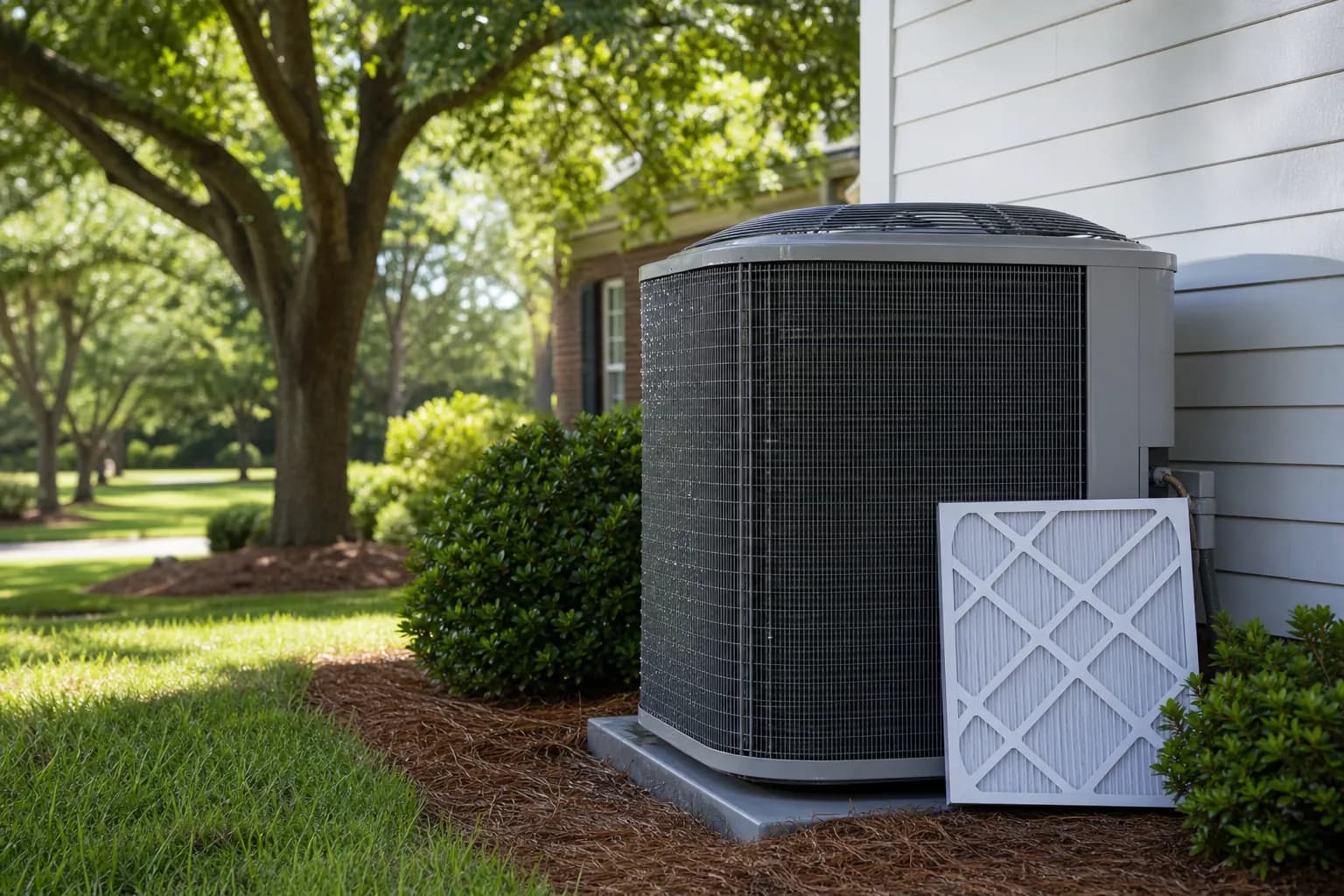 Seasonal
Pre-Cooling Your Eastern Shore Home Before the Afternoon Heat Peak
A pre-cooling strategy for Eastern Shore homes — cool the house earlier, manage thermostat setbacks, blinds, fans, and humidity so your AC isn't fighting the worst heat from behind.
August 4, 20266 min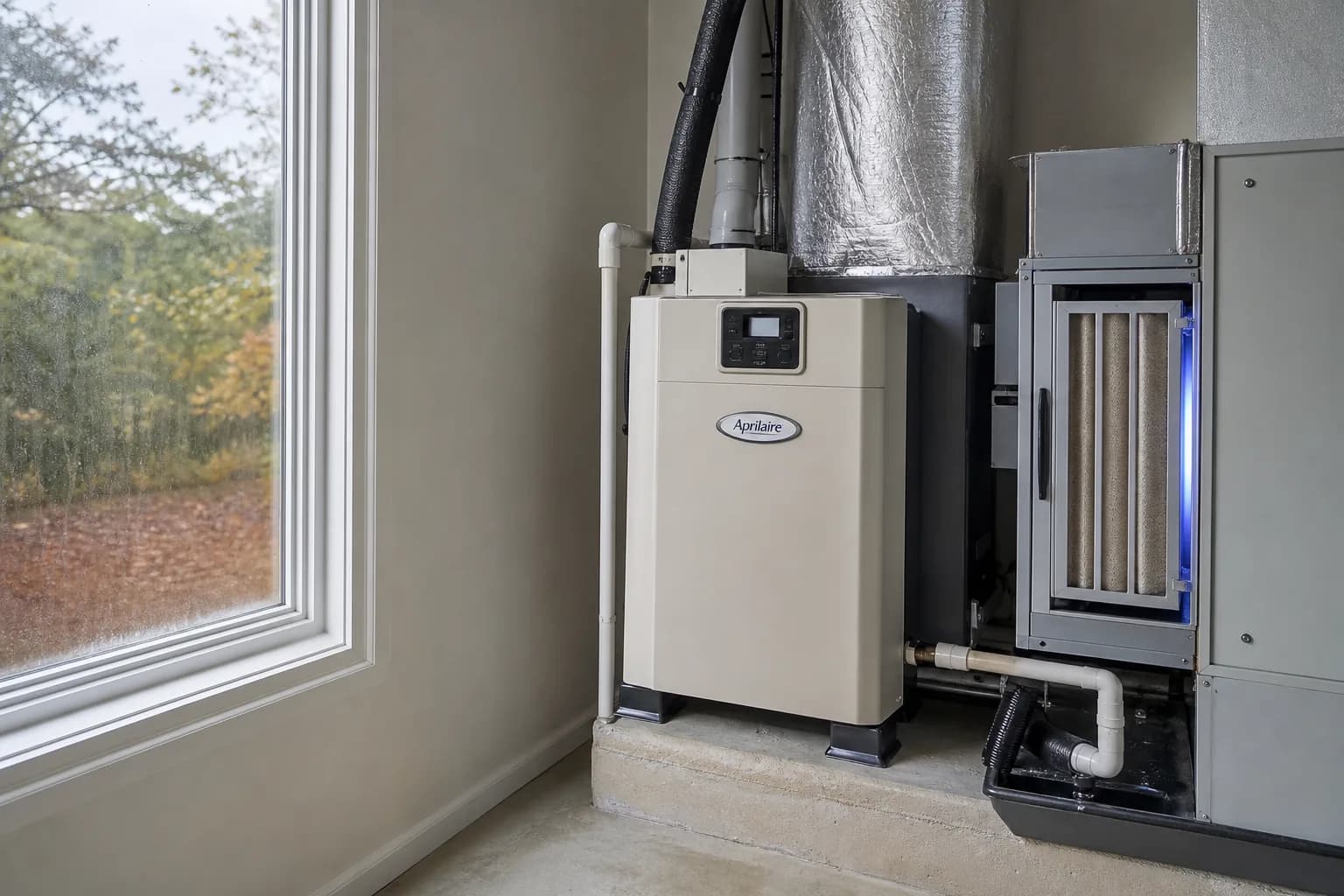 Indoor Air Quality
Why Your Fairhope Home Feels Stuffy in Fall: Lower Humidity, Tighter Homes
Stuffy fall feeling in your Fairhope, AL home? Why it happens (low humidity + sealed-up homes) and how to fix it.
September 30, 20264 min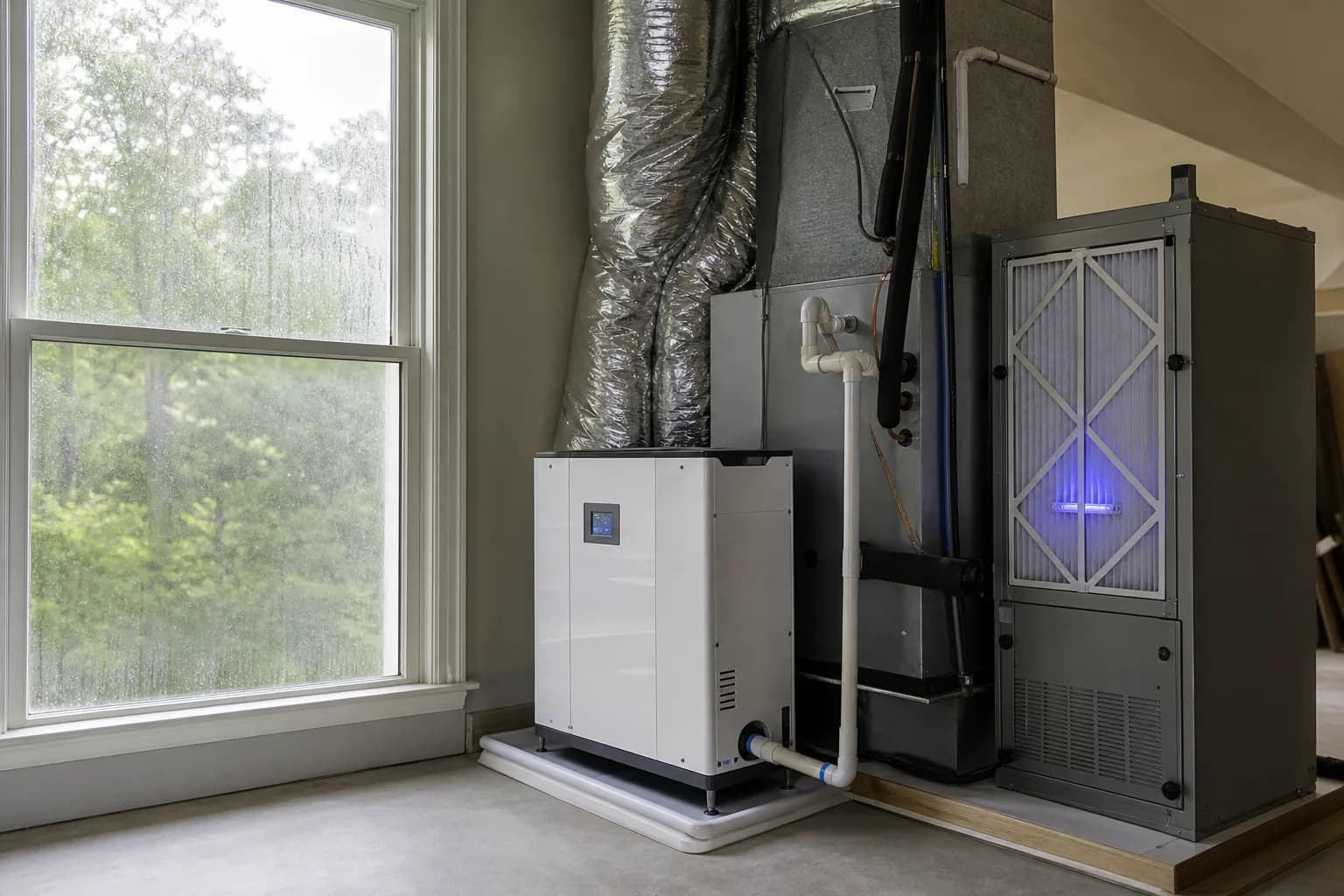 Indoor Air Quality
Whole-House Dehumidifiers for Fairhope Summer Humidity: When Worth It
When whole-house dehumidifier installation makes sense in Fairhope, AL — costs, benefits, and the specific household profiles where the math works.
September 23, 20264 min
Other services in Montrose & this service across Baldwin County.
- All HVAC services in Montrose, AL
- Indoor Air Quality across Baldwin County
- AC Repair in Montrose
- AC Installation in Montrose
- AC Maintenance in Montrose
- Commercial HVAC in Montrose
- Emergency HVAC in Montrose
- Heating Repair in Montrose
- Heat Pump Services in Montrose
- Ductless Mini-Splits in Montrose
- Heating Installation in Montrose
Indoor Air Quality in Montrose — Schedule Today.
Same-day appointments most weekdays. Cool Club members get prioritized scheduling.