
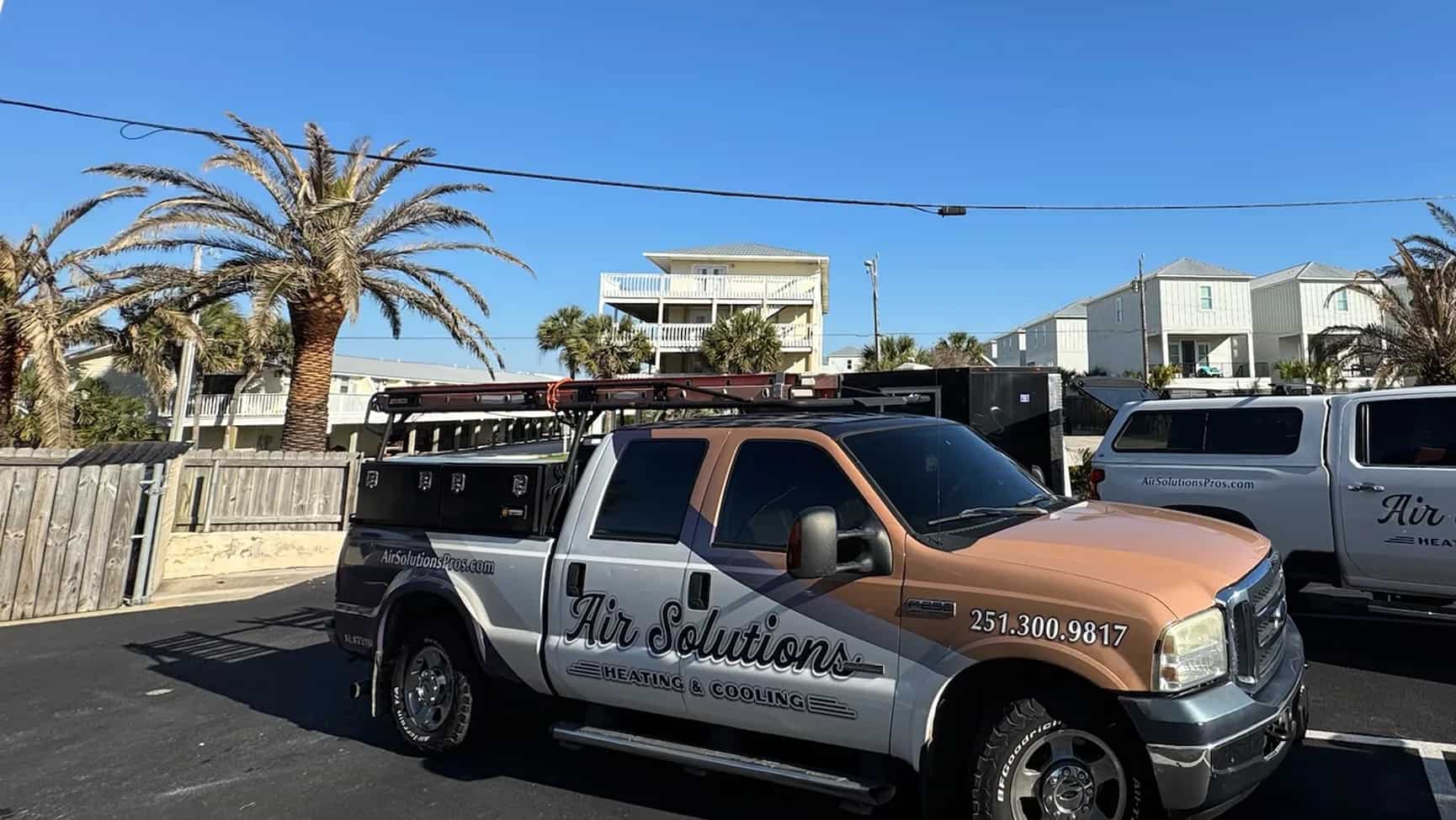
AC Maintenance in Fort Morgan.
Local AC maintenance in Fort Morgan, Alabama and surrounding Baldwin County. Bi-annual tune-ups. Cool Club priority + member savings. Licensed AL#23194. 353+ five-star reviews. Call (251) 300-9817.
Get a Free Estimate
Name and phone is all we need to call you back. Takes ~20 seconds.
353+ five-star reviews · Same-day · 24/7 · Licensed AL#23194
What AC maintenance looks like in this climate.
A bi-annual maintenance plan on the Fort Morgan peninsula pays back across one of the most lopsided cooling-to-heating ratios anywhere in Baldwin County, and the per-coordinate ERA5 reanalysis at the peninsula coordinates is what makes the math visible. Annual cooling load lands near 3,008 degree days; annual heating load comes in near 642 degree days — the lightest winter load anywhere in our service area, lower than Foley's 1,065, lower than Fairhope's 1,045, and lower than Bay Minette's 1,166. Average July highs sit near 85.7°F (the bay-and-ocean envelope moderates the peak dry-bulb temperature noticeably below what an inland Baldwin parcel records) and average January lows track around 56.4°F. From a maintenance-cadence standpoint the practical consequence is that a peninsula AC system spends nine to ten months a year in active cooling-mode duty, with maybe four to six weeks of meaningful heat-strip or heat-pump-reversal demand across late December and January. A spring tune-up booked here is amortized across a runtime season twice as long as the same tune-up on a Bay Minette parcel, which is why the cost-benefit math on the bi-annual cadence tilts so favorably on a peninsula address.
The other half of the climate picture is the moisture envelope wrapping every peninsula structure, and that moisture is what makes the spring tune-up's coil and condensate work matter as much as the electrical and refrigerant work. Sitting at 3 meters of elevation with Mobile Bay on the north flank and the open Gulf on the south flank, dewpoint sits high enough through nine months of the year that indoor latent load per square foot runs heavier than the dry-bulb numbers alone suggest. The indoor evaporator coil on a peninsula system stays wet for sustained stretches across the cooling season, biofilm patterns develop in the condensate pan and drain line at a faster pace than on a dryer inland install, and the float-switch trip patterns that surface as middle-of-the-night no-cool calls during the August humidity peak almost always trace back to drain-line work that a spring visit would have caught cleanly.
Every Fort Morgan neighborhood, every zip.
AC-maintenance dispatch to a Fort Morgan address gets planned months ahead of the visit date rather than booked against next-week calendar availability, and the route-day economics are the reason. OSRM-verified routing from the Daphne shop runs 57.1 miles and 88.6 minutes one-way under normal traffic, working south on US-98 to Foley, then south on Highway 59 to the Highway 180 turn-off, then the full length of Fort Morgan Road out to the destination — and Highway 180 remains the only road in or out of the peninsula. That is the longest dispatch in our entire Baldwin County matrix, which means peninsula tune-up work batches into recurring route days against the Cool Club roster rather than dispatching as one-off truck-rolls. A typical peninsula route day in March or April visits five or six addresses spread across Mobile Point, the Fort Morgan Peninsula proper, Gulf Shores Plantation, The Colony at Fort Morgan, and the residential blocks around the Mobile Bay Ferry landing, with the truck working its way out and back along the Highway 180 corridor through a single 36542 ZIP. Single one-off peninsula tune-ups isolated on a calendar day with no other peninsula stop are uneconomic for both of us, and the booking conversation reflects that honestly rather than promising the date you ask for if the route does not support it.
For absentee owners and property managers running peninsula rental portfolios the seasonal-scheduling workflow shapes the entire booking conversation. Spring tune-ups get timed BEFORE Memorial Day rental ramp-up — the visit lands cleanly inside a March or April vacancy window, the equipment goes into peak rental season cleanly serviced, and the documented condition snapshot lives in the property file ahead of the first guest stay of the year. Fall tune-ups get timed AFTER Labor Day rental wind-down — the visit lands in a quieter October or November window, the system gets pulled through the all-electric heating-side rare-event prep ahead of any cold-snap weather, and the written tune-up report goes to both the property manager and the absentee owner's email-on-file for the rental-property records. Multi-unit portfolios get clustered on a single peninsula route day so the truck visits four or six units in a single Tuesday-through-Thursday block rather than fragmenting across the calendar. To open the spring or fall booking conversation against the next available peninsula route day, the call routes through (251) 300-9817, which is staffed around the clock — Cool Club members on the peninsula get priority scheduling during peak season exactly as the membership page describes it, with 15% off all AC repairs and 5% off new systems as the published member benefits and no long-term contracts or cancellation penalties attached.
- Mobile Point
- the Fort Morgan Peninsula
- Fort Morgan Road (Highway 180)
- Gulf Shores Plantation
- The Colony at Fort Morgan
- the Mobile Bay Ferry landing area
AC Maintenance in Fort Morgan — the questions that come up.
- Why does Air Solutions recommend two tune-ups a year on a Fort Morgan property when the manufacturer manual says once?
- The manufacturer's annual-cadence recommendation is calibrated to an average-climate, average-exposure install — a shaded inland yard with a typical 4-to-6-month cooling season and no marine-aerosol corrosion load on the outdoor equipment. A Fort Morgan address breaks that average on three axes simultaneously. The cooling season runs nine to ten months instead of four to six, so cumulative runtime hours accumulate twice as fast as the manufacturer baseline assumes. The salt-aerosol envelope wrapping the peninsula touches every outdoor component continuously, so corrosion progresses on a calendar that is faster than the manufacturer's general-population lifespan curve. And vacation-rental occupancy density pushes capacitors, contactors, and condenser fan motors through their drift-detectable wear envelope years ahead of their install-date calendar age. The Cool Club bi-annual structure — a comprehensive AC tune-up in the spring and a heating system tune-up in the fall, two visits and two seasons covered on one membership with no long-term contract — addresses all three of those acceleration factors. On a peninsula property the cost-benefit math on the second visit pays back primarily by catching capacitor drift and condenser-coil salt fouling before they surface as a peak-summer emergency call rather than by extending equipment lifespan in the abstract.
- What does the coastal-protocol spring tune-up actually do beyond the standard inland 8-point inspection?
- The standard 8-point inspection happens on every Cool Club visit regardless of address — refrigerant pressure measurement, electrical inspection, capacitor and contactor test, coil cleaning, blower motor test, thermostat calibration, condensate-drain treatment, and a documented written report. On a Fort Morgan address the spring visit adds a coastal-protocol layer on top of that baseline. The additions: an outdoor-coil fresh-water salt rinse to flush accumulated marine deposits before they continue eating fin pack and copper across the next cooling season, a fastener corrosion inspection at the outdoor cabinet with replacement of any compromised hardware on the spot, an electrical-cabinet seal verification to confirm that wind-driven rain and salt aerosols are not bridging the gap into the disconnect or contactor enclosure, a capacitor microfarad reading recorded against the prior visit's baseline so drift toward the bottom of the tolerance band gets caught before the start-cycle failure shows up at peak July load, and a refrigerant pressure reading recorded against the prior baseline so slow leak signatures at salt-corroded line-set joints surface during the visit rather than during a 2 AM no-cool call in August. The written tune-up report documents each of those readings so the trend across visits is visible to the owner — a microfarad value that has dropped 8 percent in two visits gets flagged on the report even if the current reading still sits inside spec, which is the kind of forward-looking data that does not exist on a once-a-year visual-only inspection.
- We own a Fort Morgan vacation rental and live in Birmingham. How do you actually schedule maintenance visits around our turnover calendar?
- Absentee-owner peninsula scheduling runs on a deliberately seasonal cadence rather than on the next-available-date calendar that suits a primary-residence inland customer. The spring tune-up gets timed BEFORE Memorial Day rental ramp-up — we target a March or April vacancy window when the property is between off-season guests and you have flexibility on the date, so the equipment goes into peak rental season cleanly serviced and the documented condition snapshot lives in the property file ahead of the first paying stay of the year. The fall tune-up gets timed AFTER Labor Day rental wind-down — typically October or November, again landing in a quieter window when changeover pressure is off the calendar. On the booking call we ask for your typical changeover day, the vacancy windows where the unit is empty, and whether you want the maintenance report copied to your property manager. Multi-unit portfolios get clustered on a single peninsula route day so the truck visits four or six units in a single Tuesday-through-Thursday block rather than fragmenting across the calendar. The written tune-up report goes to both the property manager and your email-on-file in a format useful for rental-property bookkeeping — pre-work readings, parts inspected, post-work readings, the coastal-protocol scope completed — which matters when the rental income files on a Schedule E and you want the maintenance documentation in the property file for insurance or resale.
- What does a pre-Atlantic-hurricane-season inspection visit cover, and is it different from the regular Cool Club spring tune-up?
- On a Fort Morgan property the spring Cool Club visit and the pre-Atlantic-hurricane-season inspection are typically scheduled as the same visit rather than as two separate calendar bookings, with the visit landing in May or early June so it runs ahead of the climatological peak of the Atlantic hurricane season in late August through September. The hurricane-season scope layered onto the standard spring tune-up adds four specific items. First, outdoor-disconnect surge-protection verification — confirming that any installed surge-protective device on the outdoor disconnect is still in spec, replacing it if it has absorbed prior surge events, and flagging the absence of one as a recommendation if your installation does not have one yet. Second, an outdoor cabinet seal check specifically scoped against wind-driven rain — confirming that gasketing on the disconnect cabinet and the equipment cabinet itself is intact, not cracked from heat cycling, and seated cleanly so a sustained-wind weather event does not push moisture into the electrical compartment. Third, on AE/VE-zoned parcels an elevated condenser-pad inspection — confirming pad anchoring is sound, the elevation relative to the lot's Base Flood Elevation matches what the install plan specified, and any post-Sally settlement of the pad has not compromised the equipment's storm-prep position. Fourth, a written condition snapshot the owner can attach to the property's hurricane-prep records for insurance purposes. The combined spring-and-hurricane-prep visit is one of the reasons the peninsula bi-annual cadence matters so much more than the inland equivalent.
- Our Fort Morgan house runs on Baldwin EMC and has no gas service. What does the fall heating-side tune-up actually do?
- The fall visit scope on an all-electric peninsula property looks different from the equivalent fall visit on an inland Baldwin home with a natural-gas furnace, because the equipment population is different. On the peninsula every system is either a central AC paired with electric resistance strip backup or a central heat pump handling the entire heating-and-cooling load — there is no gas-furnace combustion analyzer step, no flue inspection, no carbon-monoxide check in the visit scope. What the fall visit does instead is exercise the heating-mode components that sit dormant for most of the year on a 642-heating-degree-day climate. For a straight central AC paired with electric resistance backup that means aux-strip continuity testing under load, sequencer relay actuation verification, and breaker-amperage measurement on the strip circuit to confirm the heating side will actually fire when called. For a heat pump that adds reversing-valve actuation testing, defrost-board calibration check, and a documented confirmation that the heating mode runs cleanly through a full cycle. The January 2024 multi-night sub-freezing stretch that put unusually meaningful heating-mode load on every peninsula system reminded everyone why the fall visit matters even on the peninsula's mostly-dormant heating envelope — auxiliary strips that nobody had verified under load since the prior winter were the source of a meaningful share of the cold-snap repair calls that month, and the fall tune-up is the visit that catches those issues ahead of the rare freeze event rather than during it.
How named-storm history and freeze events shape the bi-annual maintenance scope on a Fort Morgan property.
- Sep 16, 2020 — Hurricane Sally (Cat-2 landfall at Gulf Shores; eyewall across the Fort Morgan peninsula): Sally tracked the eyewall directly across the Fort Morgan peninsula with multi-day storm-surge inundation and sustained wind exposure along the entire Highway 180 corridor. For a maintenance program the storm reinforced two distinct visit-scope conclusions. First, the value of an off-cycle post-event inspection visit on equipment that survived the storm itself — outdoor disconnects that took wind-driven rain into the electrical compartment but appeared to restart cleanly afterward developed delayed control-side failures over the following 6 to 18 months, and an October or November post-Sally visit caught a meaningful share of those failures with measured readings before they surfaced as 2 AM emergency calls the following summer. Second, the value of pre-season prep ahead of any future named-storm activity — the May or early June pre-Atlantic-hurricane-season visit scope (outdoor-disconnect surge-protection verification, cabinet seal check against wind-driven rain, elevated-pad anchoring inspection on AE/VE-zoned parcels) became a load-bearing component of the spring tune-up after Sally rather than an optional add-on.
- Sep 16, 2004 — Hurricane Ivan (major Cat-3 landfall just west of the peninsula): Ivan is the reference event for the longer-tenured peninsula owners and the rebuild wave that followed reshaped a substantial share of the Fort Morgan housing stock. Almost no pre-Ivan outdoor equipment remains in service today — the post-Ivan replacement wave of 2005-2008 produced an equipment cohort that has now been replaced again in most cases as those units aged through their full coastal service life. For a maintenance program the operational consequence is that almost every system on the peninsula maintenance roster today is either second-generation post-Ivan equipment from the 2005-2008 wave (now itself nearing replacement on the coastal lifespan curve) or its post-Sally successor (installed under tightened post-event code requirements with elevated pad placements and hurricane-rated outdoor disconnects). The bi-annual tune-up scope is calibrated against that equipment vintage — capacitor microfarad baselines for the older cohort track differently than the newer cohort, and the written tune-up report's trend column flags equipment approaching the end of its serviceable coastal life ahead of the repair-versus-replace conversation arriving as an emergency.
- Ongoing — peninsula salt-aerosol exposure — Continuous coastal corrosion that the bi-annual cadence is built to manage: Not a single event but a continuous environmental load that hits harder on Fort Morgan than on any other coastline we serve. The narrow geography — saltwater on both sides, sea-breeze cycles pushing aerosols across the structure twice a day from opposite directions — means almost every outdoor unit sits inside the corrosion envelope continuously. Gulf-side parcels face full-marine open-water aerosols on the prevailing on-shore winds; bay-side parcels face brackish Mobile Bay aerosols with different chemistry but comparable corrosion potential. The maintenance-side mitigation is the spring tune-up's coastal-protocol scope — the outdoor-coil fresh-water salt rinse, the fastener corrosion inspection at the outdoor cabinet, the electrical-cabinet seal verification, and the capacitor and contactor inspections that catch corrosion-driven drift before it surfaces as a peak-summer failure. The fall visit adds the heating-side rare-event prep onto the same coastal-protocol scope. Equipment placed on a peninsula address without that bi-annual cadence tends to age out of serviceable life on a calendar that runs 30 to 50 percent shorter than equivalent inland equipment; equipment carrying the bi-annual cadence consistently tracks closer to the published lifespan curve despite the harsher operating environment.
- Jan 2024 — Multi-night sub-freezing stretch across the central Gulf Coast: A sustained sub-freezing run that put unusually meaningful heating-mode load on every peninsula central system for an unusually long window. For most Fort Morgan equipment paired with electric resistance backup the event was a brief stress test of auxiliary strips that normally sit on standby for months — strip continuity nobody had verified under load since the prior winter, sequencer relays that had not actuated in many months, breaker amperage on the strip circuit that had not seen a sustained-load reading since commissioning. The repair call wave through the freeze and into spring 2024 included aux-strip failures on equipment that had passed every cooling-season check but had not exercised the heating side since the prior fall visit. The maintenance-program lesson was sharp: the fall heating-side visit's aux-strip continuity testing and reversing-valve actuation are not optional fall-visit items on the peninsula even though the peninsula's heating envelope is the lightest in the matrix — the rare freeze event is exactly when the dormant heating components fail, and the fall visit is the place that catches those issues ahead of the event rather than during it.
What Fort Morgan customers can claim.
- Every residential address on the Fort Morgan peninsula is served by Baldwin EMC for electric, and there is no natural-gas distribution network on Fort Morgan Road past the early portion of the peninsula per the verified service-area documentation. For an AC-maintenance conversation the single-provider all-electric reality simplifies the bi-annual visit scope: no gas-furnace combustion analyzer step on the fall heating-side visit, no flue inspection, no carbon-monoxide check, and no dual-fuel switchover programming to verify. The fall visit instead focuses on the all-electric heating-mode components that sit dormant for most of the year on a 642-heating-degree-day climate — aux-strip continuity under load, reversing-valve actuation on heat-pump installations, defrost-board calibration, and the rare-event preparation the January 2024 multi-night freeze reminded everyone matters.
- Standard AC-maintenance line items on Fort Morgan parcels — Cool Club spring and fall tune-up visits, coastal-protocol coil rinse work, capacitor microfarad baselining, contactor face inspection, condensate-drain treatment, electrical-cabinet seal verification — do not qualify for utility rebates from Baldwin EMC or any other provider. The cooperative's rebate frameworks target full-system replacement at qualifying high-efficiency tiers rather than the parts-and-labor side of a recurring maintenance program.
- If a bi-annual tune-up visit surfaces a system past its serviceable run and the conversation pivots toward replacement, the rebate-side path opens up depending on which qualifying-equipment tier the replacement equipment lands in. Baldwin EMC has, in past program cycles, run residential energy-efficiency incentive paths covering qualifying high-SEER2 heat-pump and straight-AC installations, but the specific qualifying-equipment lists and dollar amounts move on the cooperative's own annual cycle — we verify the current BEMC program directly with the cooperative at quote time rather than carrying a stale figure forward into a replacement-system budget.
- Cool Club membership covers the bi-annual professional tune-up cadence at the heart of the peninsula maintenance program — a comprehensive AC tune-up in the spring and a heating system tune-up in the fall, two visits and two seasons covered on one membership — with the spring visit specifically including the coastal-protocol coil rinse that matters more on a Fort Morgan address than anywhere else in our service area. The published member benefits include 15% off all AC repairs and 5% off new systems, with no long-term contracts and no cancellation penalties attached. On an absentee-owner rental portfolio running several service tickets a year, that 15% compounds across the operating math whether the owner watches each individual invoice or not, which is the second-tier economic argument for the bi-annual cadence beyond the avoided-emergency-call value the visits themselves produce.
What Fort Morgan homeowners say after a AC Maintenance call.
Hand-picked GBP reviews for this cell pending. Wave C selects 1-3 reviews from the existing pool, ensuring no review appears on more than two cells per the master-plan uniqueness rule.
AC Maintenance Coverage Map — Fort Morgan, Alabama
Centered near Fort Morgan for orientation. Air Solutions Heating & Cooling provides AC maintenance throughout every Fort Morgan neighborhood and zip code, plus the surrounding Baldwin County area. Same crew, same number — we travel the whole county.
353+ Five-Star Reviews. And Counting.
“This company is amazing. They are quick to provide service and are just all around great to deal with as a customer. I like them so much I joined their Cool Club (and you should too). The best part about this company is Jesse! He’s been the guy I’ve dealt with every time and he ALWAYS goes above and beyond my expectations for AC maintenance. If you are looking for an honest, trustworthy company…”
“Justin Cobb was excellent with our routine maintenance!! If I could give 10 stars I would, this company goes above and beyond for the customers. I wish I would have found them sooner!!”
Stop Chasing Breakdowns.
Two professional tune-ups a year, priority scheduling when something does go wrong, and member-only savings on every service. The Cool Club pays for itself.
Two seasonal tune-ups
Spring AC + fall heat pump. 8-point check, written report.
Priority scheduling
When something breaks, members move to the front of the queue.
15% off every repair
Every repair, every visit, every part. No exclusions.
5% off new installs
Stacks with Alabama Power and manufacturer rebates on qualifying heat pump installs.
Automatic reminders
We track when your tune-ups are due and reach out to schedule.
Detailed service reports
Every visit produces a written report — your HVAC has a paper trail.
Schedule AC Maintenance in Fort Morgan.
Bi-annual tune-ups. Cool Club priority + member savings. Same-day appointments most weekdays in Fort Morgan and surrounding Baldwin County. Tell us when works for you — we'll confirm by phone during weekday office hours (8 AM-4 PM).
Need someone right now? Call (251) 300-9817 — our 24/7 emergency line is answered live when we can and returned quickly when we can't.
AC Maintenance in Fort Morgan — FAQs
How often should AC be serviced in Baldwin County?
Twice a year — spring tune-up before peak summer load, fall tune-up before heating season (or heat pump heating mode kicks in). The Cool Club membership covers both visits at a flat annual rate.What's included in a Cool Club tune-up?
Refrigerant pressure check, electrical connections inspection, condensate line clearing, evaporator and condenser coil cleaning, blower motor and capacitor test, thermostat calibration, and a written report on what we found.Does the Cool Club really save money?
For most homeowners, yes. Two tune-ups per year prevents the majority of breakdowns we see, the 15%-off-repairs benefit covers most one-off service calls, and prioritized scheduling means we get to you faster when something does go wrong.Do you service all of Fort Morgan, AL?
Yes — Air Solutions Heating & Cooling covers every neighborhood and zip code in Fort Morgan, Alabama — including Mobile Point, the Fort Morgan Peninsula, Fort Morgan Road (Highway 180), plus the surrounding subdivisions and rural roads. We handle AC repair, AC installation, AC maintenance, emergency HVAC, and commercial HVAC. Standard service hours weekdays, 24/7 emergency response, and same-day appointments most of the year. Call (251) 300-9817 to schedule.What HVAC issues are most common in Fort Morgan?
Homes around the historic Fort most commonly call us for refrigerant leaks (often salt-air or coil corrosion related on the Gulf Coast), undersized air conditioning systems struggling with Baldwin County summer humidity, and capacitor failures during peak load between June and September. A Cool Club bi-annual maintenance plan catches most of these issues before they cause a breakdown.
AC Maintenance Near Fort Morgan.
Right at the Fort Morgan city limit? We service the surrounding Baldwin County communities on the same routes — same crew, same response times.
Related HVAC Guides.
Long-form articles about AC maintenance and Baldwin County HVAC, with practical advice from our team.
 Maintenance
AC Unit Lifespan on the Gulf Coast
How long AC units actually last on the Gulf Coast, what salt air does to them, and how Baldwin County homeowners extend service life.
April 22, 20267 min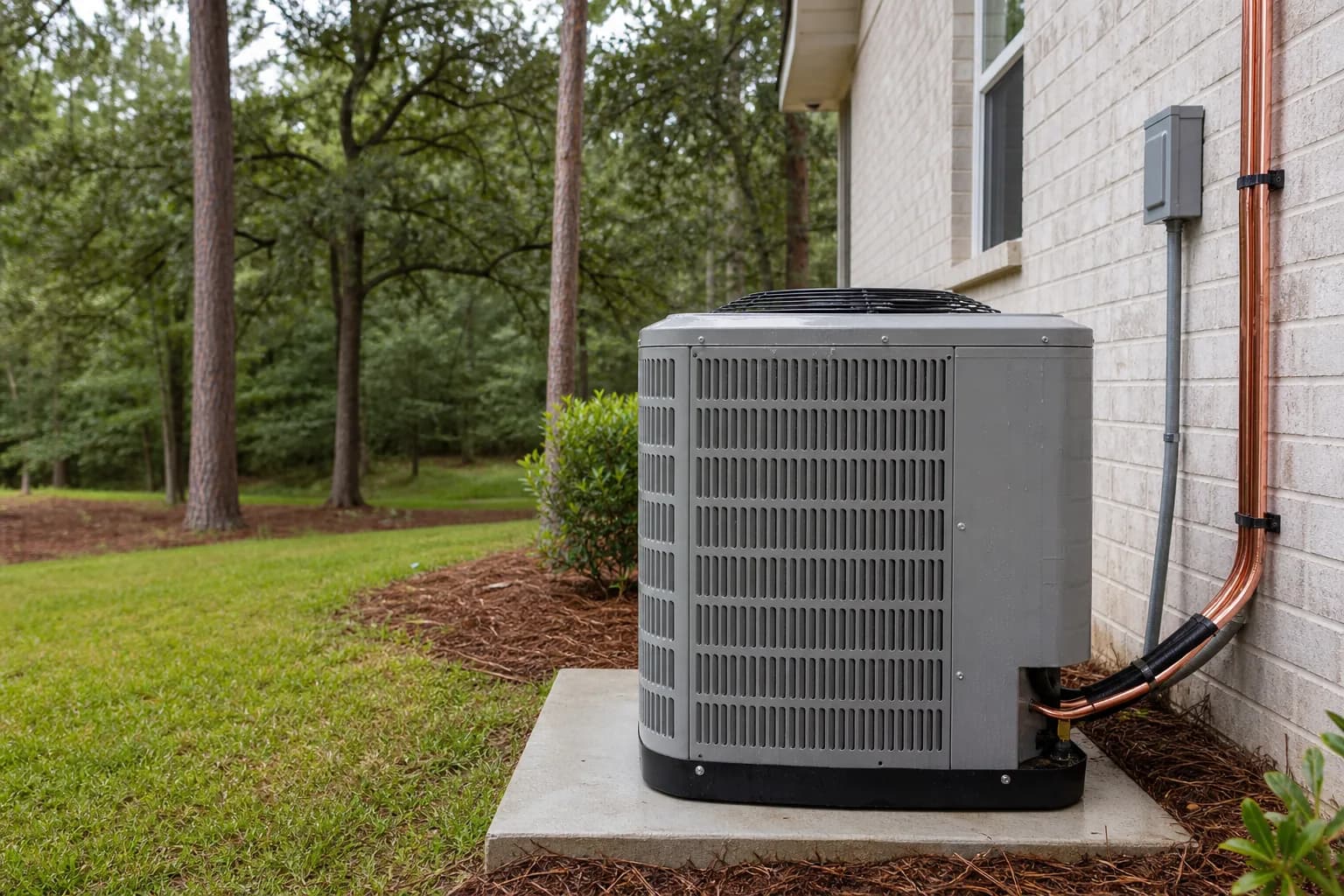 Indoor Air Quality
Indoor Air Quality on the Gulf Coast: Why Humidity Changes Everything
How Gulf Coast humidity drives indoor air quality problems in Baldwin County homes — and the HVAC strategies that actually work in our climate.
March 15, 202610 min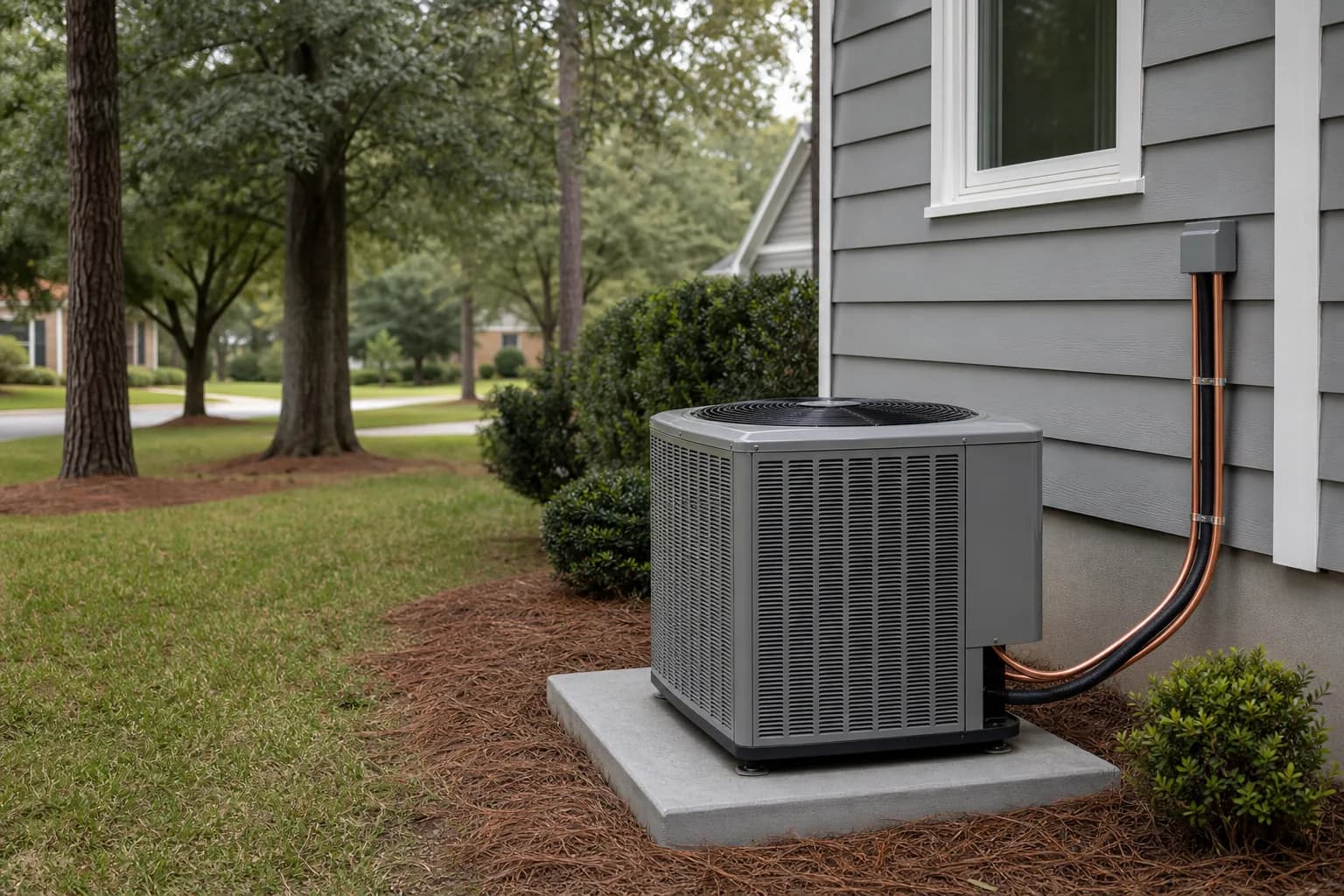 Buyer Guides
Smart Thermostat Buying Guide for Gulf Coast Homes
Honest review of Ecobee, Nest, Honeywell, and entry-level smart thermostats — which one actually makes sense for Baldwin County, AL homes and vacation rentals.
March 1, 20269 min
Other services in Fort Morgan & this service across Baldwin County.
- All HVAC services in Fort Morgan, AL
- AC Maintenance across Baldwin County
- AC Repair in Fort Morgan
- AC Installation in Fort Morgan
- Commercial HVAC in Fort Morgan
- Emergency HVAC in Fort Morgan
- Heating Repair in Fort Morgan
- Heat Pump Services in Fort Morgan
- Indoor Air Quality in Fort Morgan
- Ductless Mini-Splits in Fort Morgan
- Heating Installation in Fort Morgan
AC Maintenance in Fort Morgan — Schedule Today.
Same-day appointments most weekdays. Cool Club members get prioritized scheduling.