
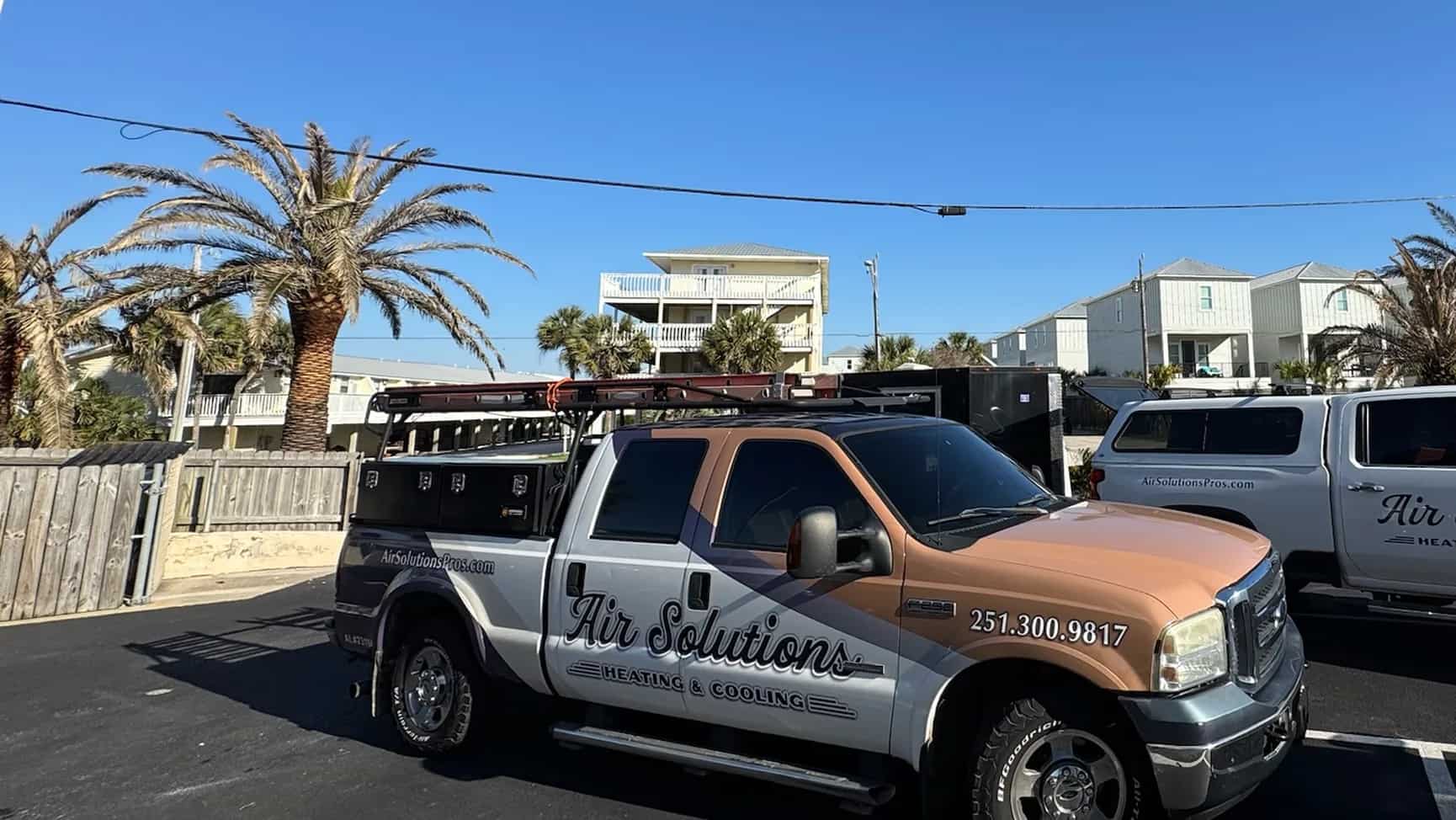
Emergency HVAC in Fort Morgan.
Local emergency HVAC in Fort Morgan, Alabama and surrounding Baldwin County. 24/7 emergency response across Baldwin County. Licensed AL#23194. 366+ five-star reviews. Call (251) 300-9817.
AC Not Cooling? Not Blowing Cold Air? Start Here.
Most Fort Morgan calls start with one of these symptoms. Same-day weekday diagnostic, written estimate before any work — call (251) 300-9817.
- AC running but not cooling the house — usually a refrigerant leak, dirty condenser coil, or weak capacitor
- AC not blowing cold air — warm air from the vents means the compressor isn't engaging or refrigerant is low; we test both and explain what we find
- Ice on the copper lines or evaporator coil — switch the system off before we arrive; running it frozen risks compressor damage
What emergency HVAC looks like in this climate.
An emergency HVAC call on the Fort Morgan peninsula lives inside one of the most lopsided cooling-to-heating envelopes anywhere in our service area. The per-coordinate ERA5 reanalysis at the peninsula coordinates returns roughly 3,008 cooling degree days against only 642 heating degree days — the lowest HDD figure in the entire Baldwin County matrix, lower than Foley (1,065), lower than Bay Minette (1,166), lower than every inland point we cover. Sitting at 3 meters of elevation with Mobile Bay on one side and the open Gulf on the other, the peninsula's thermal envelope is moderated by saltwater on both flanks in ways no inland address can match. The practical consequence for an after-hours dispatch picture is that the overwhelming majority of Fort Morgan emergency calls land in the cooling season — compressor lockouts in late June through early September, condensate-pump float-switch overflows at two in the morning on a humid August night, contactor faces failing under the third 95°F afternoon in a row — with the no-heat call category genuinely rare and largely confined to the few mornings a year when overnight lows reach the low 30s.
Two pieces of local-environment honesty matter for the emergency picture itself. The FEMA NFHL point check at the peninsula center returned a Zone X designation with the 0.2 percent annual chance flood hazard subtype — the shaded-X or 500-year zone. That city-center grading stops being useful the moment a parcel sits closer to either shoreline: addresses along Mobile Point, the Gulf-facing south side of Fort Morgan Road, the Mobile Bay Ferry landing area, and the residential blocks along the bay shore commonly fall into coastal AE or VE zones at the parcel level with real storm-surge exposure. We verify the specific address before promising anything on a storm-adjacent call. The second piece is that the rare cold morning tests heat-pump components that have sat idle for ten months on the peninsula — reversing valves that have not actuated since the previous winter, defrost-board calibration that nobody verified between seasons, auxiliary heat-strip continuity that the system itself has not exercised under load. The 642 HDD baseline looks light on paper; on the two or three actual freeze mornings a winter brings, the emergency call volume meaningfully exceeds what the annual heating-degree-day total would predict.
Direct-hit storms and access events that have shaped emergency HVAC dispatch on the Fort Morgan peninsula.
- Sep 16, 2020 — Hurricane Sally (Cat-2 landfall, Gulf Shores; eyewall directly across the Fort Morgan peninsula): Sally tracked its eyewall directly across the Fort Morgan peninsula with multi-day storm-surge inundation and sustained wind exposure along the full Highway 180 corridor. The county issued mandatory evacuation orders for Mobile Point and the peninsula ahead of landfall, Highway 180 ran one-way outbound on the established contraflow plan, and the peninsula remained closed to non-essential traffic for days after the storm passed. The post-restoration emergency-dispatch picture on equipment that survived the physical damage involved capacitors that had absorbed surge events during the multi-week grid-restoration cycle, contactor faces pitted from voltage cycling, control boards that quit on the third or fourth power-on cycle, and outdoor disconnects that took wind-driven rain into the electrical compartment. A meaningful share of the post-Sally emergency tickets ran into early and mid 2021 as equipment that had appeared to restart cleanly after the storm finally failed under peak summer load.
- Sep 16, 2004 — Hurricane Ivan (major Cat-3 landfall just west of the peninsula): Ivan came ashore as a Category 3 just west of the peninsula with the eastern eyewall over Mobile Point and the worst of the wind field along the full length of Fort Morgan Road. Evacuation orders and post-storm access closures followed a similar pattern to what Sally would later repeat. The dominant emergency-HVAC pattern on equipment that survived the structural damage involved debris-driven condenser fin damage, bent fan blades, copper line-set tears at salt-corroded penetrations, and outdoor disconnect cabinets that had taken wind-driven rain through compromised gasketing. The post-Ivan rebuild wave reset much of the peninsula's HVAC inventory; Ivan remains the reference event for peninsula property owners and the operational lesson on what evacuation-access timing means for service dispatch.
- Aug 2023 — Extended heat-advisory stretch with rental-turnover pressure: A multi-day run of heat-index readings well into the triple digits with overnight humidity that never broke below 70 percent. The Fort Morgan call mix during the run combined the standard late-summer peninsula failure pattern (capacitor end-of-life clusters on the second sustained hot afternoon, condensate-drain overflows tripping float switches at two and three a.m., compressor lockouts on older salt-exposed outdoor equipment) with the vacation-rental turnover compression specific to the peninsula — failures discovered on Saturday-morning cleaning visits with a Sunday-afternoon guest-arrival deadline pressing against a 90-minute peninsula dispatch drive. Property managers ran parallel emergency calls across multiple addresses; we worked the queue against the realistic peninsula arrival math rather than promising tighter windows than the road would support.
- Jan 2024 — Multi-night hard freeze along the central Gulf Coast: A sustained sub-freezing run that put unusually real heating-mode load on every peninsula heat pump for an unusually long window. For most Fort Morgan installs, the event was a brief stress test of components that normally sit on standby — reversing valves that had not actuated in many months, auxiliary heat strips whose continuity had not been tested under load since the previous winter, defrost-cycle calibration that nobody had verified between seasons. Properly specified variable-speed inverter equipment with coated-coil outdoor protection rode through the week; older budget-tier installs from the 2000s saw a wave of no-heat emergency calls. No natural gas service on the peninsula meant no fallback-to-furnace conversations were on the table; the heat-pump emergency dispatch was the only mechanical answer available.
Every Fort Morgan neighborhood, every zip.
Emergency HVAC coverage on the Fort Morgan peninsula spans the single 36542 ZIP that the community shares with Gulf Shores — Mobile Point at the tip, the Fort Morgan Peninsula proper, Gulf Shores Plantation, The Colony at Fort Morgan, the residential blocks around the Mobile Bay Ferry landing area, and every address along the full Highway 180 corridor running the 22-mile length of the peninsula. From the Daphne shop the OSRM-verified drive to a typical Fort Morgan address comes to about 57 miles and 90 minutes one way under normal weekday conditions, routed south on US-98 to Foley, then south on Highway 59 to the Highway 180 turn-off, then the full length of Fort Morgan Road out to the destination. That is the longest dispatch in our entire Baldwin County service area, and Highway 180 is the only road in or out of the peninsula. On a peak-summer Saturday with Highway 59 backed up south of Foley through the destination-retail spine and the Highway 180 junction turning over slowly under rental-turnover traffic, the practical drive frequently runs past two hours by the time the truck clears the peninsula entrance.
We do not promise a specific minute window for a Fort Morgan emergency response and the reason is plain dispatch arithmetic: an hour and a half each way under best-case conditions means a one-off peninsula run from Daphne is genuinely a three-hour windshield commitment, and we refuse to invent a tighter promise than the road can keep.
- Mobile Point
- the Fort Morgan Peninsula
- Fort Morgan Road (Highway 180)
- Gulf Shores Plantation
- The Colony at Fort Morgan
- the Mobile Bay Ferry landing area
Emergency HVAC in Fort Morgan — the questions that come up.
- Our Fort Morgan rental's AC died at midnight and the next guests check in tomorrow afternoon. What's the realistic dispatch window from your Daphne shop?
- Honest answer first: the OSRM-verified drive from our Daphne shop to a Fort Morgan address is about 57 miles and roughly 90 minutes one way under normal weekday conditions, routed south on US-98 to Foley, then south on Highway 59 to the Highway 180 turn-off, then the full length of Fort Morgan Road out to the property. A midnight call that reaches the 24/7 line gets dispatched as quickly as the next-available truck and the route economics allow, but we will not promise a specific minute window on the booking call before we know which truck is rolling. What we will do is quote an honest arrival window on the call, tell you immediately if the dispatch picture means we cannot make a specific check-in deadline (so a property manager can adjust on the guest-communications side), and disclose the after-hours overtime structure up front. The framing applies on the peninsula the same as anywhere else we cover: priority for life-safety situations, return calls quickly when live pickup isn't available, and dispatch a technician toward the address as soon as we can.
- There's a hurricane warning and Fort Morgan is under evacuation. Will you still come out for an emergency HVAC call?
- Once Baldwin County officials issue a mandatory evacuation order for Mobile Point and the Fort Morgan peninsula, our trucks do not roll there until the peninsula reopens to non-essential traffic. The safety threshold is plain — Highway 180 is the only road in or out of the peninsula, it commonly converts to a one-way outbound during contraflow evacuation operations on a stronger storm track, and putting a service truck onto a roadway designated for outbound civilian evacuation is not a defensible call. The pre-storm window is where dispatch work actually happens. During the warning period before the road closes, we field a meaningful surge of calls from owners and property managers wanting outdoor disconnects checked, surge protection verified, and any marginal AC system stress-tested before landfall. We work that pre-storm queue against the realistic 90-minute peninsula drive. Post-storm dispatch resumes only after the county reopens the peninsula, at which point the call mix shifts toward grid-restoration damage (capacitor failures from surge events, contactor pitting from voltage cycling, control-board failures on inverter units that survived the storm itself but failed during the multi-week restoration cycle).
- We own a Fort Morgan vacation rental and live in Atlanta. Our property manager handles day-to-day. How does an emergency dispatch flow when we're not the one calling?
- The flow we see most often runs like this. The property manager — or the cleaning crew, on a turnover discovery — calls the 24/7 line, we confirm the property address and the symptom, and we put a truck on the dispatch board against the 90-minute peninsula drive. We send the written estimate to whichever email is on file (often both the property manager and the owner) before any work past the diagnostic begins, so an absentee owner can approve the spend without waiting on a callback chain that loses hours across time zones. The 90-minute drive plus the access-and-approval logistics on an absentee-owner property mean the up-front information-gathering on the dispatch call is genuinely consequential.
- How do after-hours and weekend overtime fees work on a Fort Morgan emergency call, and does the Cool Club discount apply on the peninsula?
- After-hours, weekend, and holiday calls carry overtime rates — the Air Solutions site says that plainly and we say it plainly on the dispatch call before any truck is committed to a peninsula run. The diagnostic fee, the overtime hourly structure, and what the visit will cover get disclosed up front so there is no surprise when the tech arrives at the door 90 minutes later. The drive distance does not change the overtime policy itself; the time-of-day premium is the time-of-day premium regardless of geography. If the situation can wait safely until normal business hours, we say so honestly and let you choose.
- Our outdoor unit looked fine at the spring tune-up but quit during a thunderstorm last week. Is that the storm or the salt fog?
- On a Fort Morgan parcel it is frequently both, and the two failure mechanisms compound in ways that explain why something that passed a static inspection in March can fail under load in July. Salt-fog corrosion on a peninsula outdoor unit does not have to be visible on the obvious surfaces — the coil fins or the cabinet exterior — before it becomes electrically meaningful underneath. Disconnect-switch contacts can be pitted enough to read clean on a meter at low test current but arc under the compressor's inrush at startup. Capacitor terminal connections can develop a high-resistance interface from salt-aerosol influence that drops voltage to the start winding right when peak afternoon load is hitting. Contactor terminals can pit through to a point where the spring tension no longer makes a clean closure under load. A thunderstorm voltage cycle stresses every one of those marginal interfaces simultaneously, and the symptom — a trip or a lockout — often traces upstream to a salt-influenced electrical fault rather than to a problem at the breaker or the thermostat. Do not pull the panel off the outdoor unit yourself to check the capacitor — capacitors hold a dangerous stored charge after power is disconnected, and post-storm capacitor work on salt-exposed peninsula equipment is not a safe DIY task. The breaker reset is the only thing safe to try at home; flip it fully off and then back on, exactly once, and if it does not hold the second time, leave it off and call.
- When should I call the emergency HVAC line?
- Anytime your AC or heat is fully out and a return visit during normal hours is unworkable — a 95-degree afternoon, a sleeping infant, a vacation rental between renters. Call (251) 300-9817 and a technician routes to you.
- Do you respond on weekends and holidays?
- Yes. The number is the same: (251) 300-9817. Answered live when we can, returned quickly when we can't.
What Fort Morgan customers can claim.
- Every residential address on the Fort Morgan peninsula is served by Baldwin EMC for electric, and there is no natural-gas distribution network on Fort Morgan Road past the early portion of the peninsula. The all-electric reality shapes which emergency conversations are possible: there is no gas-furnace dispatch on a peninsula no-heat call; the failure is by definition on the heat-pump side or the auxiliary-strip electrical side, and the truck arrives with diagnostic tools sized for that scope.
- Emergency repair work itself — a Saturday-afternoon capacitor swap, a midnight contactor replacement, a defrost-board service on a rare January morning, a condensate-pump replacement on a flooded indoor coil — does not generally qualify for Baldwin EMC residential rebates. The cooperative's incentive pathways target qualifying full-system replacement at high-efficiency tiers, not the parts-and-labor side of a repair ticket.
- When an after-hours diagnostic surfaces a system past its serviceable peninsula run and the conversation turns toward a full replacement, the primary financial path is through Baldwin EMC residential energy-efficiency incentives targeting qualifying high-efficiency heat-pump installations — coated-coil variable-speed inverter equipment of the kind appropriate for peninsula salt exposure routinely clears the program floors, but specific qualifying-equipment lists and dollar amounts move annually and the responsible move is to verify the active offer directly with the cooperative. Note: the federal Section 25C Energy Efficient Home Improvement Credit expired December 31, 2025 — emergency replacements placed in service in 2026 no longer qualify; for a replacement completed before that date, a CPA can advise on the 2025 return.
- Our role on any replacement that follows an emergency call is to provide the invoice, the equipment model and serial numbers, and the install record the property file needs.
What Fort Morgan homeowners say after a Emergency HVAC call.
Hand-picked GBP reviews for this cell pending. Wave C selects 1-3 reviews from the existing pool, ensuring no review appears on more than two cells per the master-plan uniqueness rule.
Emergency HVAC Coverage Map — Fort Morgan, Alabama
Centered near Fort Morgan for orientation. Air Solutions Heating & Cooling provides emergency HVAC throughout every Fort Morgan neighborhood and zip code, plus the surrounding Baldwin County area. Same crew, same number — we travel the whole county.
366+ Five-Star Reviews. And Counting.
“We had an issue on a weekend at our office and Jacob with AirSolutions was quick to respond, kept me informed throughout the entire process and had it fixed same day! So thankful for reliable and efficient service. Never been disappointed with AirSolutions and recommend to anyone in need of repairs or preventative maintenance. They are the absolute BEST!”
“I can’t say enough good things about Air Solutions! Jesse was so kind and helpful, and came to my house within an hour of calling for a repair! Best ac repair service I’ve ever had!”
“Same day appointment during excessive heat. Very professional service from Jacob.”
When It Fails at 2 AM.
We answer the phone. Same-day diagnostic, same-day repair where parts allow. (251) 300-9817.
Schedule Emergency HVAC in Fort Morgan.
24/7 emergency response across Baldwin County. Same-day appointments most weekdays in Fort Morgan and surrounding Baldwin County. Tell us when works for you — we'll confirm by phone during weekday office hours (8 AM-4 PM).
Need someone right now? Call (251) 300-9817 — our 24/7 emergency line is answered live when we can and returned quickly when we can't.
Emergency HVAC Near Fort Morgan.
Right at the Fort Morgan city limit? We service the surrounding Baldwin County communities on the same routes — same crew, same response times.
Related HVAC Guides.
Long-form articles about emergency HVAC and Baldwin County HVAC, with practical advice from our team.
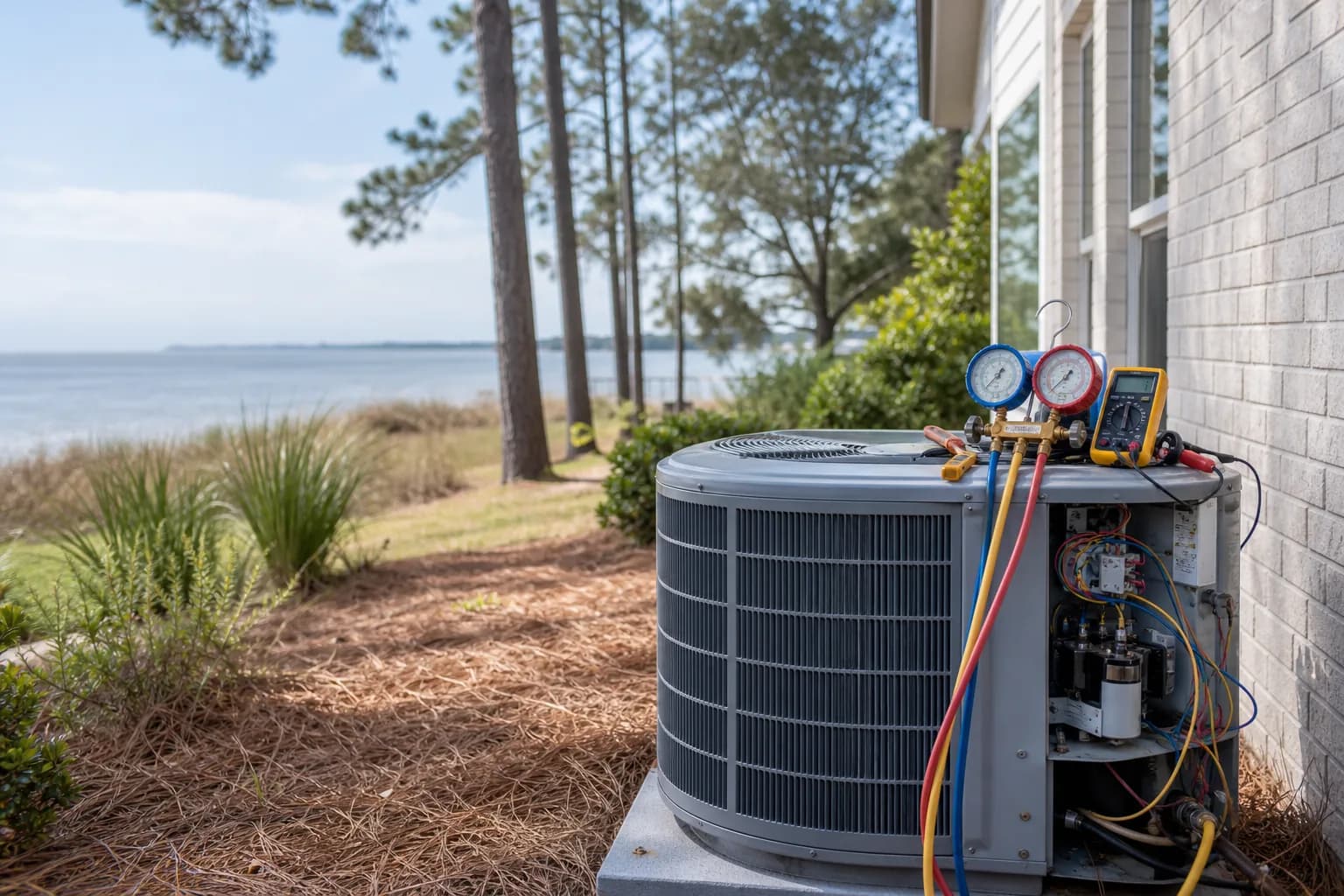 Coastal HVAC
Hurricane Prep for Your HVAC: A Gulf Coast Homeowner's Guide
Step-by-step hurricane prep for Baldwin County HVAC equipment — what to do before, during, and after a storm to protect your AC and avoid costly post-storm failures.
May 1, 202611 min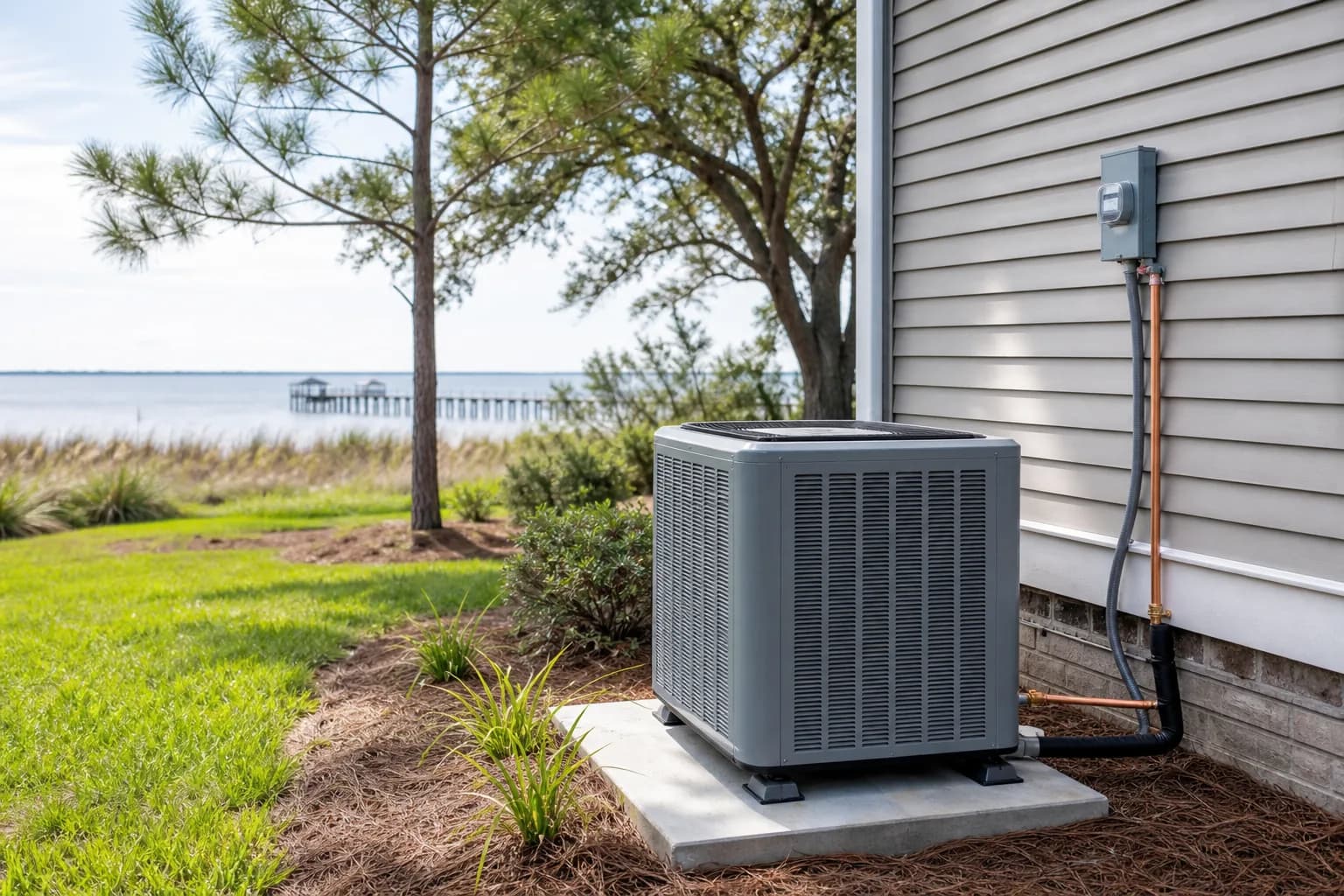 Coastal HVAC
Hurricane Insurance & HVAC Damage Claims: What Baldwin County Homeowners Need to Know
How HVAC damage claims actually work after a Gulf Coast hurricane — what's covered, what isn't, and the documentation that makes claims succeed in Baldwin County.
November 1, 20259 min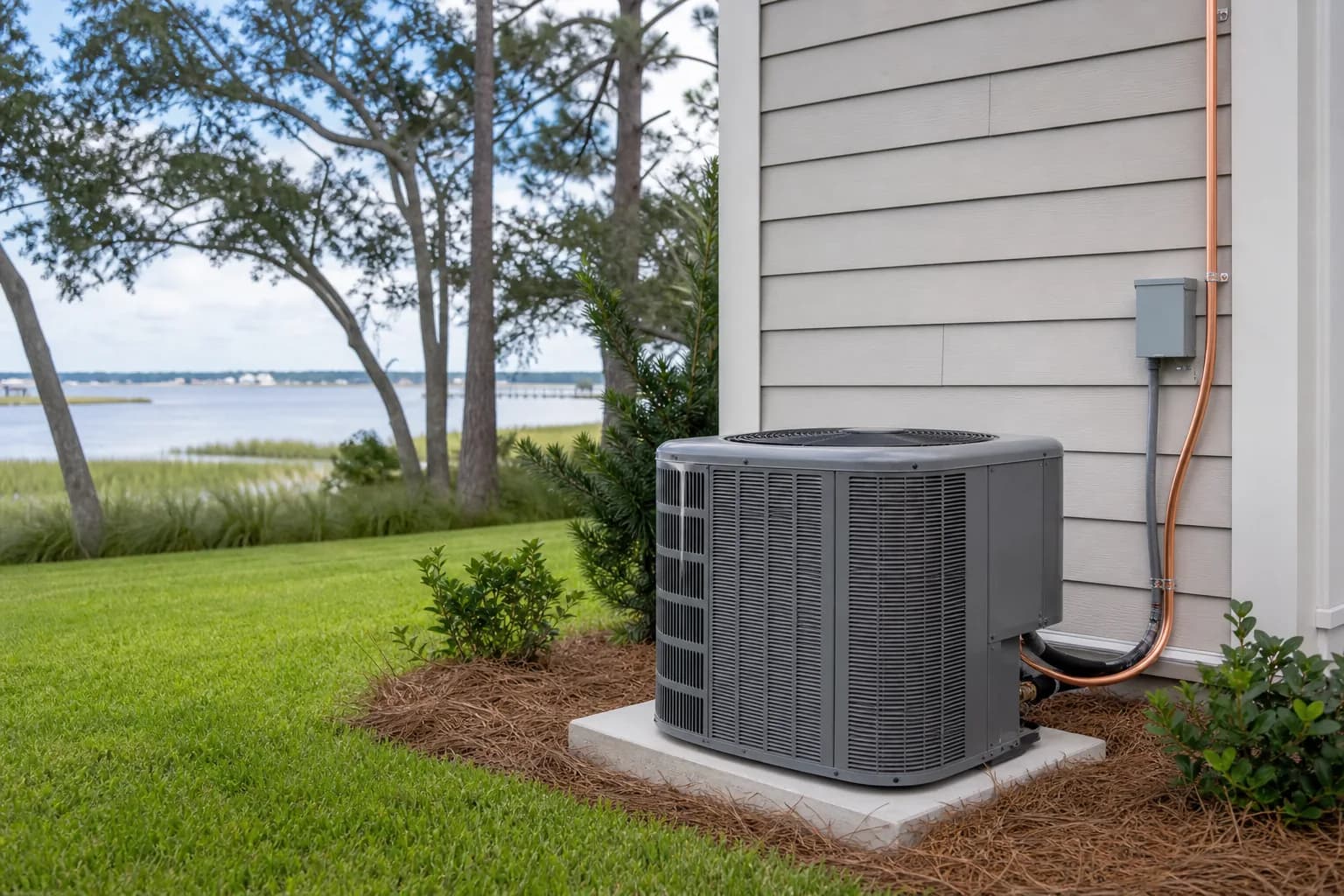 Coastal HVAC
Generator Backup for HVAC: Sizing for Baldwin County Hurricane Season
How to size a backup generator for HVAC operation in Baldwin County, AL — what you need to actually run an AC during hurricane outages, and what's worth paying for.
September 15, 20259 min
Other services in Fort Morgan & this service across Baldwin County.
- All HVAC services in Fort Morgan, AL
- Emergency HVAC across Baldwin County
- AC Repair in Fort Morgan
- AC Installation in Fort Morgan
- AC Maintenance in Fort Morgan
- Commercial HVAC in Fort Morgan
- Heating Repair in Fort Morgan
- Heat Pump Services in Fort Morgan
- Indoor Air Quality in Fort Morgan
- Ductless Mini-Splits in Fort Morgan
- Heating Installation in Fort Morgan
Emergency HVAC in Fort Morgan — Schedule Today.
Same-day appointments most weekdays. Cool Club members get prioritized scheduling.