
Sizing a Furnace for a Drafty Older Daphne Home
Why a leaky older Daphne home needs careful furnace sizing — how air infiltration changes the load and why bigger is the wrong instinct.

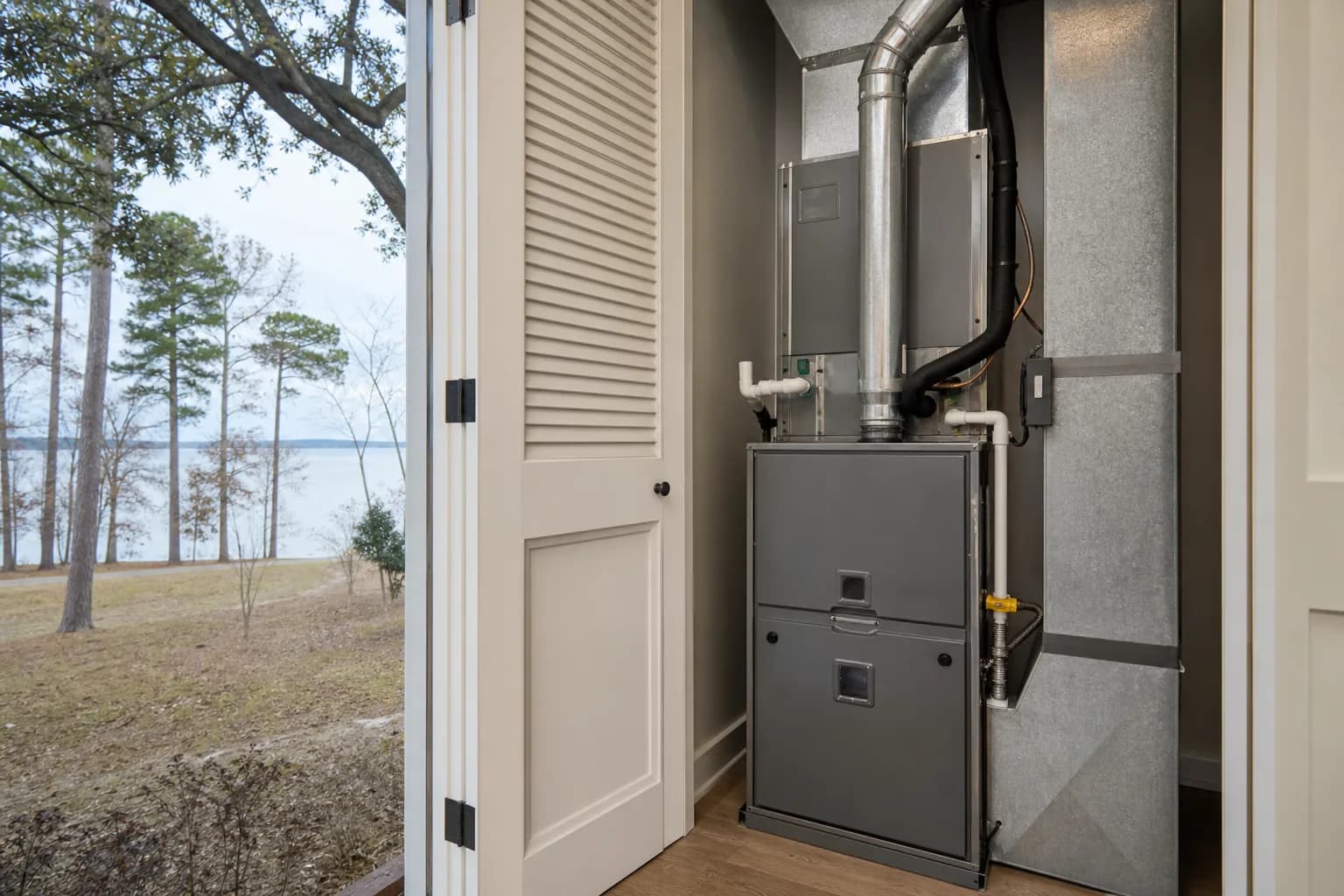
Daphne has a lot of older homes — solid places on the bluffs above Mobile Bay, in Old Daphne and Olde Towne Daphne, plus plenty out along Hwy 181 and in older corners of Lake Forest. They were built when energy codes were a suggestion and weatherstripping was an afterthought, so if you own one, you already know it can be drafty. Cold air finds its way in around old window frames, through the attic hatch, up from a vented crawlspace. When it's time for a new furnace, that draftiness isn't a side issue. It's central to getting the size right, and getting the size right is the whole ballgame.
"Drafty" is an engineering term, sort of
When we talk about a home being drafty, what we're really describing is air infiltration: outside air leaking in and conditioned air leaking out, constantly, through every gap and penetration. In an older Daphne home that infiltration can be substantial, and it directly increases the heating load — the amount of heat the furnace has to make to keep you comfortable, because some of what you're producing is always escaping.
That's why you can't size a furnace for an older home off square footage alone. Two homes of identical size, one tight and one leaky, have meaningfully different loads. The leaky one demands more.
The "just go bigger" instinct, and why it bites
Here's the part homeowners find counterintuitive. When you tell someone their old house is drafty, the natural reaction is "then put in the biggest furnace you can." That's almost always the wrong move, and it's a mistake I see more than I'd like.
An oversized furnace heats the air around the thermostat fast, satisfies the setting, and shuts off — over and over. That's called short-cycling, and it brings a parade of problems: uneven temperatures from room to room, more wear on the equipment from constant starting and stopping, noisier operation, and a system that never settles into a comfortable steady run. In a drafty home, oversizing makes the comfort complaints worse, not better, because the rooms farthest from the thermostat never catch up before the unit quits.
The goal isn't the biggest furnace. It's the right-sized one that runs long, steady cycles.
The smarter path: seal first, size second
Before we lock in a furnace size for an older Daphne home, the conversation worth having is whether a few targeted improvements would shrink the load — and the equipment — you need.
A heating install done well often starts with the building, not the box. Weatherstripping, sealing obvious attic and crawlspace leaks, and addressing the worst windows can reduce infiltration enough that a smaller, less expensive, better-matched furnace will keep the whole house comfortable. You spend a little on the envelope and save on both the equipment and the running cost for as long as you own the place.
What a proper sizing visit looks like
When we size a furnace for one of these homes, here's the order of operations.
Measure the house, not just the footprint.
Window area, insulation levels, ceiling heights, and the leakiness of the envelope all feed the load number.Flag the cheap envelope wins.
If a morning of sealing would let us drop a furnace size, that's a conversation worth having before you buy equipment.Match the furnace to the calculated load.
We spec output to the number the home actually demands, so the system runs long, even cycles instead of blasting and quitting.
Why does staged output help a leaky house?
There's a subtler sizing lesson hiding in older Daphne homes, and it's about how the furnace delivers its heat, not just how much it makes. A single-stage furnace has one speed: everything, all at once. In a drafty home that's prone to uneven temperatures, that blunt delivery tends to overshoot near the thermostat while the far rooms lag. A two-stage or modulating furnace, by contrast, can run at a gentler output most of the time, producing longer, steadier cycles that give the heat a chance to reach the whole house and that ride out the constant trickle of infiltration more gracefully. It's not that the bigger-hammer approach can't heat the place — it's that the gentler, longer run keeps the rooms closer together in temperature, which is exactly the complaint a leaky older home tends to generate. Matching not just the size but the staging to the house is part of getting comfort right on the bluff.
Don't forget the ducts
One more thing that bites older Daphne homes: the ductwork is often as old as the house and leaks as much as the windows. A perfectly sized furnace pushing air through ducts that dump a chunk of it into the crawlspace is a furnace doing work you'll never feel. If we're sizing new equipment, we'll look at whether the distribution side needs attention too. Sizing the box right and ignoring leaky ducts is half a job. The same load-calculation discipline drives the cooling side, which is why getting the AC size right follows the exact logic — the heat pump or furnace and the air conditioner share that number.
Related reading
If your old furnace is the reason you're here, it helps to know what actually happens when you replace a two-decade-old furnace — the process is less disruptive than most owners expect. While you're choosing equipment, it's also worth deciding the fuel question up front: our guide to picking gas, electric, or a heat pump for a heating install walks through the tradeoffs, and for a closer look at the two most common options here, see heat pump versus gas furnace on the coast. If the old system is near the end either way, replacing your AC on the Eastern Shore walks the full swap from start to finish.
The honest summary: in a drafty older home, the right furnace is the one matched to a real load calculation, often paired with a little sealing — not the biggest unit on the truck. If you're heating one of Daphne's established homes and you want it sized properly, we install heating systems across the Eastern Shore and we're glad to do the measuring. Call (251) 300-9817 or book a furnace sizing visit in Daphne.