
Heat Pump vs. Gas Furnace in Coastal Alabama: Which Is Right for Your Home?
Heat pump vs. gas furnace for Baldwin County homes — climate fit, operating costs, equipment lifespan, and an honest look at what the expired 25C credit changed.

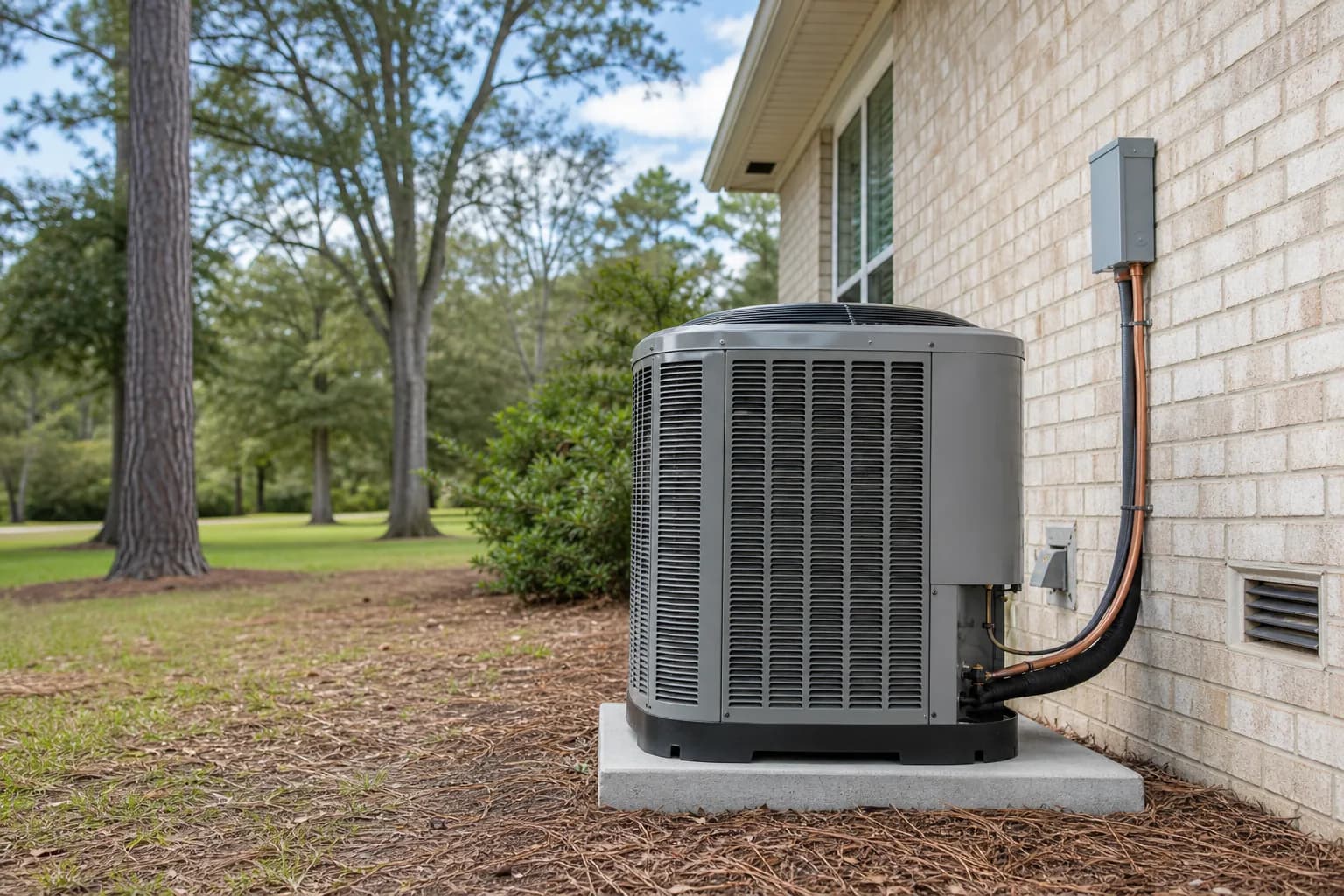
If you're replacing an HVAC system in Baldwin County right now, you're being asked a question you may not have been asked the last time you bought one: heat pump or gas furnace? Ten years ago, the answer was usually "whatever you had before." Today, it's a real decision with real money on either side — utility bill differences over a 12-15 year equipment life, equipment lifespan, and a Gulf Coast climate that fundamentally favors one of the two answers.
This guide walks through what actually matters, in the order it actually matters, for homeowners in Daphne, Fairhope, Spanish Fort, Foley, Gulf Shores, Orange Beach, Bay Minette, and the rest of Baldwin County. If you've already settled on electric and just want the heat-pump deep-dive, jump to are heat pumps worth it on the Eastern Shore.
The two-sentence answer
For most Baldwin County homes: a heat pump is the better choice today. Lower operating costs in our climate, utility incentives like Alabama Power's heat pump programs, and the fact that the overwhelming majority of your annual HVAC runtime is cooling — not heating — all point the same direction. (The federal 25C tax credit used to add to that case, but it expired December 31, 2025 and no longer applies to a new install; more on that below.)
For some specific homes — older properties with existing gas service and gas water heating, or homes north of I-10 with meaningful winter heating loads — a gas furnace can still win. Below we walk through how to tell which side your home falls on.
What each system actually does
This is worth a quick refresher because the choice often gets made on incomplete understanding.
A heat pump is an air conditioner that runs in reverse during winter to provide heating. Same outdoor unit, same indoor coil, same thermostat — the refrigerant flow direction reverses on demand. In summer it pulls heat out of your house. In winter it pulls heat out of the outside air (yes, even cold air has heat in it) and moves it inside. It's powered entirely by electricity.
A gas furnace is a separate piece of equipment from your AC. Natural gas (or propane) burns in a combustion chamber, the heat exchanger transfers that heat to indoor air, and a blower pushes the warm air through your ducts. You still need an AC system for cooling; the furnace just handles winter. Gas in, heat out.
Both can heat a Baldwin County house. They cost different amounts to operate, last different lengths of time, and qualify for different incentives.
Climate fit — the Baldwin County reality
Baldwin County sits at roughly 30.5° N latitude on the eastern shore of Mobile Bay — Climate Zone 2A (mixed-humid). What that actually means for HVAC:
- Annual cooling-degree days: ~3,000–3,500
- Annual heating-degree days: ~1,500–2,000
- Cooling season (when AC runs daily): late April through mid-October — roughly 6 months
- Heating season (when heat runs daily): late November through mid-February — roughly 3 months
- Coldest typical morning of the year: ~30°F (lower in extreme cold snaps; rare to see sustained sub-25°F)
Two things matter here:
Cooling load is the dominant load. Across a year, your HVAC system spends roughly 2-3x more hours cooling than heating. Whatever you choose for heating gets exercised much less than whatever you choose for cooling.
Heating load is mild but not trivial. When a Gulf cold front hits, you genuinely need heat — pipes can freeze, indoor temps can drop into the 40s. But sustained sub-freezing weeks (the kind that taxes a heat pump) are rare. We see maybe 5-10 nights per year where outdoor temps drop below 30°F, and almost none where they stay there during the day.
This climate profile is why heat pumps work well here. The cold-weather conditions where heat pumps lose efficiency — the sustained sub-25°F days that put serious load on auxiliary heat strips — barely happen in Baldwin County. Most days the heat pump is running in its sweet spot, where it delivers 2-3 units of heat for every 1 unit of electricity it consumes.
Operating cost comparison
Real numbers, with real caveats. Your actual costs depend on home size, insulation, your utility rates, and how you set the thermostat. These are typical ranges we see across Baldwin County customers.
Cooling costs (both systems are similar)
Cooling is essentially identical between the two paths. A 16-SEER heat pump in cooling mode and a 16-SEER AC paired with a gas furnace cool with the same efficiency — the cooling side of a heat pump and a standalone AC are mechanically the same equipment.
Heating costs
This is where the systems diverge.
Heat pump heating runs on electricity at Alabama Power rates. Auxiliary electric heat strips kick on for sustained cold snaps and bump those numbers up.
Gas furnace heating runs on natural gas or propane. In a normal Baldwin County winter, heat pump heating costs are 15-30% lower than natural gas heating, and 30-50% lower than propane heating. In an extreme cold snap (like the February 2021 freeze that hit the Gulf Coast), heat pumps with electric auxiliary back-up can spike higher than gas for those few days, but the annual total usually still favors the heat pump.
If your home has no existing natural gas service, the propane delta is large enough that heat pump is almost always the right call.
Tax credits and rebates — what changed
For several years the federal 25C Energy Efficient Home Improvement Credit tilted this decision toward heat pumps: the heat-pump amount was the largest of the residential HVAC credits, and a heat pump captured it with a single piece of qualifying equipment, while a gas furnace + AC pairing earned a smaller combined amount and required both pieces to qualify.
That advantage is gone. The 2025 federal budget law ended 25C effective December 31, 2025, so it no longer applies to a 2026 or later install — heat pump or furnace. The only remaining use is a system placed in service on or before that date, which can still be claimed on the 2025 return (filed in 2026) on IRS Form 5695. If that's you, keep the AHRI certificate and the equipment spec sheet, and confirm the filing with a CPA. We provide both documents at every install.
What's still on the table for a current install (we keep a running list in our Baldwin County rebates and incentives guide for 2026):
- Utility programs. Alabama Power runs residential heat-pump and efficiency programs, and many local co-ops do too; gas furnaces generally don't qualify for these. Terms and amounts change by program year and service territory, so check current offers for your address before assuming.
- Section 179 for rental or commercial property — a business deduction your CPA handles, not a consumer credit.
- Financing to spread the cost over time.
None of these change the underlying climate-and-operating-cost case below, which never depended on the credit in the first place.
Equipment lifespan in our climate
A meaningful factor that often gets ignored.
Gas furnace lifespan in Baldwin County: 18-25 years. Furnaces are simple. Most failures are heat exchanger cracks (which require replacement, not repair, for safety) or igniter / control board issues. The dry, indoor-installed nature of a furnace means humidity and salt don't shorten its life much.
Heat pump lifespan in Baldwin County: 10-15 years inland, 7-12 years coastal. Heat pumps work harder than AC-only systems because they run year-round in both directions. Coastal salt air shortens condenser life regardless — and how far inland that "coastal" penalty actually reaches is covered in salt air and your AC: how far from Mobile Bay does corrosion matter. Coastal-grade equipment with corrosion-resistant coil treatments extends this to 12-16 years for Gulf Shores, Orange Beach, and Fort Morgan installs.
Standalone AC lifespan in Baldwin County: 12-18 years inland, 8-14 years coastal. Less stressed than a heat pump because it only runs in one direction half the year.
So if you choose gas furnace + AC, you're buying two systems that may need replacement at different times. If you choose heat pump, you're buying one system that handles both jobs but typically needs replacement on the AC schedule, not the furnace schedule.
When we run lifecycle cost comparisons for Baldwin County customers across a 20-year horizon, the heat pump usually comes out ahead on operating costs and any utility incentives that apply. The gas furnace catches up in scenarios with very heavy heating use (rare here), expensive electricity, or cheap natural gas access. If your current system is on the fence, AC repair vs. replace in coastal Alabama helps you decide whether you're even in the market yet, and what AC replacement costs in Baldwin County in 2026 sets expectations on the number.
The honest case for gas furnace
Heat pumps don't win every house. Here's where gas furnace is still the better answer:
You already have natural gas service AND a gas water heater AND a gas range. If gas is plumbed and serving multiple appliances, the marginal cost of adding a gas furnace is lower than installing a new gas line just for HVAC.
Your current gas furnace is younger than 12 years. If you're only replacing the AC, replacing a working furnace doesn't make economic sense. Match a new high-efficiency AC to your existing furnace.
You live north of I-65 in a meaningfully colder microclimate. Bay Minette, Stockton, and parts of north Baldwin County see slightly more heating degree days than Daphne or Fairhope. Not a huge difference, but it shifts the math marginally toward gas.
You have specific comfort preferences for gas heat. Gas furnaces deliver supply air at higher temperatures than heat pumps (110-130°F vs 90-105°F). Some people perceive heat pump heat as "blowing cool air" because the supply temp is lower than skin temperature. It's not actually cool — it's heating the room — but the perception is real for some homeowners.
Your home has zoning or specific ductwork constraints that favor a furnace's higher-temperature supply. Less common; we'll flag this during the load calculation if it applies.
The honest case for heat pump
For most Baldwin County homes, the heat pump case is straightforward:
You don't have natural gas service (and don't want propane). Most newer subdivision builds in Spanish Fort, the Highway 181 corridor through Daphne neighborhoods like Jubilee Farms and Bellaton, and Fairhope's Greeno Road area are all-electric. Heat pump is the only sensible choice.
You're replacing an aging system and want to modernize. A new high-efficiency heat pump with a variable-speed compressor delivers better humidity control, quieter operation, and lower utility bills than the 12-year-old equipment you're replacing — gas or electric.
You want one system instead of two. A heat pump handles both heating and cooling on a single outdoor unit, so there's one piece of equipment to maintain, register, and eventually replace — not a furnace and an AC on separate schedules.
You care about your home's resale value in an increasingly all-electric market. New construction across Baldwin County is overwhelmingly heat pump now; resale comps reflect that trend.
You live anywhere in Baldwin County south of I-10 where heating load is mild enough that the heat pump operates almost entirely in its high-efficiency range.
Which system should you choose for your situation?
Quick decision tree we use during in-home consultations:
- All-electric home, AC needs replacing: Heat pump.
- Existing working gas furnace under 12 years old, only AC needs replacing: New AC matched to existing furnace. Don't replace what works.
- Existing gas furnace 12+ years old, both systems aging: Heat pump (single replacement, both seasons covered, one unit to maintain going forward).
- Coastal property (Gulf Shores, Orange Beach, Fort Morgan) under 1 mile from Gulf: Heat pump with coastal-grade outdoor unit. Salt air lifespan on either system is shorter; the simpler single-system replacement cycle wins.
- Vacation rental property: Heat pump. Simpler for absentee management. One thermostat, one outdoor unit, no gas-related risks if the property sits unoccupied for stretches.
- Bay Minette / Stockton / north county with existing natural gas: Run the math both ways. Often closer to a tie than the rest of the county.
What we charge to help you decide
The in-home consultation is free. We measure the house (Manual J load calculation, not a brochure number), look at your existing ductwork and electrical capacity, ask about your utility bills and comfort preferences, and put a written quote in your hand for both paths if it's genuinely close. No pressure to decide on the spot, no upsell games. Whether the answer lands on a heat pump, a new AC installation matched to your furnace, or heating installation on the gas side, we cover it from Daphne across Baldwin County.
If you're inside the next replacement window, schedule the consult — it's 60-90 minutes and you walk away with real numbers for your specific home.