
Replacing a 20-Year-Old Furnace in Fairhope: What to Expect
A walkthrough of what replacing a two-decade-old furnace looks like in a Fairhope home, from the first signs to install day and the older-house surprises.

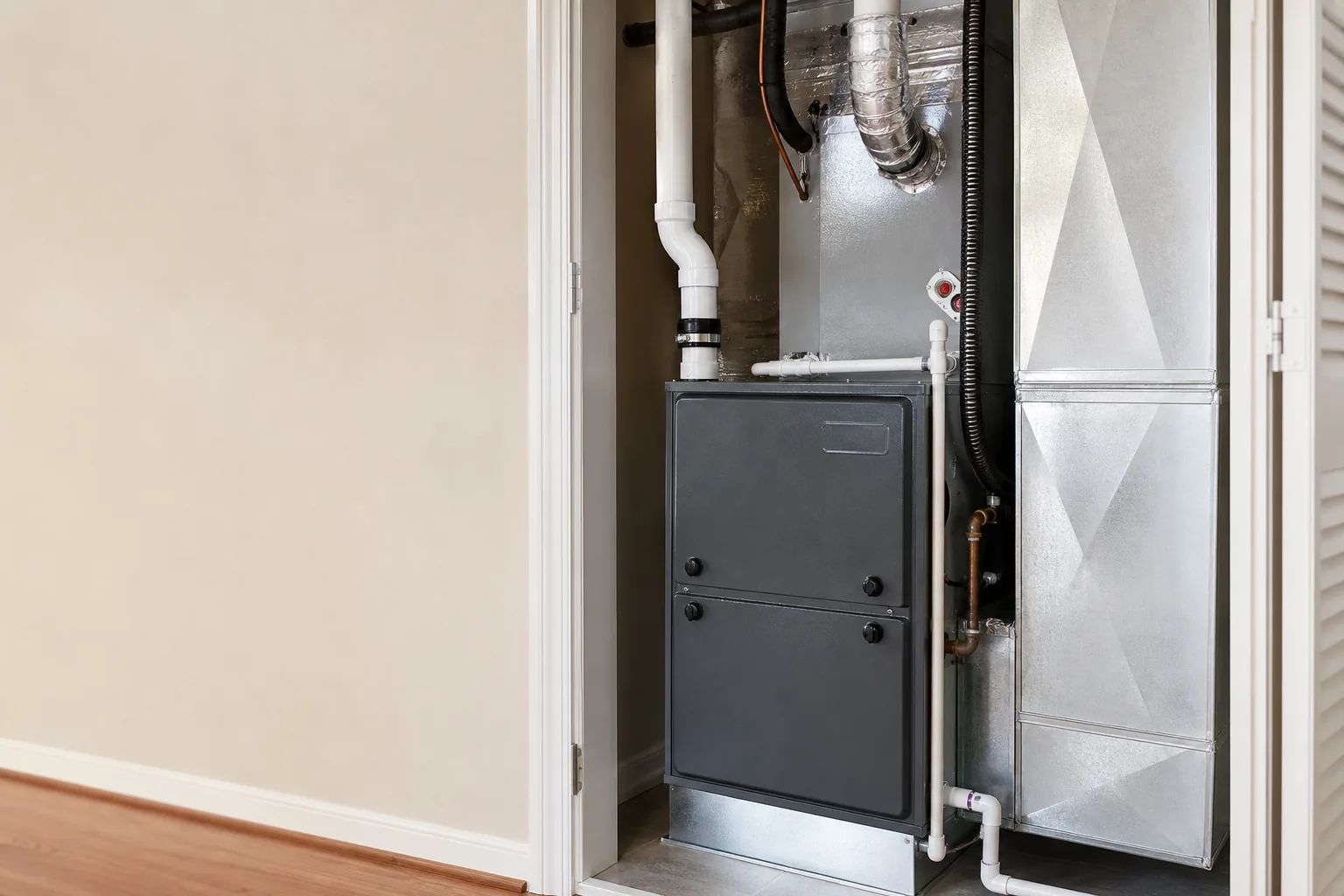
A furnace that's been heating a Fairhope home for twenty years has earned its retirement. Twenty winters is a long run, and if yours is from around the time the downtown art galleries were filling in along Section Street, it's likely living on borrowed time. The good news is that replacing it is far less disruptive than people fear. The honest news is that older Fairhope homes, with their charm and their quirks, occasionally hand a crew a surprise or two. Let me tell you what the whole thing really looks like.
The signs it's time, not just an off year
A two-decade-old furnace rarely dies all at once. It tells on itself first. You notice rooms that won't hold temperature the way they used to. The unit runs longer to reach the same setting. You're calling for a repair more than once a season, and the parts are getting harder to source because the manufacturer moved on years ago. When the cost of the next repair starts looking like a meaningful slice of a new system, that's the math turning.
Fairhope's older housing stock changes the plan
Here's where our town is its own animal. Plenty of Fairhope homes near the bluff above Mobile Bay — the older streets off Scenic 98 and the historic blocks west of Greeno Road — were built before central systems were a given, then retrofitted. That history means the ductwork, the closet the air handler lives in, and the path for refrigerant and condensate lines weren't designed around modern equipment. None of that is a problem — it's just something a crew has to read before they start, the way you'd read an old house before you repaint it. A 1970s cottage in the Fruit and Nut District and a newer build out toward Quail Creek hand a crew very different starting points.
We've also learned to respect the home itself. Original heart-pine floors, plaster walls, a tight historic closet — we plan the route and protect the surfaces before a single old part comes out.
What install day actually looks like
People picture a week of chaos. For a straightforward swap it's usually a single day. Here's the rhythm.
Protect the path and pull the old unit.
Drop cloths down, the old furnace disconnected and carried out, the space cleared so the crew can see what they're working with.Prep the connections.
Duct transitions, electrical, gas or refrigerant lines checked and brought up to spec for the new equipment. This is where an old house earns its extra hour.Set, connect, and commission.
New equipment placed, sealed, and started up. We verify airflow and operation before we leave, not just that it turns on.
The surprises old homes hand us
I'd rather you hear these now than on install day. In a home this age we sometimes find a return that's too small for modern airflow, a duct run that was abandoned during a long-ago remodel, or wiring that needs a dedicated circuit. We also occasionally meet a closet that simply won't fit the footprint of a like-for-like replacement, which opens a conversation about a different configuration. A heating install in an older Fairhope home is part carpentry, part HVAC, and being upfront about that is how we avoid the dreaded mid-job change order.
Should you reconsider the whole system?
Twenty years is also a natural moment to ask whether a straight furnace swap is even what you want. Our coastal winters are mild, and many Fairhope homeowners use this replacement as the chance to move to a heat pump, which both heats and cools and runs efficiently in our climate. If that path interests you, we walk through it in detail in should you upgrade to a heat pump in Fairhope this year, and because a heat pump cools too, it's worth reading how replacing your AC on the Eastern Shore really works before you decide. If you've got natural gas you like and a preference for that fast, hot-register feel on a cold morning, a furnace still makes sense. There's no universal right answer — only the one that fits your home and how long you plan to stay.
A retirement is also an upgrade moment
Here's the silver lining of saying goodbye to a twenty-year-old furnace: the technology has moved a long way since it was installed, and a replacement is your chance to capture that. A unit from two decades ago likely ran in a single blunt stage — full blast or off. Newer equipment can modulate, holding a Fairhope living room at an even temperature instead of swinging warm and cool. The controls have come a long way too; a modern thermostat can manage humidity and scheduling in ways the old dial on your hallway wall never could. None of this is a reason to over-buy, but it's worth knowing that the system replacing your old one can simply make the house feel better, not just check the same box the previous one did. For an older home where comfort has always been a little uneven, that's often the most satisfying part of the whole project.
A few questions worth asking
Before you sign anything, ask the contractor to confirm a proper load calculation, to explain how they'll handle the ductwork in an older home, and to spell out what's included versus extra. A good answer to those three questions tells you most of what you need to know about who's standing in your living room.
When you're ready, we install and replace heating systems all over Fairhope and the Eastern Shore, and we're happy to start with a look at your actual house. Call (251) 300-9817 or book a heating consultation in Fairhope. Twenty good years out of a furnace is a fine run — let's set up the next twenty right.
Related reading
- Should you upgrade to a heat pump in Fairhope? — weighing the swap on a replacement year
- Sizing a furnace for a drafty older home — why the load calculation matters in an aging house
- Repair or replace? An honest framework — how to read the math when the next repair looms
- AC repair vs. replace in coastal Alabama — the same fix-or-replace question, weighed for our climate