
Getting a Spanish Fort Home Listing-Ready: The HVAC Checklist for Fall Sellers
Pre-listing HVAC prep for a Spanish Fort, AL home — what inspectors flag in newer subdivisions, what buyers ask, and which fixes pay off before listing.

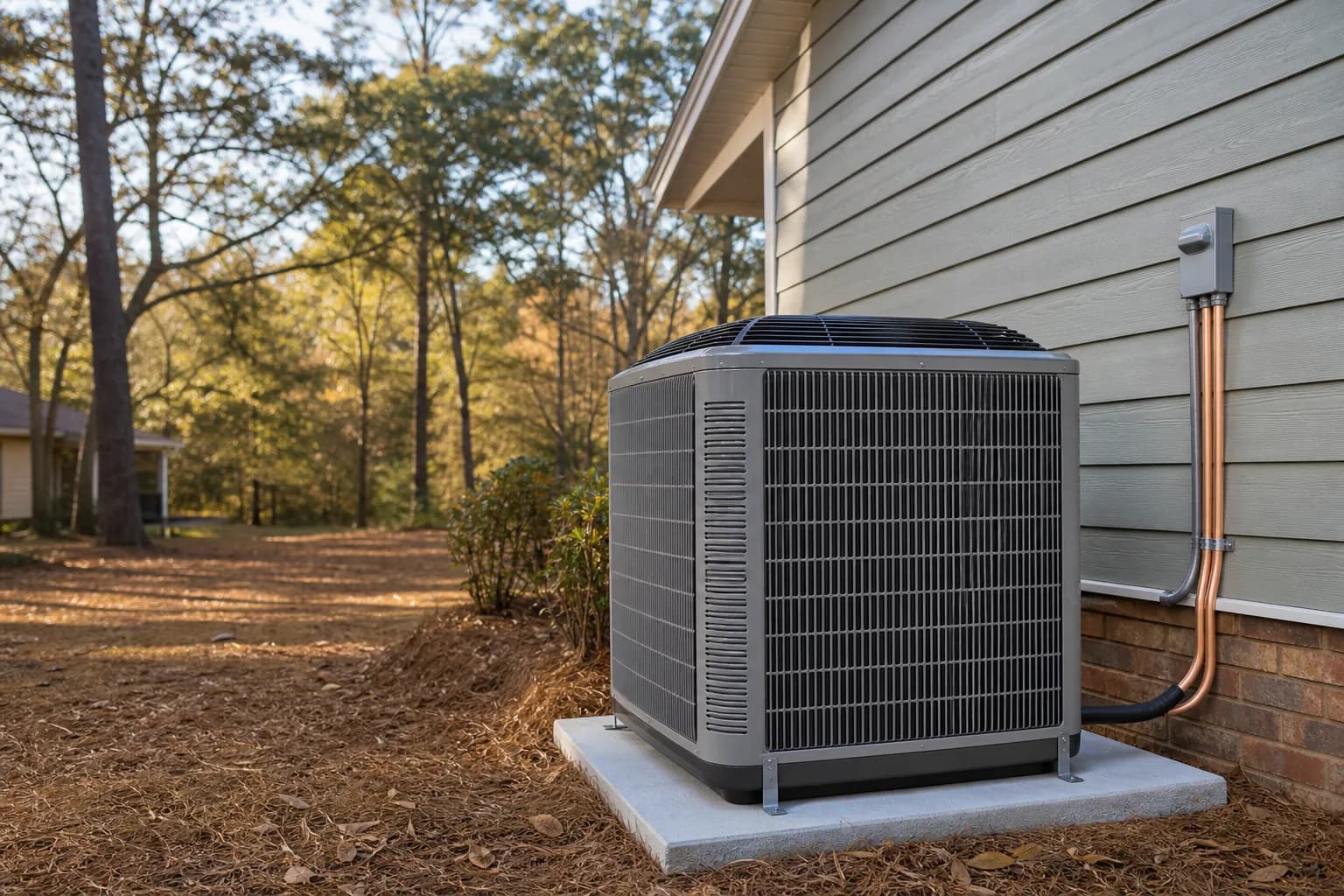
Spanish Fort is one of the fastest-growing corners of the Eastern Shore. Sitting up near the I-10 and I-65 junction above the Causeway, it has filled with newer, upscale subdivisions over the past couple of decades, and that shapes the HVAC conversation when you go to sell. Compared with an old coastal cottage or a beachfront condo, a Spanish Fort home usually has relatively young equipment and its own particular set of inspection points. Here's how to get the system listing-ready this fall.
Newer homes, a different starting point
The good news for many Spanish Fort sellers is that the equipment is often not that old. A home in one of the newer subdivisions — Stonebridge, TimberCreek, Churchill, or out along the Hwy 181 corridor near the Eastern Shore Centre — may be on its original system or a fairly recent replacement, which means the inspection conversation is less about imminent failure and more about confirming the system has been maintained and documenting that it has. That said, "newer" is not "new," and a system creeping toward a dozen years old still gets the same end-of-useful-life note an inspector would write anywhere. Knowing your equipment's age before you list lets you get ahead of the question.
How "coastal" applies inland
Spanish Fort sits roughly ten miles up from the open water, just above where the Causeway crosses Mobile Bay, so it occupies an in-between zone. It's not beachfront, but it's close enough to the bay that inspectors familiar with the Eastern Shore still consider coastal-grade equipment a reasonable expectation, and a buyer may ask about it. Salt influence is milder here than on the sand, yet it isn't zero, and a buyer who's shopped the coast — or who remembers what Hurricane Sally did to outdoor units across Baldwin County in 2020 — will have corrosion and storm wear on their radar. The practical takeaway: a glance at your outdoor unit for any rust or wear is worth doing, even though you're unlikely to see the heavy salt damage a Gulf-front unit would show.
The multi-system factor
Many of the larger Spanish Fort homes run more than one HVAC system, with separate units zoning the upstairs and downstairs or wings of the house. That's a comfort feature, but it doubles your homework as a seller. Each system has its own age, its own service history, and its own condition, and an inspector will evaluate them separately. Document them separately too. A buyer who sees clean records for every system reads the whole house as well cared for.
What does a home inspector flag on the HVAC system?
The HVAC portion of a Spanish Fort inspection covers familiar ground: the age and remaining life of each system, the refrigerant type, the condition of drain lines and pans, and the state of the electrical disconnects. An older R-22 system reads as obsolete and may worry a buyer about future costs. Standing water or algae at a drain reads as deferred maintenance. None of this is unusual, and on relatively young equipment most of it is easily addressed before anyone else lays eyes on it.
The fixes worth doing first
Put your pre-listing effort into the items that make each system present well and keep a problem off the report. A fresh filter signals a maintained home. A cleared drain line prevents a maintenance note. A coil cleaning helps a unit run and look its best. And catching any small failing component now keeps the system from faltering during the buyer's inspection. These are inexpensive, high-confidence moves.
The bigger decisions, replacing an aging system or upgrading equipment specs, depend on the unit's condition and your agent's read of this premium market. They can support a listing but they're real investments, so weigh them with your specific situation in mind. A heavy repair on a system near the end of its life is often better disclosed with a buyer credit than sunk into pre-listing.
The pre-listing service visit
The most useful single step is a professional checkup a few weeks before listing, run on every system in the house. The tech goes through cooling and heating, verifies the refrigerant charge, tests the components most prone to fail, cleans coils as needed, and treats the drains. You end up with freshly serviced equipment, small issues already handled, and service records to hand a buyer's inspector. Our Cool Club, for current customers, includes seasonal tune-ups, and members get 15% off all AC repairs and 5% off new systems. In a market of discerning buyers, documented maintenance carries real weight.
What Spanish Fort buyers ask
Buyers in these subdivisions ask focused questions, so be prepared. They'll want each system's age, readable from the plate on the outdoor unit. They'll ask about warranty coverage and whether it transfers. They may ask whether the equipment is coastal-grade given the Eastern Shore location. And they'll ask when each system was last serviced, where recent dates land well. Last summer's utility figures make a useful addition, since efficient cooling matters through a long Gulf Coast summer.
Disclose plainly
Alabama law requires disclosing known material defects, HVAC included, and past major repairs and any active service contract generally belong there as well. Candor protects you and builds trust. A specific note for each system, the install year, the most recent service date, and any known issues, does far more for buyer confidence than a vague reassurance. With multiple systems in play, that system-by-system clarity is especially valuable.
Putting it in the listing
You can mention HVAC strengths without overstating them. Noting recent professional service, multiple zoned systems, a transferable service plan, or included smart thermostats won't add a fixed sum to the price, but each detail reduces buyer hesitation. In a fast-moving, upscale market, signs of careful ownership help a home stand out.
Ready to list
Air Solutions Heating & Cooling provides pre-listing HVAC service and buyer-ready documentation throughout Spanish Fort and the Eastern Shore. Family-run, founded in Daphne in 2023, licensed AL#23194.
- Schedule pre-listing service before you list
- Call (251) 300-9817 with questions about your systems
- AC installation overview
Related resources
- AC installation in Spanish Fort
- All HVAC services in Spanish Fort
- About the Cool Club
- AC repair vs. replace: when it's worth fixing in coastal Alabama — for the repair-or-replace call before listing
- What size AC do you need for a Spanish Fort home? — sizing a replacement correctly
- Buying or building new in Spanish Fort: your builder-grade HVAC guide — what the next buyer inherits