
Selling a Gulf Shores Home This Fall? Handle the HVAC Before the Sign Goes Up
Pre-listing HVAC prep for a Gulf Shores, AL home — why salt corrosion drives inspections, what beach buyers ask, and which fixes are worth doing first.

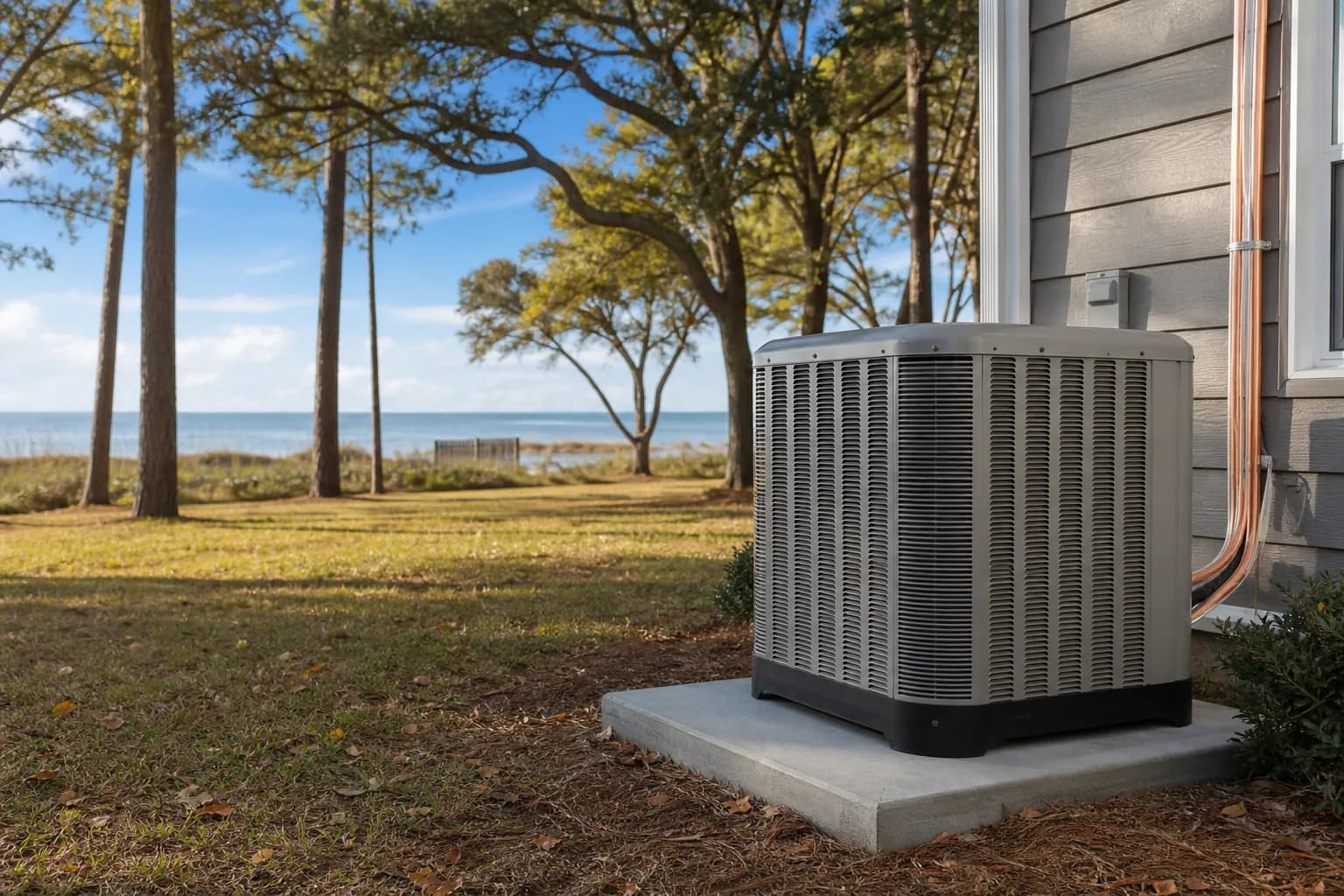
If you're putting a Gulf Shores property on the market this fall, the air conditioning system deserves your attention before the listing photos do. In most homes the HVAC is the single costliest mechanical component an inspector evaluates, and in a beachfront town it carries an extra layer of scrutiny: salt air is hard on equipment, and buyers and inspectors here know it. Getting ahead of the obvious issues smooths the whole transaction. Here is how to think it through.
Salt is the story on the coast
Inland, an inspector mostly cares about age and function. On the Gulf Coast, the first thing a sharp inspector does is walk over to the outdoor unit and look for corrosion. Years of salt-laden air pit the cabinet, eat at fasteners and electrical terminals, and degrade the coil. A home a few hundred yards off Beach Boulevard or backing up to Gulf State Park sees this faster than one set back in Craft Farms or out near Oyster Bay, but no Gulf Shores address is immune. Visible rust on the outdoor unit is a red flag that gets written up, and it colors how a buyer reads the rest of the system. If your condenser is showing its age to the salt, that is the item most likely to surface in negotiation, so it is the one to understand first.
There is also the question of coastal-grade equipment. Systems built for seaside service use corrosion-resistant coatings and hardware, and inspectors familiar with the beach expect to see them here. A standard inland unit installed a block from the Gulf can get flagged as the wrong specification for the location.
What does an inspector typically write up?
Beyond corrosion, the HVAC section of a Gulf Shores inspection report tends to touch the same handful of items: the age of the equipment and how much useful life is left, the refrigerant type, the condition of the drain line and pan, and the state of the electrical disconnect. An older R-22 system reads as obsolete. Standing water or algae at the drain raises a maintenance concern. A rusted disconnect box near the unit, predictably, draws attention on the coast.
What's genuinely worth fixing first
Spend your pre-listing dollars where they calm a buyer's nerves rather than chasing perfection. The high-value, low-effort items are the ones that make the system present well: a fresh filter that signals a cared-for home, a cleared drain line, a thorough coil cleaning so the unit runs and looks better, and any small failing part caught and replaced so nothing dies during the buyer's inspection. These are modest fixes that prevent a written-up problem.
Bigger calls, like replacing an aging system outright or upgrading to coastal-grade equipment, depend on your situation and your agent's read of the local market. They can help a listing, but they are real investments rather than quick wins, so weigh them deliberately. And some things genuinely aren't worth doing before you sell, like a major repair on equipment that's near the end anyway. In that case, disclosing the condition and offering the buyer a credit is usually the cleaner path.
The pre-listing service visit
The most useful single step is a professional inspection a few weeks before you list. A technician goes through the cooling and heating sides, checks the refrigerant charge, tests the components most likely to fail, cleans the coil if it needs it, and treats the drain. You walk away with a recently-serviced system, any small problems already handled, and a service record you can hand a buyer's inspector. For current customers, our Cool Club includes seasonal tune-ups; members also get 15% off all AC repairs and 5% off new systems. That documentation alone tends to take the air out of a lot of buyer worry.
The questions Gulf Shores buyers actually ask
Beach buyers are a savvy bunch, and they ask pointed questions. Be ready for how old the system is, with the manufacture date handy from the plate on the outdoor unit. Expect questions about warranty status and whether any coverage transfers. Expect to be asked whether the equipment is coastal-grade, which matters a great deal this close to the water. And expect "when was it last serviced," where a recent date is a strong answer and "I don't recall" is not. Having last summer's utility bills ready is a nice bonus, since efficient cooling is a selling point in a beach climate.
Disclose honestly
Alabama law requires you to disclose known material defects, and HVAC problems qualify. Past major repairs and any current service contract generally belong in the disclosure as well. Beyond the legal protection, candor builds trust. A vague "the AC works fine" reassures no one, while a specific note, such as the install year, the most recent service date, and that there are no known issues, does real work to settle a buyer's mind. Selective disclosure, on the other hand, invites trouble down the road.
Marketing the system
You can mention HVAC strengths in the listing without overselling. Noting that the system was recently and professionally serviced, that it's coastal-grade if it is, that a transferable service plan is in place, or that a smart thermostat is included won't add a fixed amount to the price, but each one chips away at a buyer's hesitation. On the coast, signs of thoughtful upkeep carry weight.
The vacation-rental angle
A lot of Gulf Shores properties are income-producing rentals — the condos and beach houses near the water and the homes around Craft Farms North and Kiva Dunes alike — which adds a few wrinkles. If yours is one, have any HOA approvals and permits for past equipment work ready, along with the service history. Rental properties also take a beating from constant turnover, so it's worth tidying the visible details before photos: a clean filter and grille, and an outdoor unit that doesn't look neglected. A buyer evaluating an investment property reads reliability into those details.
Hurricane readiness as a selling point
This is the coast, so storms are part of the conversation. Demonstrated hurricane preparation, such as properly anchored outdoor equipment and surge protection, reassures a buyer who knows what a Gulf storm can do. It's a quiet differentiator that tells a buyer the property has been looked after by someone who understands beachfront ownership.
Ready when you list
Air Solutions Heating & Cooling handles pre-listing HVAC service and buyer-ready documentation throughout Gulf Shores. Family-run, founded in Daphne in 2023, licensed AL#23194.
- Schedule pre-listing service before the sign goes up
- Call (251) 300-9817 with questions about your system
- AC installation overview
Related resources
Related reading
- Salt air and your AC: how far from the bay does corrosion matter? — the issue every coastal buyer asks about
- Repair or replace? When it's worth fixing in coastal Alabama — deciding before you list
- Replacing your AC on the coast: the complete 2026 guide — if a replacement is the right call
- What does AC replacement cost in Baldwin County in 2026? — the number a buyer will want to know