
Selling Your Elberta Home in Summer? HVAC Questions Buyers Always Ask
HVAC questions Elberta, AL home buyers ask sellers — what records to prepare, what fixes to make pre-listing, and what disclosures matter most in the inspection period.

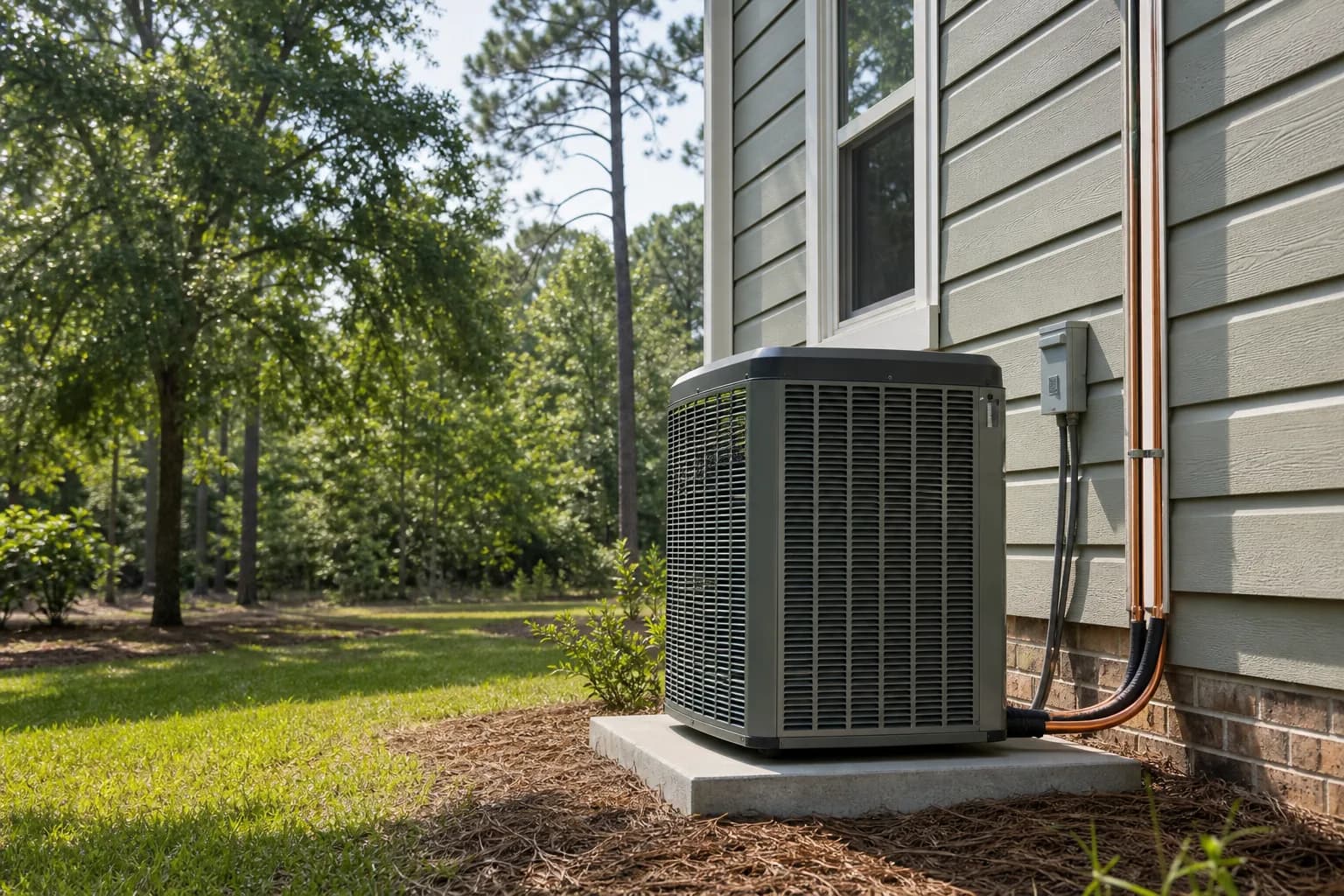
Selling your Elberta home in summer means buyers will scrutinize your HVAC system more than any other time of year. Whether your house sits in Downtown Elberta, out along the Highway 98 corridor, or on rural acreage in this German-heritage farming town, they'll be running the AC during showings. Inspectors will be testing it under peak load. Questions that wouldn't come up in October will be deal-relevant in July.
Here's what Elberta buyers ask, what you need ready, and what to fix before listing.
The questions buyers always ask
Pull these answers together BEFORE listing. Having them ready shows sellers care + reduces deal-period anxiety:
1. "How old is the AC system?"
- Get exact install year. Check the nameplate on outdoor unit (manufacture date) or your records.
- For Elberta, equipment 10+ years old prompts buyer concern; 12+ years often triggers replacement-credit negotiation.
2. "Has the system been serviced regularly?"
- Ideally annual professional maintenance with documented records.
- "I changed filters" doesn't count as professional service.
- Compile receipts from past 3-5 years into a single PDF for buyers.
3. "What major repairs has it needed?"
- Be honest. Buyers' inspectors will find anything you hide.
- Document repair date, cost, and what was done.
- Disclose proactively rather than at inspection.
4. "What refrigerant does it use?"
- R-22 (most equipment 2010 or older): expensive to repair, phasing out
- R-410A (2010-2025): standard, well-supported
- R-32 / R-454B (2024+): newest, fewer service options currently
5. "Are there any open warranty items?"
- Manufacturer warranties on parts (typically 10 years)
- Installer workmanship warranty
- Often transferable to buyer with paperwork
6. "What does it cost to operate?"
- Pull last 12 months of utility bills. Have summer + winter peaks documented.
- Buyers are comparing to their own current home; transparency helps.
Pre-listing fixes that move the needle
Spend the money on things buyers will see or test. Skip cosmetic-only items.
High-ROI fixes (do these):
1. Pre-listing professional service (the standard service rate).
- Comprehensive tune-up
- Refrigerant pressures verified
- Coil cleaned
- Drain line flushed
- Written report you can hand to buyers
2. Fix anything obviously broken.
- Loose vent registers, water staining around air handler, audible bearing noise, rusted disconnect box
- These small repairs are inexpensive next to the credits buyers negotiate when an inspector finds them
- Ask us for a free quote on the specific items before you list
3. Replace a severely aged thermostat.
- A new smart thermostat looks modern; buyers notice
- Particularly worth it if your current one is 10+ years old
4. Address visible water damage near HVAC.
- Drywall, paint, ceiling tiles damaged by previous condensate overflow
- Inspectors flag these; buyers assume worst-case
5. Hose down the outdoor condenser.
- Free, takes a few minutes
- Coastal Elberta units accumulate visible salt and pollen
- Clean unit looks well-maintained; dirty unit looks neglected
Medium-ROI fixes (consider):
- Coil cleaning — improves performance + indoor air quality
- UV light installation — addresses any humidity smell concerns
- Air filter upgrade — a fresh MERV 11 in the unit at showings is inexpensive
Skip these (not worth ROI):
- Full system replacement unless system is 14+ years old AND broken
- Cosmetic outdoor unit covers (look fake, can hide problems)
- Premium service contracts (don't transfer well to buyers)
What to disclose proactively
Honesty pays during inspection:
- System age if 10+ years
- Any major repair in past 3 years
- Refrigerant type if R-22
- Any prior water damage even if repaired
- Known limitations (room that doesn't cool well, ductwork issues, etc.)
Hidden problems become negotiation leverage. Disclosed problems become facts buyers price into their offer.
What to expect from buyers' inspections
Standard home inspectors will:
- Confirm system runs and blows cold air
- Note general condition and age
- Test thermostat function
- Check visible filter
Buyers may also commission a separate, paid HVAC inspection which adds:
- Refrigerant pressure verification
- Capacitor testing
- Coil inspection inside and out
- Detailed ductwork assessment
- Salt-air corrosion assessment
For Elberta homes (near-coast), separate HVAC inspections are increasingly common. Be prepared.
Common Elberta-specific buyer concerns
Three issues that come up more in our market:
1. Salt-air corrosion on outdoor units. Buyers see rust and assume neglect. Document that this is normal for coastal Alabama — homes along the Highway 98 corridor and out toward the Baldwin County Heritage Museum area all see it — and that the equipment is functioning properly, not a sign of imminent failure. How far from Mobile Bay corrosion actually reaches is a useful piece to hand a nervous buyer.
2. Older R-22 systems. Increasingly common deal-killer. R-22 is phased out; repairs are expensive. If your system is R-22, expect either:
- A replacement credit negotiated into the deal (often a sizable one)
- Pre-listing replacement (best for sale price)
- Significant offer reduction
3. Hurricane preparation features. Buyers in coastal areas increasingly ask about hurricane-rated condenser pads, surge protection, and storm hardening. Lack of these isn't disqualifying but having them is a marketing advantage.
What if the inspection turns up a real problem?
Even a well-prepped Elberta listing can get a surprise during the inspection period, and how you respond shapes the deal. If the buyer's inspector flags warm-air output, a water leak at the air handler, or odd noises, those each point to a specific, usually fixable cause rather than a failing system. It helps to know what you're looking at: why an AC blows warm air, the drain-line culprit behind most AC water leaks, and what those hissing, buzzing, and clicking noises mean all cover the usual findings. Addressing a small repair quickly is almost always cheaper than the credit a buyer negotiates when it's left open.
Pricing impact of HVAC condition
Rough impact on Elberta home sale prices, by system condition:
- Recent (under 5 years) system, well-maintained, documented: sale price impact NEUTRAL or slight positive
- Mid-life (6-10 years), serviced: NEUTRAL
- Aging (11-15 years) but functioning: a modest downward pull in negotiation
- Failing or recently failed: a steep downward pull, plus real deal risk
The math on pre-listing replacement only works for the worst categories. For mid-life systems, just service them and document.
Timing
For Elberta homes selling in summer:
- 30 days before listing: schedule pre-listing HVAC inspection + service
- 15 days before listing: address any deficiencies found
- Day of listing: new filter, clean condenser, paperwork compiled
- Inspection period: be available to provide records, schedule any negotiated work
- Post-contract repairs: complete with documentation before closing
Ready for pre-listing HVAC service in Elberta?
Air Solutions Heating & Cooling provides pre-listing HVAC service, written reports for buyers, and any pre-sale repairs across Elberta and the near-coast Baldwin County corridor. Family-run, founded in Daphne, licensed AL#23194.
- Schedule Pre-Listing Service — pick a time
- Call (251) 300-9817 — same-day available
- AC Maintenance services — full overview
Related resources
- AC Maintenance in Elberta — city-specific service page
- All HVAC services in Elberta — every service locally
- Spring AC tune-up: what it includes and why it matters more on the coast — the pre-listing service explained
- AC repair vs replace: when it's worth fixing in coastal Alabama — the replace-before-selling decision
- The Field Guide — searchable HVAC library