
Signs Your Heat Pump Is Failing Before Next Winter in Spanish Fort
Catch a failing heat pump before the first cold snap in Spanish Fort, AL — weak heat, constant aux heat, ice that won't clear, short-cycling, rising bills.

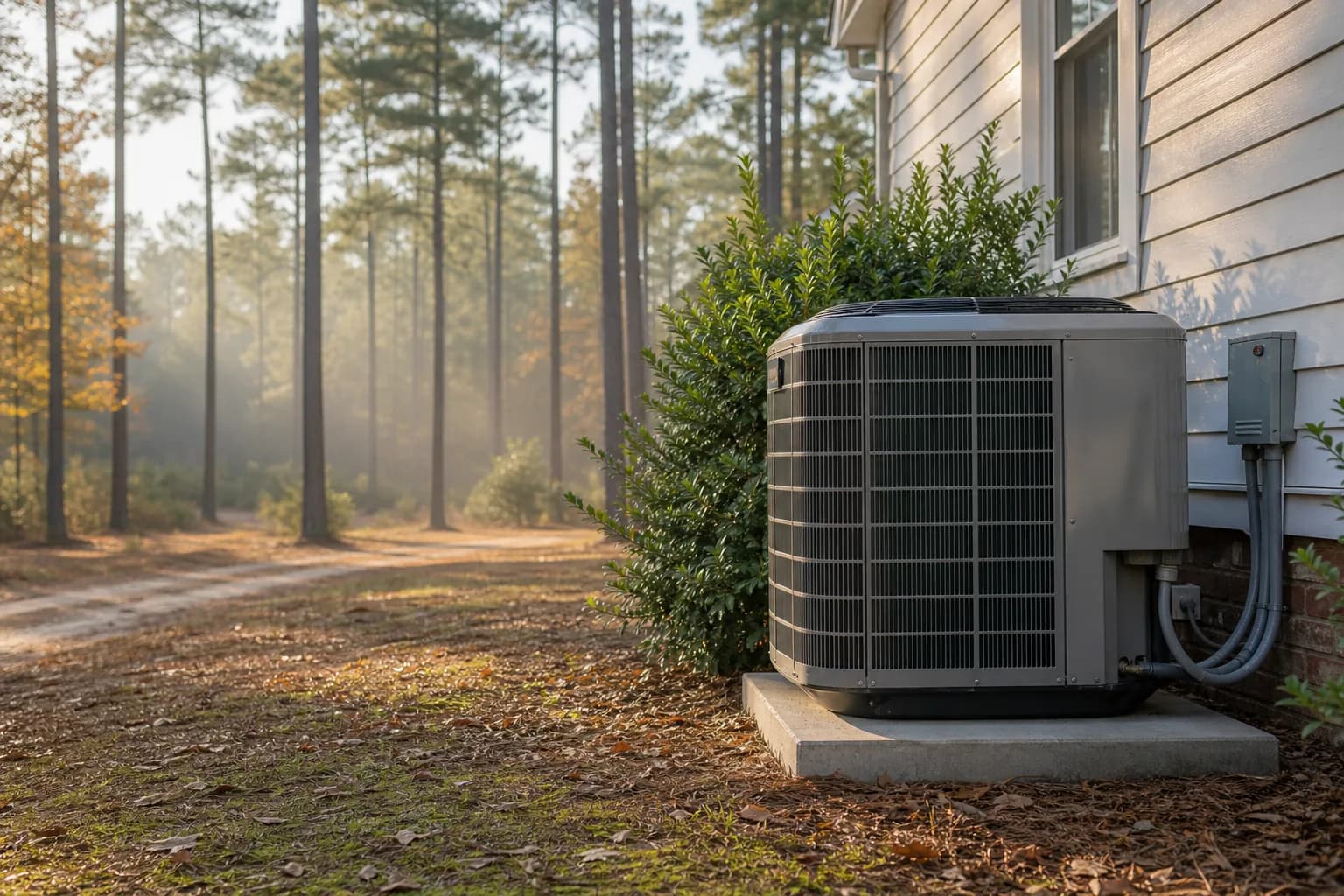
Here's the thing about heat pumps in Spanish Fort: they coast through fall doing the easy work, and then the first real cold morning of the season arrives and the weak spots show up all at once. By then you're not scheduling a checkup — you're making an emergency call with the house in the fifties and a commute to make.
The window to get ahead of that is right now, before the first cold snap pushes your system hard. A heat pump rarely fails without warning. It drops hints through the fall, and if you know what to listen and look for, you can catch the problem on a mild day instead of a miserable one. Whether you're in TimberCreek, Stonebridge, or one of the Churchill subdivisions off Hwy 181, or commuting over the Causeway into Mobile on I-10 each morning, the playbook is the same. Here are the signs we tell Spanish Fort homeowners to watch.
Weak or lukewarm heat from the vents
This is the most common early tell. You switch over to heat on a cool morning and the air coming from the registers feels tepid rather than warm — present, but not doing much. Heat pumps naturally deliver heat at a gentler temperature than a gas furnace, so a little of this is normal. But if the air feels barely warmer than room temperature and the house struggles to climb to the setpoint, the system isn't moving heat the way it should.
Caught early, this often traces to something correctable — a refrigerant issue, a struggling component, airflow restriction. Caught during a cold snap, it's the difference between comfortable and not.
Auxiliary heat that runs constantly
Most Spanish Fort heat pumps have backup electric "auxiliary" or "emergency" heat for the coldest stretches. It's supposed to be an occasional helper, kicking in only when the outdoor temperature drops low enough that the heat pump needs a hand.
If your aux heat is running on mild days — or you notice that "Aux Heat" or "Emergency Heat" light glowing on the thermostat when it's merely cool outside — your heat pump isn't carrying its share of the load, and the expensive backup is doing work it shouldn't have to. That's both a comfort warning and a bill warning, and it's one of the clearest signs something's wrong with the primary system. For a sense of when those strips are supposed to engage versus when they're a red flag, see when aux heat strips should actually kick in.
Ice on the outdoor unit that won't clear
A heat pump frosting up in winter is normal — and it has a built-in defrost cycle to melt that frost off on a schedule. What's not normal is ice that builds and stays: a thick coat of it on the coil, ice covering the whole top of the unit, or the cabinet locked in frost hours after it should have cleared.
Persistent ice means the defrost cycle isn't doing its job, and a heat pump encased in ice can't pull heat from the outdoor air. Left alone, it can cause real damage to the system. This is one to act on rather than watch — especially heading into the part of the year when the unit needs to run hardest. If you want to understand the normal cycle this symptom is a breakdown of, how the defrost cycle is supposed to work walks through it.
Short-cycling — turning on and off too often
Pay attention to the rhythm of your system. A heat pump should run in reasonably steady stretches. If it's clicking on for a few minutes, shutting off, then starting again over and over, that "short-cycling" points to a problem — anything from a refrigerant or airflow issue to a control or sizing fault.
Beyond the comfort hit of a house that never quite settles, short-cycling is hard on the equipment. All that stopping and starting wears components faster, which is how a small fall problem becomes a major winter breakdown.
Heating bills creeping up
Dig out last winter's power bills as a baseline. If your heating costs start climbing this season for the same house at the same settings, the system is working harder to deliver the same comfort — or leaning on that costly backup heat more than it should. Rising bills are a quieter sign than weak air or stubborn ice, but they show up in black and white, and they often confirm what the other symptoms are hinting at. The same logic applies in cooling season, too, which we unpack in why your summer power bill runs so high.
Age — the context for everything else
If your heat pump is past the decade mark, weight all of the above more heavily. Heat pumps work year-round and run through two seasons of demand, so they tend to wear a bit faster than cooling-only systems. An older unit showing any of these signs is more likely to need real attention than a young one with the same symptom.
Run it before you need it
On a cool fall day, switch the system to heat and let it run. Don't wait for the first cold snap to discover a problem — test it while a repair is routine, not urgent.Feel the air at a register
Hold your hand to a supply vent. It should feel clearly warm. Tepid, barely-warm air is the most common early sign something's off.Watch the thermostat for aux/emergency heat
Note whether backup heat engages on merely cool days. Constant aux heat in mild weather means the primary system isn't pulling its weight.Check the outdoor unit for ice
A little frost is normal and self-clearing. A thick, persistent coat of ice that lingers for hours is not — that's a defrost problem to act on.Listen to the cycling rhythm
Steady runs are healthy. Rapid on-off-on cycling points to a fault and wears the equipment. If you hear it, get it diagnosed before winter.
Why does a pre-winter checkup beat waiting in Spanish Fort?
Every one of the signs above is easier and less disruptive to handle in October than in the middle of a January cold front. A fall checkup lets a tech measure refrigerant, test the defrost cycle, check the reversing valve and aux heat, and confirm the system is ready to carry the house through the cold — all before you're depending on it. Catch a small issue now and it stays small. Wait, and the first hard freeze tends to find the weakness for you.
Ready for a pre-winter heat pump check in Spanish Fort?
Air Solutions Heating & Cooling is a family-run company founded in Daphne in 2023, licensed AL#23194 and BBB A-rated. We service Spanish Fort heat pumps and schedule same-day when we can.
- Schedule a heat pump checkup — get ahead of the cold
- Call (251) 300-9817 — describe what your system is doing
- Heat pump services — full overview
Related resources
- Heat Pump Services in Spanish Fort — city-specific service page
- All HVAC services in Spanish Fort — every service locally
- Cool Club membership — seasonal tune-ups that catch this early
- What a spring heat pump tune-up should cover — the warm-season companion to this fall check
- Are heat pumps worth it in Spanish Fort? — the bigger-picture case if you're weighing a replacement
- AC repair vs. replace: when it's worth fixing in coastal Alabama — how to decide when a failing system is past saving
- The Field Guide — more heat pump troubleshooting