
Switching from Cooling to Heating Mode: A Foley Heat Pump Sequence
The right order to bring a Foley heat pump into heating mode for the season, plus the sounds that are normal and the ones worth a service call.

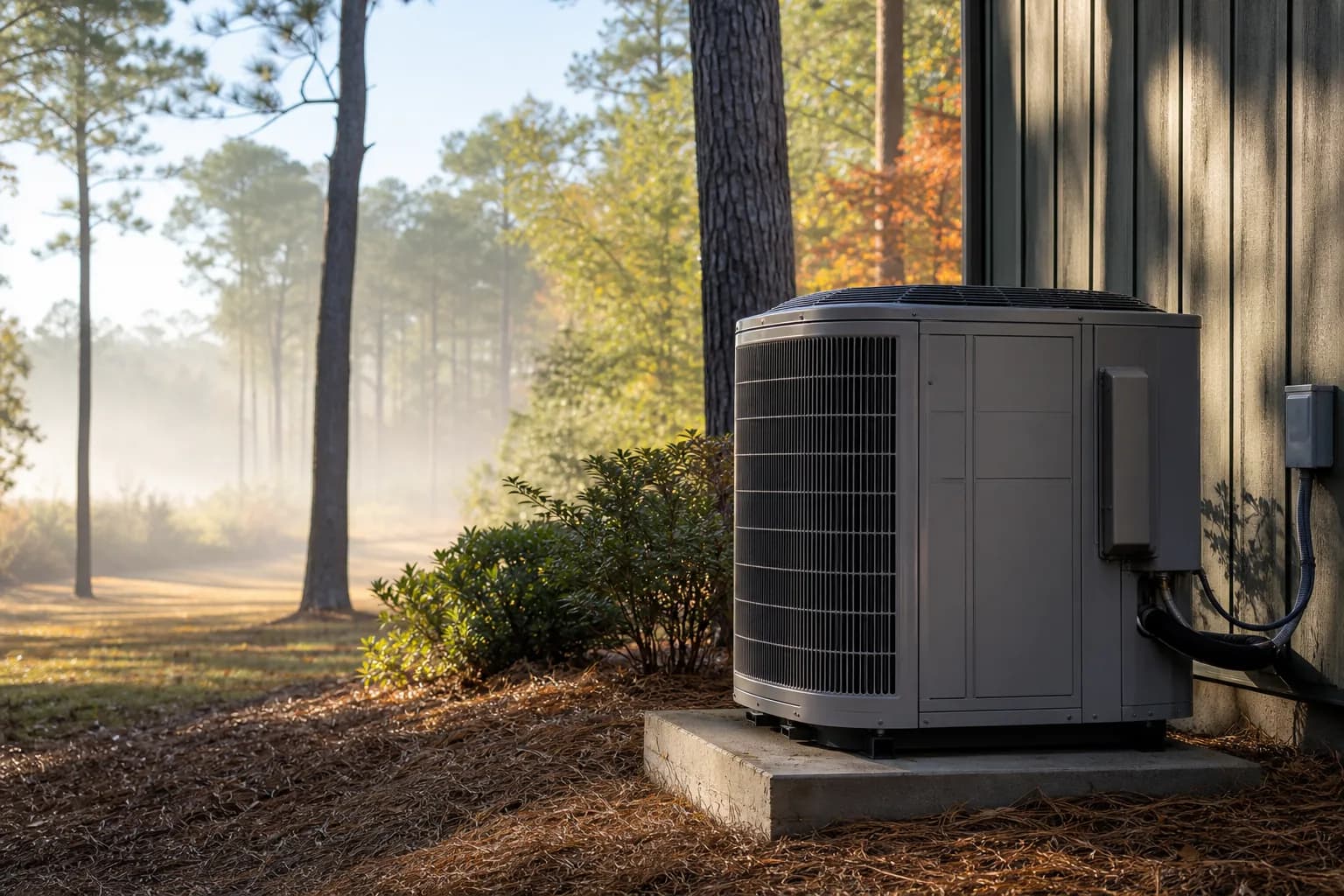
The first genuinely cool morning around Foley tends to sneak up on people. One week you are still running the air conditioning against OWA-traffic heat and Gulf humidity, and the next a front drops the overnight low into the fifties. You reach for the thermostat, slide it over to "Heat," and then pause. What is supposed to happen now, and how do you tell a healthy first cycle from one that needs attention?
A heat pump is the same box of equipment in summer and winter. The only thing that changes is the direction it moves heat. That makes the seasonal flip mostly painless, but the very first heat call after months of cooling is where any neglected problem shows itself. A little patience and a little listening go a long way.
Bring it over in order, not all at once
Resist the urge to jab the thermostat straight from Cool to Heat while the compressor is mid-cycle. Walking the system through a short, deliberate handoff protects the compressor and gives you a clean baseline to judge everything against.
Park it at Off for a few minutes
Let the current cooling cycle wind down so refrigerant pressures equalize before anything reverses. Two or three minutes is plenty.Check the filter while you wait
If it has been in longer than a month, swap it. A clean filter helps the blower deliver warm air evenly once heating starts.Move the thermostat to Heat
Then nudge the setpoint only a couple of degrees above the room. You want a gentle call for heat, not a panic demand that wakes up the backup strips.Stand there and pay attention
Give it ten minutes. The outdoor fan should spin up, the indoor blower should follow after a short delay, and you should feel warm air at the nearest register.
If everything lines up at the ten-minute mark, you are done. Your Foley system is ready for the season.
The whoosh you are supposed to hear
A heat pump heats by running its cooling cycle backwards. The part that flips the direction is the reversing valve, and the moment it shifts you will often hear a soft whoosh or a brief mechanical shudder out at the condenser. That noise is the valve doing exactly its job, and it usually lasts only a second or two.
The sound itself is not the worry. What follows it is. A whoosh that settles into smooth, steady running is a healthy machine. A whoosh that turns into hard knocking, a shudder that will not quit, or a compressor that keeps kicking on and off in quick bursts is a different story, and that is your cue to stop and call.
No warm air? Work through the short list
If ten minutes pass and the registers are still blowing room-temperature or cool air, a handful of usual suspects cover most cases.
The backup heat strips may simply not be engaging. In Foley's mild stretches the heat pump alone carries most of the load, which is the efficient way to run, but a genuinely cold morning should bring the auxiliary strips online. Push the setpoint four or five degrees above the room and watch for an "Aux" or "Emergency Heat" indicator. If nothing lights up and the air stays cool, that points to an electrical or strip problem.
A stuck reversing valve is the next candidate. If the valve never made the trip from cooling to heating, the system is quietly still in cooling mode even though the thermostat says Heat. The tell is fast frost building on the outdoor coil paired with cool indoor air, and that one is worth a call right away.
Low refrigerant can leave a system running but only mildly warm, because there simply is not enough charge to move much heat. And finally, a defrost cycle can briefly fool you: the outdoor unit pauses while the indoor blower keeps going, which is completely normal in cold, damp Foley air and clears on its own within several minutes.
Why do Foley heat pumps act up at the first heat call?
A few things about this part of Baldwin County shape what we tend to find on early-season calls.
Foley winters are short and mild, so a lot of systems sit locked in cooling mode for the better part of the year. A reversing valve that has not budged in nine or ten months is more likely to stick when finally asked to move. The Gulf Coast humidity also means defrost cycles run more often here than they would in a dry inland climate, so the defrost board and sensors get a real workout the moment temperatures drop. Older homes off Hwy 59 and out toward Bon Secour, where systems have run hard for years, tend to surface these first-cycle issues soonest.
There is also a construction wrinkle worth knowing. A good share of the newer subdivisions going up around Foley — places like Glenlakes, Liveoak Village, and Graham Creek Estates — use dual-fuel setups, pairing a heat pump with a gas furnace for backup. On those systems the heat pump should lead on the first cold cycle and the furnace should only take over when it is genuinely cold out. If the gas side fires the instant you call for heat on a fifty-degree morning, the changeover settings are probably off and worth a look.
A quick sound guide
Knowing which noises are routine and which are not saves a lot of needless worry on that first morning.
| Sound | What it usually means |
|---|---|
| Soft whoosh at the outdoor unit | Reversing valve switching direction. Normal. |
| Fan ramping up, brief mechanical click | Compressor and fan engaging. Normal. |
| Short pause then a restart in cold weather | A defrost cycle. Normal. |
| Loud bang the moment it starts | Possible compressor or motor trouble. Stop and call. |
| Steady squeal or grinding | Bearing wear or a fan blade making contact. Stop and call. |
| Hissing near the outdoor unit | Possible refrigerant leak. Call for service. |
A little prep before the cold arrives
You can head off most first-of-season surprises with a dry run in late summer. Pick a mild day, flip the system to Heat, set it well above the room for five minutes, and confirm you get warm air. That single test forces the reversing valve to move once on your schedule rather than on the coldest morning of the year, and it surfaces a stuck valve while there is no urgency.
While you are at it, fresh thermostat batteries, two feet of clearance around the outdoor unit for proper defrost airflow, and that clean filter all stack the odds in your favor.
When it is time to call
Reach out for service if you are still getting no warm air well past the fifteen-minute mark, if the outdoor coil ices over in weather that is merely cool rather than freezing, if the indoor air comes out colder than the room, if odd noises keep up, or if the system cannot stop short-cycling. An "Aux" or "Emergency Heat" light that simply will not switch off is also a signal that the heat pump itself is not pulling its weight.
Air Solutions handles heat pump diagnostics, pre-season checks, and repair throughout Foley and the surrounding south Baldwin communities. We are a family-run shop based in Daphne, licensed in Alabama under AL#23194, and emergency HVAC service is available when a cold snap catches you off guard.
- Schedule heat pump service
- Call (251) 300-9817 with questions
- Cool Club members get two seasonal tune-ups a year, 15% off all AC repairs, and 5% off new systems
Related resources
Related reading
- Are heat pumps worth it in our coastal climate? — the case for one system that heats and cools
- AC and heat pump not working: a troubleshooting guide — when no warm air is more than a setting
- What do those HVAC noises mean? — hissing, buzzing, and clicking decoded
- Replacing your system on the coast: the complete 2026 guide — when the heat pump is past its prime