
How a Spanish Fort Heat Pump Makes the Switch to Heating
What actually happens inside a Spanish Fort heat pump when it changes over to heating, and how to read whether that first winter cycle is healthy.

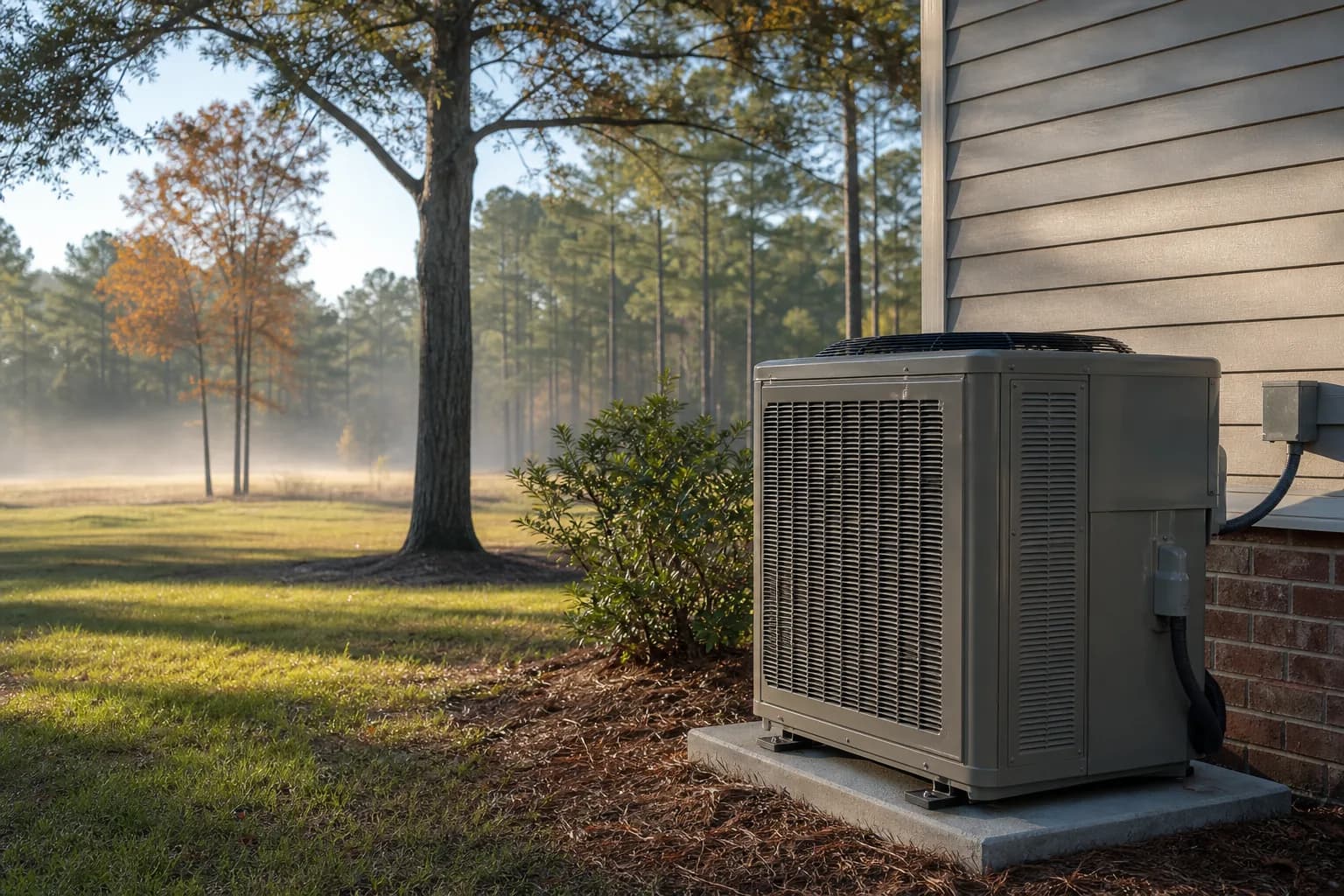
Most homeowners think of a thermostat's "Heat" setting as a switch that turns on a different machine. With a heat pump, that is not quite what is going on. The outdoor unit cooling your Spanish Fort home all summer is the very same unit that will warm it this winter. Nothing new turns on. The system just learns to run in reverse.
Understanding that one idea makes the seasonal changeover far less mysterious, and it explains why the first heat call after a long cooling season is the moment small problems tend to surface. Spanish Fort has filled in fast over the last decade — Stonebridge, TimberCreek, and the newer subdivisions off US-31 near the Causeway — and a lot of the heat pumps tucked behind those homes have spent nearly the whole year doing nothing but air conditioning. Asking one to flip direction for the first time in months is a small but real test. If you want the wider picture first, our Eastern Shore heat-pump guide on whether they're worth it here covers why the equipment fits this climate.
What "switching to heating" actually does
A heat pump moves heat from one place to another. In summer it pulls heat out of your house and dumps it outside. In winter it does the opposite, gathering warmth from the outdoor air (yes, even cool air holds usable heat) and carrying it indoors. The component that decides which way refrigerant travels is the reversing valve, and the act of changing seasons is really just that valve shifting position.
Heating mode is not a second system waking up. It is the same equipment running backwards, which is why a clean changeover depends on one little valve doing its job.
When you set the thermostat to Heat and call for warmth, that valve repositions, the compressor takes over, and within a few minutes warm air should reach your registers. The handoff is usually quiet and uneventful. When it is not, the cause almost always traces back to a part that sat idle too long.
Easing it over instead of forcing it
There is a gentle way to make the change. Rather than dragging the thermostat from Cool straight to Heat while the compressor is still running, give the system a brief rest first. Set it to Off for a couple of minutes so refrigerant pressures settle, then move to Heat and raise the target only slightly above the current room temperature. A soft, modest call for heat lets the heat pump itself do the work before the backup strips ever get involved.
Then watch and listen for about ten minutes. The outdoor fan should start, the indoor blower should follow shortly after, and you should feel warmth building at the vents. If it all comes together, your system is set for the season.
When the changeover goes sideways: cause and fix
Group the common first-cycle failures by what is actually wrong, and the picture gets clearer.
The symptom: a loud noise after the changeover. When the reversing valve shifts you will normally hear a brief whoosh or shudder, and that is fine. The cause for concern is what comes next. Persistent knocking or shuddering suggests the valve is hung up partway, and a compressor cycling on and off in rapid bursts points to a pressure or charge issue. The fix in either case is a technician's job, not a thermostat adjustment.
The symptom: air is moving but it is not warm. The most frequent cause here is a heat pump that quietly never left cooling mode because the reversing valve failed to travel. You will often catch it by the outdoor coil frosting quickly while the indoor air stays cool. A second possibility is low refrigerant, which leaves the system running yet only lukewarm. Both need service to correct.
The symptom: no real heat on a cold morning. On a genuinely cold Spanish Fort night the backup heat strips should engage to supplement the heat pump. If you push the setpoint up several degrees and never see an "Aux" indicator or feel the air strengthen, an electrical fault or a failed strip is the likely culprit.
The symptom: the unit pauses, then resumes. Often this is nothing at all. In cold, damp conditions the system runs a defrost cycle, briefly stopping the outdoor fan while the blower keeps moving air. It clears itself within a few minutes and needs no intervention.
Why this part of Baldwin County sees these issues
The local climate explains a lot. Because winters along Mobile Bay are short and the cold spells brief, equipment can sit in cooling mode for the great majority of the year. A reversing valve that has not moved in many months is simply more prone to sticking when it finally must. The damp air coming off the bay also drives more frequent defrost activity than you would see inland across Baldwin County, so the defrost controls earn their keep the moment it turns cold. (If your real complaint is summer humidity rather than the winter changeover, the Spanish Fort guide to a house that stays humid with the AC running digs into that side.)
Add to that the building boom. Many Spanish Fort homes — Stonebridge and the D.R. Horton stretches of TimberCreek among them — are recent construction, and a fair number run dual-fuel arrangements that pair a heat pump with a gas furnace. On those, the heat pump should lead and the furnace should only step in during real cold. If the gas side ignites the instant heating is called for on a mild evening, the changeover thresholds usually need adjusting. Buyers picking equipment for a new build will find more in our builder-grade HVAC guide for Spanish Fort.
Which first-night sounds are normal, and which mean call?
A short reference helps separate the routine from the worrisome on that first night.
| What you hear | How to read it |
|---|---|
| A quick whoosh outside | The reversing valve changing direction. Expected. |
| A brief click as the compressor starts | Normal startup. |
| A pause and restart in cold weather | A defrost cycle running. Normal. |
| A sharp bang at startup | Possible compressor or motor fault. Shut it down and call. |
| Ongoing squeal or grind | Worn bearings or a fan touching its housing. Call. |
| A hiss near the condenser | Possible refrigerant leak. Call for service. |
Set yourself up before the cold lands
The single best habit is a late-summer test run. On a mild day, switch to Heat, set it well above the room for five minutes, and confirm warm air arrives. That forces the reversing valve to move once on your timetable and reveals a sticky valve while there is no pressure to get heat going. Fresh thermostat batteries, clear space around the outdoor unit, and a recently changed filter round out the prep.
If the first cold front comes and the registers stay cool past fifteen minutes, the coil ices up in merely cool weather, the air runs colder than the room, the noises persist, or an emergency-heat light refuses to go off, it is time to bring in a technician.
Air Solutions is a family-run company based in Daphne, licensed in Alabama as AL#23194, working across Spanish Fort and the rest of the Eastern Shore. Emergency HVAC service is available when the weather turns before your system is ready.
- Schedule heat pump service
- Call (251) 300-9817
- Cool Club includes two seasonal tune-ups a year, 15% off all AC repairs, and 5% off new systems