
Fall Allergy Triggers Hiding in Your Elberta HVAC System
Why fall congestion lingers in Elberta, AL even after pollen drops, and the indoor HVAC sources behind it in our farm-country climate.

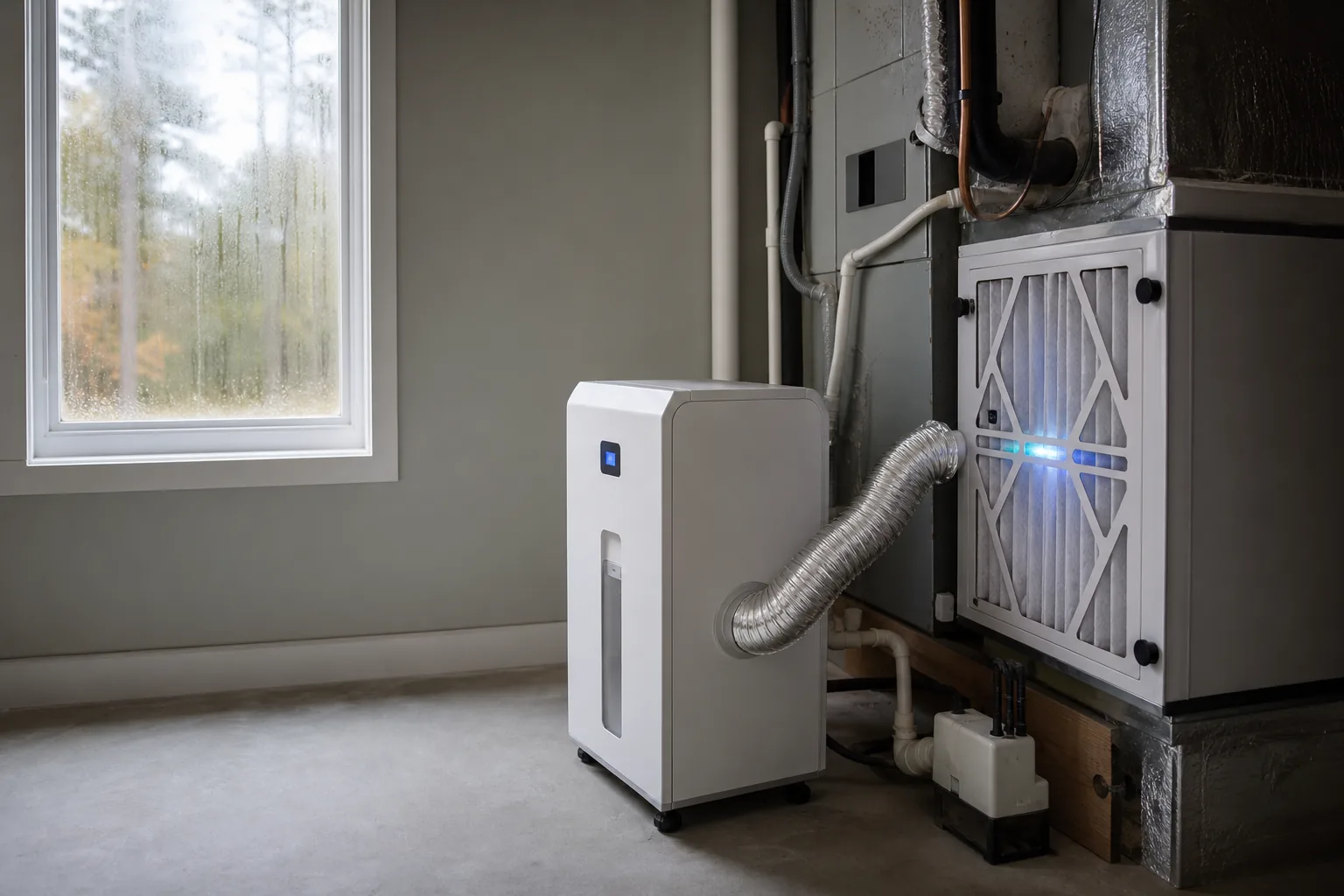
Out here in Elberta, fall doesn't arrive the way it does up north. The big seasonal shift most homeowners notice is the AC finally getting a break after running flat-out all summer. And right about the time the unit slows down, a lot of folks start waking up stuffed up, scratchy-throated, and blaming the ragweed. The ragweed is real. But so is the stuff that's been collecting inside your system since June, and that second cause is the one almost nobody thinks to check.
Why the timing fools so many people
Through July and August your air conditioner was a full-time air scrubber whether you thought of it that way or not. Long compressor runs meant your home's air kept cycling through the filter, kept getting wrung of moisture, kept staying mixed instead of settling into stale pockets. Then October's milder days cut that runtime way down. The cleaning slows, the moisture management loosens, and the same dust and spore load that never bothered you in summer suddenly has time to build up in still air.
So the trigger isn't always something new blowing in from the fields. Often it's the change in how hard your equipment is working. Less runtime, less filtration, more settling.
The farm-country angle most articles skip
Elberta sits inland on big lots with working ground all around, the German farming heritage along the Highway 98 corridor still showing up as active acreage on every side. That gives our homes an allergen profile that's genuinely different from a tight subdivision or a beach condo. From the rural stretches past Downtown Elberta out toward the Baldwin County Heritage Museum, late-season harvest activity kicks fine soil and plant matter into the air. Tractors, mowers, and dry-field wind all add to it. That material rides in on shoes, pets, and open doors, then your ductwork stores it. When the heat finally fires up for the first cold morning, the blower stirs months of settled grit back into the rooms you sleep in. It's the same Gulf-influenced humidity that drives mold growth in coastal ductwork right across Baldwin County.
It's worth naming because the fix isn't exotic. It's knowing where in the system the buildup hides.
Where it actually accumulates
Walk the system from the inside out and you'll usually find a few of these:
The cooling coil. A coil stays cold and damp every time the AC runs, which makes it the favorite spot for mold and bacterial film to set up over a long Gulf-influenced summer. Air gets pushed straight across that surface, and some of what's growing there comes along for the ride.
The drain pan and line. Standing condensate breeds algae and slime. A neglected line can back up and keep the pan wet, which only feeds the problem.
A spent filter. A filter that caught a heavy summer's worth of pollen and field dust eventually loads up and starts shedding instead of catching. Past a point it does more harm than good.
The duct runs. Years of fine dust, dander, and crop residue settle along the duct walls. Quiet, until heating airflow knocks it loose.
The outdoor unit. Falling leaves and dry plant litter pile against the condenser, trap moisture, and can pull spores into the system.
A simple way to tell the source is your HVAC
You don't need a lab to make a good guess. Pay attention to the pattern:
Notice the first-run reaction
If you feel worse in the few minutes after the system kicks on, that points at something living in the equipment or ducts.Track whether leaving helps
Symptoms that ease when you're away from the house and return when you come home suggest an indoor source rather than the outdoor air.Map it room by room
Worse near the air handler or the closest registers? That's another HVAC tell.Watch the filter test
If a fresh filter buys you a couple of clean days before things slide back, the system is feeding the problem faster than one filter can keep up.Use your nose
A musty smell when the unit runs is a strong sign of coil or drain growth.
Two or more of those lining up, and your system is almost certainly part of the story.
What to handle yourself this week
Start cheap and simple before anyone schedules a visit:
- Put in a fresh filter rated for allergens, MERV 11 or better, and write the date on the frame. A basic pleated filter is cheap; an allergen-grade one costs a bit more but earns it during harvest dust. If you're unsure how often to swap it out here, see how often to change your filter on the Gulf Coast.
- Pull the return grilles and vacuum the dust film off them, then wipe the supply registers.
- Rake the leaves and dry litter back away from the outdoor unit so it can breathe.
- If you run a smart thermostat, set the humidity target somewhere around 45 to 50 percent and let the system hold it.
These steps cost almost nothing and knock down a surprising share of the load on their own.
When it's time to bring us in
If the housekeeping doesn't settle things, the next layer is professional. A seasonal inspection and tune-up is where we actually look at the coil and the drain and tell you straight whether they need cleaning. From there, the honest options run roughly in this order: clean the coil and treat the drain if the inspection calls for it, clean the ducts if there's visible buildup or the symptoms won't quit, and only then talk about add-ons like UV coil treatment or upgraded filtration. We won't sell you the big stuff if the small stuff fixes it.
A word on UV coil treatment
For a home where the coil keeps regrowing mold no matter how often it's cleaned, a UV-C lamp mounted near the coil runs continuously and keeps that surface from re-colonizing. It's not a cure-all and it does nothing for the dust already in your ducts, but for the right house it quietly solves a recurring problem and keeps the coil cleaner, which helps efficiency too. We'll tell you whether yours is a candidate rather than installing one by reflex.
Humidity is the quiet driver
Even inland, Elberta carries enough Mobile Bay and Gulf moisture that damp indoor air is a year-round background condition. Dust mites and mold both thrive in it. If your home stays muggy and the allergy pattern tracks with that, the root issue may be humidity rather than dust, and a whole-home dehumidifier tied into the return air does what a plug-in box in one room never will. If you've never traced where that moisture comes from, our Eastern Shore humidity guide lays it out. That's a bigger step, so we only point there when the moisture readings back it up.
The outdoor side still counts
Cleaning up the indoor sources helps a lot, but the fields don't stop. Mold spores climb as leaves and crop residue break down through October and November, ragweed lingers, and harvest stirs soil dust into the wind. On heavy days, keep the windows shut and let the HVAC do the filtering instead of inviting the outside in.
Cool Club, if you're already a member
If you're on our Cool Club plan, the two seasonal tune-ups a year are the natural moment to handle the coil-and-drain check and a filter swap before heating season. Members also get 15 percent off all AC repairs and 5 percent off new systems. That's the whole offer, no fine print games.
Loop in your doctor when it's warranted
HVAC work addresses the house, not the person. If symptoms are severe, getting worse, new, or affecting a child or someone with asthma in the home, talk to a medical professional alongside any IAQ improvements. We handle the air; your doctor handles you.
Ready for an IAQ look in Elberta?
Air Solutions Heating & Cooling assesses indoor air quality for Elberta homes and recommends only what your house actually needs. Family-run, started right up the road in Daphne in 2023, licensed AL#23194.
- Schedule an IAQ assessment — book a consultation
- Call (251) 300-9817 — emergency HVAC service is available
- Indoor Air Quality services — full overview
Related resources
- Indoor Air Quality services — full overview
- All HVAC services in Elberta — everything we cover locally
- Oak pollen and bay air: a spring indoor-air guide — the other allergy season
- Cool Club membership — how the plan works