
Foley Homeowner Questions: Why the House Feels Stuffy Once Fall Sets In
Answers to the fall stuffiness questions we hear most from Foley homeowners, especially folks in the newer tight subdivisions going up around town.

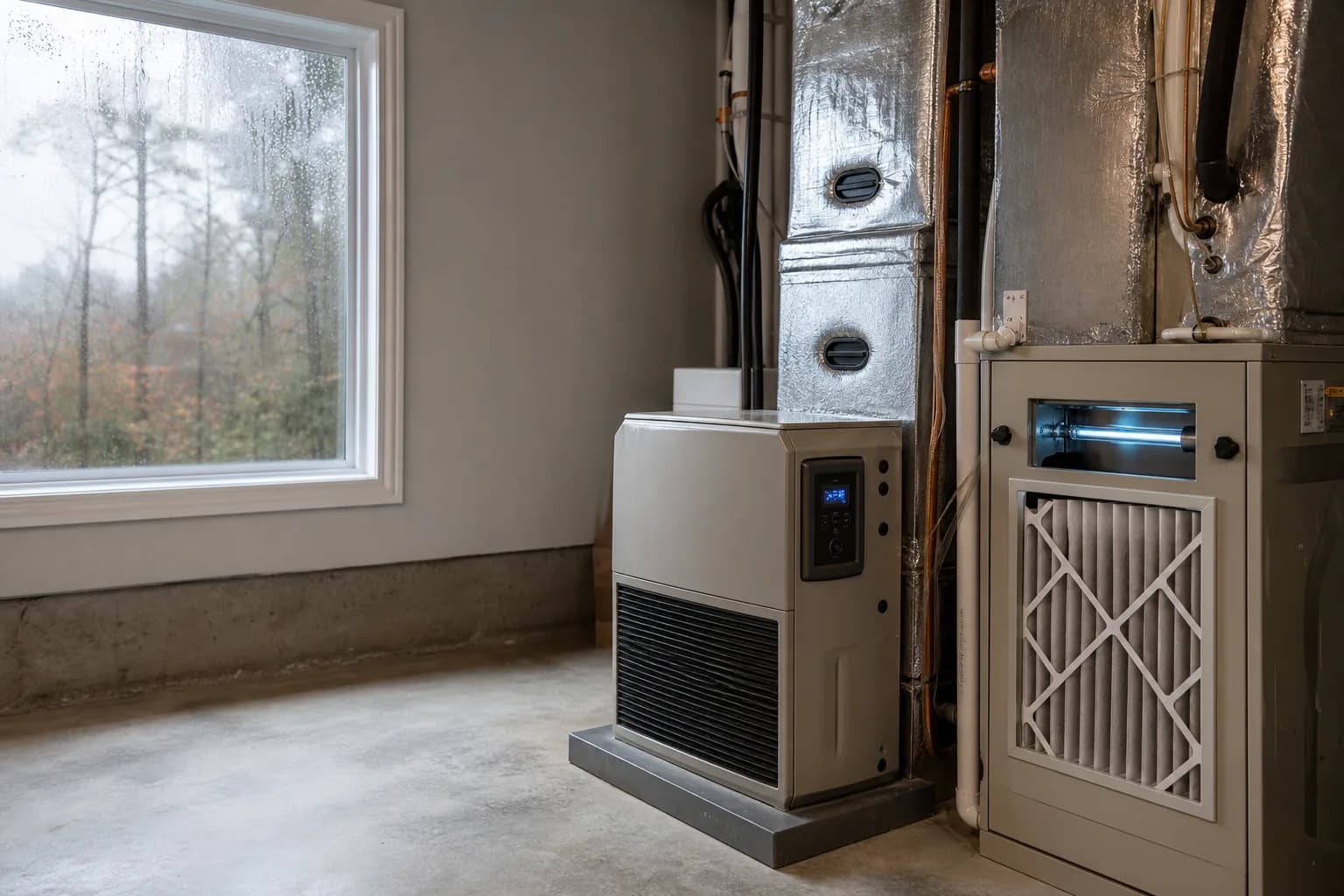
Foley keeps growing, and a lot of the calls we take now come from families in subdivisions that didn't exist a few years ago — the newer builds going up off Hwy 59 and out toward OWA. The houses are bright, efficient, and built tight to modern code. They're also the ones most likely to feel oddly close and stale the minute fall arrives and the AC stops running around the clock. We get the same handful of questions every October from across this corner of Baldwin County, so here are straight answers.
Why does a brand-new house feel stuffier than my old one did?
It surprises people, but newer construction is often the bigger offender. Older homes leaked. Air slipped in around windows, doors, and the attic hatch whether you wanted it or not, which meant the place was constantly, if accidentally, ventilating itself. A modern Foley build is sealed up far better. That's wonderful for your power bill, but it also means almost no air sneaks in on its own. When the air conditioner runs all summer, the system itself keeps everything moving and fresh. Take that away in fall and a tight house has no backup plan, so the air just sits.
Is the lower humidity actually the problem?
Partly, and not the way you'd think. Yes, our fall air dries out compared to the soup we breathe in August. But drier air feeling stuffy is the puzzle. The honest answer is that what people call "stuffy" is usually stale air rather than humid air, and stale just means it isn't moving and isn't being swapped for anything fresher.
What can I try tonight before calling anyone?
Plenty, and most of it costs nothing. Start with the thermostat fan. Switch it from Auto over to On and let the blower run on its own for thirty minutes or so. Even with no cooling happening, that pushes the whole house through the filter and breaks up the still air. While you're at it, pull the filter and look at it. After a full cooling season it's probably gray, and a fresh one only costs around five dollars. Then open a couple of windows for fifteen minutes the next cool morning to flush things out. Those three moves clear the air in most Foley homes by the next day.
My thermostat has a fan setting I never touch. Should I?
This is the one I'd point you to first. A lot of the smart and programmable units in newer Foley homes offer a Circulate option that sits between Auto and On. Instead of running only when there's heating or cooling demand, Circulate runs the blower a set number of minutes every hour, all day. For a sealed house with a long quiet stretch between cooling cycles, that steady mixing is often the whole fix. Set the humidity target somewhere in the mid-forties to low-fifties too, so the system grabs a little moisture on the occasional cooling run.
Could my new house be too tight?
It can, and that's not a defect so much as a tradeoff. Builders chase efficiency, and a very tight envelope locks conditioned air in beautifully — the newer homes in places like Glenlakes and the recent Hwy 59 subdivisions are sealed far better than the older stock around Foley. The downside shows up in shoulder seasons like fall when the system isn't running enough to ventilate on its own. Some homes genuinely benefit from a deliberate way to bring a measured amount of fresh outdoor air inside without throwing the windows open and wasting energy. Whether yours needs that is worth a real look rather than a guess, because plenty of homes do fine with just better fan habits.
What are the warning signs it's more than stale air?
A few things separate normal fall stuffiness from a real issue worth a service visit:
- A steady musty smell, not just yesterday's cooking, can point to a coil or drain line that picked up grime over the summer.
- Allergy symptoms that spike right when you seal the house up suggest filtration that isn't keeping pace.
- Rooms that feel noticeably worse than others usually mean an airflow or duct balance problem.
- Visible mold anywhere is never a "wait and see," call about it.
Does running the AC a little in fall help?
Counterintuitively, yes, in short bursts. On a mild, sticky afternoon a brief cooling cycle pulls moisture down and gets the air moving again. The goal isn't to freeze the house. It's just to let the equipment do its summer job for a few minutes so the air doesn't stagnate on the muggier fall days we still get here on the Gulf Coast. If the house stays muggy even with the AC running, that's a different problem — we walk through why a house stays humid with the AC running separately, and some tight homes are good candidates for a whole-home dehumidifier.
What about the kitchen during the holidays?
Foley families cook, and a tight house traps every bit of it. Once the oven runs for big fall meals, grease, steam, and food smells hang in the air with nowhere to go. Run the range hood the whole time you cook, crack a window for a few minutes afterward, and keep the filter fresh through the busy weeks. It keeps the whole house from soaking up the kitchen.
When should I just have someone come look?
Call us if the stale feeling outlasts the easy fixes, if you smell something musty that won't quit, if certain rooms stay stuffy no matter what, or if anyone's allergies get worse once the windows close. Air Solutions covers indoor air quality across Foley and the growing communities around it. We'll talk through the no-cost habits first and only recommend equipment when it actually solves something.
- Schedule an indoor air quality visit — pick a time
- Call (251) 300-9817 — we'll answer your questions
- Indoor Air Quality services — full overview
Related resources
- Indoor Air Quality in Foley — your local service page
- All HVAC services in Foley — everything we handle nearby
- Cool Club Membership — two tune-ups a year, 15% off all AC repairs, 5% off new systems