
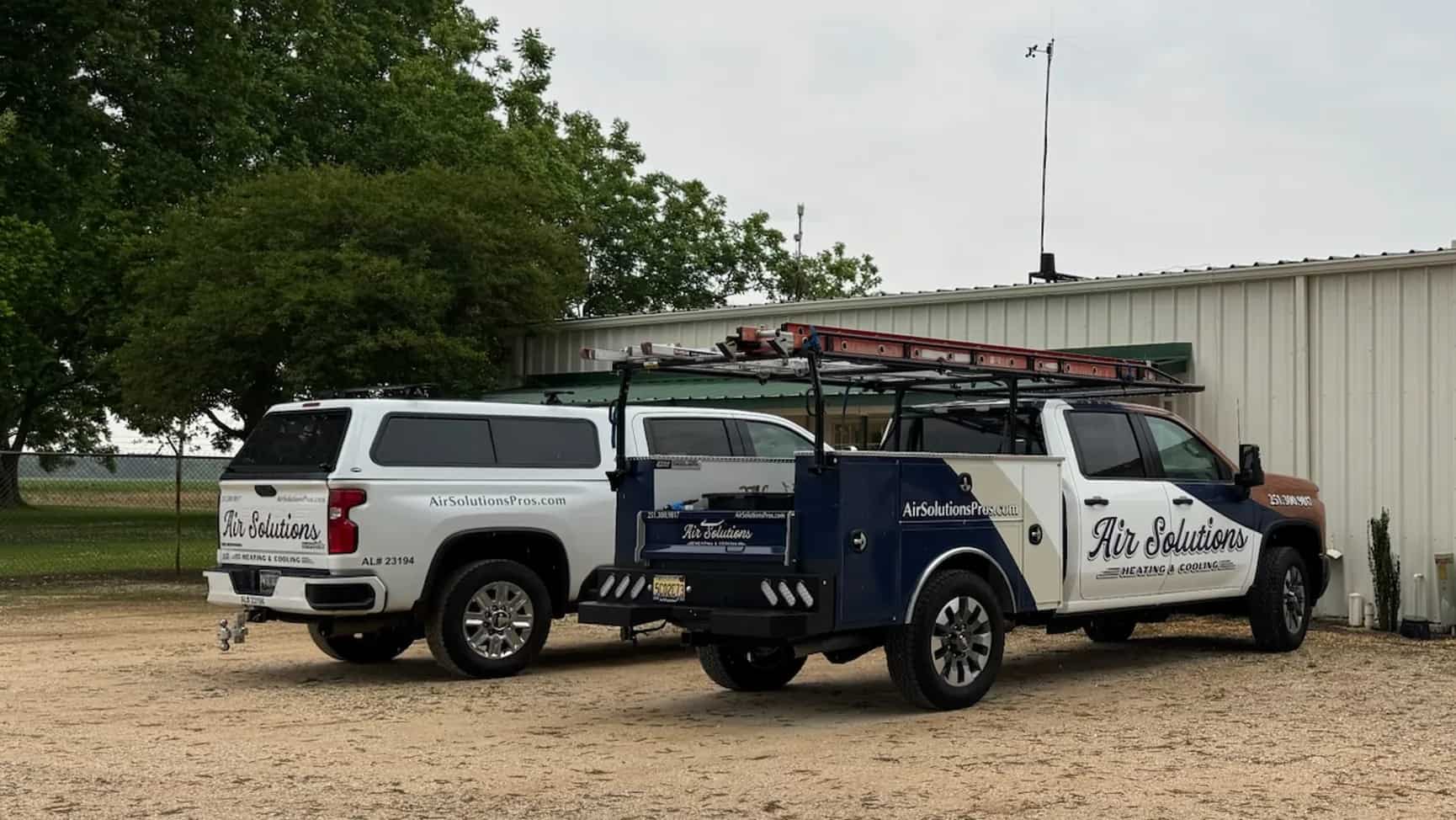
Emergency HVAC in Stockton.
Local emergency HVAC in Stockton, Alabama and surrounding Baldwin County. 24/7 emergency response across Baldwin County. Licensed AL#23194. 353+ five-star reviews. Call (251) 300-9817.
AC Not Cooling? Not Blowing Cold Air? Start Here.
Most Stockton calls start with one of these symptoms. Same-day weekday diagnostic, written estimate before any work — call (251) 300-9817.
- AC running but not cooling the house — usually a refrigerant leak, dirty condenser coil, or weak capacitor
- AC not blowing cold air — warm air from the vents means the compressor isn't engaging or refrigerant is low; we test both and explain what we find
- Weak airflow or nothing from the vents — blower motor, clogged filter, or a collapsed duct run
- Ice on the copper lines or evaporator coil — switch the system off before we arrive; running it frozen risks compressor damage
- AC short-cycling — starting and stopping every few minutes signals an electrical, thermostat, or refrigerant problem that worsens if ignored
- House cools but stays humid and clammy — in Baldwin County that often points to an oversized system, not a broken one
What emergency HVAC looks like in this climate.
The defining climate fact for an emergency HVAC call into Stockton is the cooling load, not the cold. The ERA5-Land reanalysis at the community's coordinates returns approximately 3,222 cooling degree days against a July average daily high near 95°F — the heaviest annual cooling reading in our entire 22-city Baldwin County matrix, ahead of Bay Minette at 3,096, Perdido at about 3,058, Foley near 3,034, and meaningfully clear of every coastal cell that benefits from a Gulf breeze. Forty miles inland from Mobile Bay with no marine moderation available to clip the long July afternoons, the operative consequence for equipment is concrete: a condenser bolted to a Stockton slab accumulates more compressor hours per calendar year than the same nameplate would log on any other matrix address. The failure-mode catalog therefore compresses into a tighter window than the coast sees, and the early-summer no-cool wave surfaces earlier and harder. Peak-July afternoon dispatches into 36579, with a household trying to ride out a multi-day heat-advisory stretch on a single-stage condenser already past its serviceable life, is the load-bearing emergency profile here. Winter heating load is real too — about 1,133 HDD against a January average low near 47.7°F — but it sits as the secondary climate fact rather than as the headline number the way it does for Bay Minette or Perdido.
Two geographic features shape the dispatch context further. The first is the Mobile-Tensaw River delta to the immediate west of the community: rural-acreage parcels along the Tensaw corridor sit on or near the river floodplain, and on heavy-rain events that push the river out of bank the FEMA city-center Zone X reading no longer describes those properties. Outdoor-unit submersion risk during sustained heavy rainfall is a real failure mode along the corridor — an outdoor condenser sitting in standing water has both immediate electrical-safety implications and a much-elevated risk of compressor and contactor damage that surfaces on the first restart attempt after the water recedes. The second is the surrounding timber-country geography: working forestry operations conduct prescribed burns during defined late-winter and early-spring controlled-burn windows under Alabama Forestry Commission guidance, and the wood-smoke loading on those days can affect indoor air quality for households with sensitive respiratory profiles or fresh-air ventilation systems that pull outdoor air into the conditioned space. Neither feature is hypothetical, both are routine parts of life in the timber country, and both occasionally interact with the emergency-HVAC call docket in ways the more urbanized matrix cells simply do not see.
Heat-cluster weeks, river-corridor flood risk, and timber-country events that have shaped emergency HVAC dispatch into Stockton.
- Summer 2023 — Sustained above-95°F runs against the heaviest cooling load on the matrix: Stockton runs the highest cooling-degree-day load in our entire Baldwin County matrix at approximately 3,222 CDD, and an extended above-95°F stretch in the summer of 2023 clustered the early-season emergency-dispatch pattern across 36579 accordingly. The recurring sequence on Stockton equipment that summer: capacitor swaps on the first true hot week of May or June as outdoor units past the fifteen-summer mark surrendered the microfarad spec they had drifted out of over the winter, contactor pitting on second-cycle equipment from the 2005-to-2015 replacement wave running unbroken duty, slow refrigerant loss surfacing as gradual capacity decline on systems past twelve years of service against the matrix-highest cooling-runtime hours, and condensate-drain float-switch trips on attic-located air handlers that did not see a spring drain-line treatment. The cluster surfaced harder on rural-acreage addresses where the outdoor cabinet sat in open sun with pollen and ag-dust drift from the surrounding timber-and-farmland mix loading the condenser fin pack faster than a shaded yard would have allowed. The summer-cluster pattern is the single best leading indicator of where after-hours dispatch volume lands on Stockton equipment each year, and the lesson from 2023 was simply that the matrix-highest CDD figure shows up first on the equipment with the most prior runtime against it.
- Heavy-rain spring events — Tensaw River corridor — outdoor-unit submersion risk on rural acreage: Stockton sits at the eastern edge of the Mobile-Tensaw delta, and rural-acreage parcels along the Tensaw corridor at the western edge of the community have parcel-level flood-zone overlays that go beyond the city-center FEMA Zone X point check. On heavy-rain spring events that push the river out of bank, outdoor condensers installed at the original builder elevation on those corridor parcels can find themselves standing in several inches to several feet of standing water — a failure mode the elevated incorporated cities on the Eastern Shore do not face the same way. The immediate emergency-call rule on any property along the corridor where the unit has gone under: kill power at the breaker panel before the water actually reaches the equipment, and leave it off until a licensed tech can verify the safety condition on site. Self-restarting a submerged unit on the first dry day creates both an electrical-shock hazard and a high probability of immediate compressor damage that turns a recoverable repair into a full equipment loss. The dispatch call on a post-flood Tensaw-corridor address is built around documenting the water exposure, isolating the electrical side safely, and assessing whether the equipment is recoverable or whether the conversation needs to pivot to insurance-claim documentation and a replacement timeline.
- Jan 2024 — Multi-night sub-freezing stretch — long-tenure rural households on aging dual-fuel: Three consecutive overnight lows well below freezing with daytime highs that struggled past 40°F across north Baldwin. Stockton sits inland without bay thermal moderation, and the cold-mode runtime exposed every weak point on aging strip-heat and defrost-board hardware across 36579 simultaneously. The specific Stockton call profile during that event leaned on the long-tenure ownership pattern: 87.6 percent owner-occupancy is the highest in the matrix, and a meaningful share of the rural-acreage households had been on the same property and the same equipment for fifteen to twenty-five years. Reversing valves stuck mid-cycle on the changeover from cooling after a nine-month idle period, electric auxiliary strip-heat contactors read open under sustained load, defrost boards drifted out of timing spec on hardware that had not seen recent service, and on the propane-furnace dual-fuel installations a parallel wave of flame-sensor failures and ignition-module faults landed on the single coldest night. Emergency calls clustered at 5 and 6 a.m. on the coldest mornings as overnight indoor temperatures finally dropped enough to make the failure undeniable. The longest waits during the dispatch backlog landed on the rural back-road addresses farthest from Highway 59, where the road conditions added their own time to the run on top of the fifty-minute interstate baseline.
- Late winter — recurring — Forestry controlled-burn smoke events — fresh-air-intake IAQ calls: Working timber operations in north Baldwin conduct prescribed burns under Alabama Forestry Commission guidance during defined late-winter and early-spring controlled-burn windows when wind conditions and fuel-moisture readings line up. Wood-smoke loading on those days affects outdoor air quality across the immediate timber country in a way that does not reach the more urbanized cells on the Eastern Shore. The HVAC-adjacent consequence shows up periodically as an emergency or near-emergency call: a household with someone who has reactive airway disease, asthma, or another respiratory condition notices acute symptoms when the equipment is pulling outdoor air through a fresh-air intake into the conditioned space during an active burn window. The diagnostic conversation on those calls is less about a piece of equipment failing and more about whether the ventilation system is appropriate for the geography — and the practical short-term answer is often a temporary close-off of the fresh-air intake during active burn windows with a planned conversation about MERV-rated filtration or a dedicated air purifier on the follow-up scheduled visit. We document the situation honestly rather than treating it as an equipment-failure ticket, because the equipment is generally working exactly as designed; the design assumption simply did not anticipate the seasonal smoke load.
What we see on calls in Stockton.
An emergency on a Stockton address sits across the same five-yes safety threshold we apply across Baldwin County: no cooling under an active heat advisory or with a medically dependent household member at home; no heating under an active freeze warning particularly with exposed plumbing at risk on a rural-acreage parcel; an audible refrigerant leak at the line set or a strong refrigerant smell at the indoor coil; visible arcing at the outdoor disconnect or a breaker that will not hold one clean reset; smoke or burning-plastic odor from any portion of the equipment. Those calls go to the 24/7 line at (251) 300-9817. A system that is running but missing setpoint by a few degrees, or developing a new noise the household wants a tech to evaluate, sits on the scheduled-call side and waits for the next north-county route day without after-hours overtime attached. The benefit of being plain on the phone about which tier you have is direct: a 30.9-mile dispatch up I-65 and then north on Highway 59 past Bay Minette into the timber country does not give us a second chance to come back for what we missed, so naming the situation honestly lets us load out the truck for the actual failure rather than for a guess.
What makes the Stockton emergency-call book genuinely distinctive is the combination of the heaviest cooling load on the matrix with a 1995-median housing stock that puts the typical address right at twenty-seven years old. The dominant equipment in 36579 is the second-cycle replacement that landed somewhere between 2005 and 2015, now eight to seventeen years deep into service under the highest cooling-runtime load anywhere in our coverage area. The failure patterns cluster predictably: capacitor microfarad drift on outdoor units past the fifteen-summer mark giving up during the first sustained May or June run of 90°F-plus afternoons, contactor pitting on second-cycle equipment running near-continuous duty across August heat-advisory weeks, slow refrigerant loss surfacing as gradual capacity decline on systems past twelve years of service in the heaviest CDD geography we cover, condensate-drain float-switch trips on attic-located air handlers that did not see a spring drain-line treatment, and the occasional outdoor fan-motor seizure on units running unbroken duty cycles. Rural-acreage outdoor cabinets carry their own load on top of that baseline: pollen and ag-dust drift from the surrounding timber-and-farmland mix loads condenser fins faster than a shaded suburban yard would, road dust off Highway 59 carried on the prevailing south wind adds to it, and wildlife access to refrigerant lines and outdoor disconnect cabinets on the more remote back-road acreage parcels is a real and recurring source of repair tickets. The Tensaw-corridor addresses add one more variable: heavy-rain events that push the river out of bank can submerge an outdoor unit installed at the original builder elevation, and any household along the corridor that has watched the unit go under should kill power at the breaker panel BEFORE the water reaches the equipment and leave it off until a tech can verify the safety condition rather than attempt a self-restart. While you wait for a truck on any of these calls, the short-list safe-to-do moves are the same: cut the thermostat off if a failed compressor is still trying to start, close blinds on the sun-facing or wind-facing sides of the house, run ceiling fans only in occupied rooms, skip oven and dryer use until the system is back up, and at the first whiff of anything burning or any sign of smoke kill power at the disconnect or breaker panel before anything else.
- Mid-life equipment is the common profile in this area. Capacitor and contactor failures dominate the service-call mix.
- Long cooling season means compressors run heavy May through October. Annual maintenance pays for itself in compressor lifespan.
- Mild winters mean heat pumps cover the season comfortably without backup runtime in normal years. Cold-snap weeks expose undersized units.
Emergency HVAC in Stockton — the questions that come up.
- Our AC quit on a July afternoon when the heat advisory is active. Stockton is fifty minutes from your shop — what should we do while we wait?
- First, call (251) 300-9817 and describe the situation honestly so the on-call rotation can route the truck with the right parts. Stockton runs the heaviest cooling load on our matrix at approximately 3,222 cooling degree days against a 95-degree July average daily high, and during an active heat advisory week the back-to-back peak-afternoon dispatches can stack across the county quickly — naming on the phone whether the household includes anyone medically vulnerable to heat lets the dispatch math account for that honestly rather than leave it as an unspoken variable. While the truck rolls up I-65 and then north on Highway 59, the household-side moves are simple. Cut the thermostat off if the failed equipment is still trying to start, because a compressor cycling against a fault adds to the damage rather than producing any cooling. Close blinds and curtains on the sun-facing sides of the house to slow the heat gain through windows. Run ceiling fans only in rooms where someone is actually present — fans cool people, not rooms. Stop running the oven, dryer, or any other heat-producing appliance until the system is back up. If anyone in the household is showing signs of heat illness (lightheadedness, nausea, confusion, no sweating despite the heat), move them to the coolest interior space, hydrate aggressively, and consider relocating to a cooled environment until the dispatch arrives — and call 911 if symptoms escalate, because a fifty-minute drive plus diagnostic time is too long to wait through a medical emergency.
- We are on the Tensaw River corridor and the water came up far enough to submerge our outdoor unit. What do we do now?
- Before anything else, if power is still active at the property, kill it at the main breaker panel for the entire HVAC circuit — both the outdoor disconnect and the indoor air-handler breaker. A submerged outdoor unit is an electrical-shock hazard until the safety condition is verified by a licensed tech, and the immediate priority is isolating the electrical side before anyone approaches the equipment. Do not attempt to power the unit back on once the water recedes. Self-restarting a submerged condenser on the first dry day creates a high probability of immediate compressor damage that turns what might have been a recoverable repair into a full equipment loss. Then call (251) 300-9817 and describe what happened — how deep the water got at the unit, how long the unit was submerged, whether the indoor air handler was also affected. The dispatch decision will weigh the actual situation; on a property where the water has receded and there is no active hazard, an emergency dispatch may be less urgent than scheduling a daytime visit when conditions allow a safer and more thorough assessment. The on-site diagnostic will document the water exposure, isolate the electrical side, and assess whether the equipment is realistically recoverable or whether the conversation needs to pivot toward insurance-claim documentation and a replacement timeline. Homeowner's insurance often covers flood-damaged HVAC equipment under specific policy provisions; that is a conversation with your carrier, and we can support the documentation side from our diagnostic visit.
- We started smelling smoke inside the house during a controlled-burn window and someone in the household has asthma. Is this an HVAC problem?
- Probably an HVAC-adjacent problem rather than a pure equipment failure. Working timber operations across north Baldwin conduct prescribed burns under Alabama Forestry Commission guidance during defined late-winter and early-spring windows, and wood-smoke loading on those days can affect outdoor air quality across the immediate timber country meaningfully. If your system uses a fresh-air intake that pulls outdoor air into the conditioned space — common on newer installations sized to current ventilation code — the burn-window outdoor air ends up inside the house. The short-term move is to temporarily close off the fresh-air intake if your system has a manual damper for that purpose, and to run the system on RECIRC rather than on fresh-air-mix during active burn windows. If your filter is a standard pleated filter rather than a higher-MERV option, the in-line filtration is not catching the fine particulates that are causing the symptoms; a higher-MERV filter is a near-term improvement but should be specified against your system's static pressure tolerance rather than just installed at the highest rating available. For a household member with asthma who is having an acute reaction, the in-house mitigation is one part of the answer; the other part is calling the physician or moving to a cleaner-air environment until the burn window closes. We can help with the equipment-and-ventilation question on a scheduled visit. The emergency dispatch on a controlled-burn IAQ call is rarely the right tool because the equipment is generally working exactly as designed — it just was not designed for this seasonal load.
- Our home and our heat pump are both about twenty years old. The system died on a rural acreage address fifty minutes from your shop. Should we repair it again or replace it?
- On a 36579 address that is a real conversation rather than a one-size answer, and the honest path is to let an emergency dispatch get the household back to functional first and then have the replace-versus-repair conversation when no one is making decisions under the pressure of a non-functioning system in a heat advisory. The data layer puts Stockton's median home at a 1995 build year — about twenty-seven years old at the time of writing — with 87.6 percent owner-occupancy, the highest in the matrix; long-tenure rural-acreage households are exactly the population where the original-install or second-cycle equipment is now reaching the end of its serviceable life under the heaviest cooling runtime hours we record anywhere in the county. A twenty-year-old heat pump that just suffered a major failure is at the point where a single more repair often does not pencil out against the next failure that is coming. The decision math weighs current repair cost against expected remaining service life, against the replacement cost net of any current Baldwin EMC rebate the program sheet is actually running this season, against the operating-efficiency lift a current-generation system would deliver on the heaviest cooling load in our matrix. We bring the current numbers to that conversation on a follow-up scheduled visit after the emergency dispatch has gotten the immediate situation stabilized, and we deliver the written estimate the same way we do on any non-emergency replacement quote rather than asking for a decision at the curb with a failed compressor in front of us.
- If we are already Cool Club members, how does that change a Stockton emergency call from your Daphne shop?
- On the dollar side, Air Solutions publishes the Cool Club discount as 15% off all AC repairs and 5% off new systems, and that discount applies to the repair invoice on emergency dispatches the same way it applies to scheduled maintenance visits — whether the contactor swap happens on a Wednesday morning or a Saturday night. The after-hours overtime structure that the company discloses for emergency calls is charged on emergency calls and the membership does not waive it; we name the overtime situation honestly on the dispatch call before the truck is loaded so there are no surprises. On the larger value side, a Stockton 36579 address is in many ways the matrix's clearest case for the Cool Club cadence on its own merits. The combination of the heaviest CDD load in the matrix with a 1995-median housing stock that is now well into second-cycle equipment territory means the failure patterns we see — capacitor weakness from the highest cooling-runtime hours we record anywhere, contactor pitting on second-cycle systems running unbroken duty, defrost-board drift on dual-fuel installations, propane-furnace flame-sensor fouling after long warm-season idles — are exactly the patterns a documented spring and fall tune-up catches at small cost before they surface as a midnight call on a fifty-minute dispatch. The membership math on a Stockton address is therefore the discount on whatever emergency work does come up, plus the much larger value of the cadence catching the small problems before they become the emergency.
What Stockton customers can claim.
- On a long restoration event after a severe storm or a controlled outage cycle, cooperative feeders that thread the timber-country backroads tend to come back later in the restoration sequence than higher-density feeders — the practical math of restoring more meters per repair-crew hour favors the denser areas first. For an HVAC emergency call into Stockton that timing matters because the dispatch decision is sometimes waiting on the meter being live in the first place; we cross-check the outage map on the dispatch call before sending a truck up the interstate on what would otherwise be a wasted run.
- Emergency repair work itself does not generally match a Baldwin EMC rebate. The cooperative's residential efficiency program is structured around qualifying full-system replacements at defined efficiency tiers and not around a Sunday-afternoon capacitor swap or an evening defrost-board diagnostic. A safety-critical repair happens because the household needs cooling or heat tonight, not because a rebate is pending on the back side of the invoice.
- When an after-hours diagnostic concludes that the equipment is past its serviceable run and the conversation turns to replacement instead of to another repair, the current Baldwin EMC program sheet is the right reference and we pull it through baldwinemc.com directly before any rebate figure enters a replacement quote — the cooperative's qualifying tiers and dollar amounts move on their own schedule and a stale figure carried into the conversation is the wrong anchor for a household's decision.
- The federal 25C Energy Efficient Home Improvement Credit expired December 31, 2025 and does not apply to replacements placed in service in 2026 or later. It was never a factor on the emergency repair invoice itself — ask your CPA about 2025 return eligibility if qualifying equipment was placed in service before that date.
- On the indoor-air-quality side, the seasonal controlled-burn smoke events that periodically affect the timber country around Stockton can create real symptoms in households running fresh-air ventilation that draws outdoor air into the conditioned space. The relevant equipment options — higher-MERV filtration, dedicated air-purification, or temporary close-off of the fresh-air intake during active burn windows — are not emergency-repair territory but are worth raising during any scheduled visit after a household has noticed the connection. We do not bring those system upgrades into an emergency dispatch invoice; they sit on a planned-visit timeline where the household has time to evaluate the options without the pressure of a failed compressor at the curb.
Every Stockton neighborhood, every zip.
Stockton is a 420-resident CDP at the far-north end of our regular dispatch radius, not an incorporated city with a downtown grid — and the practical coverage reality reflects that scale honestly. The 36579 footprint we cover includes Downtown Stockton itself, the Stockton Cemetery area, the rural-acreage parcels that thread along the Tensaw River corridor at the western edge of the community, the Highway 59 frontage running north from Bay Minette through the timber country, and the working timber-land acreage that wraps the community in every direction. ACS 2022 records 87.6 percent owner-occupancy in Stockton CDP, the highest figure anywhere in our matrix — a long-tenure rural-acreage population where the household themselves are the decision-makers on the dispatch call rather than a property-management chain or a separate landlord. The questions we ask on the after-hours phone reflect both the geographic spread and the structural pattern: vintage of the equipment (often second-cycle replacement from the 2005-to-2015 era on a 1995-median shell), whether the heating side is electric strip or a propane furnace pairing, whether the outdoor unit sits in open sun on the rural acreage or under any canopy, whether the address sits on the Tensaw corridor with parcel-level flood-zone overlays we should check, and what specifically failed and when it failed.
From the Daphne shop to a Stockton emergency address is the longest non-coastal run on our matrix. The OSRM routing measures 30.9 highway miles north on I-65 to the north-Baldwin exits and then up Highway 59 past Bay Minette into the timber country, clocking at 49.8 minutes under normal conditions and displayed as 50 minutes per the verified drive-time table — meaningfully longer in any weather that puts friction on the interstate or that loads weekend traffic onto the corridor. There is no alternate route that materially shortens the distance and no neighbor community of any size to co-stack the call against on a Saturday night the way a south-county Foley or Magnolia Springs emergency might piggyback onto adjacent route work. The (251) 300-9817 line is on every hour of the calendar — the on-call rotation works the live pickup when one is available and the returned-call workflow when one is not, and on a 36579 dispatch the call back will name the realistic ETA plus the after-hours overtime structure before the truck is loaded for the run. We would rather quote you a 90-minute window we can keep than promise a 50-minute one we cannot. Cool Club membership covers the bi-annual tune-ups — spring AC and fall heating — and adds the published 15% off all AC repairs and 5% off new systems to the repair-side invoice on any work whether scheduled or emergency. For a long-tenure rural-acreage household running second-cycle equipment under the heaviest cooling load in the matrix, the membership cadence is the practical tool for catching the capacitor weakness, contactor pitting, defrost-board drift, and propane-furnace flame-sensor fouling that would otherwise force a midnight dispatch decision against an aging condenser fifty highway miles from the shop.
- Downtown Stockton
- Stockton Cemetery area
- the Tensaw River corridor
- Hwy 59 north of Bay Minette
- rural Stockton timber land
Emergency HVAC Coverage Map — Stockton, Alabama
Centered near Stockton for orientation. Air Solutions Heating & Cooling provides emergency HVAC throughout every Stockton neighborhood and zip code, plus the surrounding Baldwin County area. Same crew, same number — we travel the whole county.
353+ Five-Star Reviews. And Counting.
“We had an issue on a weekend at our office and Jacob with AirSolutions was quick to respond, kept me informed throughout the entire process and had it fixed same day! So thankful for reliable and efficient service. Never been disappointed with AirSolutions and recommend to anyone in need of repairs or preventative maintenance. They are the absolute BEST!”
“I can’t say enough good things about Air Solutions! Jesse was so kind and helpful, and came to my house within an hour of calling for a repair! Best ac repair service I’ve ever had!”
“Same day appointment during excessive heat. Very professional service from Jacob.”
When It Fails at 2 AM.
We answer the phone. Same-day diagnostic, same-day repair where parts allow. (251) 300-9817.
Schedule Emergency HVAC in Stockton.
24/7 emergency response across Baldwin County. Same-day appointments most weekdays in Stockton and surrounding Baldwin County. Tell us when works for you — we'll confirm by phone during weekday office hours (8 AM-4 PM).
Need someone right now? Call (251) 300-9817 — our 24/7 emergency line is answered live when we can and returned quickly when we can't.
Emergency HVAC in Stockton — FAQs
When should I call the emergency HVAC line?
Anytime your AC or heat is fully out and a return visit during normal hours is unworkable — a 95-degree afternoon, a sleeping infant, a vacation rental between renters. Call (251) 300-9817 and a technician routes to you.What's the after-hours emergency rate?
After-hours service includes a dispatch fee on top of standard repair pricing. We disclose the fee on the call before dispatching — no surprise charges. Cool Club members get 15% off the repair work.Do you respond on weekends and holidays?
Yes. The number is the same: (251) 300-9817. Answered live when we can, returned quickly when we can't.Do you service all of Stockton, AL?
Yes — Air Solutions Heating & Cooling covers every neighborhood and zip code in Stockton, Alabama — including Downtown Stockton, Stockton Cemetery area, the Tensaw River corridor, plus the surrounding subdivisions and rural roads. We handle AC repair, AC installation, AC maintenance, emergency HVAC, and commercial HVAC. Standard service hours weekdays, 24/7 emergency response, and same-day appointments most of the year. Call (251) 300-9817 to schedule.What HVAC issues are most common in Stockton?
Homes around the Tensaw River most commonly call us for refrigerant leaks (often salt-air or coil corrosion related on the Gulf Coast), undersized air conditioning systems struggling with Baldwin County summer humidity, and capacitor failures during peak load between June and September. A Cool Club bi-annual maintenance plan catches most of these issues before they cause a breakdown.
Emergency HVAC Near Stockton.
Right at the Stockton city limit? We service the surrounding Baldwin County communities on the same routes — same crew, same response times.
Related HVAC Guides.
Long-form articles about emergency HVAC and Baldwin County HVAC, with practical advice from our team.
 Emergency
No-Cool Emergencies for Stockton Homeowners: A First-Response Guide
AC down on your Stockton, AL acreage? A rural first-response guide — what to stabilize yourself and how same-day priority routing reaches outlying north-county homes.
July 30, 20266 min Maintenance
What a Real AC Tune-Up Includes in Stockton (Not Just Gauge-and-Go)
A thorough AC tune-up for a Stockton, AL home is more than clipping on gauges. Here's the full inspection checklist a real maintenance visit covers.
August 18, 20266 min Coastal HVAC
How to Protect Your AC Before a Hurricane: Lessons From Sally
A Spanish Fort HVAC owner's pre-storm checklist, surge protection tips, and post-storm restart cautions — built on what we saw after Hurricane Sally.
July 14, 20267 min
Other services in Stockton & this service across Baldwin County.
- All HVAC services in Stockton, AL
- Emergency HVAC across Baldwin County
- AC Repair in Stockton
- AC Installation in Stockton
- AC Maintenance in Stockton
- Commercial HVAC in Stockton
- Heating Repair in Stockton
- Heat Pump Services in Stockton
- Indoor Air Quality in Stockton
- Ductless Mini-Splits in Stockton
- Heating Installation in Stockton
Emergency HVAC in Stockton — Schedule Today.
Same-day appointments most weekdays. Cool Club members get prioritized scheduling.