
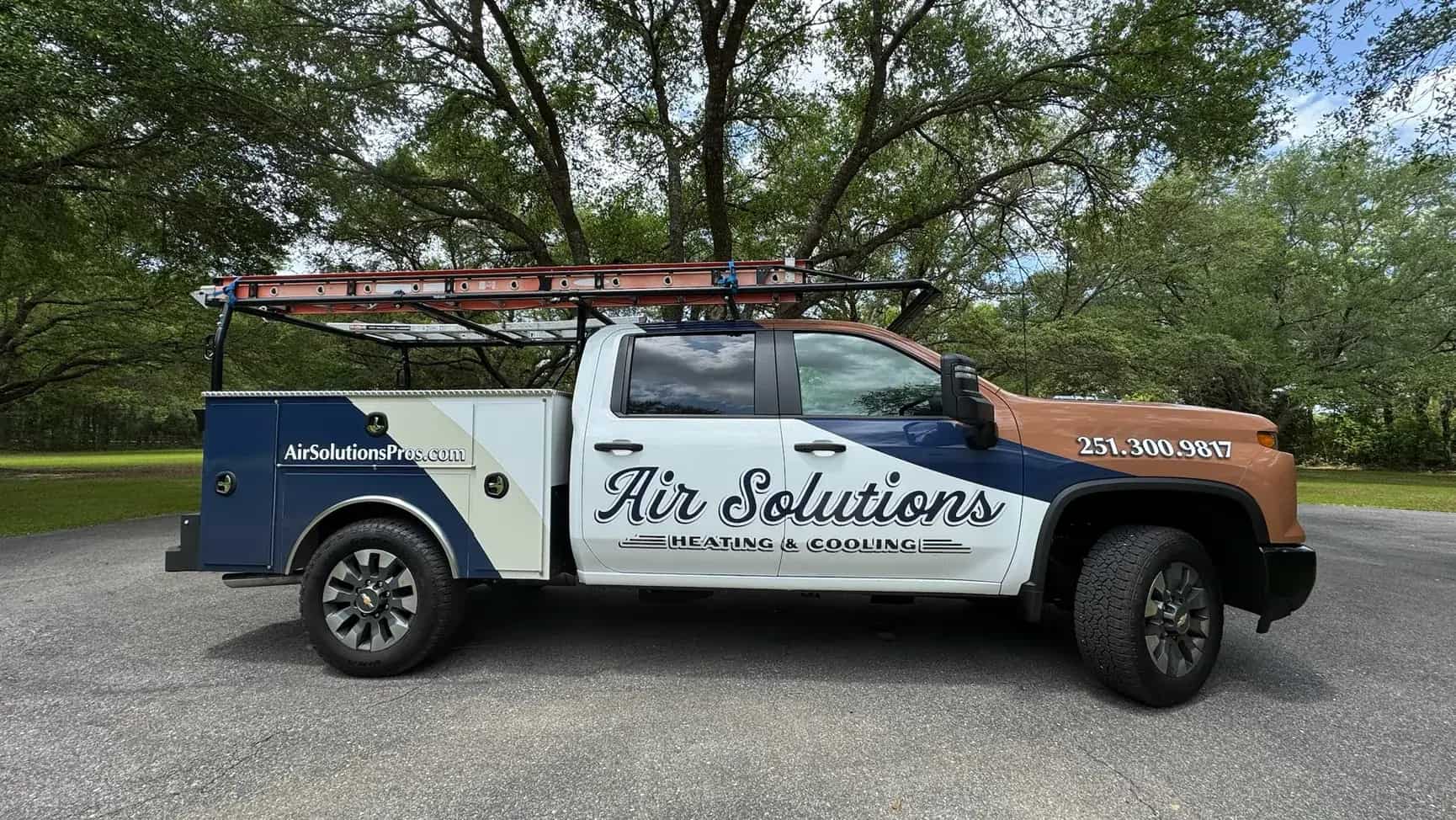
Emergency HVAC in Spanish Fort.
Local emergency HVAC in Spanish Fort, Alabama and surrounding Baldwin County. 24/7 emergency response across Baldwin County. Licensed AL#23194. 353+ five-star reviews. Call (251) 300-9817.
AC Not Cooling? Not Blowing Cold Air? Start Here.
Most Spanish Fort calls start with one of these symptoms. Same-day weekday diagnostic, written estimate before any work — call (251) 300-9817.
- AC running but not cooling the house — usually a refrigerant leak, dirty condenser coil, or weak capacitor
- AC not blowing cold air — warm air from the vents means the compressor isn't engaging or refrigerant is low; we test both and explain what we find
- Weak airflow or nothing from the vents — blower motor, clogged filter, or a collapsed duct run
- Ice on the copper lines or evaporator coil — switch the system off before we arrive; running it frozen risks compressor damage
- AC short-cycling — starting and stopping every few minutes signals an electrical, thermostat, or refrigerant problem that worsens if ignored
- House cools but stays humid and clammy — in Baldwin County that often points to an oversized system, not a broken one
What emergency HVAC looks like in this climate.
An emergency HVAC call from a Spanish Fort address tends to read differently than the same call from an inland Baldwin County city, and the reason is mostly the equipment cohort on the ground. The Open-Meteo ERA5-Land grid cell resolved at the Spanish Fort coordinate puts the local 2023 climate load near 3,048 cooling degree days against 1,085 heating degree days, with average July highs at 91.7°F and average January lows holding at 49.6°F. Those numbers sit in the same neighborhood as Daphne and Fairhope, but they understate what an emergency dispatcher actually hears at 2 a.m. on a heat-advisory week. A sustained five-or-six-day stretch where the heat index pushes past 105°F and the overnight humidity refuses to break loads a variable-speed inverter heat pump differently than it loads a single-stage builder unit. The inverter modulates compressor speed down to part-load setpoint and stays there for hours on end, which means the EXV position sensor, the inverter drive board, the communicating thermostat handshake, and the condensate-flow sensor on the coil pan all accumulate continuous-runtime exposure rather than start-cycle wear. When one of those components finally drifts out of spec on the third or fourth day of the stretch, the failure surfaces as a firmware fault code that reads like a compressor failure to a homeowner without the equipment-specific service tooling, and the emergency call lands at the worst possible moment in the climate cycle. The Causeway-adjacent geometry adds a second amplifier: sea-breeze convection pushes Mobile Bay moisture across the city footprint twice a day, and the latent humidity load that pattern produces is exactly the operating regime where a healthy inverter system earns its premium and a marginal one finally falls behind the dehumidification demand.
The other tier of Spanish Fort emergency call is the multi-night freeze. The average January low at 49.6°F sounds mild, but a handful of times a winter the bluff above the Causeway sees overnight lows in the upper 20s — the January 2024 stretch being the most recent extended example — and those mornings test the heat-pump side of the same inverter equipment all at once. The communicating-system fault pattern in heat-pump mode is its own category. Defrost-board firmware that hasn't been exercised since the previous March goes through its first-of-season actuation under a sustained heating-mode load, reversing-valve solenoid actuation logic gets stress-tested when the thermostat handshake calls for a defrost cycle the equipment hasn't run in ten months, and the auxiliary heat-strip contactor energized by a communicating air-handler control logs its first under-load close of the season at the worst possible time. A dual-fuel hybrid system pairing a heat pump with a propane or natural-gas furnace adds a balance-point-handoff variable that produces a distinct no-heat profile of its own. The FEMA point check at the city center returns Zone X — minimal flood hazard for most of the inland subdivision footprint — so the freeze-driven no-heat call is generally a comfort and safety dispatch rather than a flood-survival one. The honest caveat: parcels at the Causeway edge and along the bay-frontage corridor can fall into AE pockets at the parcel level, and we check the address before promising anything on a storm-adjacent winter call.
Every Spanish Fort neighborhood, every zip.
Air Solutions covers emergency HVAC across all of Spanish Fort — the single 36527 ZIP that captures the entire residential footprint — which in practice means the established 1990s subdivisions of TimberCreek, Spanish Fort Estates, Stonebridge, Churchill, Shenandoah, and Spanish Village across the western interior and middle of the city; the mid-2000s Blakeley Forest and Blakeley Oaks builds toward the Historic Blakeley State Park boundary; and the newer Highlands and Lakes developments on the eastern stretch. The city's population sits at 10,083 per the most recent Census ACS (rounded to approximately 11,000 on the service-area page), with 4,223 total housing units and 66.7 percent owner-occupancy across the occupied stock. The questions we ask on an emergency intake — which subdivision, what brand of equipment, when was the last service visit, which electric utility appears on the latest bill — let us route the right truck with the right parts and the right service-mode tooling to a cohort the crew already recognizes from the routine work in this city.
From the 1410 US-98 shop in Daphne, an emergency dispatch to a Spanish Fort address is the fastest named-place drive in the matrix outside Daphne itself. OSRM puts the route at 5.3 road miles and about 10 minutes via I-10 eastbound to the Causeway exits under typical traffic, with longer windows in rush-hour congestion or storm-cluttered conditions. The 24/7 emergency line is (251) 300-9817 — the same number that handles every call to the shop, routed through the on-call rotation after hours. Live pickup happens when conditions allow and the return-call workflow follows promptly when they don't, with the dispatch ETA and the overtime-fee structure disclosed on the call before a truck is committed. The practical reason an emergency call from a Spanish Fort address tends to resolve faster than from outlying matrix cities isn't just the drive itself — it's that the same crew handling a Tuesday-morning TimberCreek tune-up is the crew rolling on a Saturday-night Blakeley Forest no-cool call, and the equipment cohort across the 36527 subdivisions is dense enough that the truck arrives recognizing the brand, the install vintage, and the failure patterns the system has been signaling. Cool Club membership covers bi-annual tune-ups (spring AC and fall heating) plus 15% off all AC repairs and 5% off new systems per the published Air Solutions terms, and the repair-side discount applies on emergency work the same as it does on scheduled work — though the bigger value on Cool Club for a Spanish Fort emergency is usually the documented tune-up cadence catching the issues that would otherwise turn into the 2 a.m. inverter fault-code call in the first place.
- TimberCreek
- Spanish Fort Estates
- Stonebridge
- Churchill
- Blakeley Forest
- Blakeley Oaks
- The Highlands
- The Lakes
- Shenandoah
- Spanish Village
Storm, freeze, and heat events that have driven emergency HVAC dispatch to Spanish Fort addresses.
- Sep 16, 2020 — Hurricane Sally — Causeway corridor wind and grid cycling: Sally made landfall as a Category 2 near the Alabama-Florida line and pushed sustained tropical-storm-force winds plus a multi-day power-restoration window directly across the Causeway corridor and the bluff-side Spanish Fort subdivisions. Most of the residential footprint sat above the worst water, so the dominant emergency-HVAC consequence wasn't direct surge inundation — it was the voltage-cycling damage on grid stand-up over the restoration window. Variable-speed inverter boards on the post-2010 install cohort in Churchill, Blakeley Forest, and the newer Blakeley Oaks blocks proved meaningfully more sensitive to dirty-power restoration sequences than single-stage equipment, and a slower-burn pattern of inverter-drive failures, EXV controller faults, and communicating-thermostat reset issues continued surfacing on emergency tickets through the following spring and summer. A separate pattern showed up on outdoor disconnect cabinets along the Causeway edge that took wind-driven rain and weren't re-sealed afterward — slow-burn corrosion paths that did not produce a failure until the first hard cooling-load actuation the following season.
- Jan 2024 — Multi-night sub-freezing stretch on the bluff: Three consecutive overnight lows in the upper 20s, with daytime highs that barely cleared 40°F. The pattern that produced the highest Spanish Fort emergency-call volume wasn't absolute severity — the temperatures never approached north-Baldwin extremes — it was sustained first-of-season heating-mode actuation against equipment that hadn't been exercised since the previous winter. Communicating heat pumps in the TimberCreek and Stonebridge cohorts produced firmware fault codes on the first defrost cycle that read like compressor failures but traced back to thermostat-to-outdoor-board handshake glitches the system had quietly been carrying since the previous spring. Auxiliary heat-strip contactors that registered fine on a static continuity check failed open under sustained load. Reversing-valve solenoid actuation on the newer Blakeley cohort surfaced sticking patterns from the long warm-season idle. The 24/7 line ran heavy through the worst nights, and the calls clustered in the first hours after sunset on the coldest evenings when the bluff-side subdivisions were taking the hardest temperature drop.
- Aug 2023 — Extended heat-advisory week: Six consecutive days where the heat index sat in triple digits and crossed 105°F most afternoons, with overnight humidity that never broke below 70%. The Spanish Fort call mix that week leaned hard on three patterns specific to the local equipment cohort. Capacitor failures on the second hot afternoon of the run hit the older TimberCreek and Stonebridge second-generation systems first. EXV position-sensor drift on inverter coils surfaced across the Blakeley Forest and Churchill mid-cohort installs by the fourth day of sustained part-load runtime — the symptom presents as a comfort complaint (the air feels less cold than it should, indoor humidity creeps up) and a pressure-and-temperature diagnostic by hand reveals the charge is fine and the valve is mis-modulating. And a small but distinctive cluster of communicating-thermostat reset faults showed up on the newest Highlands and Lakes builds when sustained runtime stressed data-link components that had only been operating in short summer cycles for their first two seasons.
What we see on calls in Spanish Fort.
What an emergency HVAC call looks like in Spanish Fort tracks the subdivision the address sits in more reliably than it does in most matrix cities. The 2022 ACS reads the median build year at 1997, which means the dominant residential footprint is the post-1995 suburbia wave that came in three rough cohorts. The first cohort is the late-1990s and early-2000s originals — TimberCreek, Spanish Fort Estates, Stonebridge, and the older Shenandoah and Spanish Village blocks — where the original builder-grade equipment retired somewhere between 2010 and 2018 and the second-generation install is now in years eight through fifteen of its run. Emergency calls from this cohort cluster around mid-cycle wear surfacing under load: capacitor failures on the first stretch of consistent above-90°F afternoons, contactor pitting on outdoor units entering their second decade of service, and the increasingly common pattern where a communicating thermostat that was added partway through the second cycle starts dropping packets on the handshake to an older outdoor unit that wasn't designed for the protocol. A no-cool call from a TimberCreek address at 3 p.m. on a heat-advisory Tuesday is rarely a surprise — it's the predictable end of a wear curve the system has been signaling for weeks.
The second cohort is the mid-2000s Churchill, Blakeley Forest, and Blakeley Oaks build-out, where the equipment installed today is largely the first-cycle replacement of the original builder system retired during the post-Sally 2020-2022 wave. That cohort tends to run higher-tier equipment than the original install — variable-speed inverter condensers paired with communicating thermostats are disproportionately common here because the homeowner-decision conversation happened during a window when the technology had matured and the higher-HHI Spanish Fort customer base reached for it. Emergency calls from this cohort skew toward firmware faults on the communicating-system data link, EXV position-sensor drift during sustained part-load runtime, and the cluster of inverter-drive-board reset behaviors that follow grid-cycling events. The third cohort is the post-2010 Highlands and Lakes corridor and the newest Blakeley Oaks builds toward Historic Blakeley State Park — first-cycle equipment still inside the manufacturer parts warranty, where the emergency-call profile is genuinely about commissioning shortfalls that should have been caught at install (balance-point left at the manufacturer default, auxiliary heat-strip sized at the smallest factory option, refrigerant charge within spec but at the low end of tolerance) showing up under a real-world climate load. While a truck is en route on any of these cohorts the safe-to-do moves are short: cut the thermostat off if a failed compressor is still trying to start, close blinds on the afternoon-sun side or the Causeway-facing windows, run ceiling fans only in rooms with people in them, and at the first whiff of anything burning or any sign of smoke kill power at the disconnect or the breaker before anything else.
- Mid-life equipment is the common profile in this area. Capacitor and contactor failures dominate the service-call mix.
- Long cooling season means compressors run heavy May through October. Annual maintenance pays for itself in compressor lifespan.
- Mild winters mean heat pumps cover the season comfortably without backup runtime in normal years. Cold-snap weeks expose undersized units.
Emergency HVAC in Spanish Fort — the questions that come up.
- What actually counts as an HVAC emergency on a Spanish Fort address versus something we should book as a regular service call?
- Call the 24/7 line if any of these apply: no cooling while a heat advisory is in effect or with infants, elderly residents, or anyone medically vulnerable in the house; no heating during a freeze warning, particularly with pipes at risk; a refrigerant leak loud enough to hear from the line set or strong enough to smell at the indoor coil; visible arcing, smoke, or a burning-plastic odor at any part of the equipment; a breaker that keeps tripping and won't reset after one full off-and-back-on cycle. Those situations are what (251) 300-9817 is built for, regardless of which subdivision the address sits in. A condensate overflow at 2 a.m. that has shut a system down also counts because it's a moisture-damage risk on top of the comfort failure — common enough on the attic-mounted air-handler installs in the older TimberCreek and Stonebridge cohorts that it's worth saying out loud. A system that's running but undershooting setpoint by a few degrees, or one developing a new noise you want a tech to listen to, is a normal scheduled call we'll get to quickly without after-hours overtime billing attached. The triage step that matters most happens on the phone — describe what's actually happening, and we route to the right tier.
- Our TimberCreek heat pump threw a compressor-failure code at midnight and the indoor unit is dead. Is the compressor actually done, or could it be the communicating system?
- On the variable-speed and communicating equipment common in TimberCreek, Stonebridge, and the newer Blakeley subdivisions, the displayed fault code is sometimes a downstream symptom rather than the actual mechanical failure. A communicating heat pump — Trane ComfortLink, Carrier Infinity, Lennox iComfort, or the Bryant Evolution rebadge of Carrier — runs a continuous digital handshake between the thermostat, the indoor air handler control, and the outdoor inverter board, and when the firmware drifts, the data link picks up noise, or a packet drops at the wrong moment, the code that surfaces is often a compressor or system-failure read when the underlying issue is a communication fault. On a midnight emergency call we ask the equipment brand and model on the phone, and the truck arrives with the equipment-specific service-mode tooling already loaded for that platform. The diagnostic discipline matters here: we enter service mode, pull the live operating data the system is actually reporting (suction and discharge pressures, EXV step position, compressor commanded RPM versus reported RPM, sensor reads on both refrigerant and coil-temperature ports), and walk the communication path before condemning the most expensive component. A bad thermostat or a corroded comms wire is a meaningfully cheaper outcome than a board exchange, and on an after-hours bill the difference matters.
- Power just came back after a storm and our Blakeley Forest AC won't restart. Spanish Fort has three different electric companies — does that change how this gets handled?
- Three separate residential electric utilities meter different parcels inside the 36527 footprint — Riviera Utilities out of the Daphne branch operation, Alabama Power, and Baldwin EMC — and the boundaries follow subdivision lines rather than street grids. The provider on the meter doesn't change how the actual HVAC diagnostic runs, but it does affect the restoration timeline you're working against and any coordination needed if the issue turns out to be on the utility side of the disconnect rather than the equipment side. The top line of the most recent electric bill confirms which provider serves your specific Blakeley Forest address; we'll ask for it on the dispatch call if the situation looks grid-related. On the equipment side, the post-storm pattern we see most often on Spanish Fort subdivisions is voltage-cycling damage from the grid stand-up sequence — inverter boards reset themselves on the first restoration cycle and don't always recover, capacitors that survived the outage fail on the next start attempt, and contactors pit faster when they cycle hard through a dirty-power restoration. The truck arrives with parts for those failure modes on hand for the Spanish Fort equipment cohort specifically.
- How does the after-hours overtime fee work on a Spanish Fort emergency, and does the 10-minute drive change anything?
- After-hours, weekend, and holiday calls carry overtime rates — the Air Solutions site states that plainly, and we state it plainly on the dispatch call before a truck is routed. The fee structure, the diagnostic fee, and what the visit covers all get disclosed up front so there's no surprise when the tech arrives at the door. The 10-minute drive from our 1410 US-98 shop in Daphne to any Spanish Fort address — OSRM-clocked at 5.3 road miles via I-10 to the Causeway exits — shortens the geographic side of the response but doesn't change the time-of-day premium itself. If the situation can safely wait until normal business hours, we'll say so honestly and let you choose whether to wait or proceed at overtime. If the work uncovers a repair you want to move forward with, the diagnostic fee applies toward the repair cost rather than stacking on top. For Cool Club members the standard repair discount (15% off all AC repairs and 5% off new systems) applies on emergency work the same as on scheduled work — the membership doesn't waive the overtime fee, but the repair-side discount does apply against the invoice total.
- We have a heat pump with a propane back-up on our Spanish Fort home and the system stopped heating during a freeze. Does the dual-fuel configuration change the emergency dispatch?
- Dual-fuel configurations are common enough on the higher-tier Spanish Fort builds — TimberCreek, Stonebridge, Churchill, the Blakeley subdivisions — that it's worth surfacing on the intake call. On a hybrid system a properly-programmed communicating thermostat is supposed to swing automatically from heat-pump duty to the propane furnace once the outdoor temperature drops below the system's balance point, typically somewhere between 30 and 40°F depending on the equipment sizing. When that changeover fails during a freeze event, the failure mode could sit on either side of the equipment: the heat pump's defrost cycle and reversing-valve actuation, the furnace's ignition sequence and gas-valve operation, the propane supply itself running low or the regulator icing, or the thermostat's balance-point programming sending the wrong call signal to the equipment. The dispatch question that matters on the phone is which side of the system is actually running and which side has stopped — the truck arrives with parts and tools for both configurations rather than guessing at the symptom. Two safe-to-do moves while the truck is en route: check the breaker panel for tripped breakers on both the air-handler circuit and any separately-fed furnace circuit (flip fully off and back on, once each), and if exposed pipes are at risk, run cold water at a slow drip on the most vulnerable fixture to prevent freeze damage downstream.
What Spanish Fort customers can claim.
- Spanish Fort is the city in the matrix where confirming the utility provider is genuinely load-bearing on an emergency-recovery call. Three different electric providers meter different parcels inside the 36527 footprint — Riviera Utilities runs out of a Daphne branch into one portion, Alabama Power into another, and Baldwin EMC into a third — and the boundaries follow subdivision lines that don't align to ZIP grids or street names. On a storm-recovery emergency where the outage timeline matters as much as the equipment repair, the masthead on the most recent electric bill is the single fastest provider confirmation, and we ask for it on the dispatch call whenever the conversation needs to coordinate around grid restoration.
- On the sewer side Spanish Fort is similarly fragmented: Baldwin County Sewer Service, Daphne Utilities, and North Baldwin Utilities each serve different portions of the city. The sewer split rarely affects an HVAC emergency directly, but it does come up when a condensate-line failure floods a crawl space or interior wall cavity and the homeowner has to coordinate with the right utility on the moisture-mitigation side. We flag the relevant utility on the call when the situation crosses that threshold.
- Standard emergency repair work — a midnight capacitor swap, a Saturday-night contactor replacement, an inverter-board diagnostic on a communicating system, a defrost-board service on a January morning — does not generally qualify for utility rebates from any of the three electric providers regardless of provider. The rebate programs target qualifying full-system installs at high-efficiency tiers, not parts-and-labor emergency tickets.
- When a midnight diagnostic surfaces equipment that's clearly at the end of its useful service life and the post-event conversation pivots toward replacement, we surface the relevant utility-side rebate paths so the math is made with current figures. We do not pre-quote a specific utility rebate dollar amount before pulling the current program sheet for whichever of the three providers serves the address — incentives revise annually and a stale number does no one any good when the program calendar resets. The federal 25C heat-pump tax credit expired December 31, 2025 and does not apply to 2026 replacements.
- Dual-fuel hybrid configurations — a heat pump paired with a propane or natural-gas furnace as the cold-weather back-up — are common enough on the higher-tier Spanish Fort installs that they surface on freeze-event emergency calls specifically. Whether gas service reaches the parcel through a piped utility connection or through a propane tank install is a subdivision-by-subdivision answer, not a city-wide one, and we confirm the gas-availability and provider details on any post-emergency replacement conversation rather than assuming.
Emergency HVAC Coverage Map — Spanish Fort, Alabama
Centered near Spanish Fort for orientation. Air Solutions Heating & Cooling provides emergency HVAC throughout every Spanish Fort neighborhood and zip code, plus the surrounding Baldwin County area. Same crew, same number — we travel the whole county.
353+ Five-Star Reviews. And Counting.
“We had an issue on a weekend at our office and Jacob with AirSolutions was quick to respond, kept me informed throughout the entire process and had it fixed same day! So thankful for reliable and efficient service. Never been disappointed with AirSolutions and recommend to anyone in need of repairs or preventative maintenance. They are the absolute BEST!”
“I can’t say enough good things about Air Solutions! Jesse was so kind and helpful, and came to my house within an hour of calling for a repair! Best ac repair service I’ve ever had!”
“Same day appointment during excessive heat. Very professional service from Jacob.”
When It Fails at 2 AM.
We answer the phone. Same-day diagnostic, same-day repair where parts allow. (251) 300-9817.
Schedule Emergency HVAC in Spanish Fort.
24/7 emergency response across Baldwin County. Same-day appointments most weekdays in Spanish Fort and surrounding Baldwin County. Tell us when works for you — we'll confirm by phone during weekday office hours (8 AM-4 PM).
Need someone right now? Call (251) 300-9817 — our 24/7 emergency line is answered live when we can and returned quickly when we can't.
Emergency HVAC in Spanish Fort — FAQs
When should I call the emergency HVAC line?
Anytime your AC or heat is fully out and a return visit during normal hours is unworkable — a 95-degree afternoon, a sleeping infant, a vacation rental between renters. Call (251) 300-9817 and a technician routes to you.What's the after-hours emergency rate?
After-hours service includes a dispatch fee on top of standard repair pricing. We disclose the fee on the call before dispatching — no surprise charges. Cool Club members get 15% off the repair work.Do you respond on weekends and holidays?
Yes. The number is the same: (251) 300-9817. Answered live when we can, returned quickly when we can't.Do you service all of Spanish Fort, AL?
Yes — Air Solutions Heating & Cooling covers every neighborhood and zip code in Spanish Fort, Alabama — including TimberCreek, Spanish Fort Estates, Stonebridge, plus the surrounding subdivisions and rural roads. We handle AC repair, AC installation, AC maintenance, emergency HVAC, and commercial HVAC. Standard service hours weekdays, 24/7 emergency response, and same-day appointments most of the year. Call (251) 300-9817 to schedule.What HVAC issues are most common in Spanish Fort?
Homes around the Causeway most commonly call us for refrigerant leaks (often salt-air or coil corrosion related on the Gulf Coast), undersized air conditioning systems struggling with Baldwin County summer humidity, and capacitor failures during peak load between June and September. A Cool Club bi-annual maintenance plan catches most of these issues before they cause a breakdown.
Emergency HVAC Near Spanish Fort.
Right at the Spanish Fort city limit? We service the surrounding Baldwin County communities on the same routes — same crew, same response times.
Related HVAC Guides.
Long-form articles about emergency HVAC and Baldwin County HVAC, with practical advice from our team.
 Coastal HVAC
How to Protect Your AC Before a Hurricane: Lessons From Sally
A Spanish Fort HVAC owner's pre-storm checklist, surge protection tips, and post-storm restart cautions — built on what we saw after Hurricane Sally.
July 14, 20267 min Commercial
Commercial HVAC for Baldwin County Businesses
A plain-English overview of commercial HVAC in Baldwin County — how it differs from residential, what each business type needs, and what a service contract covers.
May 15, 20268 min Indoor Air Quality
Why Your AC Smells Musty in Summer: A Spanish Fort Humidity-Mold Diagnostic
Diagnosing musty AC smells in Spanish Fort, AL during summer — three causes, DIY first-pass, and when professional remediation is needed.
September 3, 20264 min
Other services in Spanish Fort & this service across Baldwin County.
- All HVAC services in Spanish Fort, AL
- Emergency HVAC across Baldwin County
- AC Repair in Spanish Fort
- AC Installation in Spanish Fort
- AC Maintenance in Spanish Fort
- Commercial HVAC in Spanish Fort
- Heating Repair in Spanish Fort
- Heat Pump Services in Spanish Fort
- Indoor Air Quality in Spanish Fort
- Ductless Mini-Splits in Spanish Fort
- Heating Installation in Spanish Fort
Emergency HVAC in Spanish Fort — Schedule Today.
Same-day appointments most weekdays. Cool Club members get prioritized scheduling.