
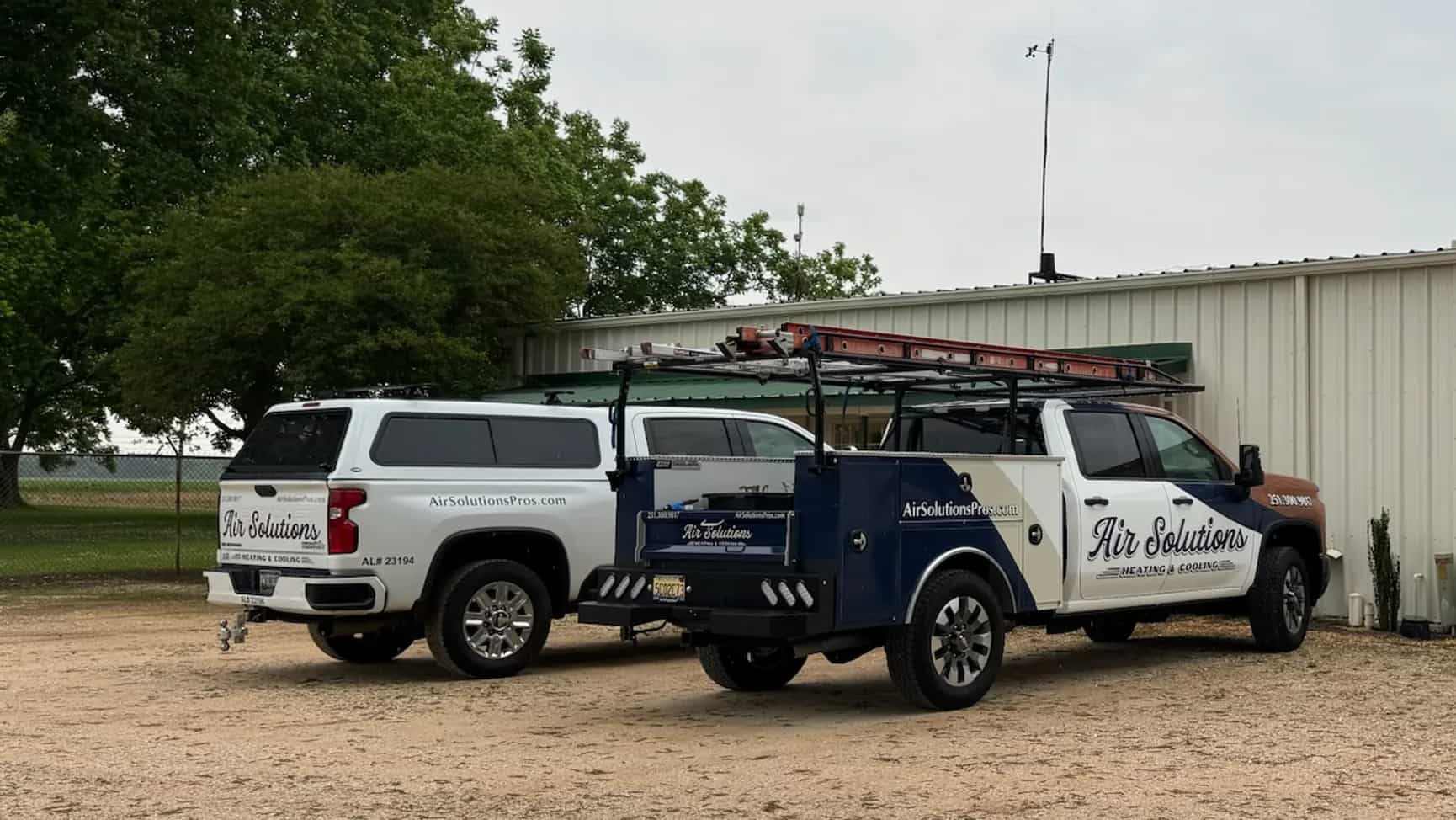
Emergency HVAC in Perdido.
Local emergency HVAC in Perdido, Alabama and surrounding Baldwin County. 24/7 emergency response across Baldwin County. Licensed AL#23194. 357+ five-star reviews. Call (251) 300-9817.
AC Not Cooling? Not Blowing Cold Air? Start Here.
Most Perdido calls start with one of these symptoms. Same-day weekday diagnostic, written estimate before any work — call (251) 300-9817.
- AC running but not cooling the house — usually a refrigerant leak, dirty condenser coil, or weak capacitor
- AC not blowing cold air — warm air from the vents means the compressor isn't engaging or refrigerant is low; we test both and explain what we find
- Weak airflow or nothing from the vents — blower motor, clogged filter, or a collapsed duct run
What emergency HVAC looks like in this climate.
The per-coordinate ERA5-Land reanalysis at the Perdido grid cell records the heaviest annual heating-degree-day load of any address in our service area at roughly 1,173 HDD, ahead even of Bay Minette and well above the Gulf-front cells, and pairs it with a cooling load near 3,059 CDD on a July average daily high of about 93.6°F. Two genuinely demanding emergency seasons fall out of those bookend numbers rather than the cooling-dominant year a Gulf Shores or Orange Beach address sees. The coldest January mornings here drop into the upper 40s on the long-run average and into the low 20s on the multi-night cold-snap events that arrive every few winters, and far-north rural Perdido sits outside the bay-and-Gulf thermal moderation envelope that softens those events for a Daphne or Fairhope address.
FEMA returns Zone X at the Perdido town-center coordinate — minimal flood hazard for most of 36562 — which keeps the after-hours dispatch math heat-driven, freeze-driven, or storm-electrical rather than flood-survival. The river-corridor elevation at the resolved climate grid cell sits at about 38 meters, which is a microclimate detail that matters mostly for overnight low temperatures and dew-point recovery after a summer thunderstorm rather than for any structural flood-survival consideration on the typical Perdido address.
Storm, freeze, and severe-weather patterns that have driven emergency HVAC dispatch into rural Perdido.
- Sep 2020 — Hurricane Sally — rural Perdido River corridor exposure: Sally made landfall just south of the Perdido area in September 2020 and reshaped a meaningful share of outdoor condenser pads, line sets, and electrical disconnects across the rural Perdido River corridor. The dispatch pattern that followed was not concentrated entirely in the immediate post-storm window: outdoor-disconnect cabinets that absorbed wind-driven rain during the event itself often passed the initial restart test and then developed slow-burn corrosion paths inside the cabinet that surfaced as repair tickets across the following winter and the next cooling season.
- Jan 2024 — Multi-night sub-freezing stretch — highest-HDD-in-matrix exposure: Three consecutive overnight lows well below freezing with daytime highs that struggled to crack the upper 30s across rural northeast Baldwin. Colder and longer than the Eastern Shore version of the same event because far-north Perdido sits outside the bay-and-Gulf thermal moderation envelope, and the cold-mode runtime exposed every weak point on aging strip-heat and LP-furnace ignition hardware in 36562 simultaneously. Heat-pump reversing valves that had not been exercised since the previous winter stuck mid-cycle on the changeover from cooling, electric auxiliary strips read open at the contactor under continuous load, defrost boards drifted out of timing spec, and on the propane-furnace dual-fuel configurations a concentrated wave of flame-sensor failures and ignition-module faults surfaced on the coldest night specifically.
- Aug 2023 — Sustained above-95°F heat with ag-acreage dust-loaded coils: Two stretches of heat-index readings well above 105°F with overnight lows that barely cleared 80°F. Rural Perdido outdoor units sit in genuinely open ag-acreage exposure — the surrounding row-crop and pasture acreage pushes dust loads onto condenser coils through the spring and into early summer, and units carrying coils that have not been cleaned for a year or more run elevated head pressure all afternoon that tips marginal compressors into high-pressure lockout earlier in the season than a cleaner-coil unit would surface the same failure.
- Spring-Summer — Open-fetch lightning and convective-storm electrical events: Far-north rural Perdido carries genuine open-fetch lightning exposure that the more sheltered coastal cells do not. Convective afternoon thunderstorms across the spring and summer routinely produce nearby strikes on or near rural acreage, and the practical emergency-dispatch consequence is the control-board fault and transformer damage that follows a near-miss strike on a property without whole-house surge protection.
What we see on calls in Perdido.
What qualifies as an HVAC emergency on a Perdido address is the same set of safety thresholds we apply across Baldwin County, and being clear on the phone about which threshold your situation has crossed lets us load the right truck for the 55-minute run north.
The Perdido emergency-call book breaks across three event-clustered profiles, and the dispatch conversation usually pivots on which one your situation belongs to. First, the peak-summer failure wave on R-22-era and first-generation R-410A equipment — capacitor weakness on aging single-stage condensers retrofit-charged with drop-in replacement refrigerants after the 2010 phaseout, contactor pitting on units that have run a decade of compressor stop-start cycling, condenser-fan motor seizures on units carrying dust-fouled coils from the surrounding row-crop and pasture acreage, and condensate-drain trips on horizontal attic runs that have not been treated in years. These calls cluster on the first sustained above-95°F week each May and again across any extended August heat run. Second, the deep-freeze multi-night profile — heat-pump reversing valves stuck on the first cold-weather actuation, electric strip-heat contactors that read open under sustained auxiliary load on the coldest mornings, defrost boards drifted out of timing spec on systems that missed a fall tune-up, and on the propane-furnace dual-fuel configurations a parallel wave of flame-sensor failures and ignition-module faults that surface specifically when overnight lows push below 25°F. The truck rolling north on a Perdido winter no-heat call carries diagnostic tools and common parts for BOTH electric strip-heat and LP-furnace ignition because the city's no-natural-gas reality means the fossil-fuel-backup side is propane rather than gas. Third, the post-storm electrical-cycling profile — outdoor units that took straight-line wind or debris during a tropical event or a spring severe-weather outbreak, control boards damaged by lightning or by the voltage-cycling that accompanies grid stand-up on the dual-provider Alabama Power and Baldwin EMC feeders that serve the rural Perdido corridor, and the slower secondary wave of capacitor failures on units that ran through the event itself and quit on the third or fourth post-restoration reboot.
- Older housing stock typical here (median build year suggests 45+ year systems are common). Duct leakage and undersized returns are the recurring finds.
- Long cooling season means compressors run heavy May through October. Annual maintenance pays for itself in compressor lifespan.
- Mild winters mean heat pumps cover the season comfortably without backup runtime in normal years. Cold-snap weeks expose undersized units.
Emergency HVAC in Perdido — the questions that come up.
- What actually qualifies as an HVAC emergency on a Perdido address given that the dispatch is about 55 minutes from your Daphne shop?
- The threshold is whether the situation is unsafe to leave overnight, and the rural distance from the shop does not change which situations cross that line — it changes what the honest ETA looks like once the dispatch decision is made. The five clear yeses are no cooling when a heat advisory is active or when someone in the household is medically dependent on temperature control, no heating during an active freeze warning particularly with exposed plumbing at risk in an older crawl space, a refrigerant leak audible from the line set or strong enough to smell at the indoor coil, visible arcing at the outdoor disconnect cabinet or a breaker that trips and will not hold after a single clean reset, and smoke or burning-plastic odor from any part of the equipment. Those are the situations the 24/7 number at (251) 300-9817 is built around. A system running but undershooting setpoint by a couple of degrees, or developing a new noise you want a tech to listen to, is a normal scheduled call — we will be out without after-hours overtime rates attached, on the next available north-county route day.
- How long does it actually take to get a truck to a Perdido emergency given that you are based in Daphne?
- Perdido ties for the longest emergency dispatch on our matrix by drive time and carries the longest mileage on the matrix outright. OSRM puts the route at 37.4 highway miles and 55.9 minutes from the Daphne shop under normal traffic — round to 55 minutes for honest planning, and longer in any condition that closes a lane on I-65 or that adds weekend traffic to the eastbound approach through Highway 21, 31, and 112 into the Perdido community. Structurally the route is harder than the straight I-65 run to Bay Minette because there is no commercial spine to pick up route density along the rural approach, no neighbor city of any size to co-stack the call against on a Saturday night, and any weather event that closes the rural corridor between the interstate and the river community makes the drive measurably longer.
- Our propane furnace will not light on a cold Perdido morning. Is that an emergency, and what should we do while we wait for the truck?
- It is an emergency under freeze-warning conditions, particularly when plumbing is at risk in an older 36562 home with an uninsulated crawl space, and the propane-furnace no-light pattern is one we see consistently on Perdido winter dispatch calls because the city has no widespread natural-gas distribution and an LP-furnace dual-fuel configuration is the realistic fossil-fuel backup for the heat-pump side on many properties up here. Common root causes on the diagnostic side: a flame sensor fouled after a long warm-season idle period — the sensor reads clean during summer test cycles and then fails to confirm flame on the first cold-night light-off; a hot-surface ignitor that cracked from thermal stress on the initial fire, often visible as a hairline fracture on the element; a gas-valve sequence fault that fails the safety lockout before the burner can stay lit. Two safe-to-do moves at the house while a truck is rolling: confirm the LP tank is not empty and that the regulator at the tank shows the gauge needle in the normal range, and check the thermostat for low-battery indicators that can cause the furnace to misread the call-for-heat signal. Do not attempt to clean the flame sensor, replace the ignitor, or open the gas-valve sequence yourself — those steps involve fuel-side safety controls that need to be diagnosed and reset by a licensed tech rather than worked off a tutorial video.
- We had a thunderstorm or wind event overnight in rural Perdido and now the outdoor unit will not start. Is that the storm?
- Probably, and storm-related no-start calls on rural Perdido addresses cluster around three patterns we see with regularity given the open-fetch exposure here and the dual-provider electric feeders (some addresses on Alabama Power, others on Baldwin EMC) that serve the corridor. A tripped breaker is the only thing safe to check yourself — flip it fully off and then back on, exactly once; if it does not hold the second time, leave it off and call. A blown run-capacitor on the outdoor unit is the next most common culprit, and the symptom is usually a brief compressor hum followed by a click-off, sometimes with the indoor blower continuing to run normally. A control-board fault from a lightning event or from the voltage-cycling that follows a multi-pass grid restoration presents differently — the unit looks completely dead with no response at the thermostat. Capacitor and control-board work involves stored electrical energy that can hold a dangerous charge for some time after power is disconnected and is not a safe DIY task even with a tutorial video open. Two additional things worth checking before the call: walk around the outdoor unit and look for physical damage to the cabinet, fan grille, or disconnect box from straight-line wind or debris, and check whether the outdoor pad has shifted or whether the line set is visibly bent.
- What does Cool Club cover for a Perdido home on an after-hours emergency call?
- The membership covers two professional visits per year — a comprehensive AC tune-up in the spring and a heating-system tune-up in the fall — plus priority scheduling during peak season when every HVAC company in the county is booked out, plus the published member discount of 15% off all AC repairs and 5% off new systems. On an after-hours emergency call from a Perdido address, the repair-side discount applies the same as it does on scheduled work — the 15% comes off the repair invoice whether the capacitor swap happens on a Tuesday morning or a Saturday night. What the membership does not do is waive the after-hours overtime rates that apply on emergency dispatch, and we are honest about that on the call before a truck is routed up I-65.
- When should I call the emergency HVAC line?
- Anytime your AC or heat is fully out and a return visit during normal hours is unworkable — a 95-degree afternoon, a sleeping infant, a vacation rental between renters. Call (251) 300-9817 and a technician routes to you.
- Do you respond on weekends and holidays?
- Yes. The number is the same: (251) 300-9817. Answered live when we can, returned quickly when we can't.
What Perdido customers can claim.
- Perdido addresses split between Alabama Power and Baldwin EMC for residential electric service, and the dividing line does not follow any obvious geographic feature — two properties on the same rural county road can land on different utilities.
- Natural-gas distribution does not reach broadly across Perdido. Properties that run a burner-side appliance for kitchen, water-heating, or supplemental-heat duty do so off an on-site propane (LP) tank rather than from a municipal gas main.
- Emergency repair work itself — a capacitor swap on a Saturday night, a contactor replacement on a July afternoon, a defrost-board service on a January morning, a flame-sensor cleaning and ignition-module diagnostic on a propane furnace — does not generally qualify for utility rebates from Alabama Power or Baldwin EMC.
- When an after-hours diagnostic surfaces a system past its serviceable run and the conversation pivots toward replacement rather than another repair, the relevant program sheet depends on which provider serves the meter — assumptions made off a stale figure or off the wrong utility help nobody.
Every Perdido neighborhood, every zip.
Emergency HVAC coverage for Perdido spans the full 36562 ZIP — the Perdido River corridor itself, the rural acreage that fans out from the river in every direction, and the Highway 112 stretch linking the community east toward the Florida line. Perdido is a small unincorporated community of about 621 residents on the most recent Census ACS figure, and we do not pretend to operate inside it the way a contractor working inside Daphne or Fairhope city limits operates in their home market. What we bring instead is a 55-minute OSRM-verified run from the Daphne shop, a dispatch conversation that names the actual ETA rather than dresses it up as something tighter, and the same diagnostic discipline we apply on a coastal call.
The (251) 300-9817 number is monitored around the clock by the on-call rotation — live pickup when the rotation can take the call, return-call workflow as quickly as the queue allows when we cannot, with the dispatch ETA and the overtime-fee structure named on the call before any truck rolls.
- the Perdido River corridor
- rural Perdido acreage
- the Highway 112 area
Emergency HVAC Coverage Map — Perdido, Alabama
Centered near Perdido for orientation. Air Solutions Heating & Cooling provides emergency HVAC throughout every Perdido neighborhood and zip code, plus the surrounding Baldwin County area. Same crew, same number — we travel the whole county.
357+ Five-Star Reviews. And Counting.
“We had an issue on a weekend at our office and Jacob with AirSolutions was quick to respond, kept me informed throughout the entire process and had it fixed same day! So thankful for reliable and efficient service. Never been disappointed with AirSolutions and recommend to anyone in need of repairs or preventative maintenance. They are the absolute BEST!”
“I can’t say enough good things about Air Solutions! Jesse was so kind and helpful, and came to my house within an hour of calling for a repair! Best ac repair service I’ve ever had!”
“Same day appointment during excessive heat. Very professional service from Jacob.”
When It Fails at 2 AM.
We answer the phone. Same-day diagnostic, same-day repair where parts allow. (251) 300-9817.
Schedule Emergency HVAC in Perdido.
24/7 emergency response across Baldwin County. Same-day appointments most weekdays in Perdido and surrounding Baldwin County. Tell us when works for you — we'll confirm by phone during weekday office hours (8 AM-4 PM).
Need someone right now? Call (251) 300-9817 — our 24/7 emergency line is answered live when we can and returned quickly when we can't.
Emergency HVAC Near Perdido.
Right at the Perdido city limit? We service the surrounding Baldwin County communities on the same routes — same crew, same response times.
Related HVAC Guides.
Long-form articles about emergency HVAC and Baldwin County HVAC, with practical advice from our team.
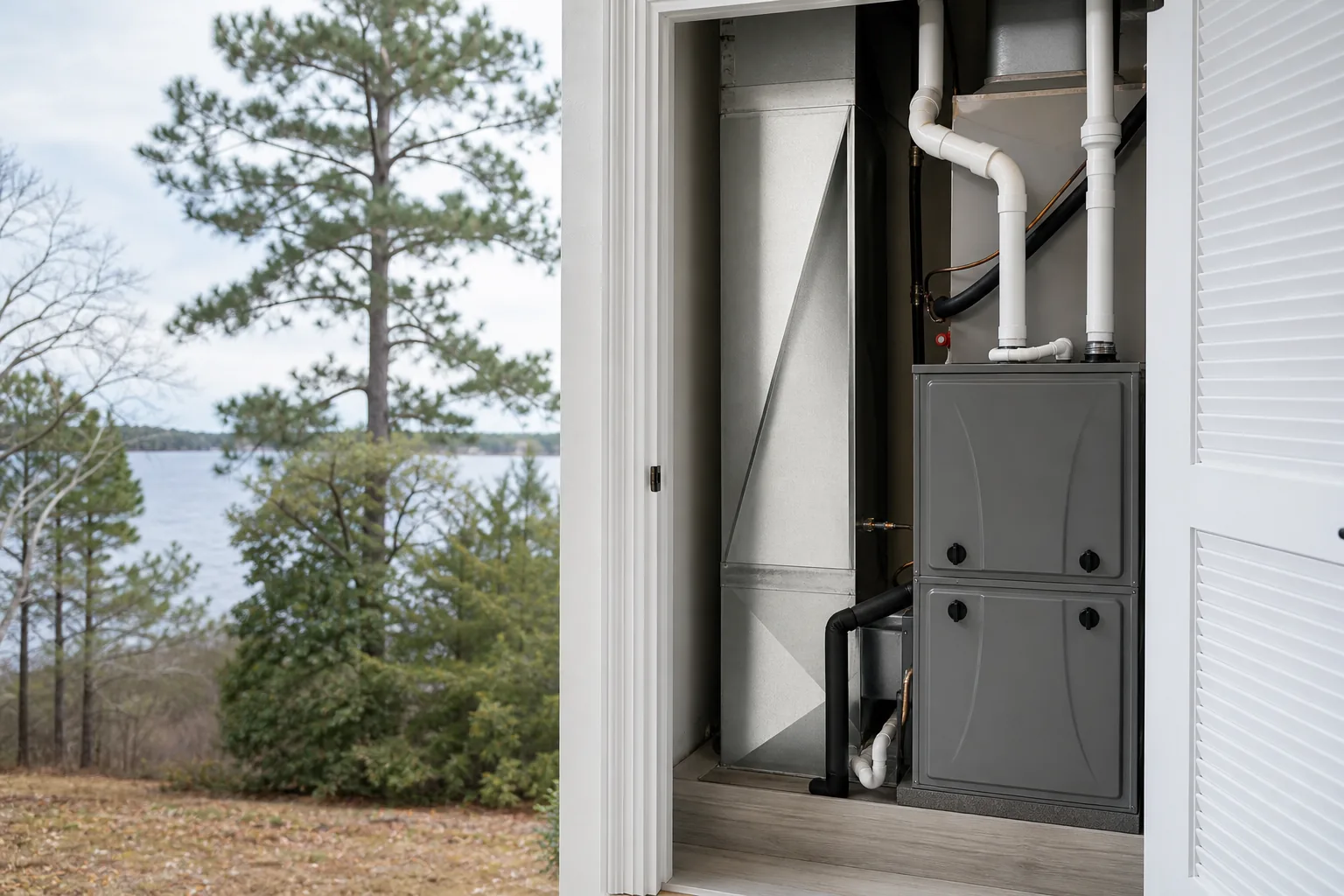 Buyer Guides
Dual-Fuel Systems for Perdido Homes: Pairing a Heat Pump With a Furnace
How a dual-fuel install works for rural Perdido properties — a heat pump for everyday heat, a furnace for the cold snaps, and the switchover logic between them.
October 12, 20265 min Emergency
No-Cool Emergencies for Stockton Homeowners: A First-Response Guide
AC down on your Stockton, AL acreage? A rural first-response guide — what to stabilize yourself and how same-day priority routing reaches outlying north-county homes.
July 30, 20266 min
Other services in Perdido & this service across Baldwin County.
- All HVAC services in Perdido, AL
- Emergency HVAC across Baldwin County
- AC Repair in Perdido
- AC Installation in Perdido
- AC Maintenance in Perdido
- Commercial HVAC in Perdido
- Heating Repair in Perdido
- Heat Pump Services in Perdido
- Indoor Air Quality in Perdido
- Ductless Mini-Splits in Perdido
- Heating Installation in Perdido
Emergency HVAC in Perdido — Schedule Today.
Same-day appointments most weekdays. Cool Club members get prioritized scheduling.