
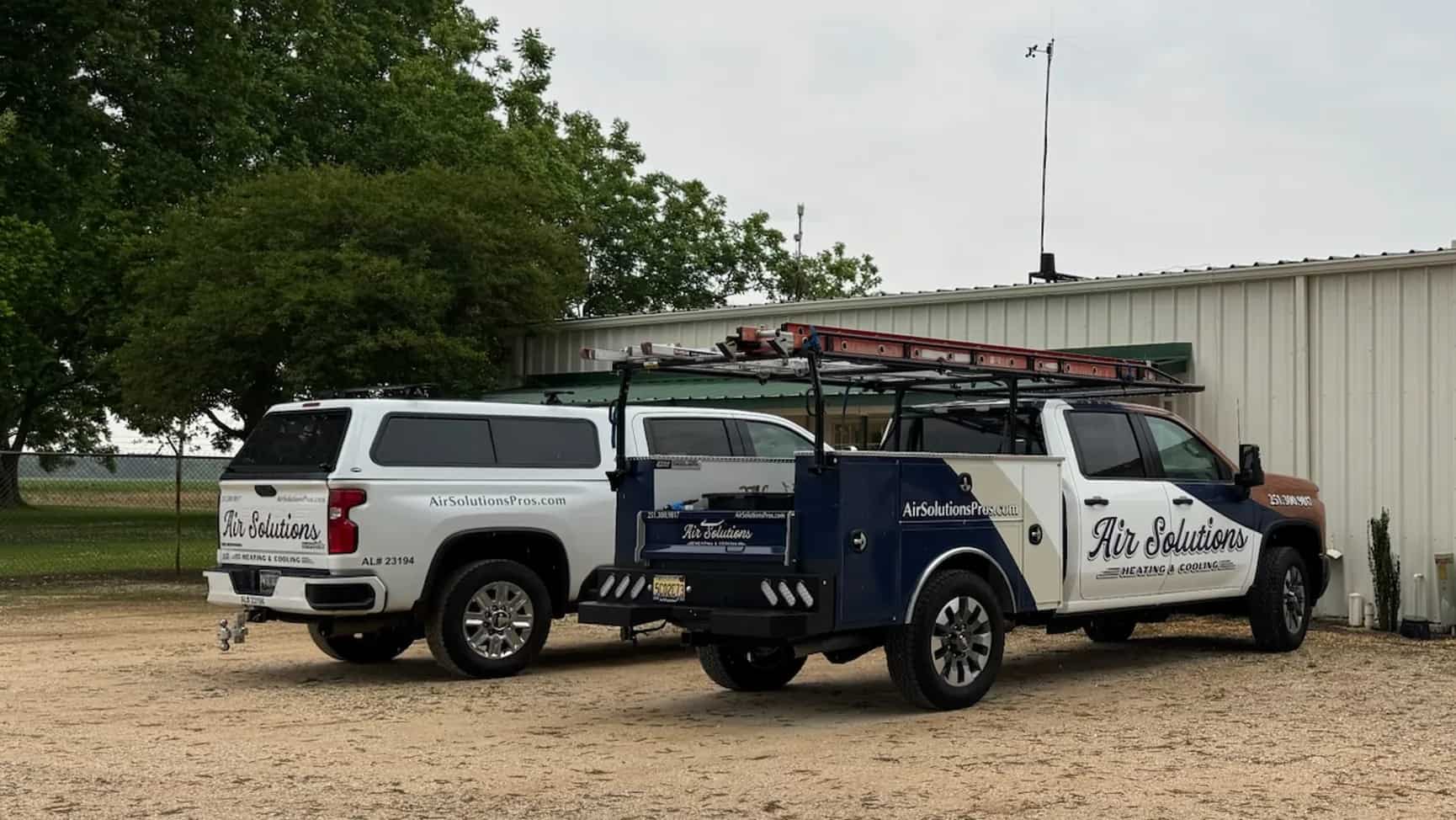
AC Maintenance in Stockton.
Local AC maintenance in Stockton, Alabama and surrounding Baldwin County. Bi-annual tune-ups. Cool Club priority + member savings. Licensed AL#23194. 353+ five-star reviews. Call (251) 300-9817.
Get a Free Estimate
Name and phone is all we need to call you back. Takes ~20 seconds.
353+ five-star reviews · Same-day · 24/7 · Licensed AL#23194
What AC maintenance looks like in this climate.
Maintenance discipline pays back more reliably on a Stockton address than on almost any other cell in our coverage area, and the reason is straight arithmetic on the cooling-load side. The per-coordinate ERA5 reanalysis at the community's coordinates returns roughly 3,222 cooling degree days against an average July high near 95°F, which is the heaviest cooling load in our entire 22-city Baldwin County matrix — a meaningful step above Foley, Perdido, and Magnolia Springs and a substantial step above any coastal cell that catches the Gulf breeze. A Stockton condenser accumulates more compressor-runtime hours, more contactor closures, more refrigerant-circuit pressure cycles, and more total mechanical wear per calendar year than the same nameplate equipment installed anywhere else we work. That compressed wear profile is exactly what a documented spring-and-fall cadence is structured to stay ahead of.
The practical consequence for a homeowner whose system is still running fine: the window between marginal-and-still-fine and faulted-on-a-July-Saturday compresses correspondingly. Capacitor microfarad drift that takes a full twelve summers to cross the no-start threshold on a Point Clear or Daphne address tends to cross that threshold a year or two earlier under the Stockton load. Contactor surface degradation, condenser-coil heat-rejection capacity loss from ag-dust accumulation, evaporator condensate-side biofilm growth on horizontal attic runs, indoor-blower bearing wear under longer-duty seasons — all of these progress on a faster clock here than they do farther south. The fall heating-side visit then catches the reversing-valve actuation, defrost-board interval, and auxiliary heat-strip continuity that the equipment will need for a winter heating load running about 1,133 degree days a year, which is a real load rather than a token cold-snap insurance policy. None of that is dramatic on the day a tune-up worksheet captures it; all of it lands in the late-July emergency queue inside the next eighteen months if nobody documents it first.
What we see on calls in Stockton.
The 2022 ACS pegs the median Stockton home at a 1995 build, putting the typical address at roughly twenty-seven years old today. The cooling equipment on that slab is almost never the original install — that mid-1990s box is long retired — and the second-cycle replacement that went in somewhere between 2005 and 2015 is what a maintenance technician actually documents on a tune-up call here. That cohort is now eight-to-seventeen summers deep in service under the heaviest cooling load on our matrix, which is precisely the equipment age band where preventive maintenance pays back the strongest. The components are still serviceable, the parts are still cheap, and the cascading-failure window has not yet opened — but it will, and the tune-up worksheet is the document that captures which marginal item is approaching its threshold this season versus next.
The recurring discoveries on a Stockton maintenance visit cluster around the predictable failure-mode pattern for equipment in that vintage range. Run capacitors on outdoor units past the twelve-summer mark routinely show microfarad readings several points under the nameplate spec — still inside the band where the system starts cleanly today, already pointing toward the no-start ticket that will land on a 95°F Saturday if the drift continues unaddressed. Outdoor contactor surfaces carry the cumulative pitting from years of single-stage cycling at peak amp draw, with the heaviest wear concentrated on systems that also engaged an electric auxiliary stage through each winter. Outdoor coil fin packs accumulate the timber-country pollen, road-dust drift off Highway 59, and surrounding-field particulate that an open-sun rural-acreage placement pulls in without the canopy filtering a shaded urban yard provides — heat-rejection capacity declines a measurable fraction below nameplate even on otherwise sound hardware. Condensate-drain runs in unconditioned attic geometry collect biofilm fastest on horizontal trap configurations, the slow growth that backs up into the air handler pan and either trips the float switch or, where no float is installed, leaves a ceiling stain inside a couple of weeks. Refrigerant charge on aging R-410A bleeds off slowly through Schrader cores and braze joints in a pattern that shows up as gradual capacity decline through a summer rather than a single dramatic loss event. Indoor blower-motor amp draw on builder-grade PSC motors creeps upward as bearings wear and the squirrel cage loads with rural-acreage particulate. None of these readings is alarming in isolation on the day the technician notes it; the value of the bi-annual visit is the cumulative documented history that distinguishes which item belongs on this season's worksheet versus which still has another year. With 87.6 percent of Stockton homes owner-occupied — the highest figure in our entire matrix — the maintenance conversation is genuinely a long-horizon stretch-the-useful-life conversation rather than a flip-the-property one, which shifts the framing toward what each documented finding buys in residual equipment service rather than toward a quick parts-cannon upsell.
- Mid-life equipment is the common profile in this area. Capacitor and contactor failures dominate the service-call mix.
- Long cooling season means compressors run heavy May through October. Annual maintenance pays for itself in compressor lifespan.
- Mild winters mean heat pumps cover the season comfortably without backup runtime in normal years. Cold-snap weeks expose undersized units.
AC Maintenance in Stockton — the questions that come up.
- Stockton has the heaviest cooling load in your Baldwin County coverage area. Does that change how often we should be doing AC maintenance?
- The bi-annual cadence — one spring visit before the cooling season, one fall visit before the heating season — is the right rhythm for any Baldwin County address running a heat-pump or split-system AC. The Stockton-specific reason it matters is that the per-coordinate climate baseline at the community's coordinates returns roughly 3,222 cooling degree days a year, the highest reading in our entire 22-city matrix. More cooling degree days means more compressor operating hours, more contactor closures, more pressure cycles across the refrigerant circuit, and more total mechanical wear accumulated each calendar year than the same nameplate equipment running on a Daphne or Fairhope address. The marginal-component progression — capacitor microfarad drift, contactor surface pitting, condenser-coil fouling, refrigerant-charge integrity — moves on a faster clock here as a result. The cadence does not need to be more frequent than twice a year; it does need to actually happen on schedule, because the window between a marginal reading captured cheaply on a March worksheet and the same component faulted on a July Saturday is genuinely narrower on a Stockton property than on a coastal one.
- Our Stockton condenser sits in open sun on rural acreage with ag fields and pine timber around it. What does the spring tune-up actually do for that exposure?
- Rural-acreage outdoor placement in open sun without canopy filtering means the condenser pulls timber-country pollen, road-dust drift off Highway 59, and surrounding-field particulate directly onto the fin pack across the spring and into the summer. The fin-pack fouling does not damage the equipment outright, but it measurably reduces heat-rejection capacity below nameplate — the compressor works harder, head pressures run higher on hot afternoons, and indoor cooling lags behind setpoint during the late-July afternoon load. A documented spring tune-up addresses that with a chemical-rinse coil cleaning that restores fin-pack capacity, verified by post-clean temperature-split measurements across the outdoor coil. The visit also walks the cabinet itself for cumulative wildlife and weather damage (wasp nests inside the service panel, rodent intrusion through cabinet gaps, fin-pack hail dimples from a late-spring storm) and checks the clearance envelope around the unit, because rural-acreage installs commonly accumulate vegetation overgrowth on the prevailing-wind side that further restricts airflow. None of that is heroic work; all of it gets captured on a service report and tracked visit-over-visit so the trend line is visible to the homeowner.
- Stockton's heating-season is real. What does the fall tune-up actually verify, and how is it different from the spring AC visit?
- Stockton runs about 1,133 heating degree days a year per the per-coordinate climate baseline — a real annual heating load rather than a token cold-snap insurance policy, with multi-night sub-freezing stretches showing up most winters and the kind of week that ran across north Baldwin in January 2024 surfacing every few years. The fall visit verifies the components the spring AC tune-up does not exercise: the reversing valve that has not actuated since the previous winter, the defrost-board cycle interval that can drift out of spec without anyone noticing in cooling mode, the auxiliary heat-strip continuity and amp draw measured under live electrical load, the balance-point thermostat setpoint programmed correctly for the upcoming winter, and on the small number of Stockton homes running a propane-furnace backup as part of a dual-fuel configuration, the LP gas-valve sequence and burner ignition cycle. Skipping the fall visit is the single most common reason an aging Stockton system surfaces a no-heat ticket on the first sub-freezing morning of the season, because the heating-mode hardware has not been touched since the previous spring and any drift that developed over the summer goes uncaught until the equipment is asked to actually run heat.
- Stockton is fifty minutes from your Daphne shop. How does that affect maintenance booking — do we have to be flexible on the date?
- Yes, and the honest reason is the route economics on a 420-person rural community sitting fifty highway minutes from our shop. The OSRM-verified routing is 30.9 miles up I-65 and out Highway 59 past Bay Minette into the timber country that defines the community, and the practical translation is that a Stockton maintenance visit is a half-day commitment on the truck by the time the morning load-out, the drive, the documented on-site visit, and the afternoon paperwork are all accounted for. Rather than send a single truck up I-65 for one tune-up, we coordinate multiple north-Baldwin maintenance visits onto the same Stockton route day — several Stockton addresses sequenced through the day where the bookings line up, sometimes paired with a Stapleton or Bay Minette stop along the same northbound routing. When you call to book, we will typically ask about your flexibility on the date window rather than offer a tight individual time slot we would have to break on the day. That stacking is how rural-community service economics actually work for an HVAC operation our size, and we say so plainly rather than imply a local-storefront presence we do not have.
- What does Cool Club actually cover on a Stockton home, and does anything change because we're on Baldwin EMC with no natural gas?
- Cool Club membership covers two professional service visits a year — a comprehensive AC tune-up in the spring before the cooling season begins and a heating-system tune-up in the fall before the first sub-freezing morning — plus the published 15% off all AC repairs and 5% off new systems for the active member. No long-term contract is attached, so a long-tenure rural-acreage Stockton homeowner can revisit the renewal each year against the equipment's actual service history rather than commit on faith. On a Stockton address specifically, the spring visit puts additional weight on the line items the local equipment age band and climate profile need most — capacitor microfarad readings against nameplate spec, contactor surface inspection, condensate-drain treatment on attic horizontal runs, refrigerant pressure readings on both the suction and liquid sides, chemical-rinse coil cleaning on the rural-acreage outdoor unit, and indoor blower-motor amp draw against spec. The fall visit puts additional weight on the heating-mode components a coastal tune-up might gloss past, including reversing-valve actuation, defrost-board verification, auxiliary heat-strip continuity under live load, and balance-point setpoint programming. Because most Stockton homes run Baldwin EMC electric with no natural-gas service at the meter, the dual-fuel portion of the fall visit covers a propane-fueled furnace where one is in place rather than a natural-gas appliance — the checklist adapts to the heating hardware that is actually installed at the address.
What Stockton customers can claim.
- Baldwin EMC is the cooperative carrying residential electric service to almost every meter inside the Stockton CDP footprint, operating out of its Bay Minette and Summerdale service areas. A small minority of edge addresses on the outer perimeter of the community may fall on Alabama Power depending on the actual service territory at the parcel — for any conversation that eventually moves toward a rebate-eligible project, we verify the provider name off the homeowner's most recent power bill rather than assume Baldwin EMC universally, because the two utilities operate on separate residential energy-efficiency program cycles and the paperwork is not interchangeable.
- AC maintenance work itself does not produce rebate paperwork from Baldwin EMC or any other utility. The cooperative's published residential efficiency programs are written around full-system replacement equipment at specific qualifying-efficiency tiers; ongoing service visits sit outside that pathway entirely. A spring tune-up on a thirteen-year-old condenser is not a rebate-eligible line item from any utility anywhere, no matter how essential the documented visit is for keeping the equipment in service through another summer. The honest framing on a maintenance cell is to say so plainly rather than imply a rebate path that does not exist for service work.
- Where the utility-side conversation does become relevant on a maintenance customer's account is on the tail end of a tune-up visit that honestly concludes the existing equipment has crossed the practical end of its useful service life. When the bi-annual cadence catches a system whose capacitor, contactor, coil condition, and refrigerant-circuit integrity collectively point toward replacement rather than another season of repairs, the Baldwin EMC program menu moves into the comparison the homeowner is weighing. Qualifying tiers and dollar amounts shift on the cooperative's annual cycle, so the disciplined move at that point is to pull EMC's current published rebate sheet directly rather than reuse a stale figure from a prior season. For Stockton parcels that fall on Alabama Power instead, we run the same current-sheet check against that utility's residential program on the same visit.
- The federal 25C credit expired December 31, 2025 and is not available on replacements placed in service in 2026 or later. Like the cooperative-side programs, the 25C credit was always a replacement-side consideration, not a maintenance-ticket item — ask your accountant about 2025 return eligibility if qualifying equipment was placed in service before that date.
- Switching a Stockton home from electric to natural gas is generally not realistic at the meter, because the north-Baldwin natural-gas distribution map does not run broadly through the community. For properties already maintaining a propane (LP) tank, a future replacement could legitimately pair an LP furnace under the indoor coil with a heat-pump outdoor unit in a hybrid dual-fuel configuration — but the maintenance cadence on whatever hardware is currently bolted to the slab runs the same way regardless of whether the indoor side is an electric air handler, an electric strip-heat package, or an LP-fired furnace. The fall visit verifies the heating components in service rather than promoting a fuel-source conversion.
- Any active manufacturer-side promotional rebate that happens to be open on a specific replacement-model line at the time a Stockton maintenance customer eventually moves toward a replacement quote gets credited directly into project pricing on our end rather than handed off to the homeowner as a separate reimbursement filing. Until that conversation arrives, the maintenance cadence stays focused on what the equipment in service actually needs each season.
Why north-Baldwin storm and cold-snap history makes the bi-annual maintenance baseline reset important on aging Stockton equipment.
- Sep 2020 — Hurricane Sally — extended outages on Baldwin EMC north-Baldwin feeders: Sally tracked east of Stockton, but the outer wind field reached well into the community and produced extended power outages plus repeated brown-out cycling on the cooperative feeders during restoration. Outdoor units that restarted normally when grid power returned gave their owners a false all-clear; the real damage tends to be internal and shows up on a slower timeline — contactor pitting from voltage cycling at restart, capacitor microfractures from inrush current on hard restart, water-residue corrosion inside disconnect cabinets that absorbed wind-driven rain. A documented Cool Club spring tune-up in the year or two following a named-storm event is the cheap moment to walk the equipment and capture each of those failure paths on the worksheet before the cumulative degradation cascades into a faulted compressor under the next peak-summer load. Stockton equipment still in service from before 2020 is now in the window where Sally-era latent damage is most likely to surface, and the cadence visit is the document that catches it.
- Jan 2024 — Multi-night sub-freezing stretch (heating-side cadence reset): Three consecutive nights well below freezing across north Baldwin with daytime highs barely climbing into the low 40s. The cold-mode runtime that week exercised every defrost-board timer, every reversing-valve solenoid, every auxiliary heat-strip contactor, and every backup-stage sequencer on aging Stockton equipment in a way the previous mild winter had not. Most systems came through the week running; what they did not come through cleanly was the cumulative wear. The fall tune-up the following autumn is the visit that documents how each of those components actually survived the event — heat-pump superheat and subcooling, strip-stage contactor closure under load, defrost-board cycle interval against spec, blower amp draw under auxiliary-heat duty — and captures the post-freeze degradation on the worksheet before the next winter forces it to surface as a no-heat ticket on a 25°F January morning fifty highway minutes from our shop.
- Summer 2023 — Sustained above-95°F afternoon runs: Stockton ran the heaviest cooling-degree-day load in our matrix that summer against an extended above-95°F afternoon cluster, and the early-season failure pattern that surfaced afterward was the predictable one: capacitor swaps in the first true hot week of June on outdoor units past the fifteen-summer mark, contactor pitting accelerating on second-cycle equipment from the 2005-2015 install wave, gradual-capacity-decline tickets on systems past the twelve-year mark with slow refrigerant leaks symptomatic only at peak duty. The maintenance-cadence translation is that spring tune-ups in March or early April are the cheap window to verify capacitor microfarad spec, contactor surface condition, refrigerant charge integrity, and condenser-coil fin-pack heat-rejection capacity before the next peak-summer cluster pressure-tests the same components. A worksheet captured in early spring is the document that lets the homeowner address each finding under the original parts-and-labor pricing rather than under an emergency-dispatch premium.
- Jan 2018 — Hard-freeze week with lows near 20°F: A reference event for the older Stockton housing stock and the equipment cohort that came through it. Pre-event systems already running marginally out of spec — weak run capacitor, drifted defrost board, soft reversing-valve solenoid — converted to no-heat tickets once temperatures dropped, and a meaningful share of the heat-pump equipment installed in the community between 2018 and 2020 traces back to the post-freeze replacement decisions on those failures. That install cohort is now entering its fifth-to-seventh year of service, squarely inside the window where a documented bi-annual cadence is the highest-value insurance against the next round of cold-weather failures surfacing during the next sustained freeze. The fall tune-up worksheet on those systems is the place where the first signs of the next decade's failure pattern get captured cheaply.
Every Stockton neighborhood, every zip.
Maintenance coverage for Stockton runs out of the Daphne shop and spans the full 36579 ZIP — Downtown Stockton, the Stockton Cemetery area, the rural-acreage homes that thread along the Tensaw River corridor, the Highway 59 spine running north from Bay Minette into the timber country that defines the community, and the rural timber-land parcels that wrap the community on every side. The road run measures 30.9 highway miles on the OSRM-verified routing and clocks at right around fifty minutes under normal traffic. The practical translation for a maintenance customer is that a Stockton tune-up is a half-day commitment on the truck by the time the morning load-out, the I-65 northbound drive, the documented on-site visit, and the afternoon paperwork are all accounted for. We schedule with that math built in rather than pretending the drive does not exist.
Because Stockton is a 420-person CDP fifty highway minutes from the shop, the route-stacking economics that work cleanly on a Foley or Magnolia Springs maintenance day do not apply here in the same shape — we coordinate multiple Stockton bookings onto a single north-Baldwin route day, sequencing several addresses through the morning and into the early afternoon and occasionally pairing a Stapleton or Bay Minette stop along the same routing, rather than dispatching a separate truck up I-65 for one tune-up. Same crew, same documented 8-point checklist, same written service report whether the address is a 1990s rural-acreage build along the Tensaw corridor or a Highway 59 corridor home up toward the Tensaw delta. The (251) 300-9817 line stays on around the clock, but for a Stockton tune-up the practical path is the scheduled booking — the time window we can offer lines up with the next north-county route day rather than tonight, and we are upfront about that when you call. For a homeowner whose manufacturer parts warranty depends on documented annual professional maintenance, Cool Club is the membership that delivers that documentation on the bi-annual schedule the warranty asks for, paired with member pricing that runs at 15% off all AC repairs and 5% off new systems. No long-term contract is attached, so a long-tenure Stockton homeowner revisits the renewal each year against the equipment's actual service-history record rather than committing on faith.
- Downtown Stockton
- Stockton Cemetery area
- the Tensaw River corridor
- Hwy 59 north of Bay Minette
- rural Stockton timber land
AC Maintenance Coverage Map — Stockton, Alabama
Centered near Stockton for orientation. Air Solutions Heating & Cooling provides AC maintenance throughout every Stockton neighborhood and zip code, plus the surrounding Baldwin County area. Same crew, same number — we travel the whole county.
353+ Five-Star Reviews. And Counting.
“This company is amazing. They are quick to provide service and are just all around great to deal with as a customer. I like them so much I joined their Cool Club (and you should too). The best part about this company is Jesse! He’s been the guy I’ve dealt with every time and he ALWAYS goes above and beyond my expectations for AC maintenance. If you are looking for an honest, trustworthy company…”
“Justin Cobb was excellent with our routine maintenance!! If I could give 10 stars I would, this company goes above and beyond for the customers. I wish I would have found them sooner!!”
Stop Chasing Breakdowns.
Two professional tune-ups a year, priority scheduling when something does go wrong, and member-only savings on every service. The Cool Club pays for itself.
Two seasonal tune-ups
Spring AC + fall heat pump. 8-point check, written report.
Priority scheduling
When something breaks, members move to the front of the queue.
15% off every repair
Every repair, every visit, every part. No exclusions.
5% off new installs
Stacks with Alabama Power and manufacturer rebates on qualifying heat pump installs.
Automatic reminders
We track when your tune-ups are due and reach out to schedule.
Detailed service reports
Every visit produces a written report — your HVAC has a paper trail.
Schedule AC Maintenance in Stockton.
Bi-annual tune-ups. Cool Club priority + member savings. Same-day appointments most weekdays in Stockton and surrounding Baldwin County. Tell us when works for you — we'll confirm by phone during weekday office hours (8 AM-4 PM).
Need someone right now? Call (251) 300-9817 — our 24/7 emergency line is answered live when we can and returned quickly when we can't.
AC Maintenance in Stockton — FAQs
How often should AC be serviced in Baldwin County?
Twice a year — spring tune-up before peak summer load, fall tune-up before heating season (or heat pump heating mode kicks in). The Cool Club membership covers both visits at a flat annual rate.What's included in a Cool Club tune-up?
Refrigerant pressure check, electrical connections inspection, condensate line clearing, evaporator and condenser coil cleaning, blower motor and capacitor test, thermostat calibration, and a written report on what we found.Does the Cool Club really save money?
For most homeowners, yes. Two tune-ups per year prevents the majority of breakdowns we see, the 15%-off-repairs benefit covers most one-off service calls, and prioritized scheduling means we get to you faster when something does go wrong.Do you service all of Stockton, AL?
Yes — Air Solutions Heating & Cooling covers every neighborhood and zip code in Stockton, Alabama — including Downtown Stockton, Stockton Cemetery area, the Tensaw River corridor, plus the surrounding subdivisions and rural roads. We handle AC repair, AC installation, AC maintenance, emergency HVAC, and commercial HVAC. Standard service hours weekdays, 24/7 emergency response, and same-day appointments most of the year. Call (251) 300-9817 to schedule.What HVAC issues are most common in Stockton?
Homes around the Tensaw River most commonly call us for refrigerant leaks (often salt-air or coil corrosion related on the Gulf Coast), undersized air conditioning systems struggling with Baldwin County summer humidity, and capacitor failures during peak load between June and September. A Cool Club bi-annual maintenance plan catches most of these issues before they cause a breakdown.
AC Maintenance Near Stockton.
Right at the Stockton city limit? We service the surrounding Baldwin County communities on the same routes — same crew, same response times.
Related HVAC Guides.
Long-form articles about AC maintenance and Baldwin County HVAC, with practical advice from our team.
 Maintenance
What a Real AC Tune-Up Includes in Stockton (Not Just Gauge-and-Go)
A thorough AC tune-up for a Stockton, AL home is more than clipping on gauges. Here's the full inspection checklist a real maintenance visit covers.
August 18, 20266 min Emergency
No-Cool Emergencies for Stockton Homeowners: A First-Response Guide
AC down on your Stockton, AL acreage? A rural first-response guide — what to stabilize yourself and how same-day priority routing reaches outlying north-county homes.
July 30, 20266 min Maintenance
Mid-Summer AC Tune-Up: Why a 30-Minute Visit Matters in Bay Minette
Why mid-summer professional AC service makes sense in Bay Minette, AL — what gets checked, what gets caught early, and why timing matters in north Baldwin County.
September 11, 20264 min
Other services in Stockton & this service across Baldwin County.
- All HVAC services in Stockton, AL
- AC Maintenance across Baldwin County
- AC Repair in Stockton
- AC Installation in Stockton
- Commercial HVAC in Stockton
- Emergency HVAC in Stockton
- Heating Repair in Stockton
- Heat Pump Services in Stockton
- Indoor Air Quality in Stockton
- Ductless Mini-Splits in Stockton
- Heating Installation in Stockton
AC Maintenance in Stockton — Schedule Today.
Same-day appointments most weekdays. Cool Club members get prioritized scheduling.