
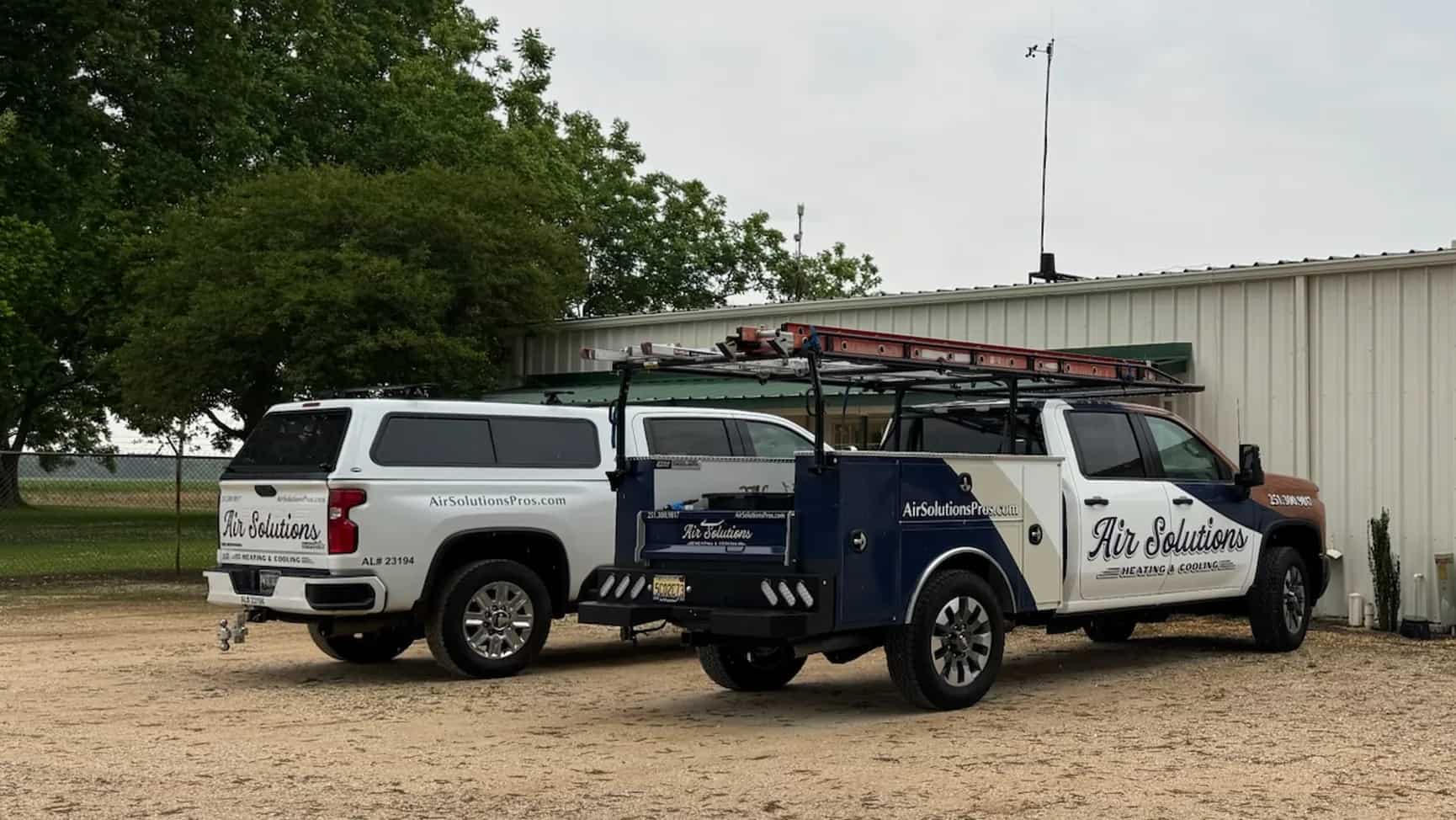
Commercial HVAC in Stapleton.
Local commercial HVAC in Stapleton, Alabama and surrounding Baldwin County. Restaurants, vacation rentals, property managers. Licensed AL#23194. 353+ five-star reviews. Call (251) 300-9817.
Get a Free Estimate
Name and phone is all we need to call you back. Takes ~20 seconds.
353+ five-star reviews · Same-day · 24/7 · Licensed AL#23194
What we see on calls in Stapleton.
The highway-frontage cluster along the Stapleton US-31 spine carries the corridor's most operationally-demanding commercial equipment. A roadside fuel-and-convenience stop on a packaged rooftop unit keeps the sales floor and walk-in coolers cycling against the corridor's heavy cooling-degree-day total without the staffing on hand to spot a marginal performance trend before it cascades into a no-cool event; the recurring service patterns cluster around economizer-damper actuator drift on systems that spent unsupervised summers cycling, condenser-coil fouling from highway-side particulate that builds faster than residential expectations, blower-motor and belt service on units that ran continuously through the July peak, refrigerant-circuit work on aging single-stage RTUs reaching the end of the original construction-wave service life, and condensate-management on horizontal runs that have never been documented end-to-end. An independent small restaurant on the corridor adds a kitchen-RTU layer with its own grease-loading regimen, requiring a tighter cleaning cadence on the condenser coil through the warm months and a more aggressive belt-tension and bearing inspection on the supply blower than the convenience-store frame demands.
Outside the highway-frontage cluster, the ag-supply and feed-and-seed counters along the corridor, the automotive and small-engine repair shops on adjacent parcels, and the contractor offices and equipment yards on rural acreage tracts each sit on their own service profile. An agricultural-supply counter typically runs a split system serving a sales office paired with a warehouse-bay air handler, where the warehouse-side equipment absorbs the dust and pollen load from open bay doors and feed-bag stacking through every operating day; the recurring service work concentrates on coil cleaning, blower-motor amp draw against fouled airflow, and filtration-stage maintenance on equipment never specified for the actual dust-loading profile the space delivers. An automotive shop adds shop-air particulate and brake-dust burden that fouls condenser coils on a quarterly rather than annual cadence. A small-office suite in one of the corridor's multi-tenant buildings runs the most conventional small-business equipment on the corridor — split systems or small packaged units serving a few thousand square feet on a daytime occupancy schedule — and the recurring service mix there reads closest to a residential pattern, though the bi-annual cadence still has to address the dual-mode wear that the heat-pump-dominant fall-and-winter heating load produces on the same single compressor handling eight months of cooling.
- Newer housing stock predominates here. Builder-grade equipment commissioning issues and warranty-period failures are the typical calls.
- Long cooling season means compressors run heavy May through October. Annual maintenance pays for itself in compressor lifespan.
- Mild winters mean heat pumps cover the season comfortably without backup runtime in normal years. Cold-snap weeks expose undersized units.
Commercial HVAC in Stapleton — the questions that come up.
- We run a small commercial address on the Stapleton US-31 corridor. How is a service contract structured for a single-storefront or small-office commercial HVAC account?
- A small-format commercial account does not fit the residential maintenance-membership framework Cool Club is built around — the equipment specification, the daily operating-hour profile, and the consequence of an unplanned downtime hour on a revenue-generating tenant push the scoping into a written service contract. The framework starts with a documented baseline-reading set on every piece of equipment at the first preventive visit: superheat and subcooling on the cooling-side, static pressure across the air handler, amp draw under load, temperature split, capacitor microfarad value, contactor surface condition, economizer-damper response where applicable, condensate-line condition. The bi-annual cadence then has a reference set to compare against on every subsequent visit, which lets the wear-trajectory conversation move from intuition to documented evidence on equipment trending toward end of life. Emergency response on a contracted account routes through a named after-hours escalation path documented on the signed contract itself, with the disclosure that after-hours calls carry overtime rates included up front in writing.
- Stapleton has no natural-gas distribution. How does that change commercial HVAC service on the heating side compared to a Foley or Daphne business account?
- It changes the heating-side service conversation across the entire commercial base on the corridor. The WP service-area pattern for north-Baldwin community addresses runs Baldwin EMC for electric with no widespread natural-gas distribution, which means every commercial tenant in Stapleton whose process or space-heating side runs on a fossil fuel runs it on propane (LP) from a delivered tank on the parcel rather than off a natural-gas tariff at the meter. The practical translation on a winter no-heat dispatch is that a truck rolling up US-31 carries diagnostic tools and common parts for two configurations — heat-pump-with-electric-strip-backup, and heat-pump-with-LP-furnace-dual-fuel — without the gas-or-heat-pump ambiguity that defines a Foley or Daphne winter dispatch. The fall preventive visit on a Stapleton commercial account weights toward LP-furnace ignition-module condition, flame-sensor cleaning, gas-valve sequence verification, and dual-fuel control-board logic rather than the natural-gas balancing a Foley restaurant would receive. On a replacement-side quote we model the operating-cost arithmetic against current LP delivery pricing, because that input matters and changes by season.
- Your shop is in Daphne. What does a 25-minute drive up US-31 actually mean for a Stapleton commercial account on routine maintenance and emergency dispatch?
- Stapleton is one of the friendlier dispatch realities on our commercial book and we say so honestly. The route from the Daphne shop measures 15.7 miles on the OSRM-verified clock and lands on the corridor inside roughly 25 minutes by way of the US-31 spine, with I-65 as one realistic approach option for parcels closer to the interchange. On the routine-preventive side, that drive math means a Stapleton commercial maintenance stop stacks naturally onto a north-county truck day alongside a Bay Minette or Stockton stop on the same route — the bi-annual visit fits into a regular north-county route day rather than requiring a dedicated full-day commitment up the corridor. On the emergency side the same drive applies, though dispatch volume on a 95°F July afternoon or a sub-30 January morning runs heavier than off-peak hours; we quote the realistic window measured against the 25-minute transit rather than promise a tighter arrival window the corridor cannot honestly support. The 40-minute Bay Minette dispatch the sibling commercial account is structured around is materially longer than the Stapleton number, and the written service-contract scope reflects that on the response-time language.
- Our highway-frontage commercial address runs a packaged rooftop unit installed during the 2000s construction wave. What recurring service work should we expect on equipment that age in Stapleton?
- Most highway-frontage commercial equipment on the Stapleton corridor sits on systems installed during or after the 2000s build-out that produced the surrounding 2004-vintage residential stock, which puts the typical commercial RTU around the 15-to-20-year mark — squarely inside the first end-of-life decision window for original-installation construction-wave equipment. The recurring service pattern on a packaged rooftop unit in that age band reads predictably: economizer-damper actuators drift out of correct sequence after multiple unsupervised summers cycling, condenser coils accumulate highway-side particulate that drops capacity if the cleaning cadence is annual rather than quarterly, supply blower motors and belts show accumulated wear from continuous summer-peak runtime, the original run capacitor drifts under nameplate microfarad spec by the mid-teens, contactors accumulate surface pitting from years of inrush cycling, and refrigerant charge on aging R-410A circuits bleeds off slowly through Schrader cores and braze joints as gradual capacity loss rather than as a dramatic failure event. A documented service-contract cadence catches each on a planned visit while the cost is still small.
- We run a small business in Stapleton. Does the Cool Club membership cover our commercial account, or do we need a different arrangement?
- Cool Club is the residential maintenance cadence — a single-family home with one or two pieces of residential equipment, the bi-annual spring-AC-plus-fall-heating tune-up pattern, no long-term contract, and the published member discounts of 15% off all AC repairs and 5% off new systems. A Stapleton commercial address — a US-31 frontage convenience store on a packaged rooftop unit, a corridor restaurant on a kitchen-RTU configuration, an agricultural-supply counter on a split system serving a sales office and a warehouse bay, a contractor yard on a small office-trailer air handler, or a multi-tenant professional-services suite on conventional small-business equipment — is scoped on a written service contract instead. The contract specifies the maintenance cadence, the per-unit baseline-reading approach, the named after-hours escalation path, and the after-hours overtime disclosure up front rather than carrying any of them as implicit expectations. If you also keep a Stapleton residential address, the residential side can run on Cool Club exactly as the membership page describes while the commercial side runs on its own contract; the two structures operate independently.
What commercial HVAC looks like in this climate.
The climate a Stapleton commercial address operates against is the inland north-Baldwin profile rather than the bay-buffered Eastern Shore baseline, and on small-format commercial equipment that distinction translates into measurable runtime and reliability consequence. Per-coordinate ERA5-Land reanalysis at the corridor's grid cell returns roughly 3,030.7 cooling degree days for the 2023 year against 1,154.1 heating degree days, with a July mean high near 92.9°F — meaningful work on both sides of the calendar, with the cooling side dominant from late April through October. A packaged rooftop unit serving a roadside convenience store keeps the sales floor cycling against that load every operating hour without the marine-breeze relief a Spanish Fort or Daphne address enjoys, and the small-format equipment typical of corridor commercial tenants does not carry the redundancy a larger building's multi-zone system supplies.
On the winter side, the deepest cold mornings dip into the upper 20s and multi-night events like the January 2024 stretch pushed lows below 25°F across the corridor — colder and longer than the Eastern Shore version because the corridor sits inland at roughly 80 meters of elevation without bay thermal moderation. A small-office suite on a heat pump backed by an LP furnace, an agricultural-supply counter on a split system feeding a sales office and an attached warehouse bay, or a contractor yard's office trailer on a packaged unit each exposes its heating-side weakness on those nights in a way the cooling-dominant Gulf-front cells never see. The maintenance economics for a Stapleton commercial account therefore weight the fall heating-side preventive visit and the spring cooling-side visit roughly equally on the bi-annual cadence.
Weather events that have shaped commercial-HVAC service patterns on the small-format US-31 inventory through Stapleton.
- Sep 2020 — Hurricane Sally — corridor small-commercial recovery on north-county feeders: Sally tracked east of the Stapleton corridor but the outer wind field reached well into north Baldwin and produced extended power outages plus repeated brown-out cycling on the Baldwin EMC north-county feeders during restoration. The commercial-impact pattern on the corridor's highway-frontage tenants was the slower post-storm wave rather than the immediate-failure spike: packaged rooftop units that restarted normally on initial grid stand-up surfaced contactor pitting, capacitor microfractures, and control-board damage on the third or fourth restoration reboot, with failures clustering into the months that followed. Tenants on marginally-running late-1990s and early-2000s equipment saw a concentrated wave of replace-versus-repair decisions land across the following season. Contracted accounts where a documented preventive program had captured baseline readings before the storm came back online faster on the post-event diagnostic, because the technician had measured references to compare each unit's post-storm numbers against.
- Jan 2024 — Multi-night sub-freezing stretch — LP-dual-fuel and heat-pump-strip commercial freeze exposure: Three consecutive overnight lows well below freezing with daytime highs that struggled to crack 40°F across the corridor — colder and longer than the Eastern Shore version because the corridor sits inland at roughly 80 meters of elevation without bay thermal moderation. The commercial impact on the corridor's small-format inventory split predictably by configuration. On heat-pump-with-electric-strip-backup units serving small-office suites and corridor retail, auxiliary heat strips ran continuously across the stretch and closed their contactors more times in one week than they normally would across a season; reversing valves stuck on first cold-weather actuation on units that had not been exercised in the fall, and defrost boards out of timing spec surfaced as comfort complaints by mid-week. On LP-furnace dual-fuel configurations a parallel wave of flame-sensor failures and ignition-module faults landed on the coldest mornings. Monday-morning opening of corridor commercial tenants drove the heaviest dispatch demand of the week; on contracted accounts the fall preventive visit's documented LP-side baseline reading was the reference that made each post-freeze diagnostic faster.
- Summer 2023 — Sustained above-90°F afternoon runs — highway-frontage RTU capacity stress: Stapleton's per-coordinate July mean high sits near 92.9°F, and an extended above-90°F cluster in the summer of 2023 pushed marginal corridor commercial equipment past its serviceable performance threshold. Packaged rooftop units on highway-frontage convenience stores and small restaurants ran continuous cycles through the worst afternoons; capacitor failures landed on the first sustained 90°F week on units whose dual-run capacitor had drifted across the previous winter, condenser coils carrying highway-side particulate showed airflow restriction that masqueraded as a refrigerant-charge issue until a static-pressure reading separated the two, and condensate drains tripped float-switch shutdowns on units whose horizontal trunks had never been documented end-to-end. The replace-versus-repair conversation on the longest-running highway-frontage equipment shifted toward replacement in the months that followed, and contracted accounts whose spring preventive visit had captured the reference readings walked into those conversations with the documentation already in hand.
What Stapleton customers can claim.
- Baldwin EMC serves nearly every commercial meter inside 36578 — the US-31 frontage tenants from Downtown Stapleton north toward the Bay Minette line and south toward the I-65 interchange, the small-format multi-tenant buildings on the corridor, and the agricultural-supply, automotive, contractor, and feed-and-seed addresses on the side-road parcels. A small number of edge addresses may fall on a different provider at the parcel level, so before any rebate math lands on a written commercial quote we verify the actual provider on the tenant's monthly bill rather than assume.
- Commercial energy-efficiency rebate programs from Baldwin EMC are built around peak-kW demand reduction together with qualifying commercial high-efficiency equipment tiers, rather than the residential tax-credit math the three Stapleton residential siblings cover. Availability and incentive levels move on the cooperative's own annual schedule, so before any rebate figure goes into a written commercial quote we pull the current program sheet directly through baldwinemc.com against the actual bid date.
- Federal tax treatment of commercial HVAC capital equipment runs under different IRS sections than the residential 25C credit (a credit that applied only to residential installs and ended after December 31, 2025) — Section 179 expensing where the business and equipment qualify, the Section 48 investment credit for specific high-efficiency categories, and the Section 179D deduction for certain building-efficiency improvements. Eligibility depends on the building's tax structure, the equipment specification, and the depreciation posture the business is taking — conversations for the building owner's CPA rather than service decisions we direct. We leave the commissioning records and equipment specification sheets the accountant will reference on any commercial install.
- Switching a Stapleton commercial address from electric to natural gas at the meter is generally not feasible — natural-gas distribution does not reach broadly across the corridor. A property that already keeps an LP tank can consider a propane furnace as part of a dual-fuel commercial pairing on a future replacement; LP delivery pricing gets modeled at the consultation against the current season's delivery rate, because that figure matters and changes through the year. For greenfield electric-only commercial buildings — the dominant pattern on the corridor's construction-wave commercial inventory — a correctly-sized commercial heat-pump configuration with auxiliary resistance strips is almost always the cleaner answer at this climate band.
Every Stapleton neighborhood, every zip.
Commercial coverage at a Stapleton address spans the full 36578 ZIP — the US-31 frontage tenants from Downtown Stapleton north toward the Bay Minette line and south toward the I-65 interchange, the side-road agricultural-supply and contractor parcels off the corridor, the handful of multi-tenant small-professional buildings on the corridor, and the rural acreage commercial outbuildings on the side-road branches. A contracted preventive sweep through the Stapleton commercial inventory pulls 15.7 miles of US-31 windshield time off the Daphne shop and arrives on the corridor inside roughly 25 minutes by the OSRM clock — short enough that the Stapleton stop stacks onto the same north-county truck day as the Bay Minette or Stockton stops on the route, rather than booking a dedicated full-day commitment the way the Bay Minette county-government account does. The dispatch math gets quoted against that 25-minute drive in the written service-contract scope rather than promised as an Eastern-Shore-grade arrival window the corridor's geography would otherwise imply.
The dispatch number is (251) 300-9817, in service every hour of the calendar and routed through the on-call rotation outside business hours — on a contracted Stapleton commercial account the practical workflow runs through the named after-hours escalation path written into the building's signed scope rather than the general intake line, with that path documented on the contract itself before any after-hours overtime structure becomes relevant. The disclosure that after-hours calls carry overtime rates is named on the dispatch call before a truck is routed up US-31, and the realistic ETA is quoted against the 25-minute drive rather than implied as a tighter window the geography cannot honestly support. Cool Club is built around the residential maintenance cadence — a single-family Stapleton home with one or two pieces of residential equipment, the bi-annual spring-AC-plus-fall-heating tune-up cycle, no long-term contract, and the published member discounts of 15% off all AC repairs and 5% off new systems. A roadside convenience store on packaged-rooftop equipment, an agricultural-supply counter on split systems serving a sales office and a parts warehouse, or a contractor yard with a small office trailer on its own air handler is scoped on a written commercial service contract instead.
- Downtown Stapleton
- the US-31 corridor
- the I-65 approach
- rural Stapleton acreage
Commercial HVAC Coverage Map — Stapleton, Alabama
Centered near Stapleton for orientation. Air Solutions Heating & Cooling provides commercial HVAC throughout every Stapleton neighborhood and zip code, plus the surrounding Baldwin County area. Same crew, same number — we travel the whole county.
353+ Five-Star Reviews. And Counting.
“Jessie goes above and beyond, glad my friend referred him to my business.”
“Called at 2:30 this morning. They responded around 6:00 and arrived on time. HVAC repaired quickly. Very professional and polite. Immediately signed up for their maintenance plan. UPDATE! Follow up service and cleaning on time and further improved the system’s performance. Will continue to do business with them.”
“I can't say enough good things about Air Solutions. Not only are they honest, dependable and reasonably priced, but they genuinely care about their customers. Maria at the office is amazing to work with, and all of the guys in the field are so kind, professional and good at what they do. I've used them at properties that I manage for others as well as my own properties - HIGHLY recommend!!”
Schedule Commercial HVAC in Stapleton.
Restaurants, vacation rentals, property managers. Same-day appointments most weekdays in Stapleton and surrounding Baldwin County. Tell us when works for you — we'll confirm by phone during weekday office hours (8 AM-4 PM).
Need someone right now? Call (251) 300-9817 — our 24/7 emergency line is answered live when we can and returned quickly when we can't.
Commercial HVAC in Stapleton — FAQs
Do you offer commercial HVAC service contracts in Baldwin County?
Yes. We work with restaurants, vacation rental properties, retail, and multi-unit operators across Baldwin County. Service contracts include scheduled preventative maintenance, prioritized response, and per-unit pricing for fleet accounts.What's your typical response time for commercial emergencies?
For service-contract customers, we respond same-day on weekdays and within hours on weekends. Restaurants and vacation rentals get prioritized routing — we know what a Friday afternoon failure costs you.Can you handle multi-unit vacation rental portfolios?
Yes. Many of the Gulf Shores and Orange Beach property managers we work with have 8 to 50+ units. We schedule turnover-aligned maintenance, document everything by unit, and bill at fleet rates.Do you service all of Stapleton, AL?
Yes — Air Solutions Heating & Cooling covers every neighborhood and zip code in Stapleton, Alabama — including Downtown Stapleton, the US-31 corridor, the I-65 approach, plus the surrounding subdivisions and rural roads. We handle AC repair, AC installation, AC maintenance, emergency HVAC, and commercial HVAC. Standard service hours weekdays, 24/7 emergency response, and same-day appointments most of the year. Call (251) 300-9817 to schedule.What HVAC issues are most common in Stapleton?
Homes around US-31 corridor most commonly call us for refrigerant leaks (often salt-air or coil corrosion related on the Gulf Coast), undersized air conditioning systems struggling with Baldwin County summer humidity, and capacitor failures during peak load between June and September. A Cool Club bi-annual maintenance plan catches most of these issues before they cause a breakdown.
Commercial HVAC Near Stapleton.
Right at the Stapleton city limit? We service the surrounding Baldwin County communities on the same routes — same crew, same response times.
Related HVAC Guides.
Long-form articles about commercial HVAC and Baldwin County HVAC, with practical advice from our team.
 Commercial
Commercial HVAC for Baldwin County Businesses
A plain-English overview of commercial HVAC in Baldwin County — how it differs from residential, what each business type needs, and what a service contract covers.
May 15, 20268 min Tax Credits
Section 179 HVAC Deduction Guide for Baldwin County Businesses
How Baldwin County businesses can use the Section 179 deduction on commercial HVAC installations and replacements.
April 30, 20267 min Cost Guides
Commercial HVAC Maintenance Contract Pricing
How commercial HVAC maintenance contracts are priced in Baldwin County — per-unit vs. flat-rate, what's included, what isn't.
April 26, 20267 min
Other services in Stapleton & this service across Baldwin County.
- All HVAC services in Stapleton, AL
- Commercial HVAC across Baldwin County
- AC Repair in Stapleton
- AC Installation in Stapleton
- AC Maintenance in Stapleton
- Emergency HVAC in Stapleton
- Heating Repair in Stapleton
- Heat Pump Services in Stapleton
- Indoor Air Quality in Stapleton
- Ductless Mini-Splits in Stapleton
- Heating Installation in Stapleton
Commercial HVAC in Stapleton — Schedule Today.
Same-day appointments most weekdays. Cool Club members get prioritized scheduling.