
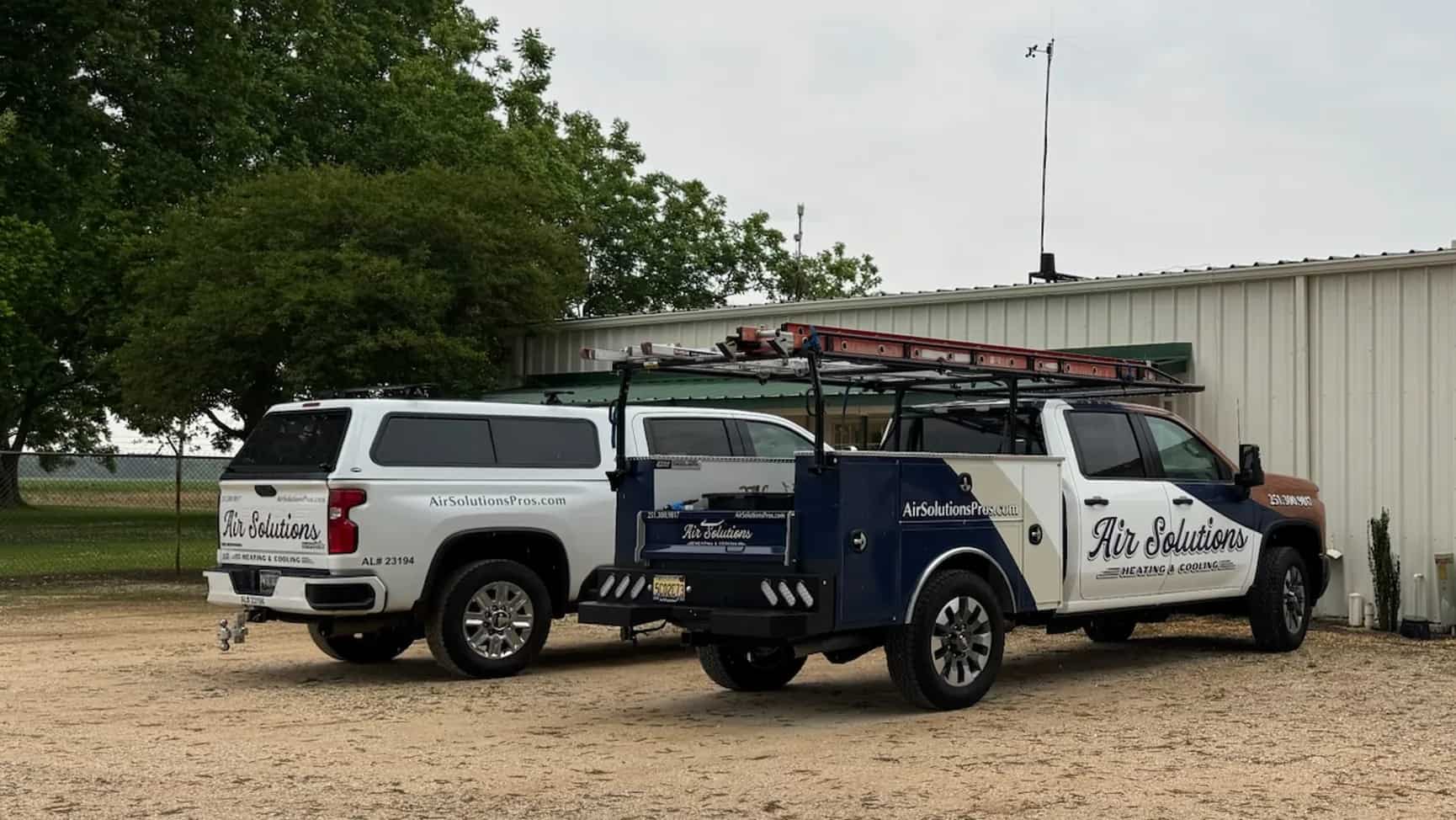
Indoor Air Quality in Loxley.
Local indoor air quality in Loxley, Alabama and surrounding Baldwin County. Dehumidifiers, air scrubbers, UV purification, ventilation. Licensed AL#23194. 353+ five-star reviews. Call (251) 300-9817.
Get a Free Estimate
Name and phone is all we need to call you back. Takes ~20 seconds.
353+ five-star reviews · Same-day · 24/7 · Licensed AL#23194
What indoor air quality looks like in this climate.
An IAQ project on a Loxley address starts with what the climate does to indoor air over a calendar year, but the headline number is the latent load rather than the temperature swing. The per-coordinate ERA5-Land reanalysis at the city-center grid records about 2,977 cooling degree days against 1,165 heating degree days, with average July highs near 91.5°F and average January lows around 48.2°F. The cooling side of that profile runs from late March into mid-October, which is also the window over which a residential cooling system has to actively pull moisture out of the indoor air before the conditioned space feels comfortable. The latent share of that load — the share spent on dehumidification rather than on temperature reduction — climbs disproportionately on shoulder-season days when the outdoor temperature is mild but the dew point is parked in the upper 60s, and an IAQ stack that does not include separate dehumidification capacity outside the central system will let indoor relative humidity drift above 60% for stretches even when the thermostat reads on setpoint. That is the regime where coil biofilm, condensate-pan growth, and chronically damp filtration media stop being self-limiting and start sustaining themselves into the next season.
What changes the IAQ conversation on a Loxley address specifically, compared to other matrix cells with similar climate readings, is the outdoor particulate baseline the residential envelope is filtering against. The city sits at the I-10 / Highway 59 interchange in active commercial-corridor build-out, with continuous north-south truck traffic feeding the interchange and a tourist-and-retail traffic pattern that extends down Highway 59 toward the Tanger Outlets cluster south of town. Layer in the ongoing road widening on portions of the corridor, the active subdivision build-out on the south side of the city, and the heavy-equipment work that comes with both, and the outdoor PM2.5 baseline near the Highway 59 frontage is meaningfully elevated above what a stabilized older neighborhood elsewhere in Baldwin County would read. The climate stays warm enough through nine months of the year to keep the central system pulling outdoor make-up air through every return-side infiltration pathway, which means the indoor IAQ picture inside a Loxley home is doing real work against a real corridor-and-construction outdoor load every cooling-season day the system runs.
What we see on calls in Loxley.
The single most common IAQ project we open on a Loxley address is a return-side filtration upgrade. The mechanics behind that pattern are straightforward once you walk through the equipment side. Loxley's post-2010 subdivision wave on the south side of the city — the build-out that filled in along Highway 59 between downtown and the Foley line — almost universally shipped with builder-grade 1-inch MERV-8 fiberglass return-air filtration as the cost-engineered baseline. MERV-8 captures the visible-dust and larger-pollen fractions at acceptable efficiency, which is what passes a builder's commissioning checklist, and it leaves the system documentation looking compliant on paper. What MERV-8 1-inch filtration does NOT do is meaningfully capture the PM2.5 combustion-particulate fraction, the fine tire-and-brake particulate, or the resuspended road-surface dust that a Highway-59-adjacent residential parcel breathes through. That is the gap that a MERV-13 media-cabinet upgrade closes. The catch — and the reason a homeowner cannot simply swap a higher-MERV 1-inch filter into the same return slot — is that a higher-MERV 1-inch filter chokes the system's static-pressure budget, which damages the air handler over time and can void the original equipment warranty. The right intervention is a 4-inch or 5-inch MERV-13 media cabinet installed where the return plenum currently houses the 1-inch slot, with the return grille and any restrictive ductwork upstream sized to allow the higher-MERV media to perform without starving the air handler. That is the project pattern that defines the IAQ work we do on Loxley addresses repeatedly.
The second pattern worth naming is construction-zone dust loading on residential addresses near active build sites. Loxley is in the middle of a sustained growth cycle — new subdivision build-out on the south side along the Highway 59 spine, periodic road widening and corridor improvement projects on segments of Highway 59 itself, fresh commercial development around the I-10 interchange. The IAQ-relevant consequence on a residential address within an eighth of a mile of an active build site is real elevated outdoor dust loading for the duration of the construction window, frequently for many months at a time. The filtration cabinet has to handle that load on top of the corridor baseline, which means a Loxley homeowner near active construction is replacing media filters meaningfully more frequently than the manufacturer-default schedule would suggest, and a shorter replacement cadence is part of the maintenance conversation we have at the project close. The newer-construction housing stock layers one more variable: younger families with pets and young children in the post-2010 subdivisions add household-internal particulate generation (carpet pet-dander, toy-and-craft dust, more home-cooked-meal cooking aerosols) on top of the corridor and construction loads. The IAQ symptom intake on a Loxley subdivision address frequently includes young-child respiratory sensitivity, persistent dust accumulation on hard surfaces that returns within a few days of cleaning, and a layered haze on light fixtures and TV screens that points clearly at filtration inadequacy rather than at any specific equipment failure.
To be explicit on the service catalog: we install whole-home dehumidifiers, air scrubbers, UV purification, ductwork sealing, and advanced filtration systems, and we don't offer duct cleaning as a standalone service. The reasoning on the duct-cleaning side is honest and consistent: one-time mechanical cleaning has a poor track record of producing measurable, durable IAQ improvement once the actual upstream causes are addressed directly, and on a newer Loxley subdivision home the upstream causes are filtration inadequacy and corridor-load infiltration rather than accumulated debris inside an aging duct system. Sealing the supply and return plenums against negative-pressure infiltration, upsizing the filtration cabinet to capture the corridor PM2.5 load, and adding a UV-C lamp at the indoor coil to prevent biological re-establishment on the wet surface — those interventions produce results a mechanical duct cleaning simply does not. We bring that diagnostic-and-equipment combination to the assessment rather than defaulting to the upsell that does not actually solve the IAQ problem in front of us.
- Mid-life equipment is the common profile in this area. Capacitor and contactor failures dominate the service-call mix.
- Long cooling season means compressors run heavy May through October. Annual maintenance pays for itself in compressor lifespan.
- Mild winters mean heat pumps cover the season comfortably without backup runtime in normal years. Cold-snap weeks expose undersized units.
Indoor Air Quality in Loxley — the questions that come up.
- Our Loxley subdivision home came with a 1-inch return-air filter slot. Can we just put a higher-MERV 1-inch filter in there to handle the Highway 59 dust load?
- It is the most common question we hear on a Loxley filtration consult, and the short answer is no — and the reason is the static-pressure budget rather than the filter itself. A 1-inch return-air slot was sized by the builder around a specific pressure-drop range that a MERV-8 fiberglass element fits inside. A higher-MERV 1-inch filter — MERV 11 or MERV 13 in the same form factor — has a meaningfully higher pressure drop across the same one-inch depth, which forces the air handler to work harder to pull the design airflow through the return. The consequences play out over time: the blower motor runs hotter and ages faster, the system static pressure climbs out of the design window, the air handler warranty can be voided depending on the manufacturer, and on systems already running near the static-pressure limit the upgrade actually reduces airflow enough to make the cooling and heating performance suffer. The correct fix is a 4-inch or 5-inch MERV-13 media cabinet installed where the 1-inch slot currently sits. The thicker media moves the higher-MERV rating into a deeper element where the pressure drop is back inside the design window, which lets the system perform normally at the higher filtration level. The conversion frequently requires a return-grille rework to accommodate the deeper cabinet — and that grille rework is most of the labor on a typical Loxley filtration-upgrade project rather than the cabinet itself.
- What does a 4-inch MERV-13 media-cabinet conversion actually involve on a typical Loxley subdivision home? Is it a big project?
- It is moderate-scope rather than minor and considerably less invasive than full ductwork replacement. The work on a typical post-2010 Loxley subdivision home unfolds in a defined sequence. First, the existing 1-inch return-air slot at the air handler is measured along with the return grille at the wall or ceiling — the cabinet has to fit the available physical space at the air handler end and the grille has to accommodate the airflow the deeper media will need without becoming a static-pressure bottleneck of its own. Second, the existing return-side ductwork is checked for any restriction or leakage that would conflict with the upsized media — there is no point installing a MERV-13 cabinet if the return duct upstream is already strangling the system or pulling unfiltered attic air around the cabinet. Third, the new media cabinet is installed in line with the air handler, with a sealed connection to the supply plenum on the downstream side and a sealed connection to the return ductwork on the upstream side, and the return grille is rebuilt or upsized as needed. Fourth, the system is commissioned at the new media setup — static pressure measured across the new cabinet, airflow verified at the supply registers, the air handler's blower-speed setting adjusted if needed to maintain the design airflow against the new pressure drop. The whole sequence is usually a one-day install for a single-system home and produces a measurable change in indoor particulate from the first run.
- Can you actually measure how much corridor particulate is reaching the inside of our house, or is that just an estimate?
- We measure several things directly and estimate one thing honestly. The directly-measurable items include the return-air filter loading rate (how saturated the existing filter is at a given service interval), the system static pressure across the existing filter and across the proposed new cabinet, the supply-register airflow at the equipment's rated speed, and the indoor relative humidity and dew point at the time of the assessment. On the particulate side specifically, a handheld particle counter at the return grille and at a representative interior room can record indoor PM2.5 and PM10 concentrations during the assessment visit, and a repeat reading after a filtration upgrade documents the change directly. What we estimate rather than measure on a single assessment visit is the long-term outdoor PM exposure on a specific parcel — that varies by wind direction, time of day, traffic intensity, season, and any local construction-zone activity, and a single-visit reading is a snapshot rather than a continuous record. The honest framing on the corridor-adjacency conversation is that the proximity to Highway 59 and any active construction is one input among several, the directly measured indoor readings are another input, the filter loading rate over time on the existing system is a third, and the recommendation comes from triangulating those inputs rather than from quoting a single annual outdoor PM number we cannot verify on a single visit.
- We just bought a new Loxley subdivision home built last year. The builder said the HVAC system was top-of-the-line. Do we still need an IAQ upgrade?
- The builder is usually telling the truth about the central system being top-of-the-line by efficiency rating and capacity matching, and on those criteria a 2023 Loxley new-build subdivision install is meaningfully better equipment than what shipped on a 2005 home. Where the builder narrative consistently diverges from the IAQ reality is on the filtration and accessory side. The cost-engineered builder install almost universally ships with a 1-inch MERV-8 return-air filter as the baseline filtration. That is not the builder cutting corners on quality; it is the builder hitting a price target on the standard package, and the MERV-8 baseline is what the system documentation lists as the design filtration. On a Highway-59-adjacent Loxley parcel the MERV-8 baseline is essentially transparent to the corridor PM2.5 fraction, and a post-move-in IAQ upgrade is the standard path to bring the filtration up to what the corridor location warrants. The good news on a brand-new install is that the air handler itself is current-generation equipment with a clean static-pressure budget to work within, so a MERV-13 media-cabinet conversion goes in cleanly without the additional complications that show up on older equipment. The upgrade conversation on a new Loxley subdivision home is therefore one of the more straightforward IAQ projects we book.
- If we add UV-C lamps at the indoor coil along with the filtration upgrade, what does that actually do for a corridor-adjacent home?
- UV-C lamp placement at the indoor coil addresses a specific and well-defined problem rather than a broad-spectrum IAQ outcome, and being explicit about what the equipment does and does not do matters for the project conversation. What UV-C at the coil does: it sterilizes the wet evaporator-coil surface and the adjacent condensate pan, suppressing the biological growth (mold, bacterial film, the early-stage organic layer that feeds further colonization) that establishes on chronically damp surfaces during the long Loxley cooling season. On a system running nine months of cooling against an indoor RH that sometimes climbs above 55%, that biological-growth suppression is real and durable. What UV-C at the coil does NOT do: it does not capture particulate from the air stream — that is the filtration cabinet's job — and it does not kill airborne pathogens at any meaningful rate during the brief transit time air spends near the lamp. The honest IAQ stack for a corridor-adjacent Loxley home pairs the filtration cabinet (for particulate capture) with the UV-C lamp (for coil-surface biological suppression) and, on systems with elevated latent load, a dedicated whole-home dehumidifier (for the humidity management that filtration alone cannot accomplish). Each piece of equipment does one specific thing well, and we install the combination because the combination addresses the actual IAQ picture on a Loxley address rather than because any single accessory does more than its equipment category can.
Storm, freeze, heat, and spring particulate events that have shaped the Loxley filtration-led IAQ project mix.
- Sep 2020 — Hurricane Sally — corridor debris loading on restoration-week return-air systems: Sally tracked west of Baldwin County and pushed sustained tropical-storm-force winds across the I-10 corridor through Loxley. The IAQ-relevant aftermath on Loxley addresses ran on two distinct tracks. On Highway 59 frontage parcels the storm left several weeks of corridor debris — broken vegetation, construction-site material displaced from active build sites, road-surface debris from emergency vehicles and tree-clearance equipment — that loaded outdoor particulate baselines significantly above normal through the restoration window. Residential return-air filtration cabinets sized for normal corridor load reached pressure-drop thresholds noticeably faster, and IAQ calls clustered around return-air starvation and dust-storm accumulation patterns that lifted as the corridor cleared but produced a meaningful uptick in unscheduled filter-replacement visits. On the post-2010 subdivision stock the secondary effect surfaced weeks later: builder-grade 1-inch MERV-8 filtration that had been marginal under normal corridor load was now clearly inadequate under the elevated load, and the conversation about MERV-cabinet upgrade accelerated meaningfully across the storm-impacted footprint.
- Jan 2024 — Multi-night sub-freezing stretch — tight-envelope backdraft on combustion appliances: Three consecutive nights below freezing with daytime highs that barely cleared 40°F. The Loxley IAQ-relevant consequence concentrated on Riviera-gas-served addresses where the cold-snap drove sustained high-fire operation on gas furnaces, gas water heaters, and gas ranges in a tightly-shut envelope. Several call records surfaced a pattern of momentary combustion backdrafting through vent connectors that had loosened over years of thermal cycling — exhaust products briefly pushed back into the conditioned space when an exhaust fan or dryer ran in the same envelope. None of those calls were equipment failures in the strict sense; they were envelope-and-vent integration issues that the cold-snap pressure differential surfaced for the first time. The post-event consultation queue included combustion-appliance vent inspections, carbon-monoxide monitor placement reviews, and on a smaller subset a recommendation for dedicated makeup-air provisioning where the kitchen-exhaust capture had outgrown the original house design. The IAQ filtration cabinet does not solve a combustion-vent integrity question, and the honest framing in those conversations stayed clearly separated.
- Jul 2023 / Aug 2023 — Heat-advisory weeks and peak-corridor traffic particulate stacking: Two stretches of heat-index readings above 105°F with overnight lows that barely fell below 80°F. On Loxley the IAQ-relevant consequence on Highway 59-adjacent addresses was a meaningful stack of two normally separate loads: peak-cooling-season return-air runtime brought through a meaningfully elevated peak-corridor traffic baseline as summer tourist traffic and trucked retail freight reached annual highs along the same stretch. Filtration cabinets that were holding through shoulder-season corridor load saturated faster, and the IAQ call mix during and immediately after the heat-advisory weeks clustered around three issues: indoor RH climb on cooling-only systems with no separate dehumidification capacity, return-air starvation on builder-grade systems where the original 1-inch filtration was choking under accumulated corridor PM, and the first symptom-onset window for households who had been tolerating the corridor baseline through the milder months but no longer could under continuous runtime. The post-heat-wave assessment calendar ran meaningfully heavier than baseline weeks for the rest of the cooling season.
- Spring annual — Combined pollen and corridor-particulate load on builder-grade MERV-8 systems: The oak and pine pollen surge across central Baldwin County runs heavy through March and April, and on Loxley subdivision addresses the seasonal pollen load stacks directly on top of the existing Highway 59 corridor particulate baseline. The combined load is what reveals the MERV-rating-mismatch problem most clearly: builder-grade 1-inch MERV-8 filtration that holds acceptably through the lower-load shoulder weeks reaches saturation within days under the combined spring load, and the IAQ symptom cluster spikes for the eight to ten weeks the pollen season runs. The dominant complaint pattern is hard-surface dust accumulation that returns within hours of cleaning, persistent return-grille film, and seasonal respiratory symptoms that the household had not associated with indoor air quality until the symptoms continued running indoors with the windows closed. The intervention conversation that the spring season opens — return-grille rework plus MERV-13 media-cabinet upgrade — is the project we book the most of on Loxley addresses across the calendar year.
Every Loxley neighborhood, every zip.
Air Solutions covers residential IAQ work across the full Loxley footprint under ZIP 36551 — the post-2010 subdivision build-out along the Highway 59 spine south of downtown, the older Downtown Loxley grid east and west of the courthouse-adjacent civic blocks, the I-10 corridor parcels close to the interchange, the Loxley Municipal Park area, the Hickory Street and US-90 frontage, and the agricultural-edge lots that wrap the city limits on the east and west sides. The IAQ project mix tracks the housing stock: a Census ACS 2022 median build year of 2002 with a meaningful younger-construction tail on the south-side subdivisions, a median household income near $89,435 that supports the MERV-cabinet retrofit decision when it lands in front of a homeowner, a median age of 36.3 that skews the IAQ-symptom intake toward young-family respiratory concerns, and an owner-occupancy rate above 84% that puts the project decisions in the hands of the resident rather than a property-management chain.
An IAQ assessment visit on a Loxley address sits on a different cadence than an emergency repair, and the dispatch math reflects that. The Daphne shop is 15.5 highway miles from the I-10 / Highway 59 interchange, which the OSRM routing clocks at about 22 minutes door-to-driveway under normal weekday traffic. For the filtration-upgrade project that dominates the Loxley IAQ book, the relevant logistics question is parts availability rather than dispatch speed — a MERV-13 4-inch or 5-inch media cabinet conversion frequently requires a specific return-grille adapter sized to the existing return-plenum opening, and we confirm the equipment availability before scheduling the install visit so the truck rolls with the right parts for the conversion rather than for a follow-up trip. Calling (251) 300-9817 reaches dispatch during business hours and after hours, and the assessment scheduling conversation works the homeowner's actual availability into the calendar rather than imposing a generic morning slot. For homeowners who want the ongoing IAQ-stack maintenance bundled into a regular rhythm, Cool Club residential membership covers bi-annual professional visits that include the corridor-load-relevant items: media-filter inspection and replacement on the shorter cadence the Highway-59-adjacent particulate load warrants, condensate-line treatment and float-switch verification, coil inspection for any biological re-establishment between visits, dehumidifier humidistat calibration, and UV-C lamp output verification on stacks that include UV-C sterilization. Member pricing works out to 15% off all AC repairs and 5% off new systems.
- Downtown Loxley
- the I-10 corridor
- the Hwy 59 corridor
- Loxley Municipal Park area
- Hickory Street (US-90)
What Loxley customers can claim.
- Standalone IAQ filtration equipment — the MERV-13 media cabinets, return-grille rework, supply-air upgrades, UV-C lamp kits, and the targeted ductwork sealing that defines the Loxley IAQ project mix — does not generally appear on either Riviera Utilities or Baldwin EMC rebate menus. The cooperative residential efficiency programs are structured around system-level kilowatt-hour efficiency thresholds rather than around indoor-air-quality outcomes, which means a filtration-led project stands on its own merits rather than on a rebate-side incentive.
- Whole-home dehumidifiers occasionally land in a different framing on a rebate menu when paired with a qualifying high-efficiency heat-pump replacement at the same install — the system-level rebate then covers the bundled package. That bundling is the practical exception to the standalone-IAQ-accessory rebate gap, and it surfaces most often when an IAQ assessment reveals that the existing central system is past its serviceable life and the homeowner is already evaluating replacement on its own timeline.
- Riviera Utilities natural-gas distribution reaches a meaningful share of Loxley parcels, though coverage is not universal across the footprint. For a pure-IAQ filtration project the gas-availability question rarely changes the immediate work — filtration cabinets, ductwork sealing, and UV-C accessories live entirely on the electric side. Where an IAQ project is paired with a heat-pump replacement being evaluated against a dual-fuel configuration, gas availability becomes a real input to the system-decision conversation rather than to the IAQ-decision conversation.
- Program names, qualifying-equipment tiers, and dollar amounts at both Riviera Utilities and Baldwin EMC shift on their own schedules. The responsible move on any IAQ-plus-heat-pump bundled quote is to verify the current program sheet at consultation rather than carry a stale figure into the project budget.
Indoor Air Quality Coverage Map — Loxley, Alabama
Centered near Loxley for orientation. Air Solutions Heating & Cooling provides indoor air quality throughout every Loxley neighborhood and zip code, plus the surrounding Baldwin County area. Same crew, same number — we travel the whole county.
353+ Five-Star Reviews. And Counting.
“Jacob arrived as scheduled and completed the service quickly and efficiently despite the severely adverse conditions working in the attic in extreme heat and humidity.”
Schedule Indoor Air Quality in Loxley.
Dehumidifiers, air scrubbers, UV purification, ventilation. Same-day appointments most weekdays in Loxley and surrounding Baldwin County. Tell us when works for you — we'll confirm by phone during weekday office hours (8 AM-4 PM).
Need someone right now? Call (251) 300-9817 — our 24/7 emergency line is answered live when we can and returned quickly when we can't.
Indoor Air Quality in Loxley — FAQs
Why is indoor air quality such a big deal on the Gulf Coast?
Baldwin County's outdoor humidity averages 75% annually and peaks above 90% on summer mornings. Indoor humidity tracks outdoor humidity, and at 60%+ indoor RH, problems start: dust mite populations explode, mold can germinate on indoor surfaces, wood furniture warps, and that distinctive 'musty house' smell appears. Getting indoor RH into the 40-55% range solves most indoor air quality complaints — and that's primarily an HVAC engineering problem, not just a 'buy an air purifier' problem.Do I need a whole-house dehumidifier in Baldwin County?
Probably not if your AC is properly sized and maintained — a right-sized AC removes plenty of moisture during normal cooling cycles. You DO benefit from a whole-house dehumidifier if: (1) your home is tight new construction where AC doesn't run long enough to dehumidify, (2) you have a vacation rental that sits at higher setpoints during vacancy, (3) you have chronic mold complaints despite good cooling, or (4) you have indoor pools/spas/large fish tanks adding moisture continuously. We provide a written estimate before any work begins.Are UV-C lights worth installing on my HVAC system?
Coil-mounted UV-C lights are genuinely useful in Baldwin County's humidity — they keep evaporator coils and drain pans biologically sterile, preventing the musty smell that humid climates produce. Worth considering for homes with chronic supply-vent odor or vacation rentals. We provide a written estimate before installation. The marketing claims about UV killing airborne pathogens are overstated; airflow is too fast for meaningful kill rates. For air sterilization, better filtration is more cost-effective.Do you service all of Loxley, AL?
Yes — Air Solutions Heating & Cooling covers every neighborhood and zip code in Loxley, Alabama — including Downtown Loxley, the I-10 corridor, the Hwy 59 corridor, plus the surrounding subdivisions and rural roads. We handle AC repair, AC installation, AC maintenance, emergency HVAC, and commercial HVAC. Standard service hours weekdays, 24/7 emergency response, and same-day appointments most of the year. Call (251) 300-9817 to schedule.What HVAC issues are most common in Loxley?
Homes around I-10 most commonly call us for refrigerant leaks (often salt-air or coil corrosion related on the Gulf Coast), undersized air conditioning systems struggling with Baldwin County summer humidity, and capacitor failures during peak load between June and September. A Cool Club bi-annual maintenance plan catches most of these issues before they cause a breakdown.
Indoor Air Quality Near Loxley.
Right at the Loxley city limit? We service the surrounding Baldwin County communities on the same routes — same crew, same response times.
Related HVAC Guides.
Long-form articles about indoor air quality and Baldwin County HVAC, with practical advice from our team.
 Commercial
Loxley Restaurant HVAC: Surviving Peak Summer Service Without Failures
Restaurant HVAC priorities for Loxley, AL operators during peak summer — service contracts, makeup air balance, and avoiding the Friday-night failure scenario.
September 10, 20265 min Maintenance
Why Your AC Is Blowing Warm Air in Loxley: 4-Step Troubleshooting Guide
Step-by-step troubleshooting for AC blowing warm air in Loxley, AL homes — four DIY checks before calling, plus what each common cause involves to repair.
August 25, 20264 min Maintenance
AC Drain Line Clogs in Humid Loxley: Causes, Fixes, and Prevention
Why AC drain lines clog in Loxley, AL homes — what causes it, the 15-minute DIY flush that prevents most clogs, and when professional cleaning is required.
April 18, 20264 min
Other services in Loxley & this service across Baldwin County.
- All HVAC services in Loxley, AL
- Indoor Air Quality across Baldwin County
- AC Repair in Loxley
- AC Installation in Loxley
- AC Maintenance in Loxley
- Commercial HVAC in Loxley
- Emergency HVAC in Loxley
- Heating Repair in Loxley
- Heat Pump Services in Loxley
- Ductless Mini-Splits in Loxley
- Heating Installation in Loxley
Indoor Air Quality in Loxley — Schedule Today.
Same-day appointments most weekdays. Cool Club members get prioritized scheduling.