
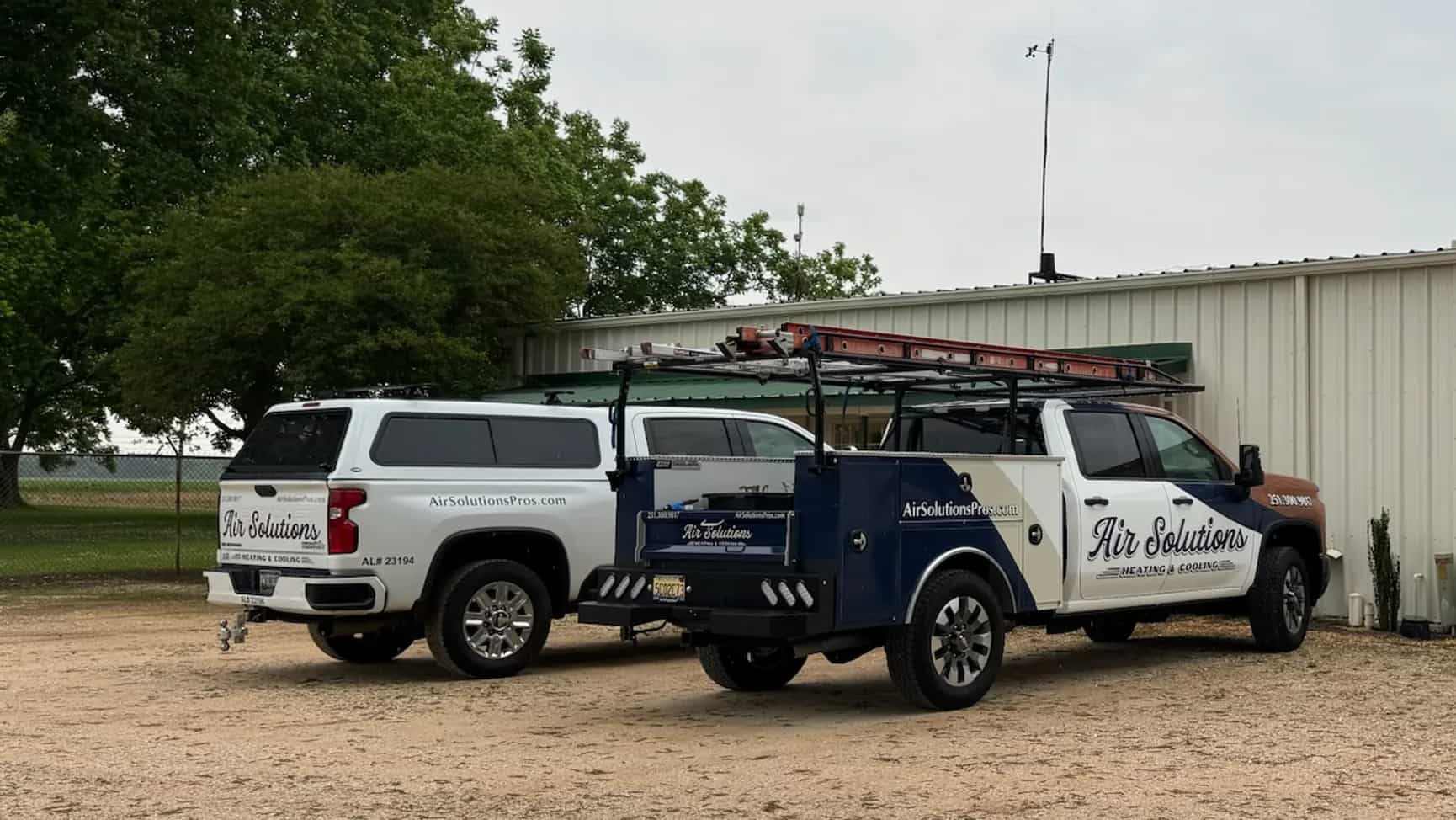
Indoor Air Quality in Rosinton.
Local indoor air quality in Rosinton, Alabama and surrounding Baldwin County. Dehumidifiers, air scrubbers, UV purification, ventilation. Licensed AL#23194. 357+ five-star reviews. Call (251) 300-9817.
Get a Free Estimate
Name and phone is all we need to call you back. Takes ~20 seconds.
357+ five-star reviews · Same-day · 24/7 · Licensed AL#23194
What indoor air quality looks like in this climate.
An indoor-air-quality discussion at a Rosinton address starts with the climate envelope the per-coordinate Open-Meteo ERA5-Land reanalysis sketches in plain numbers: roughly 3,069 cooling degree days against about 1,106 heating degree days for the 2023 baseline year, resolved at a grid cell near 43 meters elevation in the Highway 90 / County Road 64 farming corridor. The cooling-to-heating ratio runs close to three-to-one, which means the cooling system is the dominant moisture-removal mechanism in the house for eight or nine months out of twelve. The IAQ-relevant translation: the latent fraction of the cooling load — the moisture an air conditioner has to wring out before the air feels comfortable — carries the bulk of the operating year, and any indoor-environment specification that ignores that fact will chase the same musty-indoor-feel complaint regardless of how cold the thermostat reads on a July afternoon. Sustained afternoon dew points in the mid-70s drive indoor relative humidity drift past the 55-to-60-percent biological-growth threshold on systems sized for sensible capacity without latent-load headroom.
The winter side is quieter but earns its place in the IAQ conversation. Average January overnight lows hold near 49.1°F at the resolved grid cell, with the handful of multi-night sub-freezing stretches each winter that drive supplemental heating runtime on whatever combustion appliances the property runs. The community sits inland of the Mobile Bay moderation envelope, so clear-sky overnight radiative cooling regularly produces colder mornings than equivalent CDD bands closer to the water. The IAQ implication during cold weeks is that combustion-side appliances — kitchen ranges, water heaters, dual-fuel furnaces, supplemental space heaters — operate at higher duty cycles, and the resulting indoor water-vapor and combustion-byproduct pulse layers onto whatever baseline the cooling system established through summer. FEMA classifies the town-center coordinate as Zone X, which keeps the IAQ scope on routine indoor-environment work rather than flood-recovery remediation.
Weather and seasonal events that shape the Rosinton indoor-air-quality call mix.
- Sep 2020 — Hurricane Sally — multi-month wall-cavity humidity release on rural acreage: Sally tracked inland as a Category 2 through the central county. Rosinton sat well outside any direct surge zone — FEMA classifies the town-center coordinate as Zone X — but the IAQ aftermath ran much longer than the visible storm damage. Wall cavities, attic insulation, and crawl-space framing on rural Rosinton properties took on water during the storm and the days of multi-day grid recovery; properties brought back online without an explicit drying-and-dehumidification protocol produced chronic musty-smell complaints into 2021, particularly on older homes along the Highway 90 frontage and County Road 64 where original ductwork chases stayed humid enough to keep reintroducing moisture for weeks past the visible restoration milestone. Where the assessment walked the property in early 2021 after a Sally exposure, the recommendation set typically led with chase-side air sealing plus UV-C at the coil before any premium accessory work entered the conversation.
- Aug 2023 — Heat-advisory week — indoor RH climb on continuous cooling runtime: Six consecutive days with heat-index readings above 105°F. The Rosinton IAQ pattern concentrated on rural-acreage addresses where the cooling system was running essentially continuously and indoor relative humidity was still drifting past the 60-percent biological-growth threshold despite the runtime. The compounding factor was return-side leakage pulling humid attic and crawl-space air into the supply stream faster than the indoor coil could remove the moisture. The mechanical answer almost universally turned out to be the layered set: chase-side air sealing on the leakiest points first, then supplemental whole-house dehumidification sized to the measured latent load when the cooling system alone could not pull indoor RH into the 50-to-55-percent comfort band.
- Jan 2024 — Multi-night sub-freezing stretch — LP combustion-ventilation IAQ surfacing: Three consecutive nights well below freezing in mid-January 2024 with daytime highs barely clearing 40°F. On LP-served Rosinton homes, supplemental space-heater and water-heater run cycles climbed sharply through the stretch, pushing combustion byproducts and water vapor indoors at a rate the existing ventilation paths were not sized for. On a small number of properties, combustion-air supply paths to LP appliances had been seasonally blocked or insulated against the cold, and the appliances drifted toward incomplete combustion with elevated indoor CO2 as a result. Grid-cycling during recovery also produced an uptick in whole-house dehumidifier control-board faults on units that lost power mid-cycle. The post-event IAQ assessment pattern on a Rosinton address that had run hard through the stretch typically included a combustion-air supply path walk on every LP appliance, a kitchen range-hood vent termination check, and a dehumidifier control-board diagnostic on any whole-house unit that had been cycling through the grid-recovery window.
Indoor Air Quality in Rosinton — the questions that come up.
- Our Rosinton house has a chronic musty smell at the supply registers every summer, but we can't find a 'typical Rosinton home age' anywhere to compare against. How do you approach the diagnosis?
- The missing 'typical Rosinton home age' is honest to flag up front: Rosinton is unincorporated, the Census does not publish a place-level tabulation, and there is no published median build year to ground a comparison against. Any HVAC company quoting you a generic 'typical Rosinton retrofit cohort' is making the number up. On the actual diagnosis the chronic musty-register smell almost always traces to one of three pathways regardless of the house's build year. First, biological substrate on the indoor evaporator coil and condensate drain pan — the coil stays wet for most of the calendar through the long cooling season here, and the humid-summer biofilm gets carried forward into the breathing envelope on supply air. Second, return-side and chase-side leak paths pulling humid attic or crawl-space air past the coil, which keeps reintroducing the moisture substrate the smell grows on. Third, inner-liner deterioration on older flex or fiberglass-lined trunk segments where the substrate is in the ductwork itself. We don't offer duct cleaning as a standalone service because one-time cleaning has a poor track record once those underlying pathways are left in place; the durable layered fix is UV-C at the coil and drain pan plus chase-side air sealing, with full segment replacement reserved for the worst-deteriorated trunks only.
- Our property is on rural acreage off County Road 64 with farm fields on two sides. We change the filter monthly and the registers still throw fine dust. What actually moves the needle on the indoor air?
- The agricultural-particulate intake load on a rural Rosinton property is real — spring pollen drift through March and April, fine field-dust through dry summer stretches, harvest-season particulate from county-road traffic through August and September — and the monthly filter cadence in an existing 1-inch return slot is rarely the right lever to pull harder. The mistake that wastes filter spending is reaching for a higher MERV rating in that same slot, because a 1-inch slot running MERV 13 produces enough static-pressure drop that air handler airflow falls below specification. The downstream effects are unwelcome: dehumidification capacity drops at the coil, ductwork carries lower CFM than designed, and the air often short-circuits through return-side leak points rather than actually pushing through the higher-MERV filter. The genuine lever on a rural-acreage Rosinton address is filtration-cabinet geometry. A 4-inch media cabinet retrofit lets you run MERV 11 or MERV 13 at substantially lower pressure drop, stretches the replacement cadence from monthly to roughly quarterly, captures the fine ag-particulate load at the timescale that matters, and lets the cooling system actually move the airflow it was designed for. The cabinet retrofit gets sized at the assessment based on existing return-side ductwork geometry and the static-pressure headroom the specific air handler has.
- Our Rosinton house runs on propane for the kitchen range and the furnace because there's no natural gas at our address. Does indoor combustion actually affect indoor air quality, or is that overblown for a residential setup?
- It is not overblown, and the verify-the-bill-first reality is part of the conversation for a Rosinton property specifically. Natural-gas distribution from Riviera Utilities reaches some addresses along the Highway 90 frontage but drops off outside it, so the rural-acreage majority — County Road 64 properties and back-acreage stretches — runs combustion appliances on on-site propane (LP) from a tank. Any fossil-fuel combustion inside the building envelope generates water vapor, CO2, and trace byproducts the IAQ stack has to manage alongside the cooling-season latent load. Three items warrant a walk during the assessment for that reason. First, the combustion-air supply path on each LP appliance — a path seasonally blocked against the cold pushes the appliance toward incomplete combustion and elevated indoor CO2 over a long cold week. Second, the kitchen range-hood vent termination, because a hood that recirculates indoor air or discharges into the attic puts the combustion-byproduct pulse back into the conditioned envelope rather than outside the building. Third, the water-vapor load a propane water heater adds to what the cooling system is already pulling out on a near-continuous duty cycle through July and August. A CO-and-smoke combination detector on every level is the non-negotiable baseline; the IAQ recommendations stack on top of that floor.
- Our cooling system runs basically continuously through July and August, but the indoor humidity still drifts past 60 percent on the worst afternoons. Why isn't the AC pulling it down further, and what fixes it?
- The pattern is consistent with what we see across rural Rosinton properties at peak summer, and the cause is usually a mismatch between the cooling system's sensible-cooling capacity and the actual latent (moisture) load on the house. Across about 3,069 cooling degree days a year with sustained afternoon dew points in the mid-70s for weeks at a stretch, the latent fraction of the load is genuinely large. A cooling system specified for sensible capacity alone will short-cycle before the coil has been cold long enough to wring meaningful moisture out of the supply air, and indoor RH drifts past the biological-growth threshold despite the runtime. Two interventions move the needle. First, return-side and chase-side air sealing on the leakiest leak points, because unconditioned humid attic and crawl-space air bypassing the coil is the load the cooling system can never catch up to. Second, supplemental whole-house dehumidification sized to the measured latent load — a dehumidifier specified to pull the actual pints-per-day load the house presents, and ducted to distribute the dry air across the conditioned envelope. We measure both load sources at the assessment before quoting a specific capacity.
- Do I need a whole-house dehumidifier in Baldwin County?
- Probably not if your AC is properly sized and maintained — a right-sized AC removes plenty of moisture during normal cooling cycles. You DO benefit from a whole-house dehumidifier if: (1) your home is tight new construction where AC doesn't run long enough to dehumidify, (2) you have a vacation rental that sits at higher setpoints during vacancy, (3) you have chronic mold complaints despite good cooling, or (4) you have indoor pools/spas/large fish tanks adding moisture continuously. We provide a written estimate before any work begins.
- Are UV-C lights worth installing on my HVAC system?
- Coil-mounted UV-C lights are genuinely useful in Baldwin County's humidity — they keep evaporator coils and drain pans biologically sterile, preventing the musty smell that humid climates produce. Worth considering for homes with chronic supply-vent odor or vacation rentals. We provide a written estimate before installation. The marketing claims about UV killing airborne pathogens are overstated; airflow is too fast for meaningful kill rates. For air sterilization, better filtration is more cost-effective.
What Rosinton customers can claim.
- Confirming which electric utility actually serves a specific Rosinton address is the first step. The 36567 ZIP is shared with the Robertsdale postal footprint and the territory line between Baldwin EMC and Riviera Utilities runs across the community without following a clean east-west boundary. The masthead of the current electric bill is the practical confirmation — the two cooperatives maintain separate residential energy-efficiency program menus on different annual cycles.
- Standalone IAQ accessory work — a whole-home dehumidifier, UV-C lamp kit, 4-inch MERV media cabinet retrofit, air scrubber, or ductwork sealing project on otherwise-unchanged equipment — generally sits outside the residential rebate envelopes both Baldwin EMC and Riviera Utilities run, because both programs target whole-system efficiency thresholds tied to qualifying replacement tiers rather than indoor-air-quality outcomes. The practical path to utility-side eligibility on IAQ work is bundling: when the project installs as part of a qualifying heat-pump or central-AC replacement at the cooperative's qualifying tier, the system-level rebate covers the combined work. We verify the current sheet directly with whichever utility actually bills the meter rather than carrying outdated numbers into a quote, and any manufacturer rebate active on the specific equipment gets applied directly to the quote.
- The federal 25C credit expired December 31, 2025 and is not available on installs in 2026 or later. Standalone IAQ accessory work would not have qualified for 25C regardless — the credit only applied to qualifying heat-pump replacements. Ask your tax preparer about 2025 return eligibility if a qualifying bundled replacement was placed in service before that date.
- Cool Club is the residential maintenance membership most major-brand parts warranties require to stay valid: bi-annual professional tune-ups, plus the published member discount that works out to 15% off all AC repairs and 5% off new systems, with no long-term contract. IAQ baseline measurements stack onto the existing spring or fall maintenance visit for members at no separate trip charge.
Every Rosinton neighborhood, every zip.
Indoor-air-quality coverage for Rosinton runs out of the Daphne shop and spans the single 36567 ZIP shared with the Robertsdale postal footprint: the Highway 90 corridor running east-west, the County Road 64 stretch threading north and south, and the rural Rosinton agricultural land spread between them. An IAQ engagement is scheduled-assessment work rather than emergency dispatch — the road run measures 22.3 miles on OSRM-verified routing and clocks at about 32 minutes under normal traffic, and we plan against 30 minutes for honest scheduling. The corridor geometry is what makes that drive practical for IAQ work: an assessment trip folds into a Highway 90 corridor day already running adjacent maintenance, install, or repair work through Loxley, Robertsdale, or central Foley, which keeps dispatch overhead from getting padded into the assessment quote. No separate rural trip fee applies — Rosinton sits inside the same flat coverage band as the rest of central Baldwin.
A typical IAQ engagement on a Rosinton property unfolds across two scheduled visits with a documentation pass in between. The first is the assessment itself: indoor relative humidity readings across the floor plan, return-side static-pressure measurement at the existing filter slot, photographs of the indoor coil and condensate path, an inventory of LP combustion appliances and their ventilation routing, observations of accessible ductwork chase geometry through the attic or crawl space, and a written recommendation tiered by measured-comfort lift per dollar — the durable layered fixes (chase-side air sealing, UV-C at the evaporator coil, supplemental dehumidification sized to the measured latent load, filtration-cabinet retrofit) ranked ahead of the more aspirational accessory items. The second visit handles the install if the homeowner moves forward. The after-hours line at (251) 300-9817 stays open around the clock for genuine no-cool or no-heat emergencies on whatever equipment runs in the house, but an IAQ-flagged voicemail — a question about a musty register, a humidity-drift complaint, a filter-cadence question — generally comes back the next business morning rather than triggering an overnight site visit, because chronic indoor-environment scope does not benefit from a midnight diagnostic call the way a failed compressor on a 95°F afternoon does. Cool Club is the residential maintenance membership most major-brand parts warranties require to stay valid: bi-annual professional tune-ups plus the published member discount that works out to 15% off all AC repairs and 5% off new systems. IAQ baseline measurements stack onto the existing spring or fall maintenance visit for members at no separate trip charge.
- the Highway 90 corridor
- rural Rosinton agricultural land
- the County Road 64 area
What Rosinton homeowners say after a Indoor Air Quality call.
Hand-picked GBP reviews for this cell pending. Wave C selects 1-3 reviews from the existing pool, ensuring no review appears on more than two cells per the master-plan uniqueness rule.
Indoor Air Quality Coverage Map — Rosinton, Alabama
Centered near Rosinton for orientation. Air Solutions Heating & Cooling provides indoor air quality throughout every Rosinton neighborhood and zip code, plus the surrounding Baldwin County area. Same crew, same number — we travel the whole county.
357+ Five-Star Reviews. And Counting.
“Jacob arrived as scheduled and completed the service quickly and efficiently despite the severely adverse conditions working in the attic in extreme heat and humidity.”
Schedule Indoor Air Quality in Rosinton.
Dehumidifiers, air scrubbers, UV purification, ventilation. Same-day appointments most weekdays in Rosinton and surrounding Baldwin County. Tell us when works for you — we'll confirm by phone during weekday office hours (8 AM-4 PM).
Need someone right now? Call (251) 300-9817 — our 24/7 emergency line is answered live when we can and returned quickly when we can't.
Indoor Air Quality Near Rosinton.
Right at the Rosinton city limit? We service the surrounding Baldwin County communities on the same routes — same crew, same response times.
Related HVAC Guides.
Long-form articles about indoor air quality and Baldwin County HVAC, with practical advice from our team.
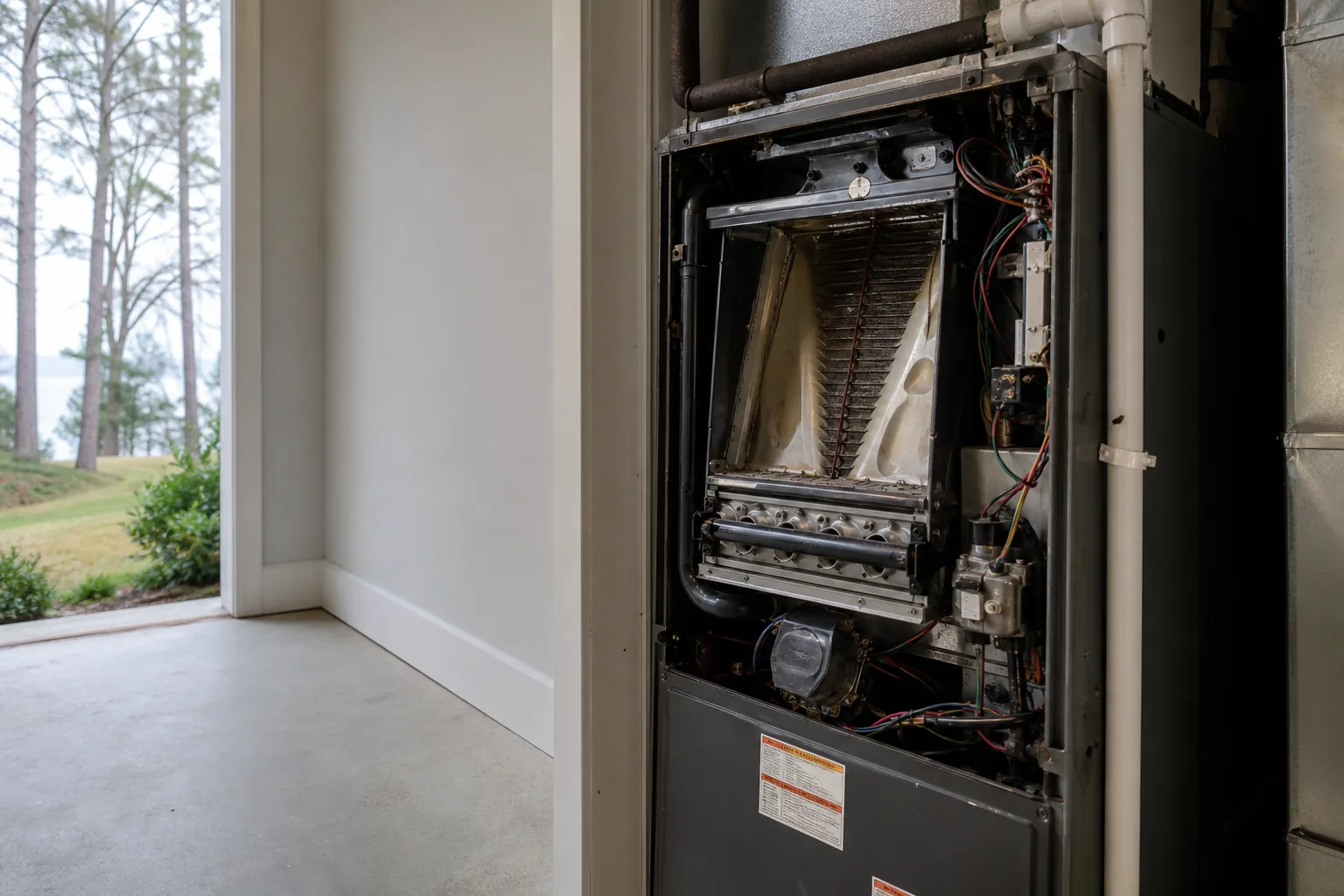 Maintenance
Rural Heating Repair Between Robertsdale and Foley: A Rosinton Guide
When the heat quits in rural Rosinton, AL, the cause depends on what kind of system you have. A guide to reading common heating-repair symptoms before you call.
October 20, 20265 min Emergency
No-Cool Emergencies for Rosinton Homeowners: What to Check First
AC quit on your Rosinton, AL acreage? The four safety checks — breaker, filter, float switch, outdoor unit — to run before you call, plus when it's a real emergency.
July 29, 20266 min
Other services in Rosinton & this service across Baldwin County.
- All HVAC services in Rosinton, AL
- Indoor Air Quality across Baldwin County
- AC Repair in Rosinton
- AC Installation in Rosinton
- AC Maintenance in Rosinton
- Commercial HVAC in Rosinton
- Emergency HVAC in Rosinton
- Heating Repair in Rosinton
- Heat Pump Services in Rosinton
- Ductless Mini-Splits in Rosinton
- Heating Installation in Rosinton
Indoor Air Quality in Rosinton — Schedule Today.
Same-day appointments most weekdays. Cool Club members get prioritized scheduling.