
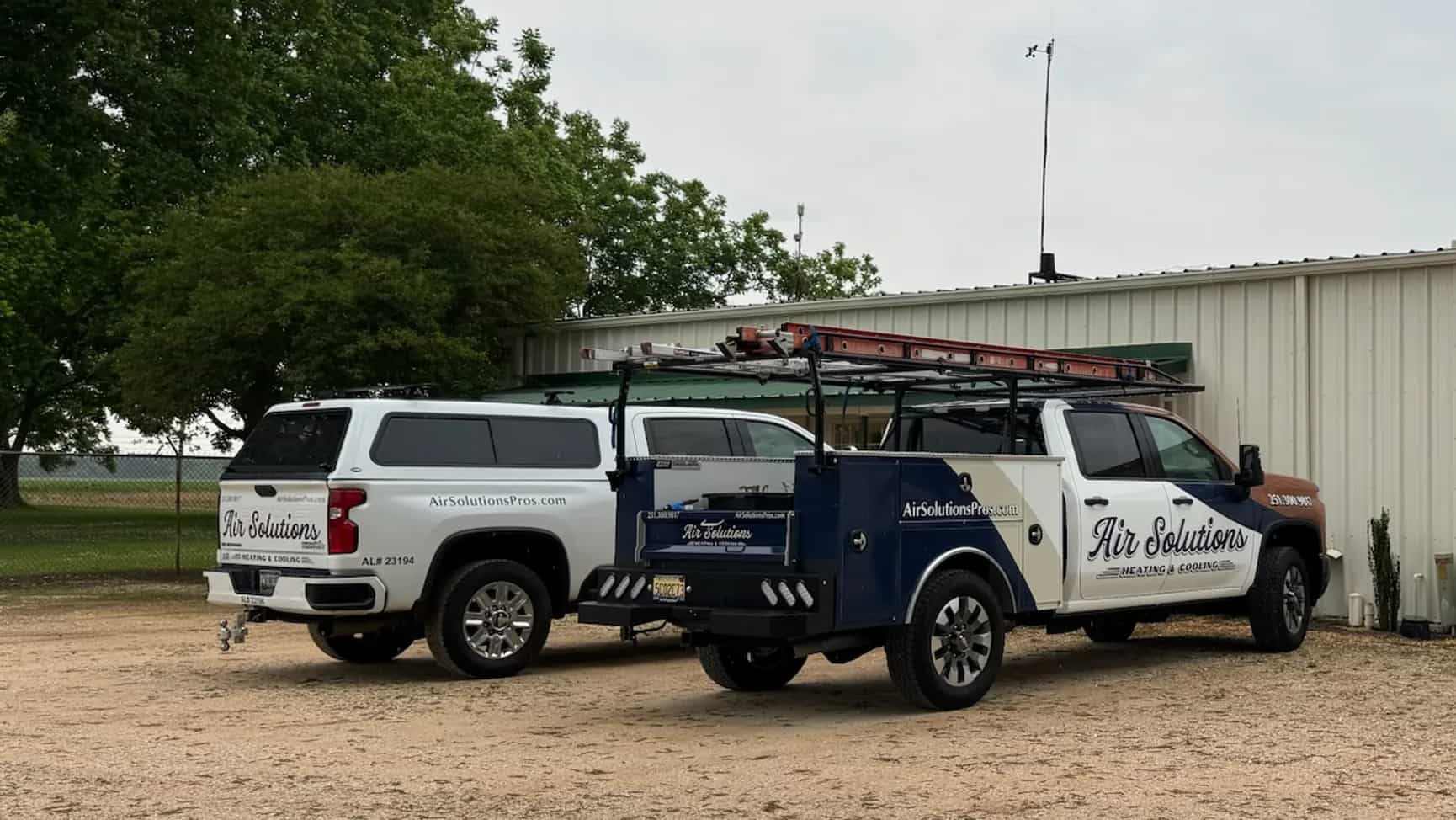
Heating Installation in Rosinton.
Local heating installation in Rosinton, Alabama and surrounding Baldwin County. Heat pumps, gas + electric furnaces, manufactured home heating — sized for Baldwin County winters. Licensed AL#23194. 357+ five-star reviews. Call (251) 300-9817.
Get a Free Estimate
Name and phone is all we need to call you back. Takes ~20 seconds.
357+ five-star reviews · Same-day · 24/7 · Licensed AL#23194
What heating installation looks like in this climate.
Specifying a new heating system for a Rosinton property means designing for a winter that genuinely arrives rather than one that mostly does not. The per-coordinate Open-Meteo ERA5-Land reanalysis resolves the area to a grid cell at about 43 meters elevation in the Highway 90 / CR-64 farming corridor, and the 2023 baseline year logged about 1,106 heating degree days against roughly 3,069 cooling degree days. That winter envelope is heavier than what an Eastern Shore or Gulf-front install gets sized against and lighter than what Bay Minette or Perdido carries — moderate, but real. Average January lows land near 49.1°F, but the design condition for any new heating equipment going onto a Rosinton slab is the small handful of clear-sky overnight mornings each winter where the temperature slides into the 20s and the system spends hours below its programmed balance point. That is the window the auxiliary heat strip on a heat pump, or the burner stage on a furnace, has to actually clear.
What separates the Rosinton install-design conversation from the in-town central-county cells on the heating side is the exposure profile and the radiative-cooling pattern. No Mobile Bay thermal mass to soften the overnight low, no subdivision tree canopy at the density a Daphne or Fairhope neighborhood provides, and most outdoor pads on Rosinton properties sit on open acreage along the Highway 90 frontage, the County Road 64 area, or the agricultural land between them. Clear-sky nights drop a few extra degrees by sunrise against the regional average. FEMA classifies the town-center coordinate as Zone X (minimal flood hazard), so outdoor-pad placement decisions stay on equipment-protection grounds rather than flood-elevation hardware. One caveat worth saying plainly at the top of any install consultation: Rosinton is unincorporated and the U.S. Census does not publish a place-level tabulation for the community, so anyone pitching a 'typical Rosinton heating-install vintage' or a 'median-home-age replacement cohort' is reaching for a statistic that does not exist.
Heating Installation in Rosinton — the questions that come up.
- Our Rosinton property is on rural acreage with no natural-gas main at the meter. For a new heating system, does a propane furnace or an all-electric heat pump make more sense?
- It pivots on whether your address already keeps a propane tank and on how the operating-cost math runs at your specific usage tier. Riviera Utilities operates natural-gas distribution along the Highway 90 frontage in Rosinton, but the main drops off quickly outside that corridor — most rural CR-64 properties and back-acreage homes have no natural-gas service available at the meter and will not in the foreseeable future. The realistic burner-side fuel on those addresses is on-site propane (LP). For a home that already runs LP for kitchen, water-heater, or fireplace service with the tank in the ground and current delivery pricing locked in, a propane furnace paired with a heat pump in a dual-fuel configuration is a sensible specification — the heat pump handles the warmer winter daytime hours and the furnace takes over below the programmed balance point. For a home starting with no tank, an inverter-driven heat pump with the auxiliary strip sized to the actual heat-loss number is usually the cleaner answer on the central-Baldwin heating envelope (about 1,106 heating degree days a year). We quote both configurations side-by-side against your prior-year electric bills at the consultation rather than steering you toward one before the numbers are visible.
- We have a detached shop building on our Rosinton property that runs an old propane heater. Should that be on the same install as our main-house system?
- Treat it as a planning question to raise at the consultation rather than a default in either direction. The answer turns on three threads. First, the outbuilding's actual heating load — a small finished shop, kennel, or guest cottage carries a different load than an open uninsulated barn with a workbench corner the owner wants warm, and the right equipment sizing differs by an order of magnitude between them. Second, the existing infrastructure — whether the outbuilding has its own electrical sub-panel, whether it has its own LP tank or shares one with the main house, and whether the gas plumbing on the outbuilding side is current. Third, your operational use pattern — a shop used a few hours a week with a homeowner present is a different specification than a guest cottage occupied through the winter. Reasonable answers run the full range: bringing the outbuilding onto a small dedicated mini-split (efficient, independent thermostat, no shared-equipment risk), keeping the existing propane heater in place and replacing it on its own cycle, or extending the main-house ductwork only when the geometry actually supports it. We walk the property at the consultation and quote the options with the operating-cost trade-offs visible rather than defaulting to whichever has the bigger ticket.
- How big does the auxiliary heat strip need to be on a heat-pump install in Rosinton, given the Census doesn't publish a typical regional house size to anchor against?
- The regional average house size is the wrong reference for strip sizing even when it is published, so the missing Rosinton Census data is not the limiting factor here. What matters is the specific heat-loss number for your house — the result of the Manual J calculation that takes your actual envelope (square footage, insulation values, window area and U-factor, air infiltration rate, exposure orientation) and your design-day outdoor condition together. For a typical central-Rosinton home the design condition is the small handful of clear-sky overnight mornings each winter where the temperature slides into the 20s, and the strip has to deliver the supplemental capacity the heat pump cannot cover at that condition. On a mid-sized property the strip usually lands somewhere between 10 and 20 kW staged on its own contactor with appropriately sized breaker and conductor — but the specific number comes from the Manual J for your house, not from a regional average. We run that calculation at the consultation and document the result alongside the balance-point thermostat programming at commissioning. Skipping that calculation is how a homeowner ends up with a February electric bill flagging a strip running far longer than it should have.
- Our house was built in the eighties on rural acreage off County Road 64 and the ductwork runs through the crawl space. Will a modern variable-speed system work with what we have, or does the ductwork need to be redone first?
- Often it can work, but a real measurement comes before the equipment quote rather than after. The first thing we do at the consultation is measure static pressure across the existing air handler — the number tells us whether the existing return path and supply trunks can carry the airflow a modern variable-speed condenser needs without choking the blower or driving noise and short-cycling. On rural-acreage homes built in the seventies through nineties, the return is often sized for an older lower-CFM blower and is the first thing that has to change; an undersized return is the single most common ductwork issue we find. Supply trunks through an unconditioned crawl space frequently need sealing at joints where decades of vibration have pulled connections open, and the original insulation has often compressed flat enough to matter on the heating-side delivery. We quote the duct remediation and the equipment swap as line items on the same project so the scope is visible rather than discovered mid-install. Some Rosinton projects are equipment-only; others are equipment plus a half-day of ductwork work; the measurement at consultation determines which yours is.
- Air Solutions is 30 minutes away in Daphne. Does that distance affect how a heating-install project actually unfolds for a Rosinton homeowner?
- Less than the mileage suggests. The OSRM-verified drive from our Daphne shop runs about 22 miles east on Highway 90, roughly 32 minutes in normal traffic — the same corridor we run for Loxley, Robertsdale, and central Foley work most weekdays. A heating-install project typically involves three site visits: a consultation to scope the project and quote the work, a dedicated install day for the equipment swap and commissioning, and a post-install walkthrough to verify operation under load. Each of those folds into a corridor day rather than requiring a one-direction trip from Daphne. The consultation visit lands within a few days of the inquiry, the install day within a couple of weeks of the signed quote depending on equipment availability, and the post-install walkthrough at whatever interval makes sense for the project. The 24-hour line at (251) 300-9817 takes any after-hours question that comes up while the new system is going through its first weeks of operation, with overtime rates disclosed on the dispatch call before any truck commits.
- Heat pump vs. gas furnace — which makes sense in Baldwin County?
- For most homes, heat pumps win. Baldwin County is Climate Zone 2A: a properly-sized heat pump runs efficiently in our winter conditions, delivers 2-3 units of heat per unit of electricity consumed, and pulls double duty as the air conditioner all summer. Gas still pencils when natural gas is already at the meter and the home has a heavier-than-typical heating load — common for older inland houses with poor insulation. If you don't already have gas service, the cost of running a new line plus a gas furnace plus a separate AC almost always exceeds the cost of a single high-efficiency heat pump installation.
- What size heating system do I need for my home?
- Right-sized — not bigger. Baldwin County's mild winters mean an oversized heating system short-cycles, wastes electricity, and wears out faster. Air Solutions runs a Manual J load calculation that accounts for square footage, insulation quality, window orientation, ceiling height, ductwork condition, and the actual design heating temperature for your zip code. The result is usually smaller than the system being replaced — and cheaper to operate. Oversizing is the most common mistake we see on heating installs in Baldwin County, and it shows up as humidity complaints in summer, not warmth in winter.
What Rosinton customers can claim.
- Confirming which electric utility actually serves a specific Rosinton address is the first step before any heating-install rebate path enters the conversation. The 36567 ZIP is shared with the Robertsdale postal footprint, and the service territory line between Baldwin EMC and Riviera Utilities crosses the community without following a clean east-west boundary. The masthead of the most recent electric bill is the cleanest confirmation — the two cooperatives maintain separate residential energy-efficiency program menus with their own qualifying-equipment tiers and their own annual paperwork cycles, and an application filed against the wrong provider does not carry over.
- Natural-gas distribution from Riviera Utilities reaches Rosinton addresses along the Highway 90 frontage but not the rural-acreage majority along County Road 64 or back across the agricultural land. For new install conversations on rural addresses, the realistic burner-side fuel is on-site propane (LP) rather than piped natural gas, and any specification of a furnace going onto the project quote starts from confirming that an LP tank is either already in place or can be installed and supplied at a delivery rate that pencils against the heat-pump-only alternative. We do not specify a gas furnace into a Rosinton quote on the assumption that gas service will be extended to a parcel where it has not been; we either work with what is at the meter today or we pivot to the all-electric heat-pump configuration that does not depend on burner-side fuel.
- Both Riviera Utilities and Baldwin EMC have at various times maintained residential efficiency-incentive paths for high-efficiency heat-pump replacements. Dollar values and qualifying-equipment tiers shift annually, so we verify the active program against the actual bid date rather than working from a stale number. Where a manufacturer rebate is active on the equipment slated for a Rosinton install, it gets applied directly to the project quote on our end rather than routed through a separate mail-in claim that lands months after the install closes out.
- The federal 25C credit expired December 31, 2025 and does not apply to heating installations placed in service in 2026 or later. We leave the equipment-spec and commissioning records in a format your preparer can work from — ask your tax preparer if a 2025 qualifying install applies to your return.
- Cool Club membership covers the bi-annual tune-up cadence that protects a fresh Rosinton heating install through its first several winters: a fall heating-system tune-up before the first hard cold front to verify the reverse-cycle hardware, the auxiliary strip continuity, and the balance-point programming on a heat pump (or the burner-side ignition sequence, flame sensor, and gas-valve safety lockout on a furnace), plus a spring AC tune-up to catch cooling-side issues before the long humid season puts hours on the equipment. The published benefit reads 15% off all AC repairs and 5% off new systems, with no long-term contract. On equipment we installed and commissioned ourselves, the documented service record the membership produces is also useful for any manufacturer-warranty conversation years later.
Cold-weather events and storm history that shape heating-install specifications on rural Rosinton acreage.
- Jan 2024 — Multi-night sub-freezing stretch: Three consecutive nights below freezing with daytime highs barely above 40°F surfaced every undersized auxiliary heat strip, every dual-fuel configuration where the changeover programming missed the swap, and every aging furnace that could not keep up with sustained call for heat across the Highway 90 corridor and the surrounding agricultural acreage. For any new install going onto a Rosinton property today, the lesson lands on the specification: heating-side load calculated against the actual cold-soak hours the climate produces (not estimated from cooling load alone), auxiliary strip sized and wired to clear the design condition, balance-point thermostat programming documented at commissioning so the strip only engages when the compressor side cannot keep up. A meaningful share of the current Rosinton heating-install backlog traces back to systems that did not survive that stretch.
- Jan 2018 — Hard freeze, overnight low near 20°F: Rare sustained sub-freezing event for central Baldwin, with overnight lows dropping into the low 20s across the corridor. The install-side legacy is the cohort of Rosinton heat pumps and dual-fuel systems installed between 2018 and 2020 to replace equipment the freeze took out — those systems are now in years five through seven of service and are due for the maintenance discipline that catches the next round of failures before the next cold snap exposes them. The same cold-snap pattern repeats every five to seven years, and the install decisions made today are the cheap moment to size and commission properly for the next one.
- Sep 2020 — Hurricane Sally — central-county grid stress: Sally made landfall as a Category 2 west of the Baldwin coast and tracked inland through the central county. Rosinton sat well outside any direct surge zone — FEMA classifies the town-center coordinate as Zone X — but the inland power grid cycled hard through the multi-day restoration window, and outdoor heat-pump condensers along the Highway 90 corridor and rural acreage absorbed voltage spikes that surfaced as latent damage on the equipment over the following months. The install-side takeaway that carries into every new Rosinton quote: surge-rated electrical accessories at the disconnect, fully weatherproof disconnect cabinets specified to current code, and outdoor-pad locations chosen with the next storm's debris path in mind rather than the existing pad's location as default.
- Dec 2022 — Pre-Christmas Arctic blast: A short but sharp Arctic outbreak dropped temperatures into the 20s for two consecutive overnight periods just before the Christmas weekend, catching equipment that had not been exercised in heating mode through the warmer fall. On the install side the event drove a quieter but persistent replacement wave through the first half of 2023 for homeowners who decided not to ride out another close call on aging equipment. The lesson worth carrying into a new Rosinton install is straightforward: the fall heating-system tune-up before the first hard cold front is the moment to verify the reverse-cycle hardware actually works, the auxiliary strip actually engages, and the dual-fuel changeover (where applicable) actually swaps cleanly. New installs leaving the Rosinton commissioning visit get those items documented in the homeowner's records.
Every Rosinton neighborhood, every zip.
Heating-installation coverage for Rosinton runs out of the Daphne shop and spans the single 36567 ZIP shared with the Robertsdale postal footprint, reaching every part of the unincorporated community the catalog lists: the Highway 90 corridor running east-west, the County Road 64 stretch threading north and south, and the rural Rosinton agricultural land spread between them. The road run from the shop measures 22.3 miles on OSRM-verified routing and clocks at about 32 minutes door-to-door under normal traffic — we plan against 30 minutes for honest scheduling. The corridor geometry is what makes the install rhythm practical: the consultation visit, the dedicated install day for the equipment swap and commissioning, and the post-install walkthrough each fold into a corridor day already running through Loxley to the north or down toward Foley to the south rather than requiring three dedicated solo trips. No separate rural trip fee applies — Rosinton sits inside the same flat coverage band as the rest of central Baldwin.
Brand-neutral on the recommendation, the way the WP install page reads: Carrier, Trane, Lennox, Goodman, Rheem, York, Bryant, and Amana are the families that show up on Rosinton install quotes, and we are not an authorized dealer for any single manufacturer, which means our recommendation is based on what fits your home and budget, not on a dealer incentive. Every installation comes with the manufacturer's warranty on parts and equipment, plus our own workmanship warranty on the installation itself — workmanship coverage that applies to whatever portion of the project our crew installed, from the equipment swap through the commissioning paperwork. Business-hours scheduling gives the dispatcher the most room to land your consultation and install day inside a workable window; the 24-hour number at (251) 300-9817 takes the after-hours call as well, with overtime rates disclosed on the dispatch call before any truck rolls east on Highway 90. For homeowners weighing the bi-annual maintenance cadence on the freshly installed system, Cool Club covers two professional visits a year — a comprehensive AC tune-up in spring and a heating-system tune-up in fall — plus priority scheduling during peak season, plus the published member discount of 15% off all AC repairs and 5% off new systems, with no long-term contract.
- the Highway 90 corridor
- rural Rosinton agricultural land
- the County Road 64 area
What Rosinton homeowners say after a Heating Installation call.
Hand-picked GBP reviews for this cell pending. Wave C selects 1-3 reviews from the existing pool, ensuring no review appears on more than two cells per the master-plan uniqueness rule.
Heating Installation Coverage Map — Rosinton, Alabama
Centered near Rosinton for orientation. Air Solutions Heating & Cooling provides heating installation throughout every Rosinton neighborhood and zip code, plus the surrounding Baldwin County area. Same crew, same number — we travel the whole county.
357+ Five-Star Reviews. And Counting.
“Showed up on time, looked and acted professional, found and corrected the problem very quickly. Will recommend these guys.”
“As always, my experience was wonderful. Jessie does his job confidently and always explains the why and what of my service call.”
“Quality locally owned company”
Schedule Heating Installation in Rosinton.
Heat pumps, gas + electric furnaces, manufactured home heating — sized for Baldwin County winters. Same-day appointments most weekdays in Rosinton and surrounding Baldwin County. Tell us when works for you — we'll confirm by phone during weekday office hours (8 AM-4 PM).
Need someone right now? Call (251) 300-9817 — our 24/7 emergency line is answered live when we can and returned quickly when we can't.
Heating Installation Near Rosinton.
Right at the Rosinton city limit? We service the surrounding Baldwin County communities on the same routes — same crew, same response times.
Related HVAC Guides.
Long-form articles about heating installation and Baldwin County HVAC, with practical advice from our team.
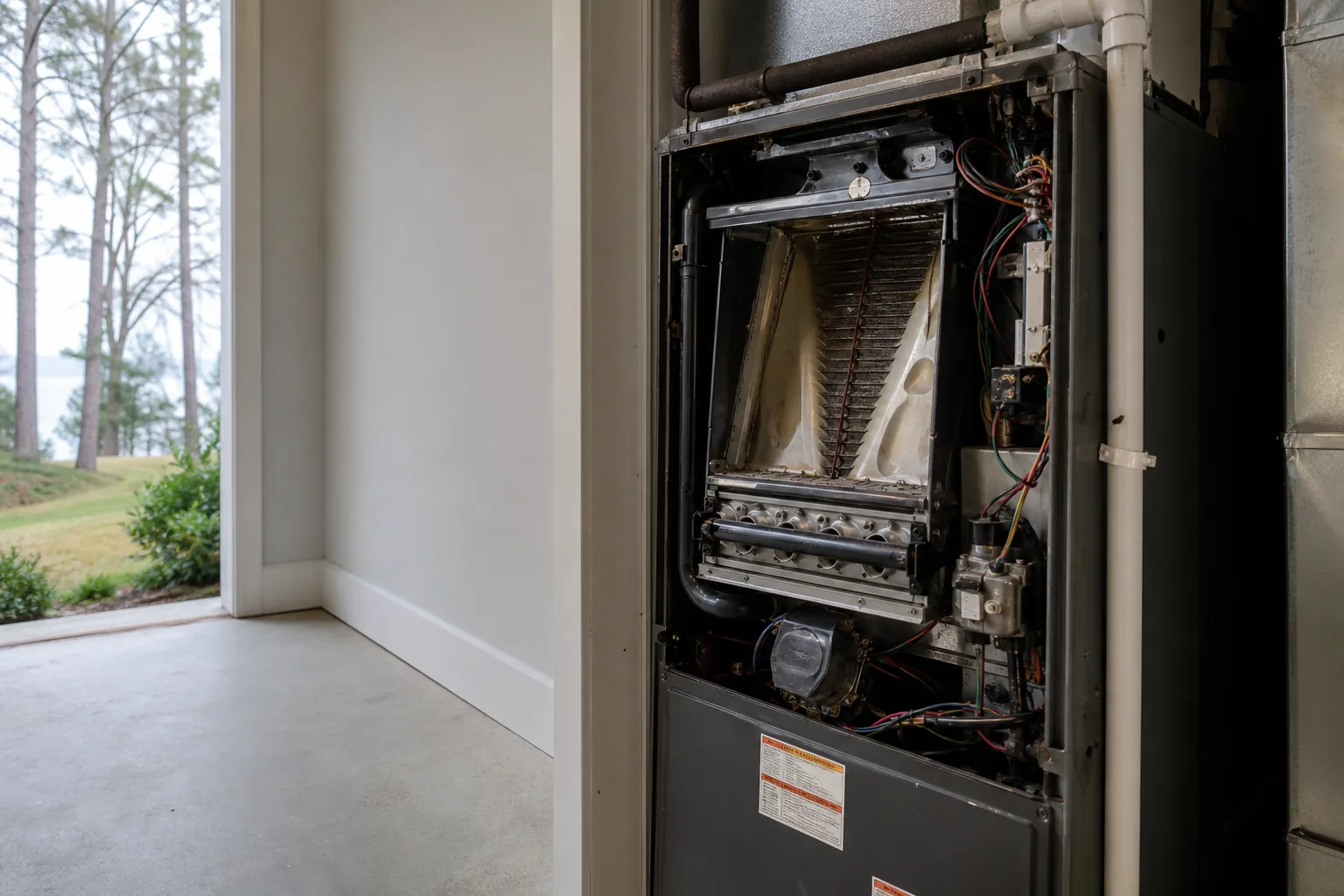 Maintenance
Rural Heating Repair Between Robertsdale and Foley: A Rosinton Guide
When the heat quits in rural Rosinton, AL, the cause depends on what kind of system you have. A guide to reading common heating-repair symptoms before you call.
October 20, 20265 min Emergency
No-Cool Emergencies for Rosinton Homeowners: What to Check First
AC quit on your Rosinton, AL acreage? The four safety checks — breaker, filter, float switch, outdoor unit — to run before you call, plus when it's a real emergency.
July 29, 20266 min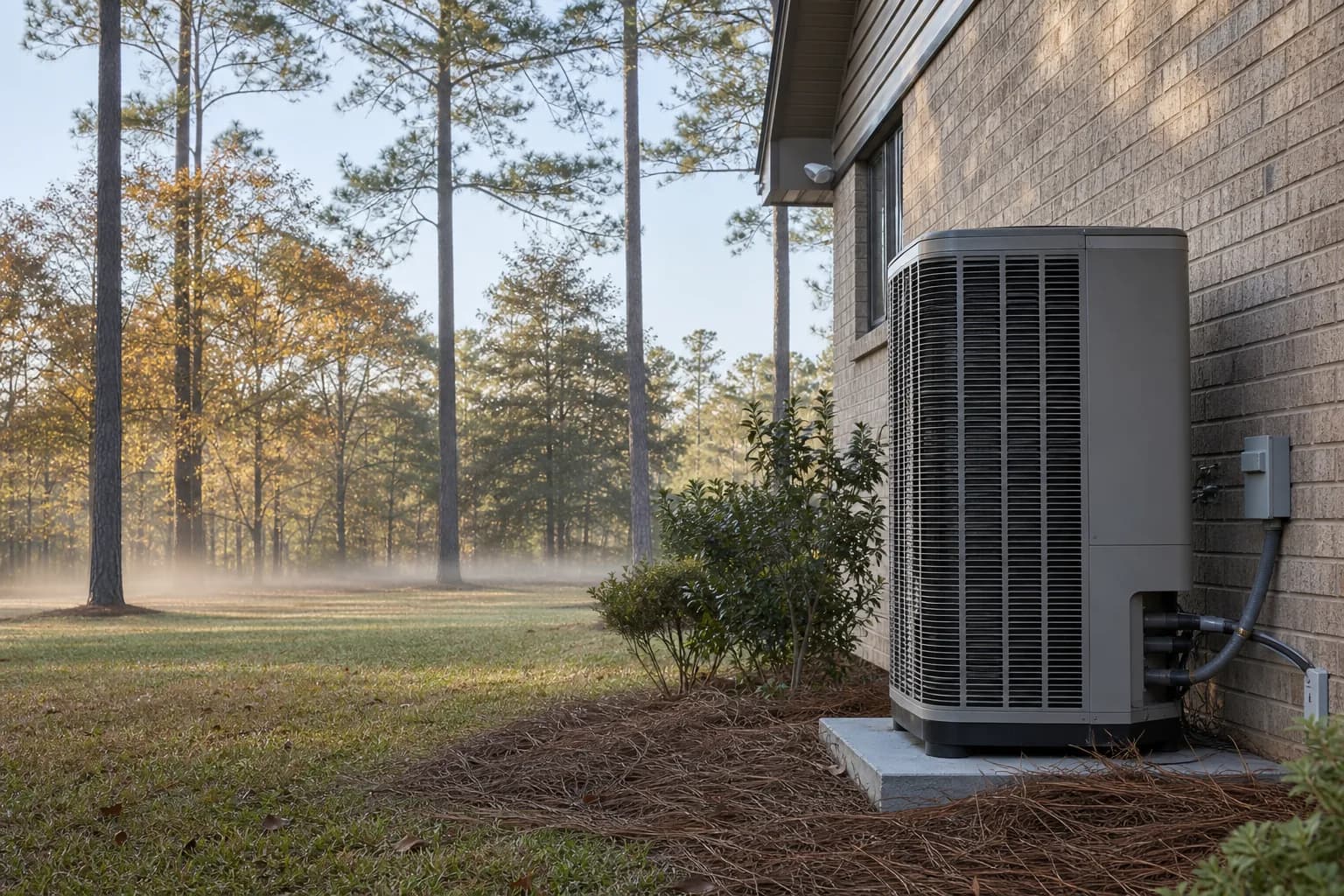 Buyer Guides
Cold-Climate Heat Pump Models for Robertsdale: 2026 Buyer's Picks
Cold-climate heat pump options for Robertsdale, AL — when you actually need them, recommended models, and 2026 pricing.
October 7, 20264 min
Other services in Rosinton & this service across Baldwin County.
- All HVAC services in Rosinton, AL
- Heating Installation across Baldwin County
- AC Repair in Rosinton
- AC Installation in Rosinton
- AC Maintenance in Rosinton
- Commercial HVAC in Rosinton
- Emergency HVAC in Rosinton
- Heating Repair in Rosinton
- Heat Pump Services in Rosinton
- Indoor Air Quality in Rosinton
- Ductless Mini-Splits in Rosinton
Heating Installation in Rosinton — Schedule Today.
Same-day appointments most weekdays. Cool Club members get prioritized scheduling.