
Section 179 and Your Daphne Storefront's HVAC: A Plain-English 2026 Walkthrough
How Daphne, AL retail and office owners can think about the Section 179 deduction when replacing commercial HVAC — qualifying, timing, and the questions for your CPA.

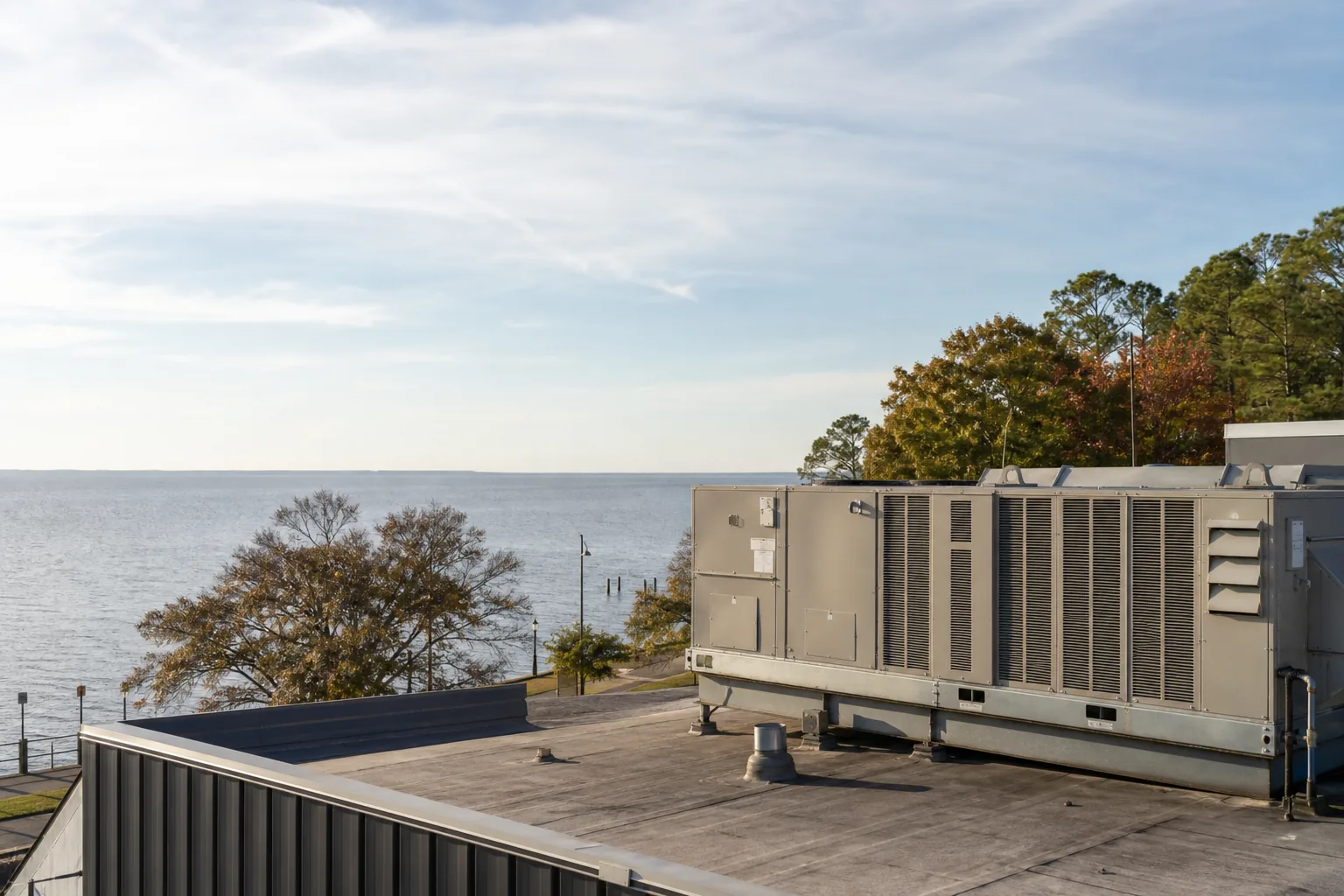
If you run a shop, a restaurant, or an office near Historic Malbis or along Daphne's US-98 corridor, your commercial HVAC is doing quiet, expensive work all day long. When the day comes to replace it, there is a corner of the tax code worth understanding before you sign anything. Section 179 can let a qualifying business write off the cost of equipment in the same year it goes into service, instead of spreading that write-off thinly across decades of depreciation. For an established Daphne storefront on the Gulf Coast, that timing difference can meaningfully change what a replacement actually costs you after taxes.
I want to be upfront about one thing right away: I install HVAC, I am not your tax preparer. The specific limits, caps, and percentages tied to Section 179 get adjusted by Congress and the IRS, and they shift from year to year. So rather than print numbers that may be stale by the time you read this, I am going to walk through how the deduction behaves and exactly what to confirm with your CPA. The dollar figures are their department; the equipment is mine.
The core idea, without the jargon
Normally, when a business buys a long-lived asset, the tax code says you cannot deduct it all at once. You spread the deduction out over the asset's expected life, and commercial building improvements have historically been stretched across a very long schedule. That is fine in theory, but it means the cash benefit of a big purchase trickles back to you slowly.
Section 179 exists to short-circuit that for qualifying purchases. Instead of a sliver each year, an eligible business may elect to deduct the full cost in the year the equipment is placed in service. A tax law change back in 2017 brought commercial HVAC into the categories this can apply to. The headline benefit is simple: the relief lands the same year you spend the money rather than dribbling in over a long horizon.
Does a Daphne retail or office setup qualify?
Daphne's commercial base leans heavily toward retail, dining, and professional offices, and that is generally favorable territory. The equipment most of these businesses run, rooftop package units on a strip retail building, split systems serving an office suite, the controls and thermostats that go with them, tends to fall into the kinds of business-use property Section 179 was written for.
The cleaner your situation, the easier the claim. A standalone retail space or an office you operate your business out of is straightforward. Where it gets more involved is mixed-use property, say a building with a shop downstairs and an apartment up top, because the residential slice plays by different rules than the commercial slice. Equipment you lease rather than buy can also change the picture. None of that disqualifies you automatically; it just means the allocation has to be done carefully and documented, which is your CPA's wheelhouse.
Why the "placed in service" date rules everything
Here is the detail that trips people up. Section 179 does not care when you ordered the equipment or when you paid the deposit. It cares about when the system is installed, running, and ready to do its job, the date it is placed in service. Equipment sitting in a crate in your stockroom on December 31 has not been placed in service. The same equipment installed and operating by that date generally has.
For a Daphne business running on a normal calendar tax year, that creates a real reason to think about the back half of the year. If you already know a system is on its last legs and you have the income to make the deduction useful, finishing the install before year-end can be the difference between claiming it this year and waiting a full year for the benefit. But that only works if the project actually completes in time, and December is when the whole commercial trade gets jammed. The realistic move is to decide in the fall, contract and order in October, and aim the installation at November so a final inspection is not racing the clock on New Year's Eve.
What this can mean for cash flow
Think of it less as "free money" and more as a timing lever on a cost you were going to bear anyway. When the deduction lands in the same year as the purchase, it reduces the taxable income your business reports for that year, which softens the cash sting of the equipment right when you feel it. For a Daphne storefront where margins are real and every quarter matters, pulling that relief forward instead of waiting can ease the pressure of a large unplanned capital outlay.
There is a catch your CPA will raise: the deduction is generally tied to your business income for the year. It is not designed to manufacture a loss. In a lean year, the full benefit may not all be usable at once, though there are mechanisms to carry unused amounts forward. This is precisely why the conversation with a tax professional comes before the install, not after.
The questions to bring to your CPA
You do not need to become a tax expert. You need to ask the right handful of questions and let your preparer run the numbers for your actual situation.
What are this year's limits and thresholds
Ask them to confirm the current-year deduction cap, phase-out point, and any bonus depreciation that applies. These change yearly, so get the live numbers rather than relying on anything you read online.Is my projected income enough to use it
Because the deduction is bounded by business income, your preparer can tell you whether claiming it fully this year makes sense or whether spreading it helps more.Section 179 or a different approach
There may be situations, a low-income year, an expected jump in your future tax rate, where another depreciation path serves you better. Let them weigh it.How does Alabama treat it
State conformity has its own wrinkles. Ask how the federal election flows through to your Alabama return.
What we hand you on the equipment side
My job is to make the documentation clean enough that your CPA never has to chase me for anything. For a Daphne commercial replacement, that means an itemized invoice that breaks out the HVAC scope plainly, the equipment specifications, and clear records of when the system was installed and operational. If a question ever comes up, the paperwork should answer it. Beyond Section 179, there are also separate energy-efficiency provisions for commercial buildings that your preparer may be able to layer in, and they can tell you whether your project fits. One caution worth flagging if you also own a home: the residential side has its own rebates and incentives picture for Baldwin County, and the federal 25C residential energy credit expired December 31, 2025 — so don't assume a homeowner credit you may have heard about still applies. Your CPA confirms what's live.
A note on Daphne's older commercial stock
A fair number of buildings along the established US-98 stretches of Daphne, from the older Eastern Shore commercial blocks near Mobile Bay outward, are getting up in years, and their original HVAC often reaches the point where a patch-and-pray approach stops making sense. When the math finally tips from repair toward replacement on a coastal Alabama system, that is exactly the scenario where understanding Section 179 ahead of time pays off, because you can line up the install timing with your tax year deliberately rather than reacting after a mid-summer failure forces your hand. It also helps to know roughly what replacement runs in Baldwin County and whether the job needs a county permit before you set a date.
Talk commercial HVAC in Daphne
Air Solutions Heating & Cooling is a family-run company founded in Daphne in July 2023, licensed in Alabama as AL#23194, with an A rating from the BBB since June 2025. We handle commercial replacements across Daphne and the Eastern Shore.
- Request a consultation — walk the building with us
- Call (251) 300-9817 — or email office@airsolutionspros.com, 1410 US-98 Suite N, Daphne
- Commercial HVAC services — full overview
This article is general information, not tax advice. Confirm every figure and election with your CPA or tax preparer.
Related resources
- Commercial HVAC services — what we install
- Every service we run in Daphne — full area overview
- Why is my summer power bill so high? — reading a commercial bill and its demand charge