
Robertsdale Commercial HVAC Maintenance Agreements: A 2026 Guide for Hub City Businesses
A practical look at commercial HVAC maintenance agreements for Robertsdale warehouses, shops, and ag-commercial buildings — scope, cadence, and quoting.

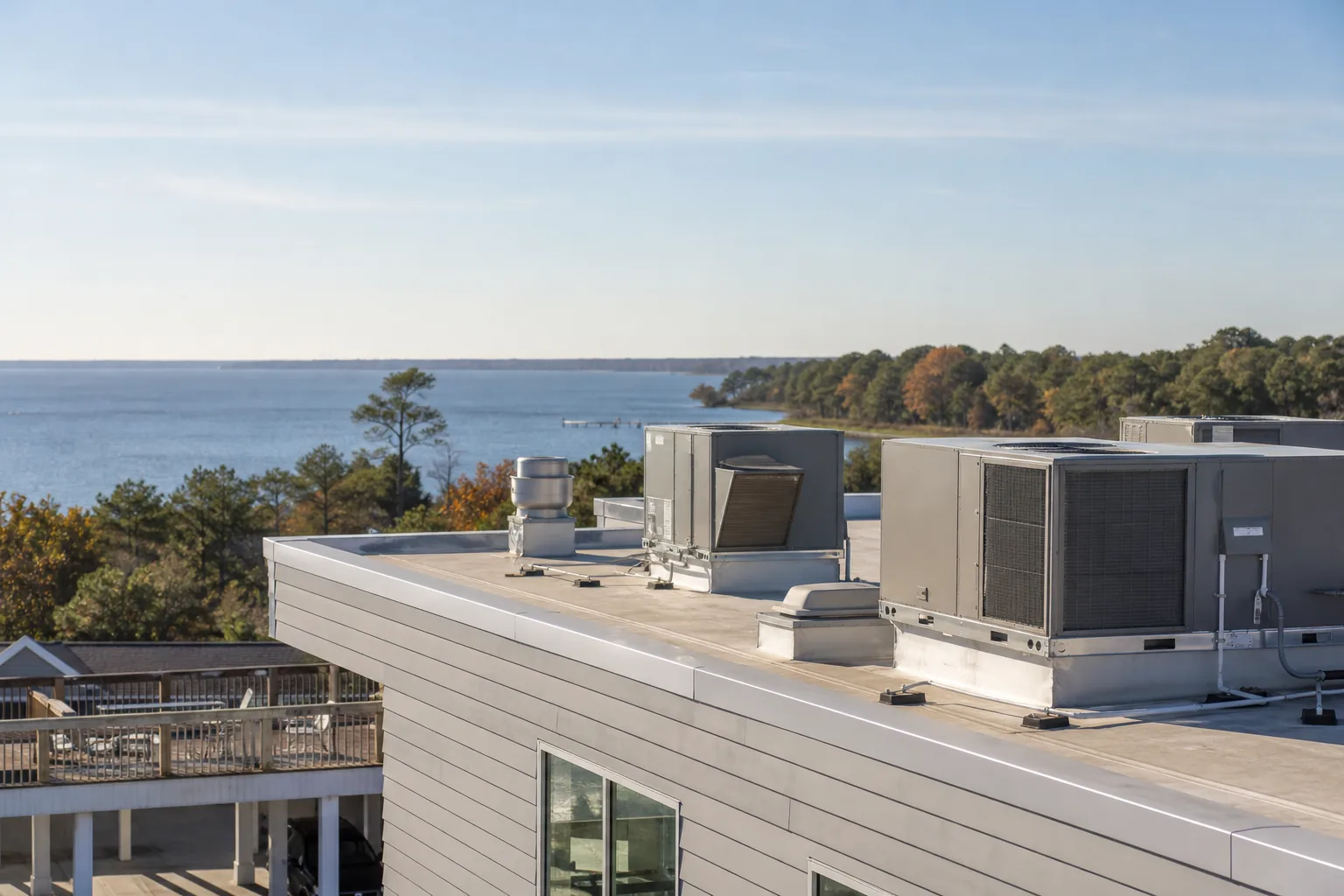
Robertsdale earned the "Hub City" name honestly — it sits at the center of Baldwin County's farm country, where the rail line and the highways cross and the buildings lean toward work rather than scenery. The commercial HVAC we maintain here reflects that: distribution and storage buildings with rooftop units running long hours, equipment and ag-supply shops with a conditioned showroom up front and a warehouse behind, fabrication and light-industrial spaces, and the offices that ride along with all of it. The cooling loads are bigger and the dust is heavier than you'd find on a quiet retail strip, and that changes what a maintenance agreement is worth.
This is a working guide to commercial maintenance agreements for a Robertsdale operation — what scope means, how often a unit should be touched, and how we arrive at a quote. We've left the price tiers off because, in commercial work, a number with no equipment behind it is just a guess.
The problem an agreement actually solves
Out here the failure mode that hurts is not a warm dining room. It is a rooftop unit on a packing line or a storage building that quits in August and takes product, throughput, or a whole shift's comfort down with it. When equipment runs hard in a dusty environment with nobody assigned to watch it, three things creep up: airflow chokes off as coils and filters load with field dust, electrical components cook because they are working against that restriction, and refrigerant problems go unnoticed until capacity has already fallen off a cliff.
A maintenance agreement is the standing arrangement that gets ahead of all three. You trade the scramble of an unplanned breakdown for a calendar — equipment looked at before the season that punishes it, small failures caught early, and a documented history that makes the next decision easier.
What scope means on this kind of building
"Scope" is the word that does the heavy lifting in a commercial agreement, and it is where vague proposals fall apart. On a Robertsdale building with one or more rooftop or split systems, a real maintenance scope on each visit covers:
- Airflow first. Filters pulled and replaced, outdoor and evaporator coils cleaned of the dust this area throws at them, condensate drains flushed clear. In a warehouse or shop this is the single biggest driver of whether the unit survives the summer.
- Belts and bearings. A lot of larger commercial blowers are belt-driven. Belt tension and condition get checked and the belt replaced when it's marginal, with bearings and the motor inspected for wear.
- The electrical package. Capacitors and contactors checked, motor amperage read against spec, terminals tightened — vibration on a rooftop unit loosens connections, and a loose connection is how a cheap part becomes a burned-out compressor.
- Refrigerant and capacity. Pressures and temperatures taken to confirm the system is moving the heat it was sized to move, with leaks caught early instead of after the charge is gone.
- Controls, safeties, and a written record. Thermostat and economizer operation verified where present, safety cutoffs tested, and a report left behind so the file tells a story over time.
That last piece matters more in commercial than people expect. When you have several units of different ages on one roof, the written history is what tells you which one is trending toward replacement before it strands you — the same repair-versus-replace judgment we weigh on coastal Alabama systems, scaled up to a packing line.
Setting cadence to the load
The right number of visits follows the work the equipment does, not a one-size rule. A climate-controlled office suite is a gentler duty cycle and often does fine on two visits a year. A warehouse rooftop unit running long hours through a dusty harvest stretch may need filters and coils touched more often than that, because the environment loads them so fast. A space that swings between conditioned and open — showroom up front, big roll-up doors in back — has its own rhythm, and we match it. The agreement should say plainly how many visits, in which months, on which units.
How we quote a Robertsdale agreement
Here is the honest part about pricing. The right figure for your building depends on how many units you run, the tonnage and type of each, how brutal the duty cycle and the dust are, and how many visits the cadence calls for. A single split system on a small office and a row of rooftop units over a distribution floor are not remotely the same job, so we don't hand out a tier sheet that would only end up overcharging the smaller account to make the chart look tidy. We walk the property, count and note every unit, and quote against that.
Structurally, a leaner agreement covers the scheduled visits and routine consumables and gives current customers a standing discount on between-visit repairs; a fuller one adds frequency and a broader set of small parts. Which one fits a working building is a question the walkthrough answers, not a table.
Maintenance agreement versus full repair coverage
It's worth knowing the two are different animals. A maintenance agreement buys you the scheduled upkeep plus a discount on repairs when something breaks — the repairs are billed separately at the member rate. A broader repair-inclusive arrangement folds more of the fix-it work into the agreement itself. For most Robertsdale operations with a manageable number of units, the maintenance agreement plus a repair discount is the sensible starting point; the heavier coverage tends to make sense only when uptime is genuinely mission-critical and the equipment count is high. We're glad to lay out both against your actual equipment so you can see which math works for you.
What makes a maintenance agreement different in Robertsdale?
A couple of local realities shape the work. Sitting inland in central Baldwin, the buildings along the Highway 90 corridor and out toward Rosinton, Elsanor, and Gateswood get less of the coastal salt that eats condensers down on the water — but they trade that for agricultural and road dust that loads coils and filters faster than a town building would see, which is the real reason airflow service leads every visit out here. The shops and warehouses near the Baldwin County Fairgrounds area run their equipment hard, and because the commercial accounts are spread across a farming region rather than packed into one downtown, the buildings that sail through summer are the ones that booked their pre-season service early, before everyone's equipment started straining in the same heat wave and the calendar tightened up.
If your operation depends on cooling you can't afford to lose in August, a written maintenance agreement is the quiet piece of infrastructure that keeps a forty-dollar capacitor from becoming a lost shift.
Talk to us about a Robertsdale maintenance agreement
Air Solutions is a family-run company, founded in 2023 and based in Daphne, licensed AL#23194 with a BBB A rating since 2025. We maintain commercial HVAC throughout Baldwin County and scope agreements to the building we're standing in. Emergency HVAC service is available for the times something fails between visits.
- Request a property walkthrough — we count the equipment, then quote
- Call (251) 300-9817 or email office@airsolutionspros.com
- Commercial HVAC services — full overview
Related resources
- Commercial HVAC in Robertsdale — local service page
- All HVAC services in Robertsdale
- Cool Club — our residential maintenance plan