
AC Compressor Hard Starts in Spanish Fort Heat: Diagnosis and Fix
Diagnosing AC hard starts in Spanish Fort, AL — what hard starts indicate, the typical fixes, and why summer heat amplifies the problem.
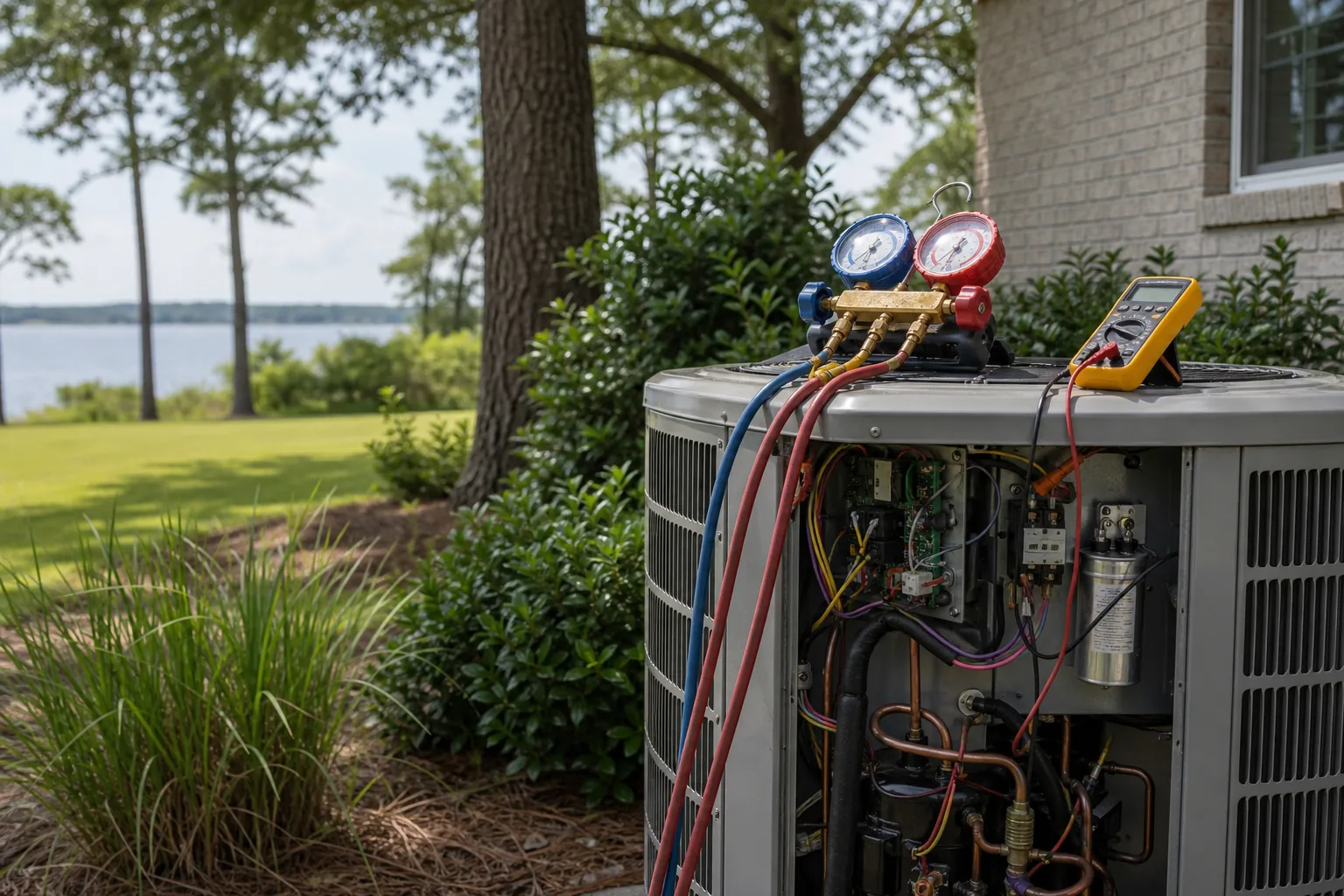
When your Spanish Fort AC cycles on and you hear a loud bang, click, or grinding sound — followed by the system running normally — that's a "hard start." It's the compressor straining to begin operation. On the Eastern Shore, where systems run hard from April through October across neighborhoods like TimberCreek, Stonebridge, and Spanish Fort Estates, this is one of the more common warning signs we get called out for. Hard starts mean expensive trouble is coming if not addressed.
Here's what causes them and what each fix involves.
What a hard start sounds like
Three common patterns:
1. Loud bang or thud at startup. Compressor finally starting after extended attempt. Sometimes accompanied by a brief electrical flicker in the house.
2. Repeated clicking before the unit starts. Contactor cycling, capacitor straining to provide enough current.
3. Initial grinding or scraping that subsides. Bearings or compressor internals taking unusual time to spin up.
All three indicate the compressor needs more starting power than it should. Continuing to operate this way damages the compressor. If you are trying to place the sound, our guide to what those AC noises mean walks through hissing, buzzing, and clicking and which ones are urgent.
Why hard starts happen
Five common causes:
1. Weak capacitor. Most common. The capacitor stores and releases the electrical surge needed to start the compressor. Weak caps can't deliver enough surge; the compressor strains.
2. Aging compressor. Internal wear means the compressor needs more starting energy than it did new. Common in 10+ year systems.
3. Refrigerant problems. Low or high refrigerant changes the load the compressor faces at startup. Both make hard starts worse.
4. Voltage drop at the unit. Long electrical runs, undersized wiring, or grid voltage issues can leave the compressor with insufficient voltage at startup.
5. Hot ambient conditions. Summer heat increases compressor load. Marginal compressors that start fine in spring fail in July's peak.
Why does Spanish Fort summer heat make hard starts worse?
Three factors:
1. Outdoor temperature impact on compressor. Compressors work harder against high outdoor temperatures. Spanish Fort's 92-95°F afternoons — common from the Causeway and Battleship Parkway flats up through the I-10 corridor — push marginal compressors past their ability to start cleanly. Mobile Bay humidity adds to the load the whole system carries.
2. Long runtime fatigue. July systems have been running constantly for 6-8 weeks. Internal components are at their hottest and most worn point of the year.
3. Voltage variability. High summer demand means grid voltage can sag during peak hours. A compressor that starts at 240V may struggle at 230V.
Diagnostic process
A real hard-start diagnostic includes:
1. Capacitor microfarad measurement. Compares actual capacitance to nameplate rating. If 6%+ below spec, replace.
2. Voltage measurement at the disconnect. Verifies adequate voltage during startup attempt.
3. Compressor amp draw at startup. Inrush current measurement. Excessive current means compressor strain.
4. Refrigerant pressure verification. Both low and high pressure can cause hard starts.
5. Visual inspection. Burn marks at terminals, oil leakage at compressor base, signs of past failures.
The diagnostic (the standard rate) tells you which fix is needed.
Fix options
Option 1: Capacitor replacement (the most affordable fix)
- Most common fix
- Same-visit when capacitor is the cause
- Restores starting power immediately
- Bridge to longer-term reliability
Option 2: Hard-start kit (a small add-on)
- Adds a dedicated start capacitor + relay
- Boosts starting torque dramatically
- Useful for aging compressors that need extra help
- Sometimes pushes a 10-year compressor to 12-13 years
Option 3: Refrigerant repair (mid-range, depends on the leak)
- If refrigerant is the underlying cause
- Includes leak search + repair + recharge
- Restores normal compressor load at startup
Option 4: Compressor replacement (the most expensive repair)
- Last resort
- Often the time when full system replacement makes more sense
- Done if compressor is too damaged to continue
We quote the exact figure for whichever option fits before doing the work — just ask for a free estimate.
Why ignoring hard starts costs more
Each hard start damages the compressor:
- Inrush current spikes accelerate winding wear
- Mechanical strain on bearings and connecting rods
- Heat stress on internal components
- Eventual failure
A compressor that should last 12 years with normal starting may fail at 6-8 years if hard-starting throughout its life. Catching the problem at the capacitor stage costs a small fraction of a compressor replacement — easily a 5-10× difference in your favor.
When hard starts indicate "replace, don't repair"
If your Spanish Fort system is showing hard starts AND:
- System is 10+ years old
- Multiple repair issues in past 3 years
- R-22 refrigerant
- Significant utility bill increases
...the math usually favors system replacement over repair. Run the repair-vs-replace calculator before authorizing major compressor work, and read when it's worth fixing an AC in coastal Alabama for how we weigh the call on the Eastern Shore.
Prevention
Three habits that reduce hard-start risk:
1. Annual capacitor testing. Catches degradation before failure. Replacement on schedule (vs emergency) is cheaper and prevents compressor damage.
2. Surge protection at the disconnect. An inexpensive install that reduces voltage events that weaken capacitors and stress compressors.
3. Coil cleaning + refrigerant verification annually. Maintains operating conditions that don't strain the compressor.
For Cool Club members, all of these are included in the bi-annual tune-ups.
What to do today if you hear hard starts
Immediate:
- Note when starts happen (every cycle? Only on hot afternoons?)
- Don't disable the system unless it's clearly failing
- Schedule a diagnostic within the week
Mid-term (next service visit):
- Have capacitor tested and replaced if degraded
- Get hard-start kit if appropriate for your system
- Verify refrigerant and voltage
Long-term:
- Track hard starts over time — frequency tells you compressor health
- Plan replacement window if system is aging
- Cool Club for ongoing prevention
Ready for AC service in Spanish Fort?
Air Solutions Heating & Cooling provides AC diagnostics, capacitor replacement, hard-start kits, and full HVAC service across Spanish Fort and the Eastern Shore. Same-day appointments usually available. Family-run, founded in Daphne, licensed AL#23194.
- Schedule a Diagnostic — pick a time
- Call (251) 300-9817 — same-day or 24/7 emergency
- AC Repair services — full overview
Related resources
- AC Repair in Spanish Fort — city-specific service page
- All HVAC services in Spanish Fort — every service locally
- Why does my AC freeze up in the summer heat? — another heat-season failure mode
- Repair vs Replace Calculator — run the math yourself