
Variable-Speed AC for Summerdale Summers: Math vs Marketing
Variable-speed compressor AC for Summerdale, AL — what it actually does differently, where the value really is, and when single-stage is the right call.

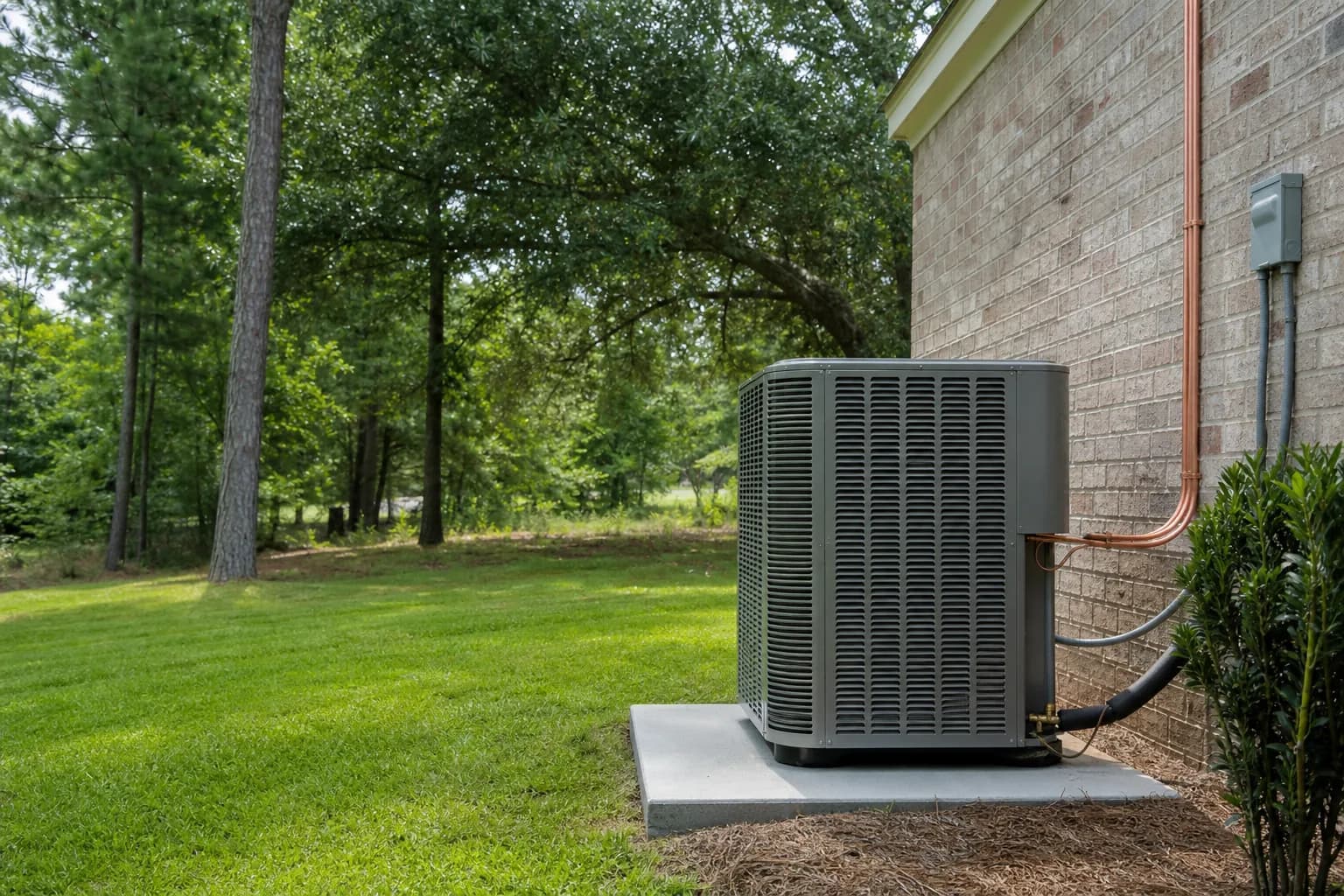
Variable-speed AC compressors get marketed as the obvious upgrade for any new install. They're more expensive, more efficient, and "better" in vague but compelling ways. For Summerdale homeowners considering an install or replacement, the question is: where does the actual value sit, and where is it just marketing?
Here's the honest analysis.
What variable-speed actually does
Conventional single-stage AC compressors run at one speed: full output. They turn on, run at 100% capacity, satisfy the thermostat, turn off. Repeat.
Two-stage compressors have two speeds: roughly 65% and 100%. They run at low speed for most of cooling demand and step up to high only when needed.
Variable-speed (sometimes called "inverter-driven") compressors run at any speed from roughly 25% to 100% in continuous adjustment. They can match output to actual cooling demand at any moment.
In practice, for Summerdale summers:
- Single-stage: runs hard for short cycles, then off
- Two-stage: runs at low speed most of the time, ramps up on hottest hours
- Variable-speed: runs at low speed for hours, modulating continuously
What this means in your house
Three real benefits of variable-speed in Summerdale:
1. Better dehumidification. This is the #1 benefit in our climate. Variable-speed runs longer at part-load, removing far more moisture per cycle. Indoor humidity drops from 60-65% (typical with single-stage) to 45-50% (achievable with variable-speed). Real comfort upgrade.
2. More consistent room-to-room temperatures. Long, low-speed cycles let air balance throughout the house. Single-stage's short bursts leave cold rooms near the thermostat and warm rooms far away.
3. Quieter operation. A variable-speed compressor running at 30% is dramatically quieter than a single-stage at 100%. Important for bedrooms near outdoor units, multi-story homes, and vacation rentals.
Two real benefits that show up in dollars:
4. Lower utility bills. Roughly 15-30% efficiency gain over single-stage, which trims a real slice off the typical Summerdale cooling-season bill year after year.
5. Equipment longevity. Variable-speed equipment runs at lower stress most of the time. Often outlasts single-stage by 3-5 years. Hard to monetize but real.
What it costs
For a typical 3-ton install in Summerdale, the install price steps up with each tier:
- Single-stage 14 SEER2 — the baseline
- Two-stage 16 SEER2 — a moderate step up over single-stage
- Variable-speed 18 SEER2 — a larger premium over single-stage
- Variable-speed 20+ SEER2 (premium) — the top of the range, and a substantial premium over single-stage
The exact figures depend on tonnage (set by a Manual J calc), coil and air-handler matching, electrical and line-set work, and any coastal-grade options — which is why we itemize every tier on the quote instead of quoting a single number. Ask for a free in-home estimate and you'll see the real spread for your home.
Note: the federal 25C tax credit no longer offsets this premium for current installs (see the tax section below) — older guidance that nets it out is out of date.
The breakeven math
On pure utility-savings payback, here's how the tiers stack up:
- Single → two-stage: the smallest premium against a steady annual saving, so it pays back the soonest — comfortably inside the equipment's life.
- Single → variable-speed (basic): a larger premium against a larger annual saving; payback lands roughly around the midpoint of equipment life.
- Single → variable-speed (premium): the biggest premium, and the saving doesn't grow fast enough to match it — payback can stretch beyond the equipment's useful life on dollars alone.
Equipment life is 12-15 years in Summerdale (less coastal exposure than direct Gulf cities helps slightly).
By pure financial payback:
- Two-stage breaks even within equipment life — clear win
- Basic variable-speed breaks even or close — measured win
- Premium variable-speed pays back primarily in non-financial benefits — comfort + longevity
Where variable-speed really wins
The dollar math undersells variable-speed because the comfort/humidity benefits don't show up in utility savings. Strong cases for variable-speed:
1. Households with chronic humidity complaints. Already paying for dehumidification one way or another (standalone unit, comfort loss). Variable-speed AC handles it integrated.
2. Long-stay residences. 10+ years in the home. Comfort benefit accrues throughout.
3. Anyone in the household with respiratory issues. Stable humidity below 50% reduces mold spores, dust mites, and other respiratory triggers.
4. Vacation rentals. Better humidity = better reviews = higher booking rates. Real revenue impact.
5. Multi-zone homes. Variable-speed handles different load conditions across zones better than single-stage.
6. Open-plan homes with lots of glass. Heat-load varies hour-to-hour with sun position; variable-speed adapts.
Where single-stage is the right call
Don't overspend if:
- Tight budget priority. Get coastal-grade equipment first; SEER2 16 single-stage with coastal-grade beats SEER2 20 builder-grade.
- Selling within 5 years. Won't recoup the variable-speed premium in sale price.
- Smaller home (under 1,800 sq ft) with simple layout. Single-stage often handles smaller loads fine.
- Dry secondary residence. If the home isn't lived in continuously, sophistication doesn't pay back.
Should you repair the old system instead of upgrading at all?
Before you spend on any new tier, it's worth pressure-testing whether replacement is even the right move this year. If your current system is under about 12 years old and the problem is a single failed part, a repair often buys you several more seasons — our repair-versus-replace breakdown for coastal Alabama lays out where the line falls. If you are replacing, the size question comes first: getting the tonnage right with a proper load calculation does more for comfort in a Summerdale summer than jumping to a premium compressor on an oversized box. Decide replace-or-repair, then size, then tier — in that order.
Summerdale-specific considerations
Three local factors:
1. Inland humidity is moderate. Summerdale sits along the Hwy 59 corridor between Foley and Loxley, far enough inland that humidity is less brutal than coastal cities. The variable-speed advantage is real but less dramatic than at Gulf Shores or a direct Mobile Bay address. For the full picture on how the coast changes the calculus, see our Eastern Shore home comfort guide to beating Gulf Coast humidity.
2. Salt-air drift is moderate. This far up Hwy 59 from the water, coastal-grade equipment is helpful but not as critical as it is for direct-coast properties. Where you sit in Baldwin County relative to the bay matters, which we break down in how far from Mobile Bay corrosion actually reaches.
3. Agricultural area. Outdoor units across rural Summerdale ag land and the neighborhoods near the Track Family Recreation Center take more pollen and dust loading than urban areas. Variable-speed compressors that run continuously at low speed actually self-clean better than systems that cycle on/off — continuous airflow keeps debris from settling on the coil.
What we recommend by Summerdale household profile
Most Summerdale primary residences: Two-stage 16-18 SEER2 with coastal-grade. Sweet spot.
Long-stay (10+ years) primary residences: Variable-speed 18-20 SEER2. Comfort + utility math justifies.
Vacation rentals: Variable-speed 20+ with smart thermostat humidity setpoint. Reviews and booking rates justify the premium.
Tight budget: Single-stage 16 SEER2 with coastal-grade. Don't sacrifice coastal-grade for higher tier.
Selling soon: Single-stage 14-16 SEER2. Functional and clean for inspection.
A note on the federal 25C credit
The federal 25C Energy Efficient Home Improvement Credit expired December 31, 2025 and does not apply to a 2026-or-later install — so it shouldn't factor into a current Summerdale decision. The only carryover: a qualifying system placed in service on or before December 31, 2025 can still be claimed on the 2025 return filed in 2026 (keep the invoice, AHRI certificate, and manufacturer certification, and confirm with a CPA). What remains worth checking for a current install is utility incentives (Alabama Power, TVA EnergyRight, local co-ops), manufacturer promotions, and 0% financing. General guidance, not tax advice.
Ready for an AC quote in Summerdale?
Air Solutions Heating & Cooling provides Manual-J-based quotes with multiple equipment tiers itemized — single-stage, two-stage, and variable-speed options compared honestly on utility savings and comfort. We'll also flag any current utility rebates or manufacturer promotions you qualify for. Coastal-grade standard.
- Schedule a Quote — free in-home consultation
- Call (251) 300-9817 — same-day quotes
- AC Installation services — full overview
Related resources
- AC Installation in Summerdale — city-specific service page
- All HVAC services in Summerdale — every service locally
- Replacing your AC on the Eastern Shore: the complete 2026 guide — the full replacement walkthrough
- Are heat pumps worth it here? — the other big install decision
- HVAC Glossary — definitions for variable-speed, SEER2, BTU
- HVAC Financing — payment options + rates