
Heater Smells Like Something Burning in Daphne: Normal or Call?
That first burning whiff from your Daphne heater is usually harmless dust, but a few odors mean shut it off now. Here is how a homeowner tells which is which.

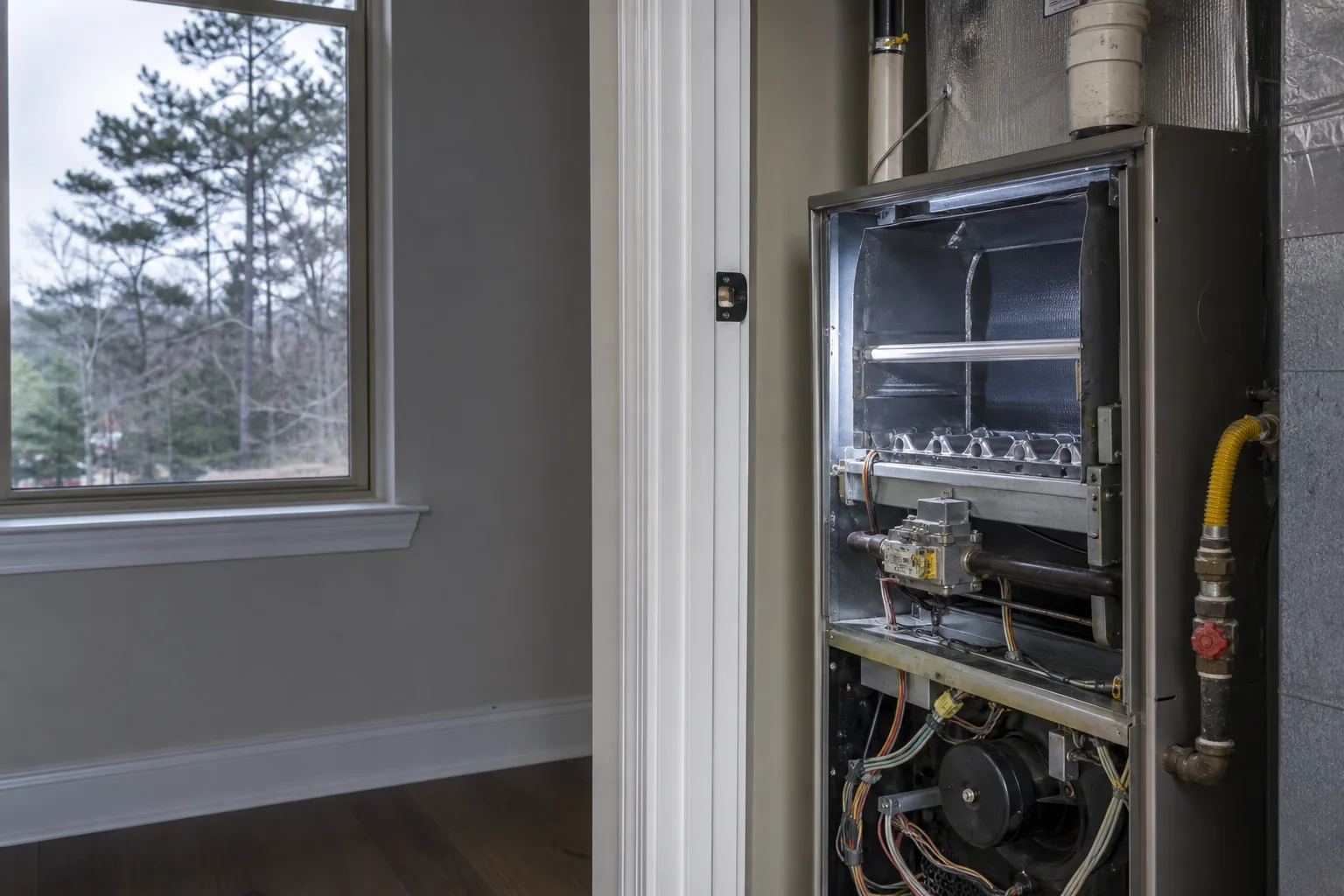
The first genuinely cold night of the year arrives over the Eastern Shore bluff, you nudge the thermostat up, and within a minute the whole house smells scorched. Before you panic, know this: in the large majority of Daphne homes that odor is harmless and gone before you finish reading this paragraph. The trouble is that a small slice of these smells are not harmless at all, and the two situations can feel identical in the first thirty seconds. So let's sort them by what you should actually do, fastest action first.
Stop the system right now if you smell any of these
Some odors are a signal to act before you investigate. If your nose registers any of the following, the safe move is to power the unit down at the thermostat and, where noted, leave the house.
- Rotten eggs or sulfur. Utilities add that stink to odorless natural gas on purpose so a leak announces itself. Walk everyone outside, skip every light switch on the way, and phone the gas utility from the lawn. Do not flip the furnace back on to "test" it.
- Sharp electrical or hot-plastic odor that keeps coming. Think melted crayon or a frying phone charger. That is wire insulation or a circuit board cooking. Kill the unit, and shut the breaker if you can reach it easily.
- Visible smoke or a haze drifting from a vent. Treat smoke as a fire question, not a comfort question. Get out, call 911, sort the cause afterward.
Everything below assumes none of those three are happening. If one is, close the article and make the call.
The smell that fools almost everyone: summer dust cooking off
Here is what is really going on most years. Your heat exchanger, burners, and any backup heat strips sat untouched from March through November while the air conditioner did all the work, collecting a fine layer of household dust on every warm surface. The moment heat fires, that film scorches all at once, and you get a dry, faintly metallic "hot dust" smell, the same one a long-dormant space heater gives off.
The tell is the timeline. Real dust burnoff shows up in the first few minutes, never smells like chemicals or plastic, produces no smoke, and fades on its own well inside half an hour. Crack two windows, let the furnace run, and watch the clock. If the odor is thinning by the twenty-minute mark and the system is heating like normal, you witnessed an ordinary start of season and owe it no further worry.
A quick read on the in-between odors
Between "obviously fine" and "obviously dangerous" sits a middle band worth naming, because Daphne's older housing stock produces these regularly.
- A faint sweet or chemical note, sometimes described as ether-like, can point to a refrigerant leak on a heat pump. It is not an evacuate-the-house event, but stop running the system and book a diagnostic, since low refrigerant strains the compressor.
- A burnt-oil or hot-rubber smell from the blower area often means a motor bearing is going or, on an older unit, a blower belt is slipping. Shut it down and have it looked at before the motor seizes.
- Dust burnoff that simply will not quit past the first hour usually means the filter is missing or the ductwork is genuinely filthy. Swap the filter, run it one more hour, and if the smell holds, that is your cue to schedule.
Why Daphne's housing stock changes the math
This town is not a subdivision of identical five-year-old builds. Plenty of homes along the older streets near the bay have been heated for decades, and the equipment inside them shapes what a burning smell is likely to mean.
First, established homes often run aging gas furnaces, and age is the single biggest reason to take a persistent odor seriously rather than wave it off. Second, many Daphne houses pair a heat pump with a gas furnace in a dual-fuel setup, which means the same vent can carry two entirely different sources of smell depending on which stage is running. Third, a lot of the older stock hides its air handler in the attic, and attics in this climate attract squirrels, mice, and wasps over a long cooling season. A nest scorching against a heat strip is a real first-of-season finding, not a hypothetical.
An odor that returns every single time the heat kicks on is telling you something. Brief and fading is dust. Repeating and steady is a service call.
Carbon monoxide: the danger with no smell at all
Here is the uncomfortable part. The most dangerous thing a gas furnace can do produces no odor whatsoever. Carbon monoxide is colorless and scentless, so your nose is useless as a detector. It leaks when the heat exchanger, the metal wall that keeps combustion gases out of the air you breathe, develops a crack. That is exactly why a working CO alarm is not optional in a Daphne home that burns gas.
Put a detector on every floor and near the bedrooms, clear of the kitchen and not directly above the furnace, test it monthly, and replace the whole unit on its expiration date. If an alarm ever sounds, treat it as the real thing: outside first, 911 second, and no going back in until a meter clears the house. Headache, dizziness, or nausea that eases when you step outdoors is the same warning in human form.
What a heat exchanger inspection actually checks
Because so many Daphne furnaces have years on them, the heat exchanger inspection is the part of a winter tune-up I care about most. A technician uses a mirror or scope to hunt for hairline cracks in that metal barrier and verifies no CO is spilling into the supply air. A confirmed crack means a furnace replacement, not a patch, and on a dual-fuel home the compressor on the paired heat pump may need attention too — we put any repair in a written estimate before work starts. Catching it during a calm fall visit beats discovering it on a January night.
A sane way to time prevention
The smell calls cluster on the first cold night because that is when dormant problems wake up, so you head them off by servicing before the season rather than during it. Early fall is the easy window; booking after a failure on the coldest night of the year loses the advantage entirely. A pre-season visit cleans the burners and dust, inspects the exchanger, and tightens the electrical connections behind those intermittent odors. Cool Club members get that visit built in along with 15% off all AC repairs and 5% off new systems.
So, standing in your living room with a strange smell: breathe, identify the odor against the danger list up top, open a window, and give it thirty honest minutes. If it is fading dust, carry on. If it lingers, repeats, or sets off any of the alarms above, call (251) 300-9817 and we will tell you straight what it is.
Why does the neighborhood you live in matter here?
Daphne is not one kind of house, and the address shapes the odds. Older homes up on the bluffs and along Hwy 181 near Mobile Bay, plus the established streets around Olde Towne Daphne, tend to run aging gas furnaces where a lingering smell deserves more weight. Newer subdivisions like Lake Forest and the builds near Historic Malbis lean toward heat pumps with electric strips, where first-night dust burnoff is the usual story. Across Baldwin County and the wider Gulf Coast the pattern is the same — months of cooling-only duty, then a sudden cold night that wakes every dormant problem at once — but what's most likely behind the smell shifts with the age of the equipment in your particular home.
A couple of related reads on the indoor-air side of all this:
- Mold in your AC ducts: a Gulf Coast indoor air guide — when a musty smell is the ductwork, not the furnace.
- What do those AC noises mean? Hissing, buzzing, clicking — the companion guide for the sounds a system makes.
Keep reading
- Heating Repair in Daphne — what our local heating service covers
- Every service we run in Daphne — the full local list
- Heating repair services — full service overview
- Schedule heating service — book a diagnostic
- How the Cool Club works — membership details