
Rural Heating Repair Between Robertsdale and Foley: A Rosinton Guide
When the heat quits in rural Rosinton, AL, the cause depends on what kind of system you have. A guide to reading common heating-repair symptoms before you call.

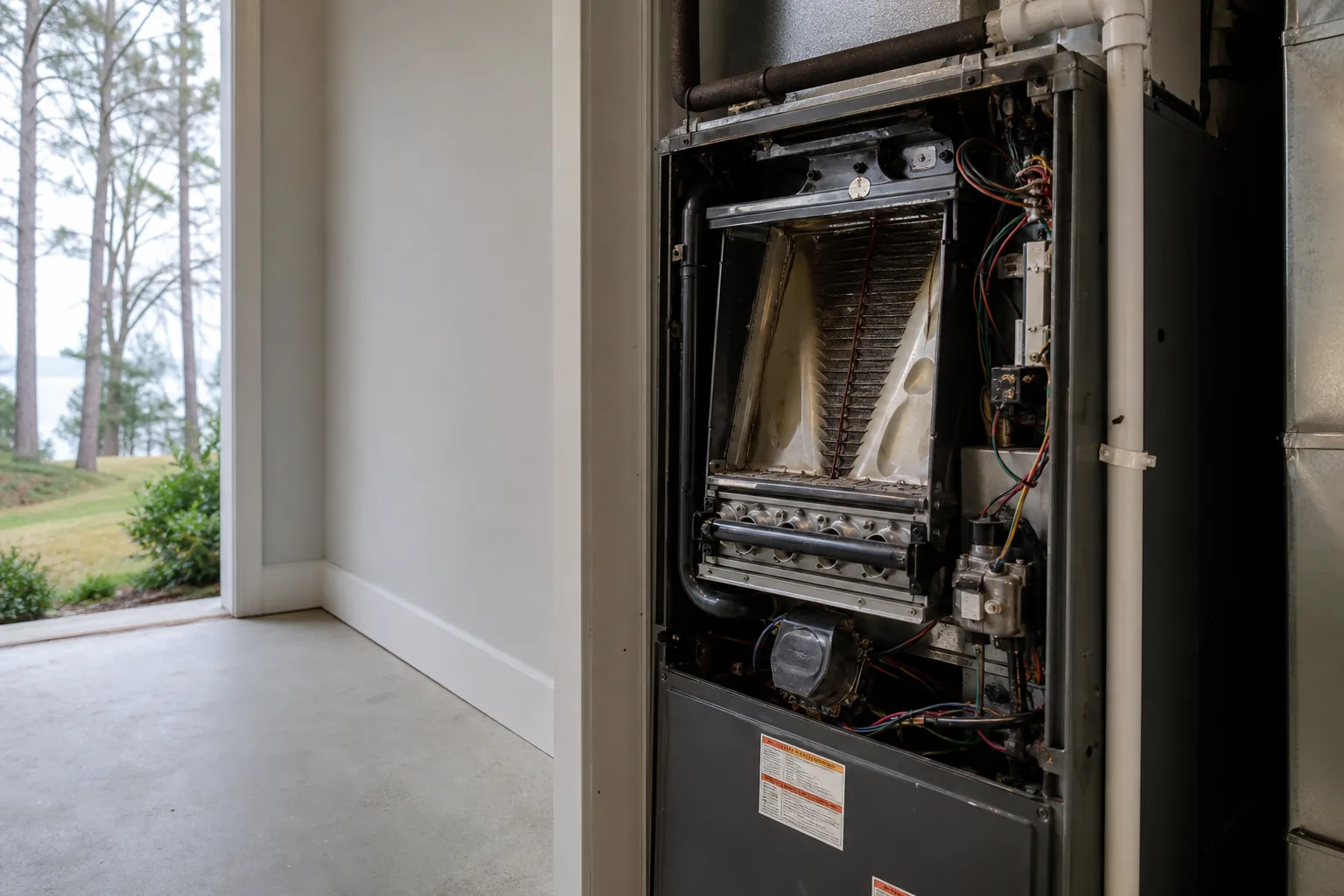
Heating gives Baldwin County folks less trouble than cooling, simply because we don't run it as much. But that's part of the problem: a heating system that sat idle all year gets fired up on the first cold morning, and that's exactly when its weak spots show. Out in Rosinton, in the farm country off Hwy 90 between Robertsdale and Foley, homes run a real mix of heating setups — heat pumps, gas or propane furnaces, and electric backup heat — and what's gone wrong when the house won't warm up depends heavily on which kind you've got. Knowing your system and reading its symptoms saves a lot of guesswork.
This is a practical walk through the common heating failures and what they usually mean, sorted by the kind of equipment you're likely running.
How do you know which heating system you have?
It sounds basic, but plenty of folks out on the agricultural land around Rosinton aren't sure. If your outdoor unit runs in winter to make heat, you have a heat pump. If you have an indoor furnace that burns natural gas or propane, that's a gas furnace, and there's a tank or a gas line involved. If the heat comes purely from electric elements with no outdoor unit working and no flame, that's electric resistance heat. Each fails in its own way, so identifying your setup is step one of any sensible diagnosis.
Heat pump symptoms
If you're on a heat pump and the air from the vents feels cool or only lukewarm even though the system's running, that's a common one. Heat pump air is naturally cooler than furnace air, but if it's not warming the house at all, suspect low refrigerant charge, a stuck reversing valve — the part that flips the system between heating and cooling — or a defrost control that's gone wrong and left the unit unable to switch back to heating after clearing frost.
If the outdoor unit is iced over and stays that way for hours rather than briefly steaming and clearing, the defrost cycle has failed and the unit can't shed its frost, which chokes off its ability to pull in heat. And if your electric backup heat seems to be running constantly and your power bill is climbing, the heat pump itself may be underperforming and leaning on the expensive backup more than it should.
Gas and propane furnace symptoms
A furnace that blows cold air, or short bursts of warm then cold, often comes down to ignition. Modern furnaces light electronically, and a dirty flame sensor or a worn igniter will cause the burner to fail to light or to light and immediately shut down on a safety. Out in the country on propane, also check the obvious before assuming a failure: a tank that's run low or a valve that's closed will starve the furnace no matter how healthy it is.
A furnace that runs but cycles on and off rapidly without warming the house may be overheating internally and tripping its high-limit safety, frequently because of a clogged filter strangling its airflow. And any burning or unusual smell from a fuel-burning furnace, or a furnace that won't run at all and shows a fault, is one to leave to a professional — gas appliances have safeties for good reason, and that's not a place for guesswork.
The handful of checks worth doing yourself
Before you call anyone, a few honest checks rule out the simple stuff, no matter which system you have.
Look at the thermostat — set to HEAT, set above room temperature, and check its batteries, since a dead battery stops everything. Check your filter; a clogged one starves airflow and causes both furnaces and heat pumps to misbehave or shut down on safeties. Look at your breakers, since electric heat and air handlers can trip them. And if you're on propane, glance at the tank gauge and make sure the supply valve is open. If none of those is the answer, you've done the smart triage and the rest is genuinely a job for a tech.
Why rural distance makes prevention pay
Living out in rural central Baldwin — whether you're along the Highway 90 corridor or back toward the County Road 64 area — you're a fair piece from the nearest crew, and a heating breakdown on a cold morning is more of a bind than it is in town. That's the real argument for a pre-season heating check: the failures that strand people in January are almost always things that were findable in the fall — a weak igniter, a low charge, a flame sensor due for cleaning, a worn capacitor on the heat pump. A short look before the first cold snap turns a January emergency into a quiet October fix, which matters more the further out you live.
Getting the heat back on in Rosinton
A no-heat morning is unsettling, but most heating failures trace to a manageable list once you know which system you're running. Heat pumps fail on the refrigerant and defrost side, furnaces on ignition and fuel, electric heat on its elements and breakers. Do the simple checks, leave the fuel-burning and electrical guesswork to a professional, and lean on a fall check-up to keep the rural distance from turning a small fault into a cold night.
Air Solutions is family-run and works the inland farm communities of Baldwin County, Rosinton included. Whatever's heating your home, if it's quit or it's struggling, see our heating repair service, schedule a heating repair, or call us at (251) 300-9817, and we'll get you warm again.
Related reading
- Heat pump defrost cycle: what owners should know in winter — a closer look at the iced-over outdoor unit symptom above
- When a furnace won't stop running in Loxley: common causes and costs — more on the rapid-cycling and high-limit problems covered here
- New-construction heating installation choices in Rosinton — planning the same systems right from the studs, before any of this comes up