
Frozen Evaporator Coil in Elberta: Why It Happens in 95° Weather
How an Elberta, AL AC evaporator coil freezes during 95°F summer days — three causes, what to do when it happens, and why it indicates other problems.

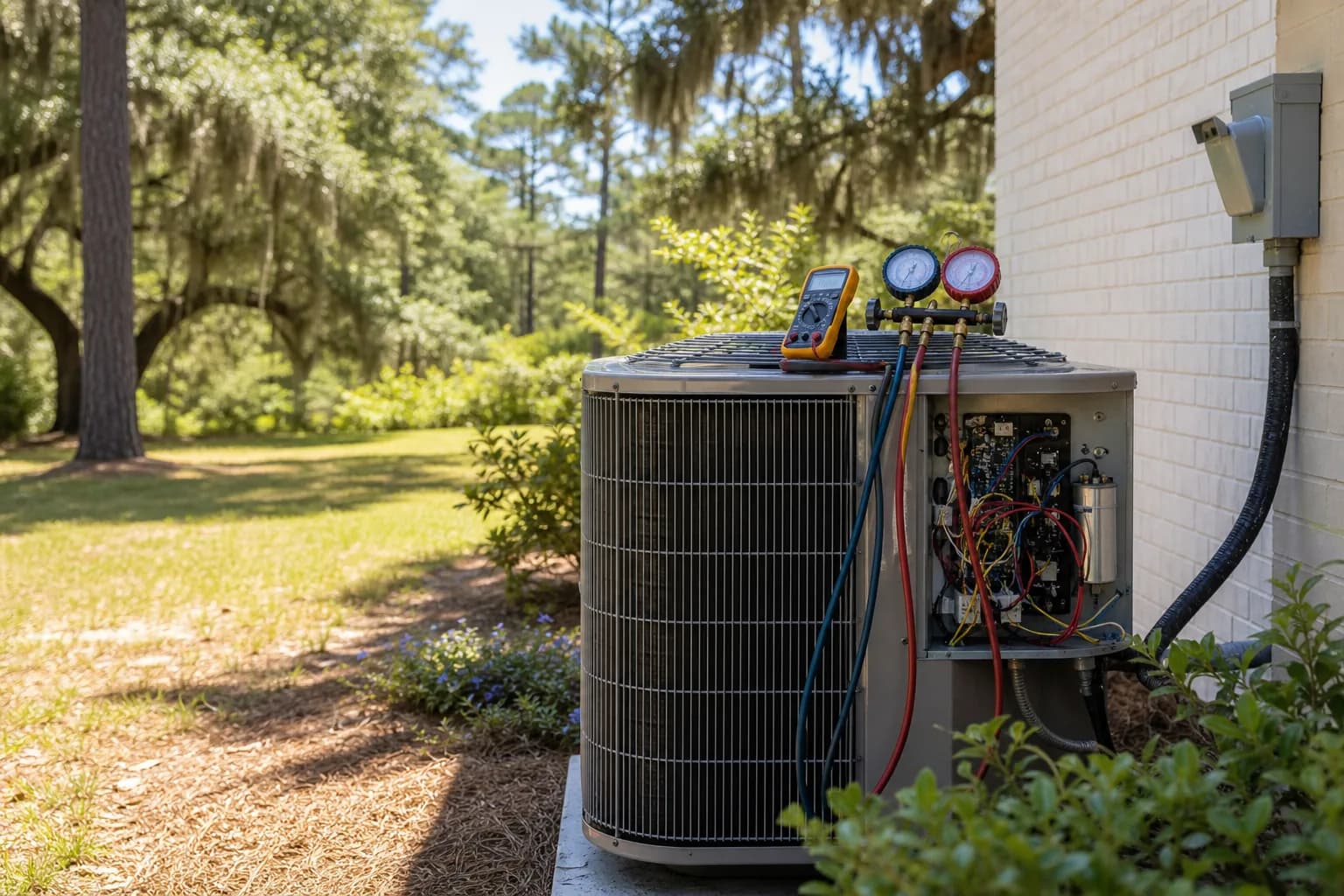
It seems counterintuitive: ice on the indoor coil of your Elberta AC during the hottest week of the year. But it happens often enough that we get multiple service calls about it every July. Here's why your AC freezes in 95°F weather and what each cause requires.
How a frozen coil happens
Your indoor evaporator coil normally operates around 40-50°F when cooling. When something disrupts that balance, the coil temperature drops below freezing. Moisture condensing from indoor air freezes on contact, building up an ice layer. The ice blocks airflow, which makes the cooling problem worse, which makes more ice, which makes... you get the picture. Once it starts, it cascades.
Three primary causes:
1. Restricted airflow. Most common. A loaded filter, dirty coil, undersized return ductwork, or closed-off vents reduce air across the coil. Less air means less heat transfer, which means colder coil, which means freezing.
2. Low refrigerant. A refrigerant leak reduces the amount of refrigerant absorbing heat. The remaining refrigerant gets too cold (because there's not enough mass to absorb the heat load). Coil temperature drops below freezing.
3. Failed blower or motor issues. Indoor blower runs slow or not at all. Same effect as restricted airflow — too little movement of air across the coil.
What it looks like
Symptoms in order of when you notice them:
- Reduced or no cooling despite the system running constantly
- Ice visible on indoor unit if you can access the coil
- Frost on the copper line running outside (from the indoor coil to the outdoor unit)
- Water leaks when the ice melts (sometimes more than the drain pan can handle)
- System eventually shuts off for self-protection if your model has the right safety
Step-by-step: what to do
When you see signs of a frozen coil:
Step 1: Turn the AC OFF immediately. At the thermostat. Don't keep running it — you'll compound damage to the compressor.
Step 2: Set fan to ON. This runs the indoor blower without cooling. Helps melt the ice faster.
Step 3: Wait 4-6 hours. Yes, hours. Severe ice takes time to melt completely. Don't restart until you've verified all ice is gone.
Step 4: Replace the air filter. Even if it looks acceptable. A loaded filter is the most common cause. Fresh filter rules out one variable.
Step 5: Check around the indoor unit.
- Water on the floor? The drain pan overflowed during ice melt — vacuum or mop up.
- Standing water? Drain line might be clogged AND your float switch is non-functional.
- Visible ice still on coil after 6 hours? Wait longer or call.
Step 6: Restart and observe. Once you've confirmed the coil is fully thawed and the filter is fresh, restart the AC. Run for 30 minutes and check:
- Is cooling restoring?
- Is condensate draining outside?
- Any signs of refreezing?
If cooling returns and stays normal, you likely had a filter or airflow issue. Continue normal operation.
If freezing returns within 24 hours, you have a deeper issue requiring professional diagnosis.
When to call without trying DIY
Skip the DIY restart if:
- System is 12+ years old (cumulative damage from prior freezes is likely)
- You've had this happen multiple times this summer
- Refrigerant pressures haven't been checked in 2+ years
- You see oil stains around any refrigerant connections (indicates leak)
- Ice formed in less than an hour of operation (severe airflow or refrigerant issue)
- Water damage has occurred from melted ice
Why Elberta sees more freezes than dryer climates
Sitting on the Highway 98 corridor east of Foley, Elberta gets coastal humidity without the salt-water-frontage equipment most beach homes carry — a combination that quietly sets up frozen coils. Three local factors compound:
1. Humidity loads. The Gulf Coast humidity that hangs over Elberta from Downtown Elberta out to the rural German-heritage farmland creates lots of condensation on the coil. Any factor that drops the coil temperature too far means more frozen condensation, faster.
2. Pollen and salt-air debris. Outdoor units this near the coast accumulate pollen, field dust, and salt-air drift that foul the coil, reduce overall system efficiency, and strain the system — which can trigger freezes.
3. Older equipment in older homes. Many Elberta installations, especially around the older parts of town near the Baldwin County Heritage Museum, are 10-15 years old. Aging compressors and coils are more sensitive to airflow problems.
What drives the cost
A frozen coil itself is a symptom — what you pay depends on the underlying cause, listed here roughly cheapest to most expensive:
- Filter replacement (DIY) — the least expensive fix, and often the whole problem.
- Coil cleaning (professional) — a routine service-visit repair.
- Refrigerant leak diagnosis + repair — costs more because finding the leak takes labor, and the repair scales with where the leak is.
- Blower motor replacement — a parts-driven repair in the mid range.
- Compressor damage from repeated freezes — the worst case, and by far the most expensive, which is exactly why you shut the system down at the first sign of ice.
The pattern is the point: catching it early is a small repair, while ignoring it until the compressor takes the damage is the expensive one. We'll diagnose the cause and give you a free quote before any repair.
Prevention
Three habits that prevent recurring freezes:
1. Filter change discipline. Every 60-90 days during peak Elberta summer.
2. Annual coil cleaning — included in Cool Club tune-ups.
3. Address airflow issues at install time. If your system has chronically restricted ductwork, fix it during the next service or replacement, not by adapting around it.
Ready for AC service in Elberta?
Air Solutions Heating & Cooling handles refrigerant work, coil cleaning, and full AC repair across Elberta and the near-coast Baldwin County corridor. Same-day appointments usually available. Family-run, founded in Daphne, licensed AL#23194.
- Schedule AC Service — pick a time
- Call (251) 300-9817 — same-day available
- AC Repair services — full overview
Related resources
- AC Repair in Elberta — city-specific service page
- All HVAC services in Elberta — every service locally
- Service in nearby Foley — just west on Highway 98
- Cool Club Membership — bi-annual coil cleaning + benefits
Dig deeper on coil freezing and its causes:
- Why does my AC freeze up in the summer heat? — the full mechanics of a frozen coil
- AC not working: an Eastern Shore troubleshooting guide — what to check before you call
- How often should you change your AC filter on the Gulf Coast? — the airflow fix that prevents most freezes
- Salt air and your AC: how far from Mobile Bay does corrosion matter? — why near-coast coils foul faster