
UV Light Air Purifiers and Coil Sterilization: Worth the Money or Marketing?
Honest take on UV-C air purifiers and coil sterilization for Baldwin County HVAC systems — what they actually do, what the marketing claims overstate, and when they're worth installing.

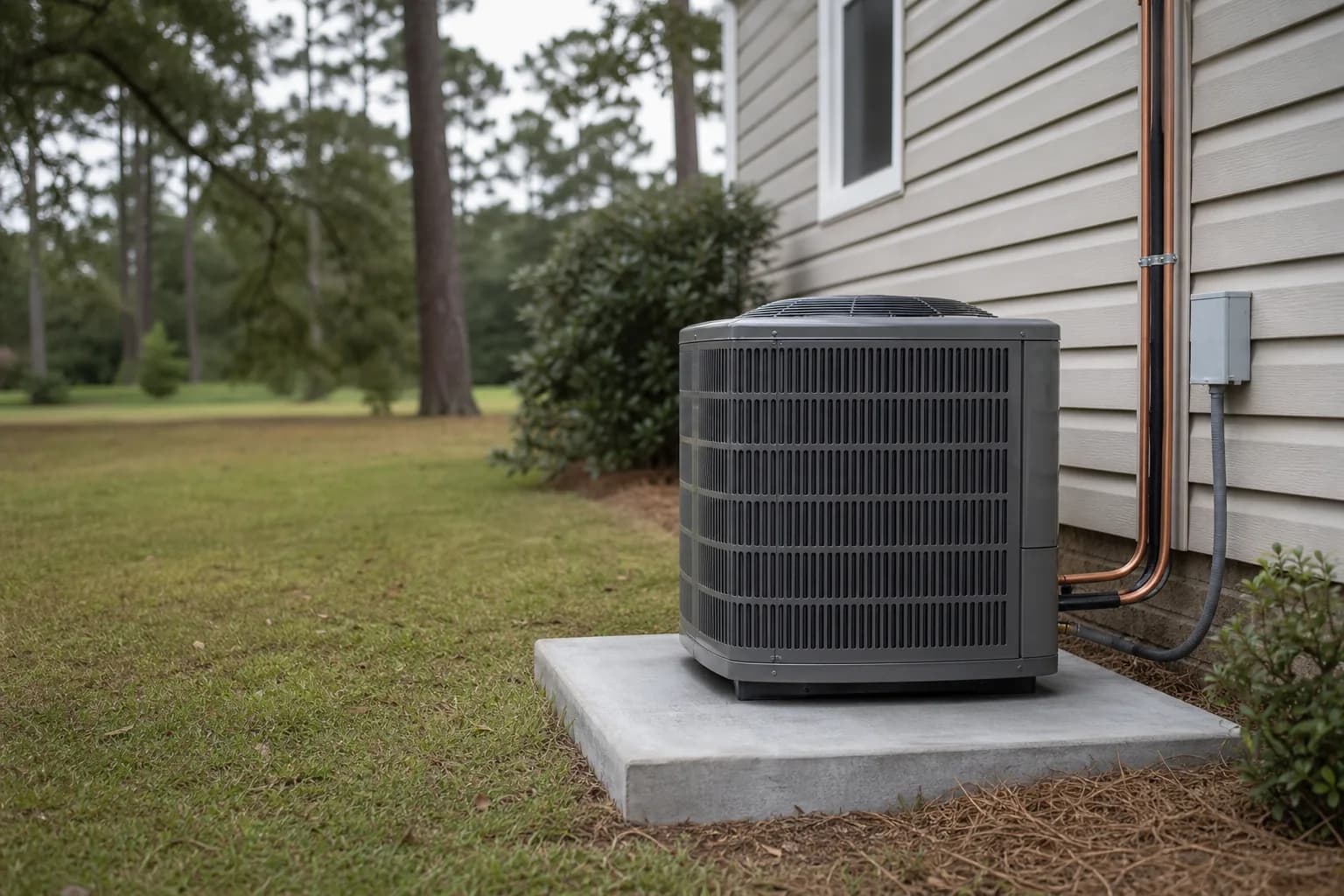
Every HVAC contractor in Baldwin County eventually gets the question: "What about adding a UV light to kill the germs?" Whether the home is a bayfront place along Mobile Bay in Daphne or a shaded lot in Timbercreek, the answer involves separating two things that get conflated: UV-C light installed at the evaporator coil (which actually does useful work in our humid climate) versus UV "air purifier" claims about killing airborne pathogens (mostly marketing). This guide explains the difference, what UV is genuinely worth installing, and what you can skip.
What UV-C light actually does
Ultraviolet light at the C-band wavelength (around 254 nanometers) destroys the DNA of microorganisms — bacteria, viruses, mold spores — by disrupting their genetic material. Lab-tested under controlled conditions, UV-C achieves 99%+ kill rates on most common pathogens within seconds of exposure.
The practical question is whether the conditions inside an HVAC air handler — moving air, varying contact time, real-world dust on the bulb, etc. — match the lab conditions that justify those kill-rate claims. The honest answer: partially.
UV-C does two genuinely useful things inside an HVAC system, and one mostly-marketing thing.
What works: coil sterilization
The evaporator coil inside your air handler is constantly wet during cooling operation. Condensate forms on the cold metal fins, drips into the drain pan, and exits through the condensate line. Wet, dark, room-temperature surfaces are exactly what biological growth needs.
In Baldwin County's humidity, evaporator coils develop biofilm — a slimy bacterial and mold colony — within months of the last cleaning. Biofilm:
- Reduces heat transfer efficiency (your AC works harder)
- Releases volatile organic compounds (VOCs) that smell musty
- Causes the "dirty sock syndrome" where your supply vents emit a distinct unpleasant odor
- Sheds biological material into your indoor air
A UV-C light mounted to shine on the evaporator coil keeps the coil surface and drain pan biologically sterile. The coil stays clean longer between professional cleanings. The musty smell never develops. The drain pan doesn't grow algae.
This is the genuine value proposition. Coil-mounted UV-C does what it claims. Worth installed for most Baldwin County homes, especially:
- Homes with chronic musty smell from supply vents
- Homes that have had previous biological growth issues
- Vacation rentals where the AC may sit unused for stretches (perfect biofilm conditions)
- Older systems where the coil is harder to access for cleaning
- Magnolia Springs, Fish River-area homes where humidity is constant
If a musty odor is what's driving your interest, our guide to mold in AC ducts is worth a read first — UV is one tool, but the source matters.
What also works: drain pan sterilization
Same principle, different surface. The drain pan below the evaporator coil holds standing water during cooling cycles. That water can grow algae and bacteria, which then clogs the condensate line and creates the biofilm odor.
Some UV-C installations target the drain pan specifically with a small directed bulb. This prevents the algae buildup that's the leading cause of clogged condensate drains in Baldwin County (we clear hundreds of these per year). In water-adjacent Daphne neighborhoods like Lake Forest, and on the older systems common in Olde Towne Daphne, the drain pan is often where the trouble starts.
Often combined with coil sterilization in a single installation.
Does UV-C really kill airborne germs as the marketing claims?
Where the marketing gets aggressive: claims that UV-C lights inside HVAC systems eliminate viruses, bacteria, and allergens from the air being circulated through your home.
Under controlled lab conditions with sufficient exposure time, UV-C can kill airborne pathogens. In real HVAC airflow conditions, the math is much less impressive:
- Air moves through the typical air handler at 400+ feet per minute
- Exposure time of any individual particle to the UV-C beam is fractions of a second
- Real-world kill rates for airborne pathogens in moving air are typically 10-30%, not the 99%+ that gets advertised
- Particles that DO get killed leave behind cellular debris that can be allergenic
The upgrade to higher kill rates requires:
- Multiple UV bulbs in series (more cost, more electricity)
- Longer ducted exposure chamber (custom installation, expensive)
- Slower airflow (defeats the purpose of the HVAC system)
For most Baldwin County homes, the airborne-pathogen claim is real but the magnitude is overstated by 10-100x in marketing. UV doesn't replace good filtration; UV doesn't replace ventilation; UV doesn't replace humidity control.
If your goal is reducing airborne pathogens, your money is better spent on:
- Higher MERV filtration — see our MERV ratings and HEPA filters guide for Gulf humidity
- A whole-home dehumidifier (mold needs humidity)
- Better ventilation (ERV/HRV)
- HEPA bypass filtration for serious cases
This is the heart of what our indoor air quality work addresses.
What we install most often in Baldwin County
When customers ask about UV, we walk through what they're actually trying to accomplish:
- "I want to kill germs in the air" → discuss filtration upgrades; UV isn't the right answer
- "I have a musty smell from my vents" → coil-mounted UV-C is the right answer
- "I had mold remediation last year and want to prevent recurrence" → coil-mounted UV-C plus dehumidifier
- "I have a vacation rental that smells off when I get there" → coil-mounted UV-C plus dehumidifier set during vacancy
- "I just want better air quality" → start with proper filter, then revisit
Installation considerations
Three things to check before installing:
1. Bulb location matters
The bulb must shine directly on the evaporator coil surface for coil sterilization to work. If it's positioned wrong, it kills nothing. We position based on coil geometry — there's no one-size-fits-all spot.
2. Indoor unit access
UV-C bulbs need to be replaceable. If your indoor air handler is in a tight attic space or behind a wall, the install access affects both labor cost and future bulb replacement cost. Worth knowing up front.
3. UV-C is harmful to skin and eyes
The bulb must be sealed inside the air handler so it never illuminates occupied space. Quality units have safety interlocks that turn the bulb off when the access panel is open. Cheap units sometimes don't. Important if anyone in the household will be near the equipment with panels open (HVAC enthusiasts, DIY repairs).
What we recommend, situation by situation
| Situation | UV recommendation | |---|---| | Standard Baldwin County home, no humidity issues, no smell complaints | Skip it. Save the money. | | Home with chronic musty smell from supply vents | Coil-mounted UV-C — strongly recommended | | Home that had previous mold issues | Coil + drain pan UV-C, plus dehumidifier | | Vacation rental with vacancy periods | Coil-mounted UV-C — sterilizes during low-use periods | | Family with young kids and concerns about germs | Better filter + dehumidifier first; UV maybe later | | Magnolia Springs / waterfront / heavy-shade home | Coil-mounted UV-C — high humidity environment | | Budget-constrained homeowner | Skip UV; spend money on better filter and tune-ups instead |
Bottom line
UV-C coil and drain pan sterilization is genuinely useful in Baldwin County's humidity. UV-C as a substitute for good filtration, ventilation, and humidity control is mostly marketing. Spend the money where it actually helps — coil sterilization if you have specific symptoms, otherwise skip it and invest in the things that matter more (right-sized AC, MERV 8+ filtration, bi-annual maintenance, dehumidification when needed).
If you're not sure whether UV makes sense for your specific situation, ask during your next AC maintenance visit, or schedule one. We'll tell you honestly whether it solves a problem you actually have.