
Selling Your Baldwin County Home? The HVAC Pre-Sale Checklist
What Baldwin County home sellers should do with their HVAC before listing — what buyers and inspectors look for, what to fix, and what to disclose to avoid deal-killers.

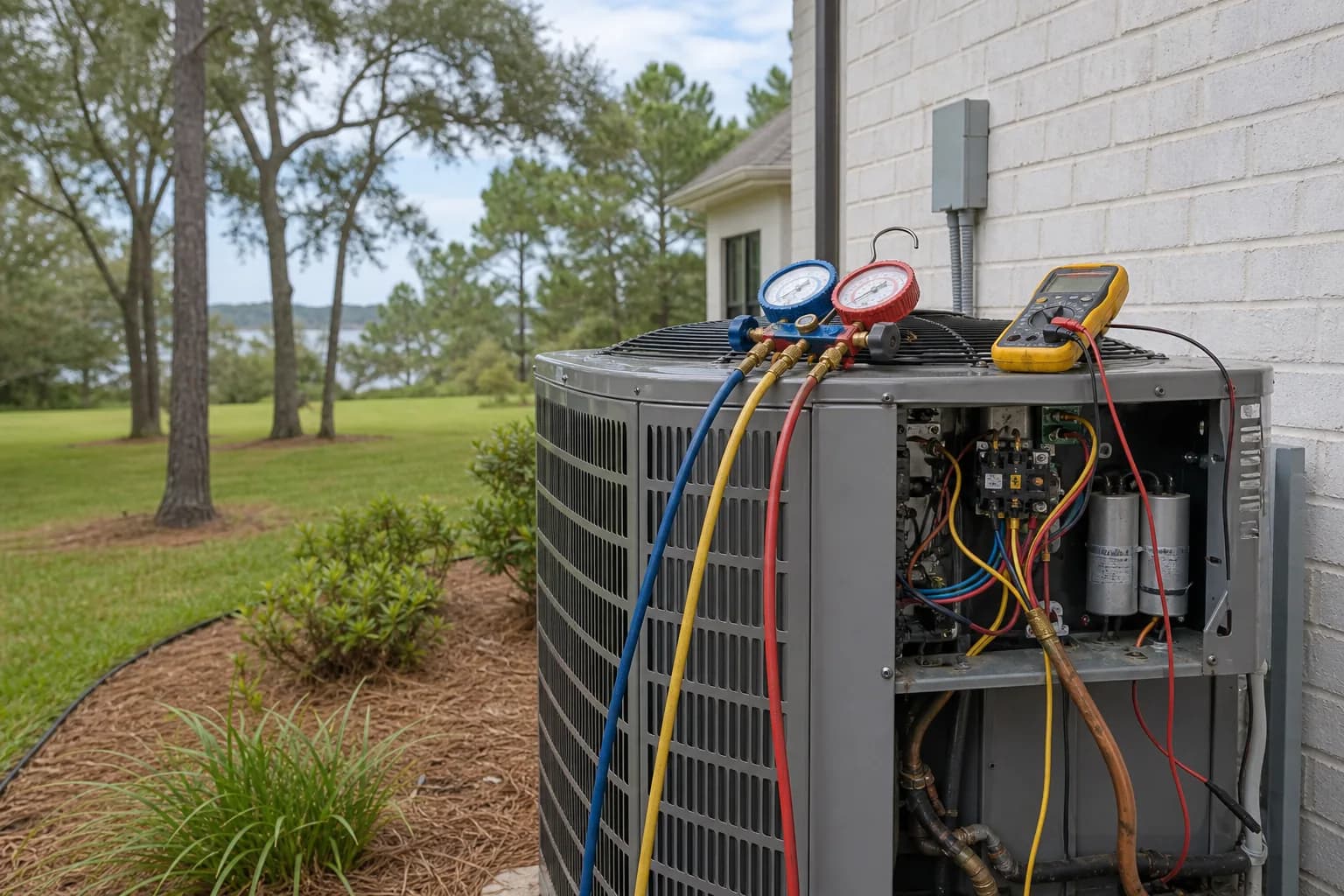
A Baldwin County home with a clean HVAC story sells faster, sells closer to asking price, and produces fewer repair-credit demands during negotiation than the same home with an HVAC question mark. Whether you're listing a bayfront house off Scenic 98, a Highway 181 build near Lake Forest, or an Olde Towne Daphne bungalow up on the bluffs, the principle holds: a home with an aging system, recent repair history nobody documented, or visible cosmetic problems on the outdoor unit creates buyer anxiety — and buyer anxiety becomes seller concession.
This guide walks through what Baldwin County sellers should actually do with their HVAC before listing, what home inspectors flag (and what they don't), and how to handle the disclosure questions honestly without creating problems that don't need to exist. Mobile Bay humidity is hard on equipment, so a system that looks tired to a Daphne-area buyer is a predictable price drag.
What home inspectors actually look at
A standard home inspection in Baldwin County includes an HVAC walkthrough. Most inspectors are not HVAC technicians — they're generalists checking for visible problems. What they look at, in roughly this order:
- Outdoor unit condition. Visible damage, corrosion (relevant near coast), refrigerant lines exposed or damaged, electrical disconnect condition, age plate.
- Indoor air handler. Visible leaks, condensate drain condition, filter status, age, model number.
- System operation. Will it turn on. Does it produce cold air at the supply vents (basic temp split test). Does it cycle off when setpoint is reached.
- Ductwork. Visible ducts (basement, crawl space, attic) checked for obvious leaks, disconnections, deterioration.
- Thermostat. Functional or not. Programmable or not.
What inspectors typically do NOT do:
- Refrigerant pressure testing
- Manual J load calculations
- Static pressure measurement
- Detailed component-level diagnostics
- Determining remaining useful life
So a home inspector will catch obvious problems (rusted-out condenser, water-stained ceiling under air handler, system that won't turn on) but won't catch subtle problems (slightly low refrigerant, marginal capacitor, mild duct leakage). Most buyer renegotiation is driven by the obvious problems.
The pre-list HVAC checklist
What Baldwin County sellers should do before the photos are taken and the listing goes live.
1. Schedule a professional HVAC tune-up (4-8 weeks before listing)
A bi-annual AC maintenance visit catches and fixes most of what an inspector will find. (Our spring tune-up guide covers exactly what a thorough one includes on the coast.) After the visit, you have:
- A clean condensate drain (no water stains forming)
- Verified refrigerant levels
- Replaced or tested capacitors
- Cleaned coils inside and out
- A written service report with the date and tech name on it
The written report is the magic. When the buyer's agent asks "when was the HVAC last serviced," "last week, here's the report" is dramatically better than "I don't remember."
2. Replace the air filter
The cheapest, most visible signal of a well-maintained system. A clean MERV 8+ filter installed within 30 days of listing tells the inspector and the buyer's agent that the home was cared for. A grey-brown filter compressed into the slot tells the opposite story.
Tip: leave the new filter packaging in a visible spot under the air handler. Inspectors notice. Buyer's agents take photos.
3. Address the visible cosmetic issues
These don't affect HVAC performance but they affect buyer perception:
- Rust on outdoor condenser cabinet. Wire brush and touch-up paint with rust-inhibiting paint. in supplies, 30 minutes of work, dramatic improvement in inspection report photos.
- Bent or corroded coil fins. "Fin combs" available at any HVAC supply or hardware store; straighten by hand. Looks dramatically better.
- Overgrowth around the unit. Trim back any vegetation within 24 inches. Required for the unit to breathe; also looks much better.
- Missing or damaged refrigerant line insulation. New foam insulation is at any hardware store. Replace any sun-damaged or animal-chewed sections.
- Faded or peeling decals on disconnect. Replace if obvious.
4. Document the equipment age and history
Pull together everything you have on the system:
- Original install date and contractor (if you're the original owner)
- Major repairs and dates
- Maintenance records (especially Cool Club tune-up reports if you've been a member)
- Any warranty information still in effect
This becomes part of the seller's disclosure packet. It signals "I've taken care of this" and gives the buyer's agent ammunition to push back on lowball repair credit demands.
5. Handle small repairs proactively
If anything is borderline-broken, fix it now rather than negotiate it later:
- Slightly low refrigerant: top-off at the tune-up
- Failing thermostat: replace with a basic smart thermostat (installed) — adds value, removes a complaint vector
- Stained or saggy ductwork insulation: replace the visible sections
Rule of thumb: anything under to fix proactively is worth doing rather than negotiating. Buyers tend to ask for 2-3x the actual repair cost in concessions.
When to replace vs. when to leave alone
The big decision: should you replace an aging system before listing?
Replace before listing if:
- The system is over 15 years old and visibly aging (rust, faded paint, tired-sounding operation)
- The system has had multiple major repairs in the past 2-3 years
- The system uses R-22 (banned for production; refrigerant cost is now prohibitive)
- The home is in a competitive price band where the buyer pool expects move-in-ready
- You're priced toward the top of the comp range and need every selling point
A new HVAC system in a Baldwin County home doesn't return dollar-for-dollar in sale price (typically 50-70% recoupment), but it converts the home from "needs work" to "move-in ready" — which moves it through the market faster and with less negotiation. If you're weighing it, our breakdowns on repair vs. replace in coastal Alabama and what AC replacement costs in Baldwin County will help you run the math before you commit to an AC installation.
Don't replace before listing if:
- The system is under 10 years old and operating normally
- The home is priced as a "fixer" or "as-is" — replacement won't change buyer expectations
- You're selling to a builder/flipper who'll replace anyway
- Your timeline doesn't allow for the install (typically 1-2 weeks from contract to completion)
For the in-between cases (10-15 years old, working but tired), the right answer often depends on local comps. We can give an honest assessment during the pre-list tune-up visit.
Disclosure considerations
Alabama is a buyer-beware state but residential property disclosure laws still require honest answers to specific seller disclosure form questions. For HVAC:
You must disclose:
- Known defects in the HVAC system
- Recent major repairs (especially within the past year)
- Any known leaks, mold issues, or moisture damage
- Age of equipment if known
- Whether equipment is under warranty
You don't have to disclose:
- Things you don't know
- Wear and tear consistent with age
- Maintenance recommendations from your tech that aren't actual defects
What you SHOULD voluntarily share:
- Recent maintenance records (positive)
- Equipment install dates (positive — proves recency)
- Any extended warranties or service contracts in effect
- Cool Club membership status (transferrable to new owner)
Honest, complete disclosure protects you legally and reduces buyer anxiety. Vague or evasive answers create suspicion that drives concession demands.
Pre-listing inspection — worth it?
Some Baldwin County sellers pay for a pre-listing inspection to catch problems before the buyer's inspector finds them. Trade-offs:
Pro:
- You see problems before the buyer does
- You can fix or disclose proactively
- Reduces surprise renegotiation requests
- Inspection report becomes a marketing asset
Con:
- Once you have written documentation of a problem, you must disclose it
- A pre-listing HVAC inspection by a non-HVAC inspector might miss what an actual HVAC tech would catch
Our recommendation: skip the general pre-listing inspection (the buyer will pay for theirs anyway), but DO get a professional HVAC tune-up with written report. That gives you the documentation without the disclosure burden of formal pre-listing inspection findings.
The Cool Club transfer
If you're a Cool Club member and selling, the membership is transferable to the new owner with a quick paperwork update. This is a real selling point:
- Buyer gets immediate enrollment in bi-annual maintenance
- Buyer gets 15% off any future repairs
- Buyer gets the "we already know your equipment" relationship benefit
- Costs the buyer nothing during the existing membership term
We've had Baldwin County home sales close where the buyer specifically valued the Cool Club transfer because it removed HVAC anxiety from their decision. Talk to your real estate agent about including it in the listing.
What we do for sellers
When Baldwin County sellers contact us about a pre-listing HVAC visit:
- Comprehensive tune-up + cosmetic improvements. Full bi-annual maintenance plus the visible-improvement work (rust touch-up, fin straightening, vegetation clearing, insulation replacement) included.
- Written service report formatted for buyer disclosure. Date, tech name, work performed, system condition assessment.
- Equipment age and warranty documentation. We pull what's still on file from past service.
- Honest "should you replace" recommendation. No pressure either way; the goal is your fastest, highest-value sale.
- Cool Club transfer paperwork if applicable.
Schedule the visit 4-8 weeks before listing. Anything sooner and the report feels stale to inspectors; anything later and you don't have time to fix what we find.
Schedule the pre-listing visit
If you're planning to list a Baldwin County home in the next 60 days, schedule the HVAC tune-up now. We work the whole Eastern Shore, from Daphne and Fairhope down through the bay communities. Free quote, fast turnaround, written documentation that helps your sale.