
Is It Time to Replace Your AC? 7 Signs for Daphne Homes
Seven concrete signs a Daphne, AL air conditioner is near the end of its life — and how we help you decide between one more repair and replacement.

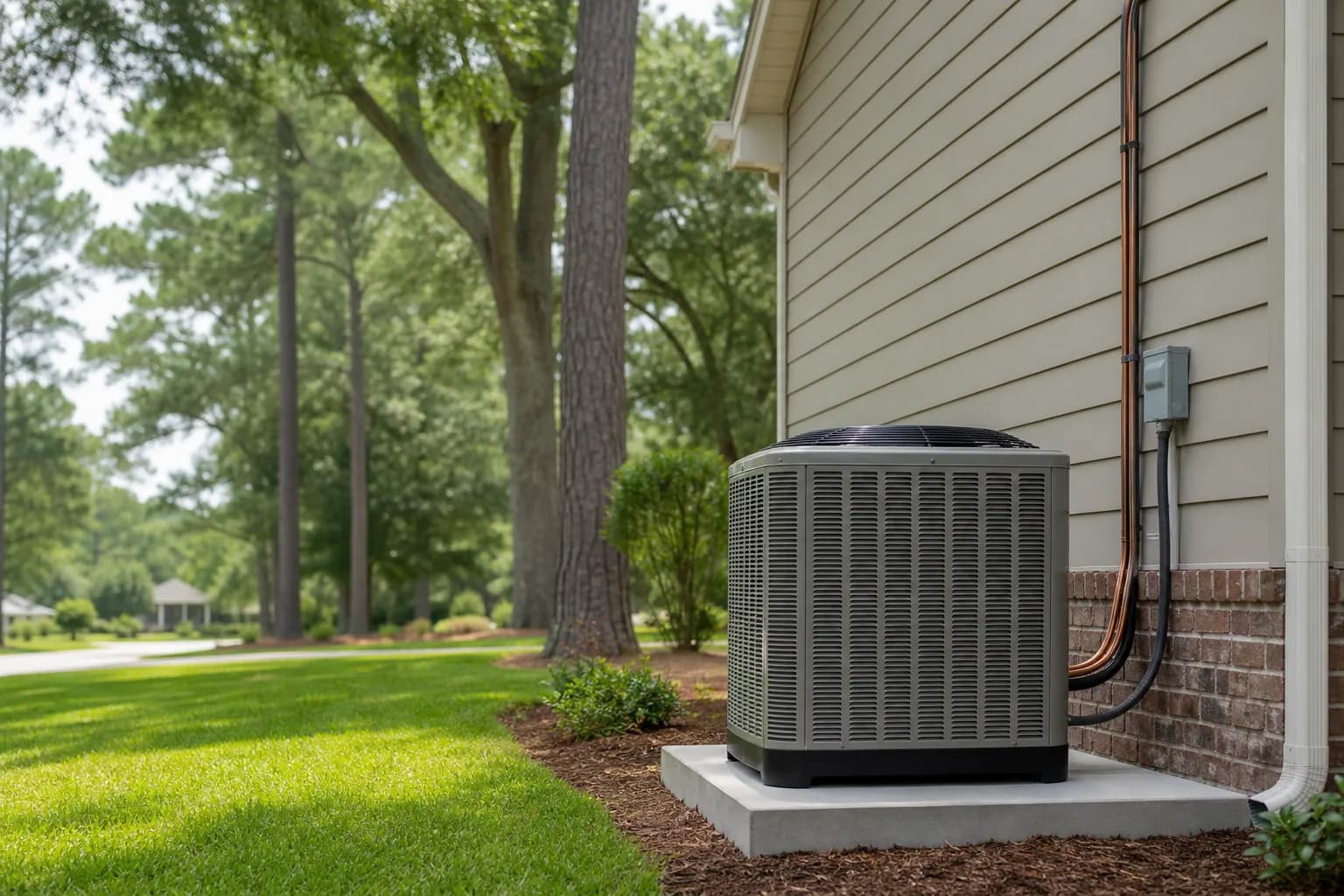
It's the third week of a Daphne August and the unit out by the fence has been running almost without a break since breakfast. The house is comfortable enough — for now — but you've started doing the mental math every time it cycles on. How many more summers does this thing have? Is the next repair the last one worth paying for, or the one that finally tips you into a new system?
That's an honest question, and it deserves an honest answer rather than a sales push. Below are seven signs we look at when a Daphne homeowner asks whether it's time. None of them is a verdict on its own. Together, they paint a reliable picture.
Sign 1: The system is 10 to 15-plus years old
Age is the first thing we check, because it frames everything else. A well-kept central AC in our climate tends to give good service for somewhere in the low-to-mid teens, and the high-humidity, long-runtime summers along the Eastern Shore tend to land systems toward the shorter end of that band rather than the longer one. Sitting right on Mobile Bay, Daphne homes — from the older streets around Olde Towne Daphne to the newer Hwy 181 subdivisions — run their AC harder and longer than almost anywhere away from the water in Baldwin County.
If your unit is under about eight years old, we're almost always looking to repair it. Past twelve, the conversation shifts. We'll still fix a young system without hesitation — but on an older one, every new repair has to be weighed against how much runway is realistically left.
Sign 2: Repairs are getting more frequent
One repair every few years is normal ownership. Two or three calls in a single cooling season is a pattern, and patterns matter more than any single breakdown.
When parts start failing in sequence — a capacitor this year, a contactor the next, then a fan motor — it usually means the whole system is aging together, not that you've had a run of bad luck. We track the repair history with you and look at the trend rather than the last invoice. A system that needs us back every few months is quietly telling you something.
Sign 3: It runs on R-22 refrigerant
If your AC was installed before roughly 2010, there's a real chance it uses R-22, the older refrigerant that's been phased out of production. We can still service R-22 systems, but the refrigerant itself has become scarce and expensive, which changes the economics of any repair that involves a leak or a recharge.
When an older R-22 system springs a refrigerant leak, throwing money at it is often the least sensible option on the table. We'll always tell you straight whether your system is on the old refrigerant and what that means for the repair in front of you.
Sign 4: Humidity and comfort problems you can't shake
A healthy AC does two jobs in Daphne: it drops the temperature and it pulls moisture out of the air. As a system wears down, the moisture half tends to fail first. The thermostat reads fine, but the house feels clammy, sticky, or just never quite crisp.
You might also notice rooms that won't even out — the bonus room over the garage that stays warm no matter what, or the back bedrooms that lag the rest of the house. Some of that is ductwork, which is worth ruling out. But persistent humidity and uneven comfort on an aging system are classic signs the equipment is losing its grip.
Sign 5: It's getting loud
You know what your AC is supposed to sound like. When that changes — a new grinding, a rattle, a screech on startup, a hum that wasn't there before — the equipment is telling you a component is wearing out.
Some of these noises point to a quick, affordable fix. Others, especially anything coming from the compressor, can signal a major repair that forces the repair-or-replace question outright. Either way, a system that's gotten noticeably louder over a season or two is aging in front of you, not holding steady.
Sign 6: It can't keep up when the heat peaks
Plenty of Daphne systems coast along in May and then struggle in late July. If your AC holds the house fine in mild weather but loses ground on the hottest afternoons — the temperature creeping up two or three degrees past the setpoint while the unit runs nonstop — its usable capacity has slipped below what your home demands at peak.
This is one of the more telling signs because it shows up exactly when you need the system most. An undersized-feeling AC that was perfectly adequate a few years ago hasn't gotten smaller; it's gotten tired.
Sign 7: The energy bills keep climbing
Pull your summer power bills and lay a few years side by side. If the cost of keeping the same house at the same temperature has been trending up — beyond what rate changes alone explain — your system is working harder to deliver less. Declining efficiency is one of the quieter signs, but it shows up on paper month after month.
How we actually make the call with you
Here's the part we want you to hear clearly: we don't decide for you, and we don't push. When you have several of these signs at once, we walk through it together.
- We tell you the real condition of the equipment and what the repair in front of you involves.
- We put both the repair and the replacement in writing, so you can compare them side by side with no guesswork.
- If another contractor has already told you to replace, we'll give you a free second opinion — sometimes the honest answer is that your system has more life in it than you were told.
The goal isn't to talk you into a new system. It's to make sure that whatever you spend, you spend with the full picture in front of you. If you want to see the exact questions we work through together, our honest repair-or-replace framework for Foley lays out the same five-question approach step by step.
Ready to weigh repair vs replacement in Daphne?
Air Solutions Heating & Cooling is a family-run company founded in Daphne in 2023, licensed in Alabama as AL#23194 and BBB A-rated. We give free in-home estimates and free second opinions so the choice stays yours.
- Schedule a free estimate — we'll assess your system in person
- Call (251) 300-9817 — talk through the signs with our team
- AC installation services — what a replacement involves
Related resources
- AC Installation in Daphne — city-specific service page
- All HVAC services in Daphne — every service locally
- Cool Club membership — extend the life of your next system
- How long your AC should last by system type — realistic lifespans, unit by unit
- Is a maintenance plan worth it? — the upkeep that buys those extra years
- Repair vs. replace: when it's worth fixing in coastal Alabama — the same decision laid out as a clear framework
- What AC replacement costs in Baldwin County in 2026 — what to expect when the signs add up to replacement
- HVAC rebates and incentives for Baldwin County homeowners in 2026 — what can offset the cost of a new system
- The Field Guide — more straight talk on HVAC decisions