
Spring Cleaning for Your HVAC: A Silverhill 30-Minute Checklist
30-minute spring HVAC cleaning checklist for Silverhill, AL homeowners — what to clean, what to inspect, what to leave to a professional.

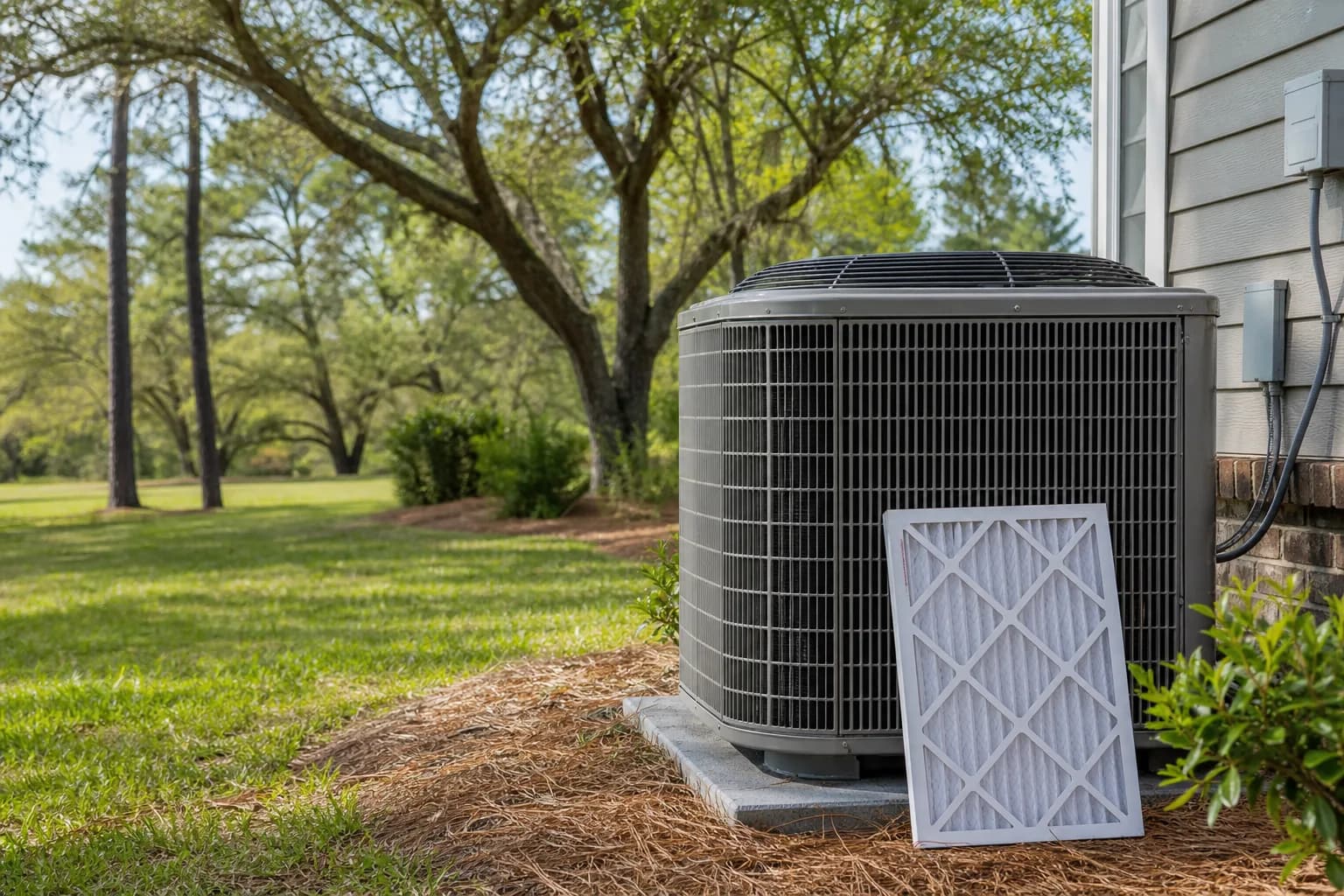
Spring cleaning lists usually focus on closets, kitchens, and yards. Your HVAC system rarely makes the list — but in Silverhill, where systems sit through humid winters with biological growth quietly accumulating on coils and inside drain pans, 30 minutes of spring HVAC attention prevents most summer service calls.
Here's the Silverhill homeowner's spring HVAC cleaning checklist. Total time: about 30 minutes. No tools needed beyond a hose and basic cleaning supplies. It applies whether you're on an established lot near Downtown Silverhill or in newer construction off the County Road 55 corridor — the humid-winter buildup is the same across this quiet stretch of central Baldwin County.
Outside the house (15 minutes)
Clear the perimeter
Walk around the outdoor condenser unit. Remove anything within 24 inches:
- Pool toys, hose reels, garden tools
- Patio furniture pushed too close
- Vines climbing up the unit (especially common on Silverhill homes with established landscaping)
- Shrubs that have grown to within a foot of the coil fins
- Trash, debris, leaves piled against the unit
Adequate airflow around the unit is critical for efficient operation. Restricted airflow makes the system work harder, raises utility bills, and shortens equipment life.
Hose down the coil fins
With the disconnect OFF or the breaker tripped, use a regular garden hose with normal pressure (no power washing — bent fins are worse than dirty ones) to rinse the outdoor coil. Spray top-down on all four sides. You'll see months of accumulated pollen, grass clippings, and dust wash off.
Wait 15 minutes for the unit to dry before restoring power.
Visual inspection
While you're outside, look for:
- Bent or damaged fins — minor damage is cosmetic, significant damage reduces capacity
- Refrigerant line damage — kinks, dents, oil stains (oil indicates a leak)
- Disconnect box condition — open it carefully (with breaker off) to check for water intrusion or corrosion
- Concrete pad condition — cracks, settling, drainage issues
Inside the house (15 minutes)
Replace the air filter
Use a quality MERV 11 pleated filter. Make sure the airflow arrow points TOWARD the air handler. Note the date on the filter edge with a Sharpie so you remember when to replace next.
Wipe down supply and return registers
Damp microfiber cloth. Both sides of every register grille. Removes dust that's been accumulating since last service.
Inspect the indoor air handler closet
Open the closet (or attic access). Check for:
- Water on the floor or in the drain pan — drain line probably needs flushing
- Visible mold or biological growth — needs professional cleaning
- Insulation damage on supply ducts
- Burning or musty smells that linger more than 10 minutes after first use
Flush the condensate drain line
Pour 1 cup of distilled white vinegar through the indoor cleanout (the small T-shaped fitting on the PVC line near the air handler). Replace the cap. The vinegar suppresses biological growth.
Test thermostat function
Set thermostat down 5°F. Within 30 seconds, indoor blower should start; within 60 seconds, outdoor unit should start. If anything's off, note it for the professional tune-up call.
What to skip (and what to schedule a pro for)
DIY does the easy 80%. The remaining 20% requires gauges, electrical tools, and training:
- Refrigerant pressure verification — requires gauges and certification
- Capacitor capacitance testing — requires meters and electrical safety knowledge
- Coil cleaning beyond garden hose — chemical cleaners need proper handling
- Ductwork inspection — needs camera or smoke testing
- Anything inside the electrical disconnect — high voltage, safety risk
For these, schedule a professional spring tune-up. Cool Club includes both spring and fall tune-ups in the annual membership.
Does an inland Silverhill home really need the same care as a beach house?
Different problems, same need for attention. A Gulf Coast beach house fights salt-air corrosion that eats coils and cabinet hardware. A home out toward the Highway 104 area doesn't get that salt exposure — but it trades it for heavy pollen, agricultural dust drifting off surrounding farmland, and the same months-long humidity that feeds biological growth on coils and in drain pans. The corrosion timeline is gentler inland, but the fouling and mold pressure is every bit as real. So the spring routine matters here just as much; it's the specific failure mode that shifts, not the overall need to keep the system clean and breathing.
When to call before summer demand
If your spring cleaning revealed any of these, schedule professional service before the first 90°F day:
- Visible water around the indoor unit
- Mold or biological growth on coil or pan
- Burning smells that don't resolve
- Outdoor unit not running cleanly during test
- System hasn't had professional service in 2+ years
- Strange noises during operation
Late May vs late July pricing: late May is standard rates. Late July is emergency rates. Different math.
What you'll get out of the 30 minutes
Tangible benefits from this checklist:
- Lower utility bills — clean coils transfer heat 10-20% more efficiently than fouled ones
- Better dehumidification — clean indoor coils condense more moisture
- Longer equipment life — debris-free systems run cooler and last longer
- Caught problems early — visual inspection catches most issues before they become emergencies
- Cleaner indoor air — fresh filter + clean coil = lower particulate counts
Ready to schedule professional spring service in Silverhill?
Air Solutions Heating & Cooling services Silverhill and surrounding Eastern Shore inland Baldwin County every weekday. Family-run, founded in Daphne, licensed AL#23194, and consistently five-star rated by Baldwin County homeowners.
- Schedule Spring Tune-Up — pick a time
- Call (251) 300-9817 — same-day available
- AC Maintenance services — full overview
Related resources
- AC Maintenance in Silverhill — city-specific service page
- All HVAC services in Silverhill — every service locally
- Cool Club Membership — bi-annual tune-ups + benefits