
Spring AC Tune-Up Checklist for Daphne Homes: 8 Items That Matter Most
What actually matters in a spring AC tune-up for Daphne, AL homes — eight items that prevent summer breakdowns, plus what to skip when contractors try to upsell.

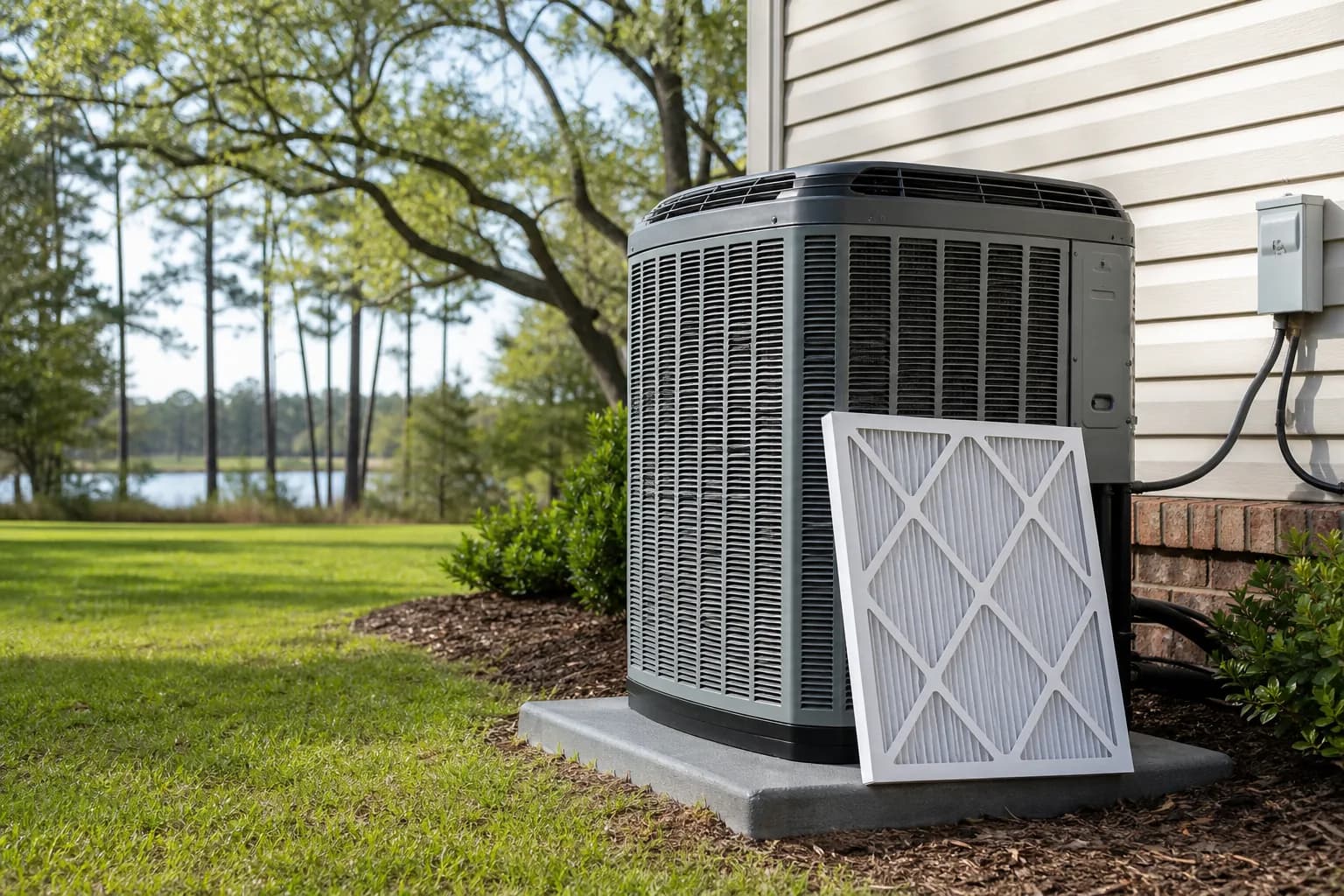
If you live in Daphne and your AC has been off most of the winter, the first 90°F afternoon in May is going to expose every issue that's developed since last fall. We see the pattern every spring on the Eastern Shore — systems that "worked fine" in October fail spectacularly the first weekend it gets hot. Most of those failures were preventable with a 30-minute tune-up.
The trouble is that "AC tune-up" can mean almost anything, depending on the contractor. Some shops show up, glance at the unit, replace your filter, and bill you. That's not a tune-up; that's a filter change. A real spring tune-up does eight things, and these are the eight that actually move the needle on whether your system makes it through a Daphne summer without a service call.
1. Refrigerant pressure check (with gauges, not eyeballing)
The number one cause of mid-summer AC failures we get called for in Daphne is low refrigerant — usually because of a slow leak that started months earlier. A proper tune-up puts gauges on the system, reads suction and head pressures, calculates superheat and subcooling, and tells you whether your charge is correct.
If a tech doesn't pull out gauges and write down numbers, they didn't actually check the refrigerant. Ask to see the readings.
2. Capacitor test (not just a visual inspection)
Capacitors are the single most-replaced component in Eastern Shore AC systems. They store and release the electrical surge that starts your compressor and condenser fan. They degrade in heat and humidity — both of which we have plenty of — and a marginal capacitor will work fine through one more start cycle, then fail in mid-July at 4pm on a Saturday.
A real tune-up uses a capacitance meter to measure microfarads against the rated value on the cap. If it reads more than 6% below spec, replace it now. The replacement part is inexpensive; the after-hours service call when it fails in mid-summer is not.
3. Coil cleaning (both indoor and outdoor)
The outdoor condenser coil in your Daphne home picks up everything: pollen, grass clippings, dryer lint, pine needles, the occasional palm frond. The mature oaks and pines around Lake Forest and Olde Towne Daphne are especially hard on a condenser this time of year. Even modest fouling reduces heat transfer significantly. The indoor evaporator coil collects dust and biological film — particularly in our humid climate where the coil stays wet for months at a time.
A real tune-up rinses the outdoor coil and inspects (and if needed, foams) the indoor coil. If your system hasn't been cleaned in 2+ years, expect to find significant buildup that's been quietly raising your utility bills.
4. Drain line flush
The condensate drain line on a Daphne AC moves 5–15 gallons of water a day during peak summer. Clogged drains are the #1 cause of indoor water damage from HVAC systems on the Eastern Shore. A proper tune-up vacuums the drain line clear from the exterior, adds an algicide tablet to the drain pan, and tests the float switch that's supposed to shut your system off if water rises.
If you've never had this done and you've lived in your Daphne home for 2+ years, the line is almost certainly partially clogged.
5. Electrical inspection
This is where it gets tedious but matters: every electrical connection inside the disconnect, the outdoor unit, and the air handler should be checked for tightness, corrosion, and discoloration. Loose connections create heat, which causes early component failure. Corroded connections (we get a lot of these in Daphne — the damp Mobile Bay air off the bluffs is brutal on terminals) increase resistance and shorten compressor life.
A tech with a torque screwdriver and 15 minutes can prevent most electrical-failure service calls.
6. Blower motor and bearings
The indoor blower runs constantly when your AC is calling for cooling. In a Daphne home running 8-hour AC cycles in July, that's a lot of motor hours. A real tune-up checks blower amp draw against nameplate, listens for bearing wear, verifies the squirrel-cage wheel is balanced and clean, and checks the belt tension if your system is belt-driven.
A blower motor that fails in August is a emergency. Catching it now while it's still gradually getting louder gives you time to schedule replacement at normal pricing.
7. Thermostat calibration
Your thermostat reads room temperature with a small sensor. Over time those sensors drift — particularly in homes with sun-exposed thermostat locations. A real tune-up measures actual room temperature with a separate thermometer and compares to what the thermostat reports. If they're off by more than 2°F, the thermostat is either miscalibrated, mis-located, or due for replacement.
A thermostat reading 4°F low means your AC is running 4°F harder than it needs to — which is roughly an 8% utility bill premium for no benefit.
8. Written report you can keep
This sounds bureaucratic, but it matters. Every Air Solutions tune-up produces a written report listing what was checked, what was found, what was adjusted, and what's worth watching. Three reasons:
- Insurance. Documented maintenance protects warranty claims and supports insurance claims if something fails.
- Resale. When you sell your Daphne home, a paper trail of HVAC service raises buyer confidence and reduces inspection-period haggling.
- Trend tracking. If your refrigerant pressures are slowly drifting from year to year, the trend tells us something the snapshot can't.
If a contractor doesn't leave you with paperwork, they're cutting corners somewhere else too.
What we skip (and what to refuse)
A real spring tune-up should NOT include any of the following — if a contractor recommends them on a routine visit without specific evidence, push back:
- "Sealing your ductwork" with aerosol products (bad ducts need actual sealing, not goop)
- "UV light installation" sold during a tune-up rather than after a humidity diagnostic
- "Compressor saver" capacitor add-ons (your existing cap should just be sized correctly)
- "Refrigerant top-off" without a leak search (top-offs without finding the leak just delay the inevitable replacement)
Ready to schedule your spring tune-up in Daphne?
Air Solutions Heating & Cooling services Daphne and the surrounding Eastern Shore every weekday — same-day appointments are usually available, and the after-hours emergency line is open 24/7. We're a locally owned, family-run shop founded in Daphne by Reaves Nelson; licensed Alabama HVAC contractor (AL#23194); and the most-reviewed HVAC company in Baldwin County.
- Schedule a Spring Tune-Up — pick a time and we'll confirm by phone
- Call (251) 300-9817 — for same-day or after-hours service
- All AC Maintenance services — read more about how we approach routine maintenance
Related resources
- AC Maintenance in Daphne — city-specific service page with pricing, response times, and local context
- All HVAC services in Daphne — every service we offer in your city
- Cool Club Membership — two tune-ups a year + member benefits
- The Air Solutions Field Guide — searchable library of HVAC guides for Baldwin County homeowners