
Why Your AC Sounds Like a Lawn Mower After Spring Startup in Foley
Loud AC noises after the first spring startup in Foley, AL — what causes the lawn-mower sound, what's normal, what's a real warning, and when to call.

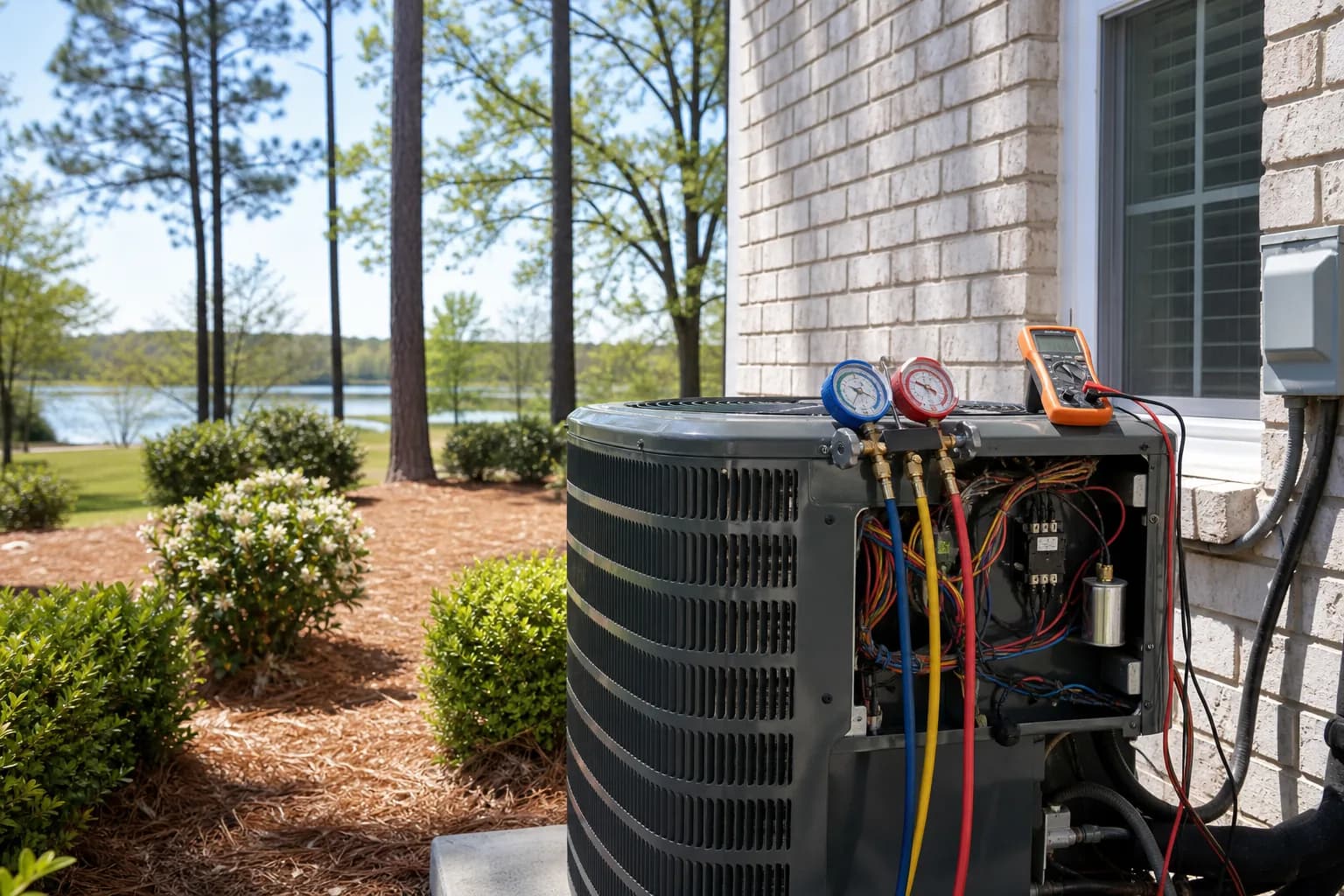
You step outside on the first warm Foley afternoon in May, the AC has been running 20 minutes, and the outdoor unit sounds like someone parked a riding mower in your side yard. If you've never heard your AC do this before, the gut reaction is "something is broken."
Sometimes it is. Often it isn't. Here's how to tell which one you have, and what to do about each.
Three sounds that are mostly normal after spring startup
1. Brief grinding for the first 5–10 seconds of each cycle. The condenser fan and compressor have been still for months. Bearings settle, oil pools, and the first few rotations are louder than steady-state operation. If the noise resolves in under 10 seconds and the system runs quietly after, that's typical. Schedule a professional tune-up at your convenience but don't panic.
2. Loud rumble that gradually quiets over the first few cycles of the season. Refrigerant migration during winter is normal. The first hour of operation can sound louder as oil and refrigerant redistribute through the system. If the unit settles into normal noise levels after running for a while, you're likely fine.
3. Wind/whoosh sound from the indoor air handler. Higher airflow through cleaner ducts after a winter of low use, or simply your ear re-acclimating to the AC sound after months without it. Not a problem.
Five sounds that mean call us
1. Sustained loud humming with the fan NOT spinning. Walk outside while the system is running. Look at the top of the outdoor unit. The fan should be turning steadily. If you hear humming but the fan is still, you almost certainly have a failed run capacitor. The compressor is trying to start but can't get the electrical surge it needs.
This is the single most common spring service call we get in Foley. The fix is usually a capacitor replacement, but you should call before continuing to run the system — repeated failed-start attempts damage the compressor.
2. Metallic banging or clattering that doesn't go away. Something has come loose inside the unit — fan blade hitting the housing, broken motor mount, debris caught in the blower. Continued operation will compound the damage. Shut the system off at the thermostat and call.
3. High-pitched squealing from the indoor unit. Worn blower motor bearings, failing belt (on belt-drive systems), or a slipping motor coupling. Squealing usually progresses to motor failure within days to weeks. Schedule service this week.
4. A sharp electrical "snap" or "pop" sound followed by the system shutting down. Likely a failed contactor or a worn capacitor exploding. Don't reset the breaker repeatedly — you can damage components further. Call.
5. Hissing or bubbling from the line set or indoor coil. Refrigerant leak. Especially common in Foley homes that have had ant infestations near the outdoor unit (ants chew through refrigerant lines). Don't run the system long term; running on low refrigerant kills compressors.
Why are Foley spring startups noisier than inland HVAC?
Three factors make Foley AC spring startups louder than HVAC in dryer climates — and they hit homes from the Hwy 59 corridor near OWA and the Tanger Outlets out to the quieter subdivisions like Glenlakes and Liveoak Village:
- Salt air drift. Foley is 8 miles inland but Gulf Coast salt particles still affect outdoor components. Capacitors corrode faster. Bearings degrade faster.
- Humid winter storage. Even when the AC is off through winter, the indoor coil stays damp. Biological growth on the coil surfaces creates extra airflow noise.
- Pollen and debris loading. Spring pollen accumulates inside the outdoor unit during off-season. Pine needles get caught in the fan. The first runs sound rougher.
This is why a mid-May tune-up matters in our area more than it does in places without our humidity and pollen reality.
What to do this week
If your Foley AC sounds different than last summer:
- Listen for 5–10 minutes after startup. Many noises resolve as the system stabilizes. If it's quiet after 10 minutes, schedule routine maintenance at your convenience.
- Verify the outdoor fan is spinning steadily. If not — call us today before the noise resolves.
- Check for visible debris. Pine needles, leaves, and small branches in the top grille should be cleared (with the breaker off).
- Note when the noise happens. Startup only, all the time, intermittent? This information speeds the diagnosis.
- Don't run a system that's clearly distressed. A 20-minute drive to your office is cheaper than a compressor replacement.
What it usually costs in Foley
Diagnostic visit: standard diagnostic rate (confirm at booking) (applied to the repair if same-visit) Capacitor replacement: Contactor replacement: Fan motor replacement: Refrigerant leak diagnosis + repair: varies depending on leak location Compressor replacement: (at this point, replacement is usually the better math)
Cool Club members receive 15% off all repairs.
Ready to schedule AC service in Foley?
Air Solutions Heating & Cooling services Foley and the surrounding near-coast Baldwin County area every weekday — same-day appointments are usually available, and the after-hours emergency line is open 24/7. Locally owned, family-run, founded in Daphne by Reaves Nelson, licensed AL#23194.
- Schedule AC Repair — pick a time
- Call (251) 300-9817 — same-day available
- AC Repair services — full overview
Related resources
- AC Repair in Foley — city-specific service page
- All HVAC services in Foley — every service we offer locally
- The Air Solutions Field Guide — searchable HVAC library