
No-Cool Emergencies for Point Clear Homeowners: What to Do First
A zone went warm in your Point Clear, AL home? A bayfront-aware triage for multi-zone estates, salt-air wear, and knowing your first move before help arrives.

The master suite reads 78 and climbing while the rest of the house feels fine. Or the whole east wing along the water has gone stuffy by mid-afternoon while the kitchen side holds its setpoint. If you live on one of the Scenic 98 estates between the bay and the road, a "no-cool" rarely means the entire house quit at once — it usually means one zone, one system, or one corner of a big floor plan stopped pulling its weight.
That distinction matters here more than almost anywhere in Baldwin County, because the larger bayfront homes around Point Clear are frequently built with two, three, or even four separate systems or zoned dampers. Diagnosing which one is struggling is the first real step, and it's something you can sort out before you ever pick up the phone.
Pin down which zone or system is the problem
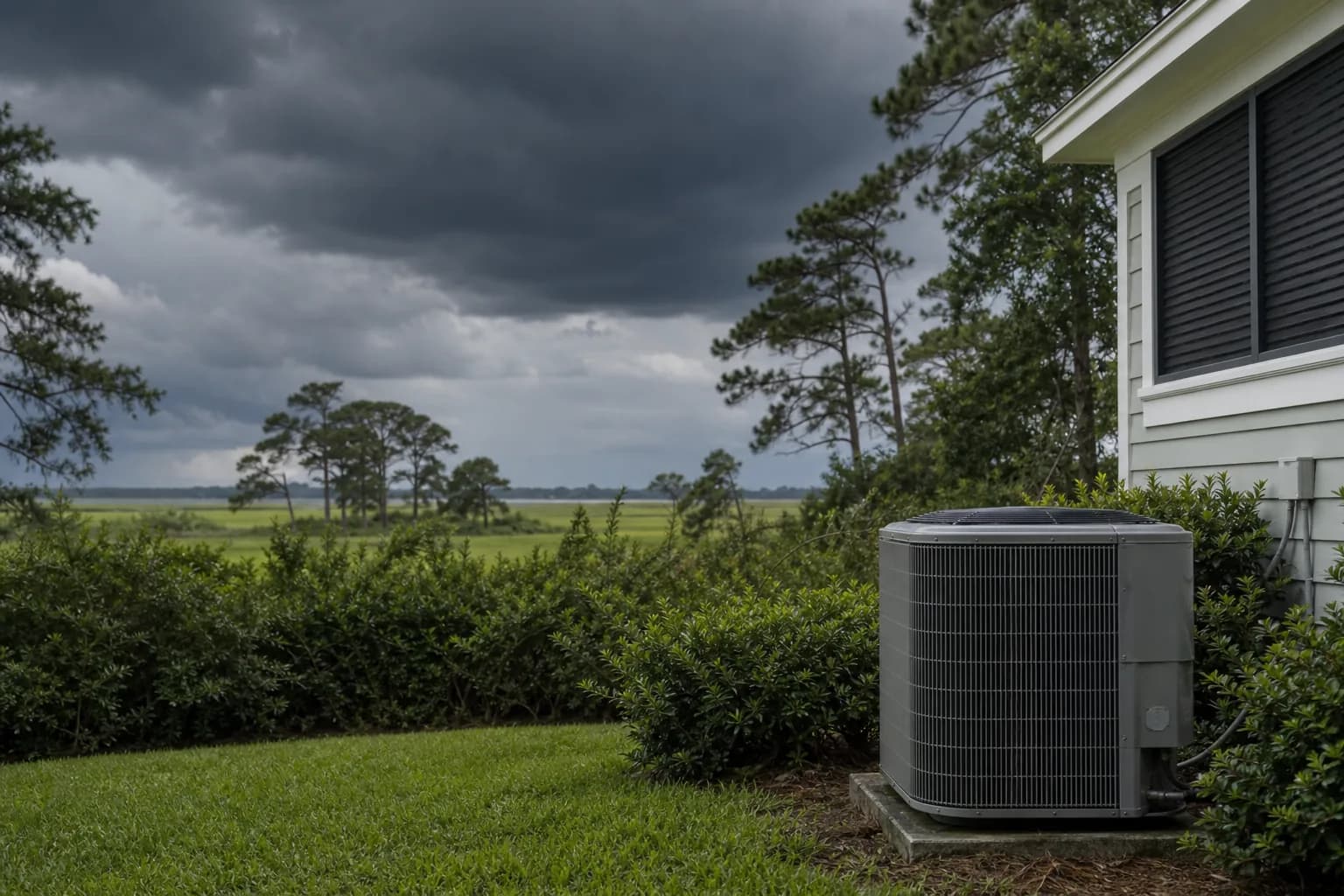
Before you assume the worst, walk the house with intent. Note the temperature in each zone and which thermostat controls it. A multi-system home will have more than one outdoor condenser — often grouped on the north or shaded side, or tucked along the garage run — and each one answers to its own thermostat and air handler.
Match the warm zone to its equipment. If the upstairs is the problem, it's the upstairs system you're chasing; the downstairs unit being fine tells you nothing about the one that failed. On a home with zoned dampers off a single system, a single warm zone can instead mean a stuck damper or a failed zone control board — a very different repair, and one only a tech can confirm.
The checks worth doing yourself
You don't need tools to rule out the common, harmless causes. Work the suspect system specifically, not the whole house.
- Thermostat for that zone: set to COOL, a few degrees below the current room reading, fan on AUTO. A dim or blank screen can mean a dead battery, and that alone stops a zone cold.
- The right breaker: a multi-system home has a breaker for each condenser and air handler. Find the one tied to the zone that quit. If it sits in a soft middle position, flip it fully OFF then ON a single time. If it trips again at once, stop and leave it.
- The filter for that air handler: big homes often have a separate return and filter per system. A matted filter chokes airflow and can ice the coil. Check the one feeding the warm zone, not just the one by the front hall.
- The outdoor unit that matches: walk to the condenser for that system. Is the top fan spinning? A unit that hums but won't spin its fan is a classic weak-capacitor sign — shut that zone off at the thermostat so it stops drawing current it can't use.
If the suspect system has a clean filter, a healthy breaker, fresh thermostat batteries, and a humming-or-dead condenser, you've done the smart legwork and ruled out the easy fixes.
What salt air does to bayfront equipment
Living this close to Mobile Bay comes with a tax that inland homes don't pay. From the Grand Hotel grounds down through the older bayfront places, the salt-laden air corrodes the aluminum fins and copper of an outdoor coil faster, and it works on the contactor and electrical connections inside the condenser cabinet too. Over years, that corrosion shows up as a unit that struggles to shed heat, trips on high pressure during the hottest part of the day, or finally drops a contactor that's been pitting quietly.
None of that is something you fix in a no-cool moment, but it explains a pattern worth knowing: bayfront condensers tend to need more attention and don't always last as long as the brochure promised. Rinsing the outdoor coil gently with a hose a few times a season — power off first — slows the buildup. Beyond that, a coil that's visibly crusted or a cabinet showing rust is a flag for a tech to look at before the next heat wave, not during one.
When one warm zone is actually urgent
Most single-zone failures are a comfort problem you can manage for a few hours. A few situations deserve a faster call no matter how big the house is. A burning or hot-electrical smell from any air handler or vent means shut that system off at the breaker and call right away. A breaker that trips again the instant you reset it is protecting you from a short or a seizing motor — don't keep forcing it. And if the warm zone is the one where someone elderly, very young, or with a health condition sleeps, the indoor temperature in that room matters more than which part failed.
Holding comfort while you wait
On a large home you have an advantage: you can consolidate. Move everyone into a zone that's still cooling and close the doors to the warm wing so you aren't fighting the whole envelope. Draw the blinds and drapes on the bay-facing glass, where afternoon sun drives the biggest load. Run ceiling fans in the occupied rooms — they cool people, not air — and hold off on the oven and dryer until the system's back. None of this fixes the equipment, but it buys real comfort on a hot afternoon.
Ready to get a zone cooling again in Point Clear?
Air Solutions Heating & Cooling is a family-run shop founded in Daphne in 2023, licensed AL#23194, and we cover Point Clear — from the Point Clear Historic District to the newer builds off Scenic 98 — and the rest of the Eastern Shore. We'd rather help you read what your system is doing than have you guess through a hot afternoon.
- Schedule emergency service — same-day when we can; we'll confirm by phone
- Call (251) 300-9817 — 24/7 emergency dispatch
- Emergency HVAC services — full overview
Related resources
- Emergency HVAC in Point Clear — city service page
- All HVAC services in Point Clear — every service locally
- Cool Club membership — two seasonal tune-ups, priority scheduling, and 15% off repairs
- Deciding to call now vs. wait until morning in Spanish Fort — a clear framework for the after-hours judgment call
- When the house won't cool in Perdido — first-response steps for a full no-cool
- A first-response guide for outlying Stockton homes — how we route to far-flung north-county properties
- The Field Guide — more local HVAC how-to