
Heat Pump Spring Tune-Up: What Fort Morgan Owners Should Schedule and Why
Spring heat pump tune-up checklist for Fort Morgan, AL homeowners — what professional service should include, salt-air specific concerns, and Cool Club value.

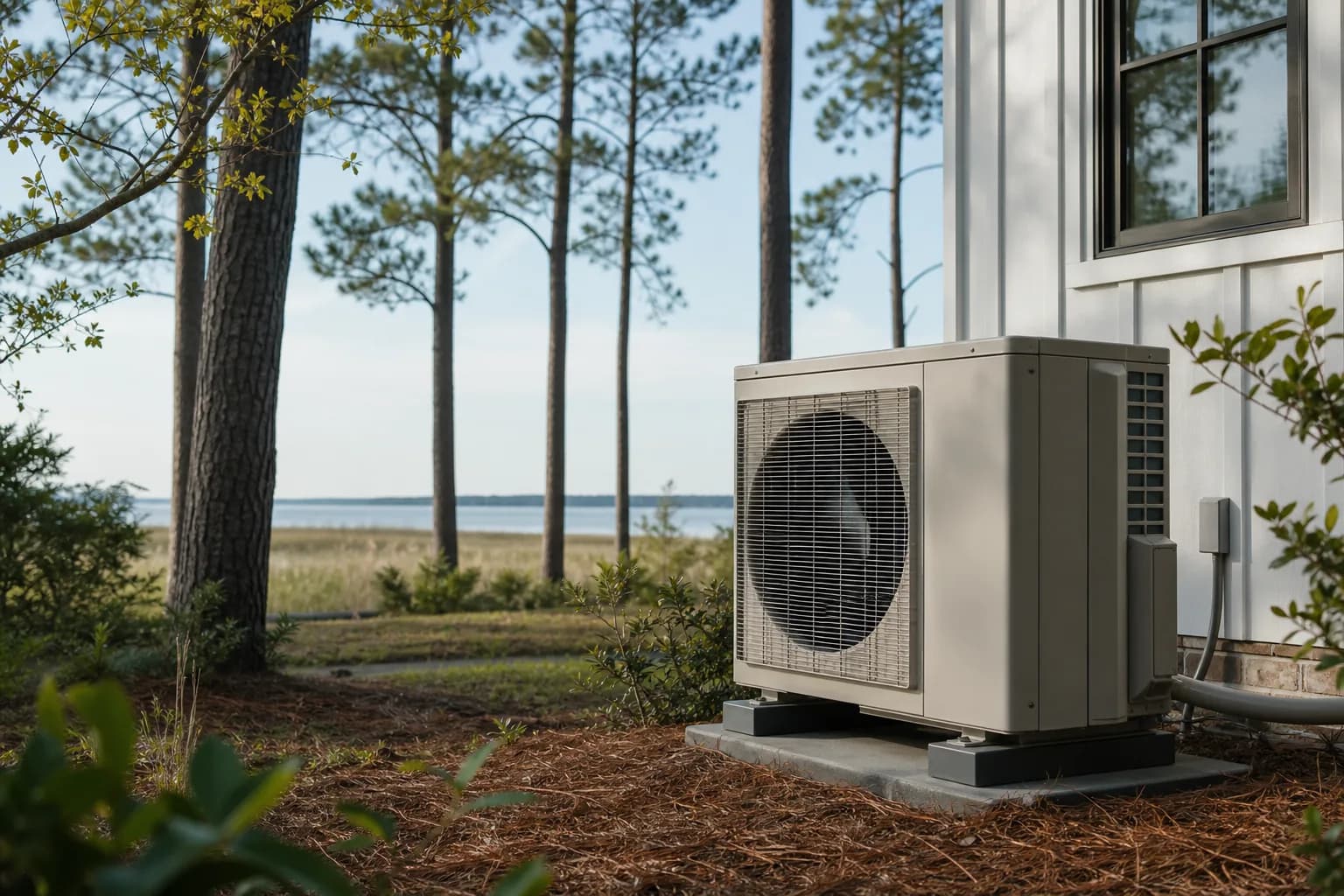
Heat pumps are the dominant HVAC system type in Fort Morgan because they cool AND heat without burning fuel — the right call for our mild winters. They also work harder than conventional AC because they run year-round in both modes, which makes their spring tune-up genuinely more important than for cooling-only systems.
Here's what a real spring heat pump tune-up should cover, and why it matters more on the Fort Morgan peninsula than inland — whether your place is a primary home out toward Mobile Point or a rental in Gulf Shores Plantation along Fort Morgan Road (Highway 180).
What a real heat pump tune-up includes
Beyond standard AC maintenance items, a heat pump spring tune-up should specifically address:
1. Reversing valve test in both modes. The reversing valve is what lets a heat pump switch from cooling to heating. After winter heating use, the valve should be cycled and tested to confirm it shifts cleanly. A failing valve causes mode-switching problems that show up as "heat pump won't cool" in summer.
2. Defrost board verification. During winter heating mode, the defrost board controls when the outdoor coil is defrosted. After 4-6 months of heating use, defrost timing can drift. Spring is when you verify everything is set right before summer cooling demand starts.
3. Auxiliary heat strip inspection. Most Fort Morgan heat pumps have electric resistance heat strips that supplement during cold snaps. After a winter of use, strips should be tested for amp draw and checked for failure or damage. Failed strips mean inadequate winter heating next year.
4. Refrigerant pressures in cooling mode (just like AC). Same gauges, same diagnostic process. Verify charge is correct.
5. Outdoor coil cleaning specifically for salt-air. Fort Morgan coils get more aggressive salt deposit than any other Baldwin County location. Spring cleaning prevents summer capacity loss.
6. Capacitor + contactor + electrical inspection. Heat pumps cycle more often than AC because they run both seasons. Electrical components wear faster.
7. Indoor coil + drain pan inspection. Same as AC tune-up — verify clean condensate flow, no biological growth.
8. Written report. Documentation of refrigerant pressures, capacitor microfarad readings, electrical resistances. The trend year over year is what catches developing problems.
Why Fort Morgan heat pumps need different attention
Three peninsula-specific factors compound:
1. Salt-air aggression. Fort Morgan is direct Gulf coast. Salt particles in the air deposit on outdoor units continuously. Coastal-grade equipment helps but doesn't eliminate the corrosion. A Fort Morgan heat pump 10 years old will look like an inland Bay Minette unit at 18 years.
2. Hurricane evacuation history. Fort Morgan is in a mandatory evacuation zone. Owners often shut systems down completely during evacuations, then restart after the storm has passed. Each shutdown/restart cycle stresses the equipment more than steady operation. Spring tune-up catches issues from that cycle.
3. Vacation rental usage patterns. Many Fort Morgan properties are short-term rentals — communities like The Colony at Fort Morgan and Gulf Shores Plantation are full of them. Guest behavior — extreme thermostat settings, leaving doors open, etc. — is harder on equipment than owner-occupied use. Spring tune-up resets the system after a winter rental cycle.
The salt-air conversation
One thing worth discussing during your Fort Morgan tune-up: condition of the outdoor coil and electrical components. After 6-8 years of Fort Morgan exposure, even coastal-grade equipment shows real wear. Your tech should give you an honest assessment:
- Year 1-5: Maintenance is preventive
- Year 6-9: Some component replacements becoming likely (capacitors, contactors)
- Year 10-12: Coil corrosion + electrical wear compound; replacement planning starts
- Year 12+: Most Fort Morgan heat pumps need replacement, not just repair
Knowing where your system is in that arc lets you plan capital expenditure rather than getting surprised in July when something fails.
Why does timing matter so much for service way out on the peninsula?
Because Fort Morgan is the end of a long, narrow road. A home near the Mobile Bay Ferry landing area is the better part of an hour's drive down Fort Morgan Road from the nearest hardware store, and that distance cuts both ways: parts runs take longer, and the booked-solid stretch of summer makes a same-week visit harder to land than it is inland. Scheduling the spring tune-up early — before the peninsula fills with summer renters and before hurricane season ramps up — is what gets your system checked while the calendar is still open. It's also the cheapest insurance against a breakdown during a packed rental week, when a failure means both an uncomfortable guest and a service call competing with everyone else's. Out here, getting ahead of the season is most of the strategy.
Tune-up cost in Fort Morgan
- Standard heat pump tune-up: standard rate (confirm at booking)
- Cool Club membership: includes both spring and fall tune-ups plus 15% off all AC repairs and 5% off new systems
- Coastal coil chemical cleaning (when needed): add-on
- Reversing valve service (if needed during tune-up): typically incurs additional charge based on complexity
For Fort Morgan owners, Cool Club membership tends to pay for itself the first year a major repair comes up. On a barrier island where the next named storm is always somewhere out in the Gulf, getting the system serviced before hurricane season is the part that matters most.
When to NOT bother with a tune-up
Skip spring tune-up if:
- System was just replaced (under 1 year old) — manufacturer warranty maintenance
- You had a complete service in late winter and nothing has changed
- System is being replaced in next 60-90 days
Otherwise, schedule it. Heat pumps that receive consistent bi-annual professional service tend to last meaningfully longer than systems that don't — and the maintenance documentation also keeps the manufacturer warranty in force.
Ready to schedule a heat pump tune-up in Fort Morgan?
Air Solutions Heating & Cooling services Fort Morgan and the Gulf coastal corridor with a coastal-aware service approach, family-run since 2023.
- Schedule Heat Pump Service — pick a time
- Call (251) 300-9817 — emergency HVAC service is available
- Heat Pump Services — full overview
Related resources
- Heat Pump Services in Fort Morgan — city-specific service page
- All HVAC services in Fort Morgan — every service locally
- Cool Club Membership — bi-annual service + benefits