The tech just left. You’re holding a repair quote. The number is big enough that the thought crosses your mind: should I just get a new one? It’s the most common internal debate in HVAC, and there’s no universal answer. But there is a framework, and if you run your situation through it honestly, the right decision usually becomes obvious.
The 50% Rule
The industry’s standard threshold is simple: if a single repair costs more than 50% of what a new system would cost, replace. If your system would cost $8,000-$10,000 to replace and you’re looking at a $4,500 compressor repair, the math says replace. If it’s a $350 capacitor, repair.
But the raw number isn’t the whole story. A $1,800 compressor repair on a 4-year-old system with no prior issues is a very different decision than the same $1,800 repair on a 13-year-old system that needed a $600 fan motor last year and a $400 contactor the year before. The repair history matters as much as the current quote. If you’ve spent $1,500+ in repairs over the past two years and now you’re looking at another major bill, the system is telling you something.
Age Is the Multiplier
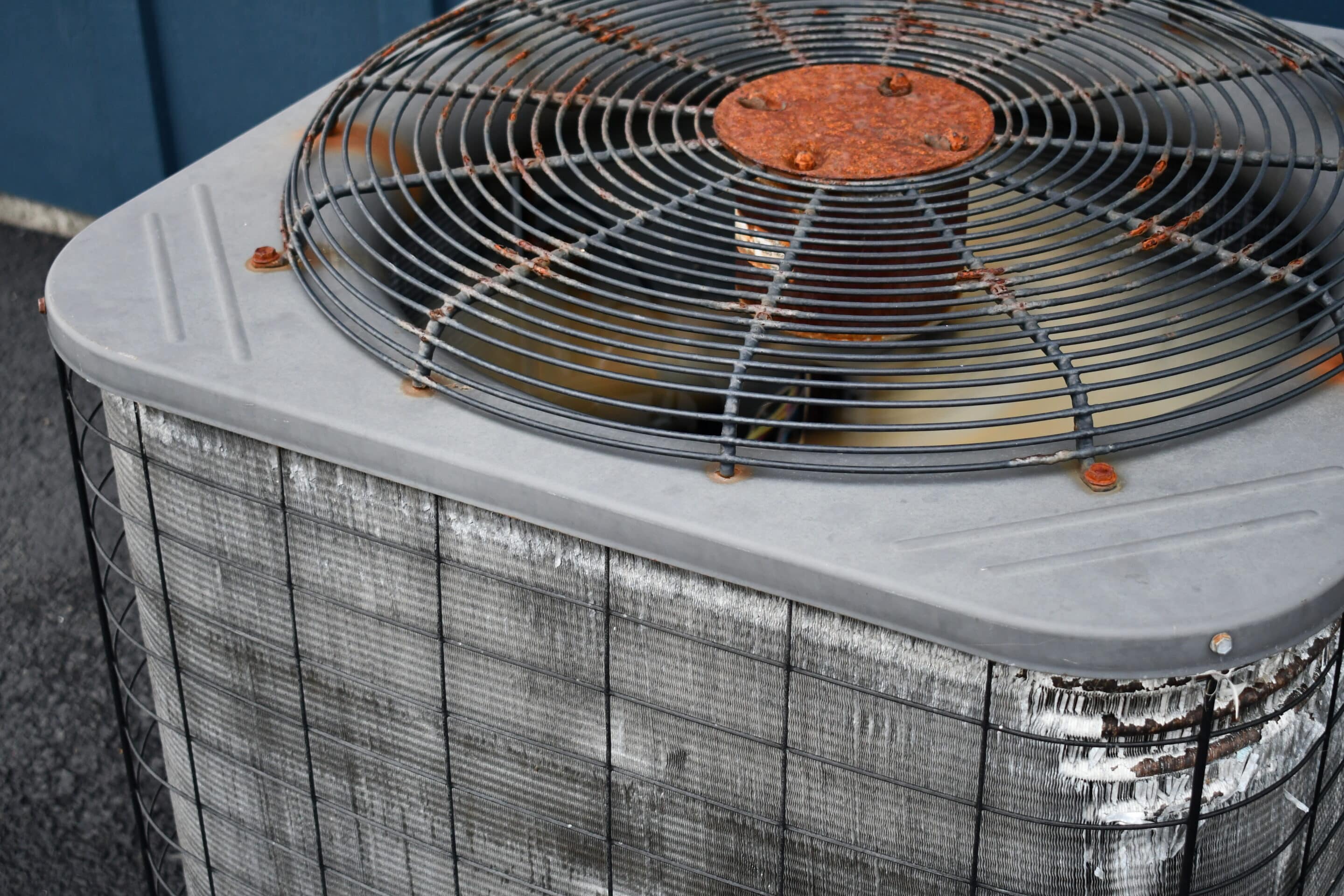
System age changes the calculation dramatically. Under 7 years old, repair almost always makes sense unless the repair is catastrophic (compressor on a unit with expired warranty) or the system was badly installed to begin with. At 7-12 years, it depends on the repair cost, the repair history, and the system’s coastal exposure. A well-maintained 10-year-old system in Bay Minette has more life left than a neglected 8-year-old system in Gulf Shores that’s been soaking in salt air without coil coatings.
At 12+ years, the replacement conversation gets serious with every major repair. At 15+ years, even moderate repairs start looking like bad investments — you’re pouring money into equipment that’s already past its expected life in Baldwin County’s climate. Our AC lifespan guide covers the geographic zones that affect how long systems actually last here.
The Efficiency Gap
Older systems waste energy that newer ones don’t, and the gap is wider than most people realize. A system installed 12-15 years ago probably runs at a SEER rating equivalent to 10-13 in today’s terms. The current minimum SEER2 rating is 14.3, and most new installations in Baldwin County go in at 15-18 SEER2. In a climate where the AC runs seven months a year, that efficiency difference shows up as real money on every electric bill. Run the math: if your current system costs $200/month in electricity during peak season and a new system would cost $140, that’s $60/month in savings during the 6-7 months the AC runs heavy, plus smaller savings during shoulder months. Over 15 years, that difference compounds into thousands. It doesn’t always tip the scale toward replacement, but it’s a factor that repair-only analysis misses.
The R-22 Question
If your system runs on R-22 refrigerant (the old Freon), any repair involving refrigerant changes the entire equation. R-22 was phased out of production years ago, and the remaining supply gets more expensive every year. A $500 refrigerant-related repair on a modern system could easily run $1,500+ on an R-22 unit just because of the refrigerant cost. If your system uses R-22 and needs a refrigerant repair, replacement is almost always the right call — you’re paying a premium for a substance you’ll need again, and the system is old enough that something else will fail soon regardless.
What a Good Contractor Will Tell You
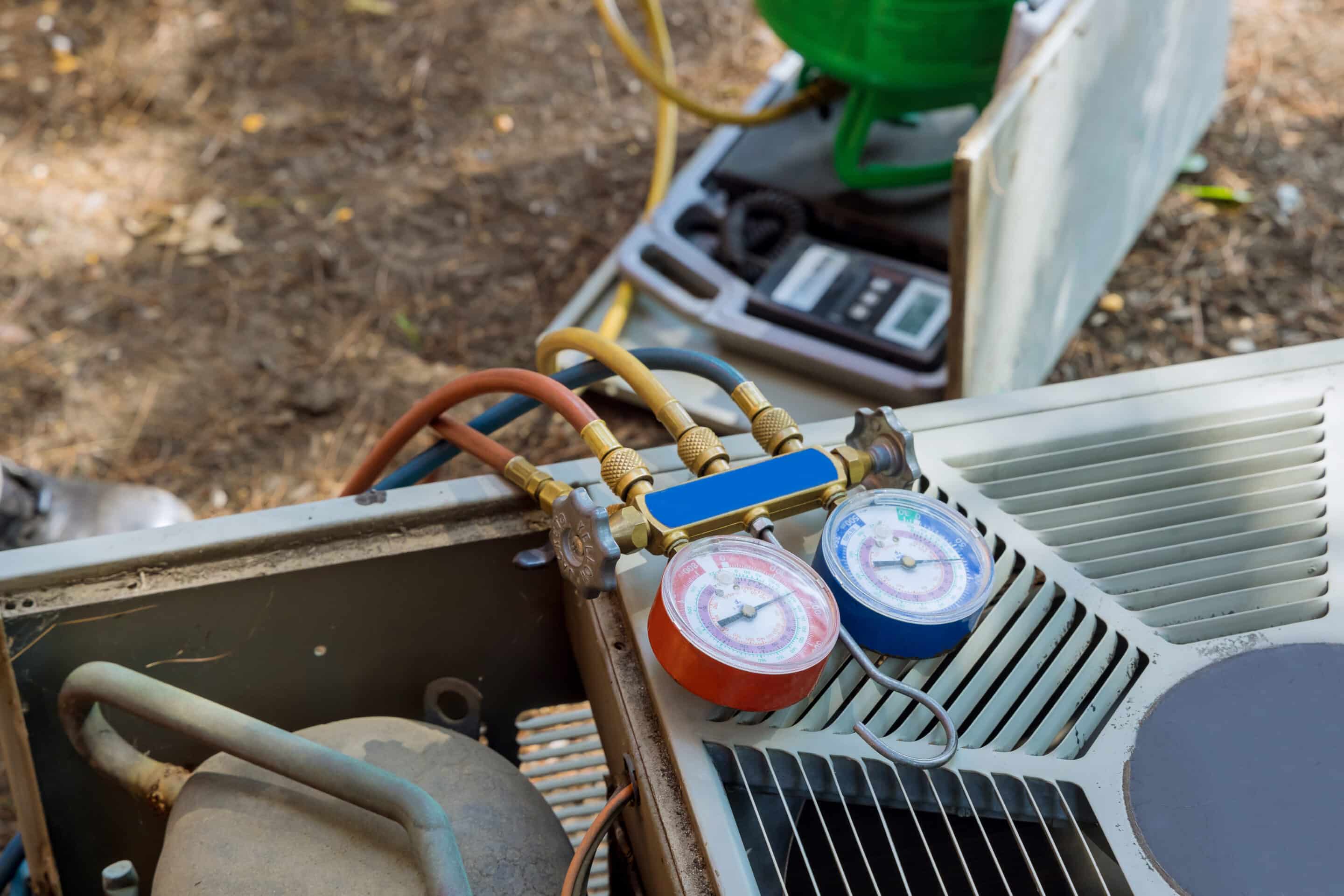
An honest AC repair technician will lay out both options without pushing either one. They should tell you the repair cost, the approximate remaining life of the system after the repair, and whether they think you’ll be back within 12-18 months with another failure. If they only want to talk about replacement, get a second opinion. If they only want to repair a system that clearly needs replacing, also get a second opinion.
At Air Solutions, we show you the repair cost, the replacement cost, and the math in between. If a $300 repair buys you 3-5 more years, that’s a good investment and we’ll say so. If a $2,500 repair on a 14-year-old system is throwing good money after bad, we’ll say that too.
When You’re Ready to Replace
If the decision lands on replacement, three things matter: proper sizing (see our AC sizing guide), choosing the right equipment for Baldwin County conditions, and taking advantage of every rebate and incentive available to reduce the upfront cost.
Our AC installation page covers the full process, and our financing options make it possible to handle the cost without draining your savings. A replacement is a big purchase, but when the math says it’s time, delaying it usually costs more in repairs and wasted energy than the new system would have cost if you’d pulled the trigger sooner.
The Straight Answer
When replacement time comes, working with a certified manufacturer partner matters. As a RUUD Pro Partner, we have factory training on the latest equipment and access to exclusive warranty coverage.
Call (251) 300-9817 for a diagnosis and an honest recommendation. We’ll tell you what’s wrong, what it costs to fix, and whether we think you should fix it. No sales pitch. Just the information you need to make a good decision. Hundreds of Baldwin County homeowners have made the same decision — see what they say about working with us.